
Granite Size: Understanding Dimensions and Variations
Granite (as a general product, not only full slabs) is commonly supplied either as tiles or as prefabricated countertop pieces, each with fairly standard sizing: popular tile sizes include 12 in × 12 in × 3/8 in (30.48 cm × 30.48 cm × 0.95 cm), 18 in × 18 in × 1/2 in (45.72 cm × 45.72 cm × 1.27 cm), and 24 in × 24 in × 1/2 in (60.96 cm × 60.96 cm × 1.27 cm); prefab kitchen countertop runs are often sold as 26 in × 96 in × 2 cm (66.04 cm × 243.84 cm × 2.0 cm), with other common run lengths like 108 in × 25.5 in (274.32 cm × 64.77 cm) also available, and prefab thicknesses are typically 2 cm (0.79 in) or 3 cm (1.18 in, often marketed as “1¼ in” nominal) depending on the supplier and edge build-up.
Regular Size
108 in × 60 in, thickness 0.79 in (2 cm) or 1.18 in (3 cm).
Jumbo Size
120 in × 72 in, thickness 0.79 in (2 cm) or 1.18 in (3 cm).
Super Size
138 in × 78 in, thickness 0.79 in (2 cm) or 1.18 in (3 cm).
Super Jumbo
138 in × 78 in, thickness 0.79 in (2 cm) or 1.18 in (3 cm).
Mini Slab
96 in × 48 in, thickness 0.79 in (2 cm) or 1.18 in (3 cm).
Selecting the Right Granite Stone Measurements
When selecting the right granite stone for your project, it is crucial to consider the project dimensions, as they dictate the size and shape of the granite slabs needed. For instance, if you are working on a kitchen countertop that measures 10 feet by 2.5 feet, you will need to ensure that the granite slabs you choose can accommodate these dimensions without excessive seams.
The desired aesthetic also plays a significant role in your selection process. If you envision a modern look, you might opt for a polished, lighter-colored granite, while a more rustic design may call for darker, textured stones.
Budget constraints are another critical factor; granite prices can range from $40 to $200 per square foot, depending on the quality and rarity of the stone. It’s essential to balance your aesthetic desires with what you can afford, ensuring that you don’t compromise on quality for the sake of cost.
Additionally, the fabricator’s expertise should not be overlooked. Some fabricators specialize in intricate designs and custom cuts, while others may focus on standard installations. If your project requires unique shapes or finishes, ensure that your chosen fabricator has the necessary skills and experience.
Lastly, specific design requirements, such as edge profiles or integrated sinks, must be factored into your granite selection. For example, a waterfall edge may require a thicker slab, which can influence both the cost and the availability of the stone. By carefully considering these aspects, you can select the right granite stone that meets your project’s needs and enhances its overall appeal.
Why Jumbo Works Better for Granite Measurements
Selecting the right granite stone measurements is crucial for achieving optimal results in any construction or design project. One significant advantage of using jumbo slabs, which typically measure around 126 inches by 78 inches, is the reduction in seams. Fewer seams not only enhance the aesthetic appeal of the finished product but also improve durability, as seams can be potential weak points. For instance, a standard slab measuring 96 inches by 54 inches may require multiple pieces to cover a large surface area, leading to more joints that can trap dirt and moisture.
Additionally, jumbo slabs allow for more design flexibility, enabling designers to create larger, uninterrupted surfaces that can showcase the natural beauty of the stone. This is particularly beneficial in high-traffic areas like kitchens and commercial spaces, where a seamless look is often desired.
Furthermore, using larger measurements can lead to cost savings in the long run, as fewer pieces mean reduced labor costs for installation and less waste generated during the cutting process. Overall, opting for the right granite stone measurements, especially jumbo sizes, can significantly enhance both the functionality and visual appeal of any project.
Common Wastage Range for Granite Stone
Granite stone, widely used in construction and decorative applications, often experiences a common wastage range of approximately 5% to 15% during extraction, processing, and installation.
This wastage can be attributed to several factors, including the natural imperfections in the stone, the cutting process, and the handling of the material. For instance, when blocks of granite are quarried, it is not uncommon for 10% to 20% of the stone to be lost due to cracks or fissures that render portions unusable.
Additionally, during the cutting phase, saw blades can create further waste, with an estimated 5% to 10% of the stone being lost due to kerf—the material removed by the saw blade itself.
Installation also contributes to wastage, as pieces may need to be trimmed to fit specific dimensions, leading to additional losses.
To mitigate these losses, careful planning and precise measurements are essential, along with the use of advanced cutting technologies that minimize waste. By understanding and managing the common wastage range, stakeholders can optimize their material usage and reduce costs associated with granite stone projects.
Biggest Granite Stone Format You Can Get
Granite is one of the most durable and aesthetically pleasing natural stones available, making it a popular choice for various applications, including countertops, flooring, and monuments. The size of granite slabs can vary significantly, but the largest granite stones can reach impressive dimensions. Typically, the biggest granite slabs available in the market can measure up to 10 feet by 5 feet, with some exceptional pieces even exceeding these dimensions. These large slabs are often sourced from quarries around the world, including Brazil, India, and Italy, where the geological conditions allow for the formation of massive granite deposits.
When it comes to thickness, granite slabs usually range from 2 cm to 3 cm, but custom orders can be made for thicker pieces, sometimes reaching up to 5 cm. The weight of these large granite slabs can be substantial; for instance, a 10-foot by 5-foot slab that is 3 cm thick can weigh around 800 pounds or more. This weight necessitates careful handling and installation, often requiring specialized equipment and skilled professionals to ensure that the stone is properly supported and secured.
In addition to their size, the aesthetic appeal of large granite slabs is noteworthy. They often feature unique patterns and colors, which can include speckles, veins, and swirls that are characteristic of the specific granite type. Some of the most sought-after colors include black, white, gray, and various shades of blue and green, each offering a distinct look that can enhance the beauty of any space. The ability to use large slabs minimizes the number of seams in a project, providing a more cohesive and elegant appearance.
Moreover, the versatility of large granite stones extends beyond residential use; they are also utilized in commercial projects, such as hotel lobbies, office buildings, and public monuments. The durability and resistance to scratching, heat, and staining make granite an ideal choice for high-traffic areas. As technology advances, the ability to quarry and transport these massive stones has improved, allowing for even larger and more intricate designs to be realized in architecture and design.
In conclusion, the biggest granite stones available on the market offer both functional and aesthetic benefits, making them a valuable choice for various applications. With sizes reaching up to 10 feet by 5 feet and weights that can exceed 800 pounds, these slabs are not only impressive in scale but also in their beauty and durability. As the demand for large granite stones continues to grow, so does the innovation in quarrying and fabrication techniques, ensuring that this timeless material remains a staple in both residential and commercial design.
Ideal Thickness for Busy Floors Using Granite Stone
When selecting granite stone for busy floors, the ideal thickness is a crucial factor that significantly impacts durability and performance. Typically, granite tiles used in high-traffic areas should have a thickness of at least 1.25 inches (3 cm). This thickness provides the necessary strength to withstand heavy foot traffic, furniture movement, and other stresses that can occur in commercial or residential spaces. Thinner tiles, such as those measuring 0.75 inches (2 cm), may be suitable for less demanding environments but are generally not recommended for areas that experience constant use.
In addition to thickness, the installation method plays a vital role in the longevity of granite flooring. For busy floors, a proper substrate is essential. A solid, level base ensures that the granite tiles are adequately supported, reducing the risk of cracking or chipping over time. It is also advisable to use a high-quality adhesive specifically designed for stone installation, as this will enhance the bond and provide additional stability.
Moreover, the finish of the granite can influence its performance in high-traffic areas. Polished granite, while aesthetically pleasing, can be slippery when wet, making it less ideal for environments where spills are common. In contrast, honed or textured finishes offer better traction and are often preferred for busy commercial spaces such as restaurants, retail stores, and airports.
Maintenance is another consideration when choosing granite thickness for busy floors. Thicker tiles are generally easier to maintain, as they are less prone to damage and can withstand more rigorous cleaning methods. Regular sealing is recommended to protect the stone from stains and moisture, especially in areas where spills are likely to occur.
In conclusion, when selecting granite stone for busy floors, a thickness of at least 1.25 inches (3 cm) is ideal to ensure durability and longevity. Coupled with proper installation techniques and maintenance practices, granite can provide a beautiful and resilient flooring solution for high-traffic environments.
Granite dimensions for walls & decorative surfaces
Granite brings a natural, high-end character to walls and decorative surfaces, and its available formats often vary because each slab is produced from quarried blocks with unique movement, grain, and mineral patterning.
Instead of one fixed standard, granite commonly comes in large slab ranges, often around 2400–3300 mm long and 1400–2000 mm wide (roughly 95–130 in by 55–79 in), giving designers flexibility for statement walls, fireplace surrounds, and tall cladding features with fewer breaks.
For vertical use, many projects choose a thickness around 10–20 mm to balance strength with manageable weight, while 30 mm is typically reserved for heavier design statements or when the granite needs to visually match thick horizontal surfaces nearby.
For example, if you want a bookmatched granite feature wall, selecting larger slab ranges helps you cut a mirrored pair from the same area of the stone, keeping the “butterfly” effect centered and reducing the need for extra seams.
Because granite is naturally varied, it’s common to review slabs in person (or via detailed slab photos) and map the most dramatic areas—like sweeping veins or clustered minerals—into the focal zones of the wall for the most consistent, intentional look.
Granite dimensions for stairs
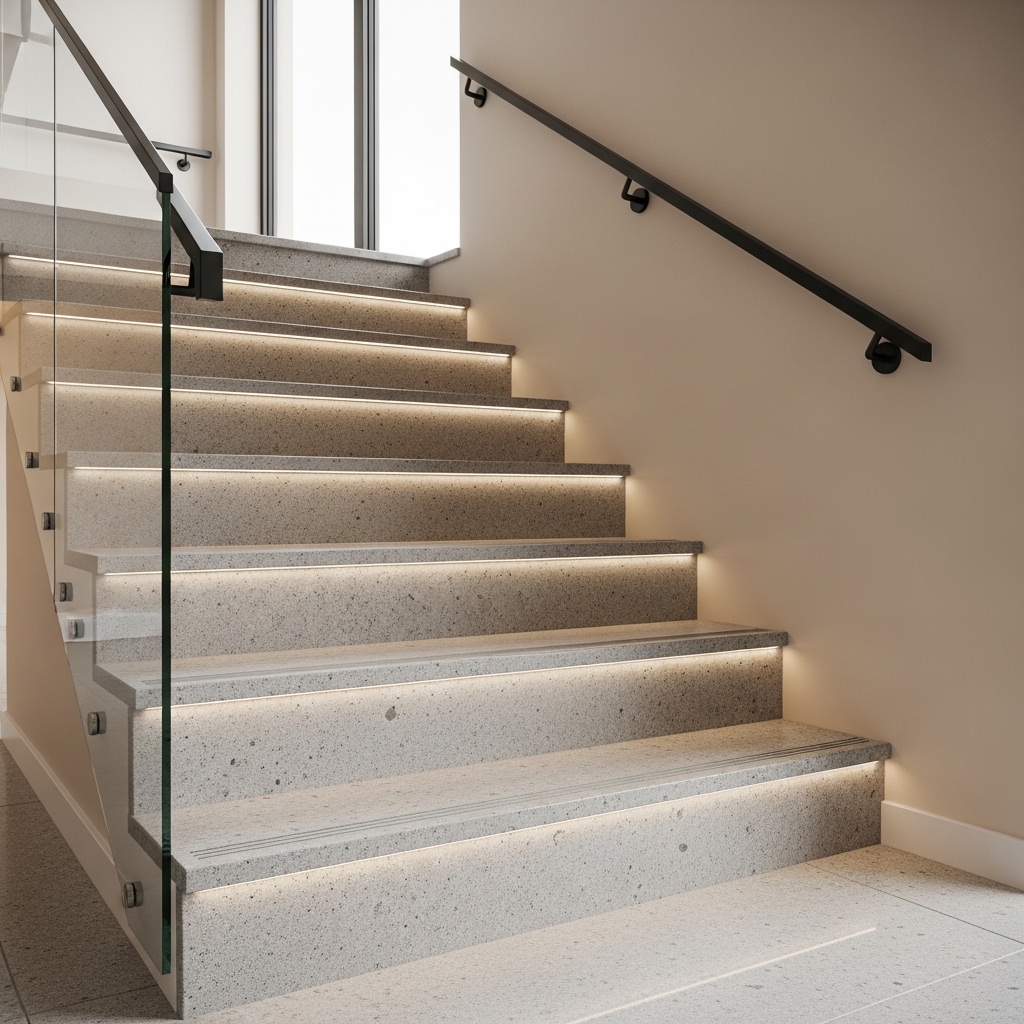
Granite is a classic choice for stairs because it is naturally hard-wearing, handles heavy foot traffic well, and offers a wide range of natural patterns that can make staircases feel premium and architectural.
Granite is typically supplied in large slab ranges rather than one fixed size, often within workable ranges such as 2400–3300 mm long and 1400–2000 mm wide (typical examples), allowing multiple treads and risers to be cut with consistent tone and grain direction.
For stair treads, thickness is commonly selected around 20–30 mm depending on span, fixing method, and the desired edge profile, with thicker edges often preferred for a strong step-nose appearance.
As an example, a single granite slab can be planned to produce a full flight’s visible treads with similar movement, while risers can be cut from calmer areas of the slab to keep the stair face looking neat and balanced.
Because granite is naturally varied, stair projects often benefit from slab viewing and layout mapping so the most attractive sections are placed on the most visible steps and landings.
In the UAE market, granite size typically varies by quarry, but most suppliers and yards stock slabs in the 2500–3220 mm length range and roughly 1350–1800 mm widths for common colors, with 20 mm and 30 mm thicknesses widely available for kitchens and vanities. For large islands and minimal-joint installations, fabricators often select longer inventory closer to 3000–3200 mm so a single run can be cut with fewer seams and stronger grain continuity. If you are planning a full countertop set, confirm the exact granite slab size on the chosen batch so the template can be optimized for overhangs, sink cutouts, and backsplash strips without unnecessary joins.
Granite Size Standards for Interior Surfaces and Marble Threshold Design
Granite size standards for interior surfaces generally vary by quarry, but most slabs supplied for UAE projects measure between 2800–3200 mm in length and 1500–1800 mm in width, with thicknesses of 20 mm and 30 mm widely available. These sizes are suitable for kitchen counters, vanities, wall cladding, and stair treads, offering flexibility in layout and seam placement. In refined interior detailing, designers often coordinate slab cuts to also produce a matching marble threshold, creating smooth and durable transitions at doorways using the same stone family.
Granite Size Standards for Raised Floor Applications
Granite size standards play a critical role in projects that integrate stone finishes with a raised floor application. Typical granite slabs measure approximately 2800–3200 mm in length and 1500–1800 mm in width, with thicknesses ranging from 18 mm to 30 mm depending on usage. These standardized dimensions help designers plan clean transitions between granite-clad areas and raised access flooring, ensuring consistent heights, safe load performance, and visually balanced interiors.