
Granite Slab Size Guide
Granite slab size (full slabs intended for fabrication) varies by quarry and supplier, but “standard” ranges are often around 108–120 in long × 60–72 in wide (274.32–304.80 cm × 152.40–182.88 cm); many suppliers also carry smaller slabs around 96 in × 48 in (243.84 cm × 121.92 cm) depending on origin and availability, and the most common slab thicknesses are 2 cm (0.79 in) and 3 cm (1.18 in, frequently sold as “1¼ in” nominal), with 3 cm generally chosen when extra rigidity is preferred.
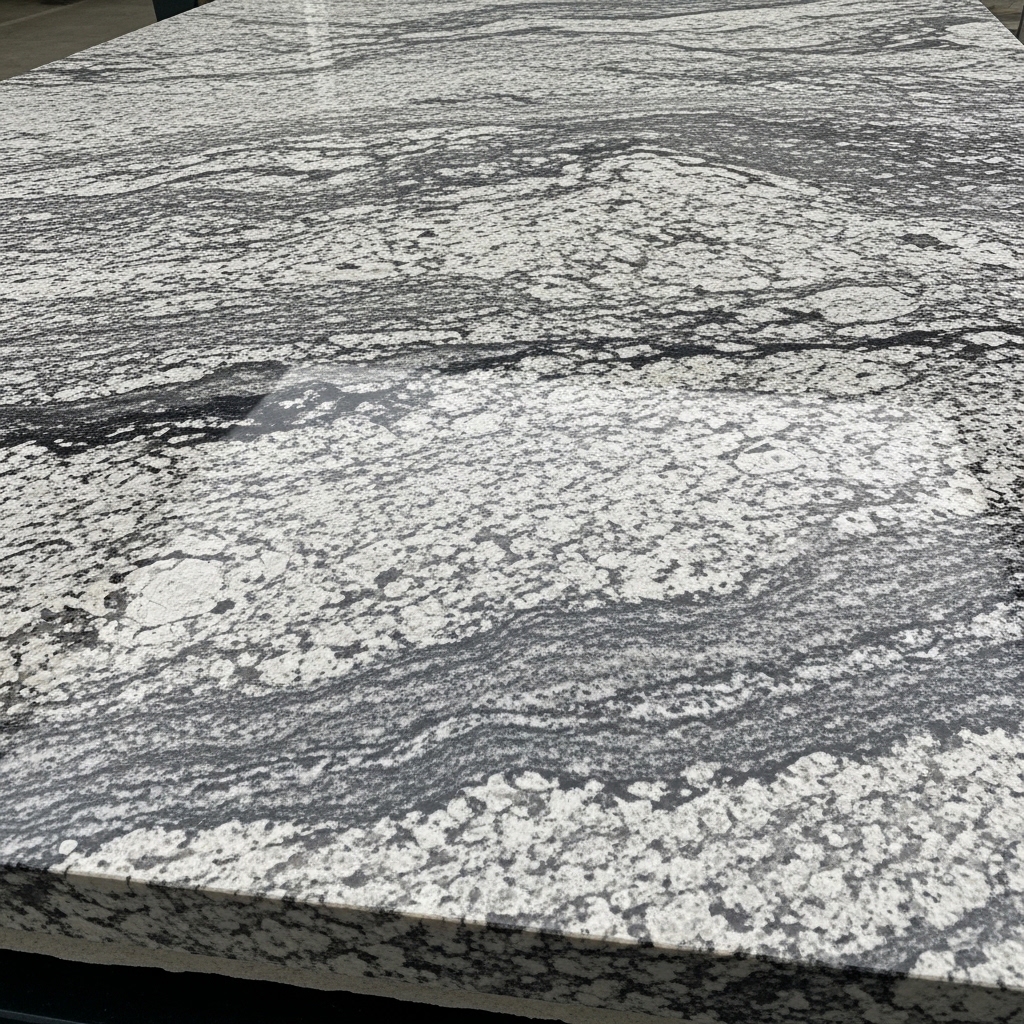
Regular Size
120 in × 72 in, thickness 0.79 in (2 cm) or 1.18 in (3 cm).
Jumbo Size
126 in × 78 in, thickness 0.79 in (2 cm) or 1.18 in (3 cm).
Super Size
138 in × 78 in, thickness 0.79 in (2 cm) or 1.18 in (3 cm).
Super Jumbo
138 in × 78 in, thickness 0.79 in (2 cm) or 1.18 in (3 cm).
Mini Slab
96 in × 48 in, thickness 0.79 in (2 cm) or 1.18 in (3 cm).
Finding the Ideal Granite Slab Dimensions
Finding the ideal granite slab dimensions requires careful consideration of several factors that align with your project’s specific needs.
First, assess the project dimensions; for instance, if you are working on a kitchen countertop, standard dimensions typically range from 25 to 30 inches in depth and 96 to 120 inches in length.
Next, consider your desired aesthetic; larger slabs can create a seamless look, ideal for modern designs, while smaller pieces may suit more traditional styles.
Budget constraints also play a crucial role; granite slabs can range from $40 to $200 per square foot, so it’s essential to balance size with cost.
Additionally, the fabricator’s expertise should not be overlooked; some may specialize in larger, intricate cuts, while others may excel in smaller, detailed work.
Lastly, specific design requirements, such as the need for a waterfall edge or integrated sinks, can dictate the dimensions of the slab. By carefully evaluating these factors, you can determine the most suitable granite slab dimensions for your project.
Big-Format Advantages for Granite Slab Dimensions
Finding the ideal granite slab dimensions or utilizing big-format granite slabs offers numerous advantages that can significantly enhance both aesthetic appeal and functionality in various applications.
One of the primary benefits of larger granite slabs, often measuring 120 inches by 55 inches or more, is the reduction in seams, which not only creates a more seamless and visually appealing surface but also minimizes the potential for dirt and bacteria accumulation in grout lines.
Additionally, big-format slabs can be more cost-effective in the long run; fewer seams mean less labor and material costs associated with installation.
The expansive surface area of larger slabs also allows for more creative design possibilities, enabling homeowners and designers to create striking focal points in kitchens, bathrooms, or commercial spaces.
Furthermore, larger slabs tend to be more stable and less prone to cracking, as they distribute weight more evenly across the surface.
In terms of maintenance, big-format granite slabs are easier to clean and maintain due to their fewer seams and larger surface area, making them a practical choice for high-traffic areas.
Overall, selecting the right dimensions for granite slabs can lead to enhanced durability, aesthetic appeal, and cost efficiency, making it a wise investment for any renovation or construction project.
Estimated Cutting Loss for Granite Slab Material
When estimating cutting loss for granite slab material, it is essential to consider various factors that contribute to waste during the fabrication process. Typically, the cutting loss can range from 10% to 20% of the total slab area, depending on the complexity of the design and the cutting techniques employed. For instance, if a granite slab measures 120 square feet, the estimated cutting loss could be between 12 to 24 square feet.
The layout of the cuts plays a crucial role in minimizing waste; efficient planning can significantly reduce the amount of material lost. Additionally, the type of saw used, such as a bridge saw or water jet, can impact the precision of cuts and the resulting loss.
It is also important to account for the thickness of the blade, which can vary from 0.1 to 0.5 inches, further contributing to the overall waste. By carefully analyzing these factors and employing strategic cutting plans, fabricators can optimize the use of granite slabs and reduce estimated cutting loss, ultimately leading to cost savings and more sustainable practices in stone fabrication.
Largest Granite Slab Format Available
The largest granite slab formats available in the market today have revolutionized the way designers and architects approach their projects. Typically, these slabs can reach dimensions of up to 126 inches by 75 inches, allowing for expansive surfaces that minimize seams and create a more cohesive look. This is particularly beneficial in applications such as kitchen countertops, where a continuous surface is not only aesthetically pleasing but also functional, as it reduces the number of joints that can harbor dirt and bacteria.
In addition to size, the thickness of these slabs can vary, with options ranging from 2 cm to 3 cm, providing versatility for different applications. The thicker slabs are often preferred for high-traffic areas due to their durability and resistance to chipping and cracking. Moreover, the weight of these large slabs can be significant, often exceeding 800 pounds, which necessitates careful handling and installation by professionals.
The availability of large granite slabs has also expanded due to advancements in quarrying and processing technologies. Modern machinery allows for the extraction of larger blocks of granite, which can then be cut into these impressive dimensions. This not only enhances the aesthetic appeal of the stone but also provides a more sustainable option, as fewer seams mean less waste during fabrication.
Furthermore, the variety of colors and patterns available in large granite slabs is astounding. From classic whites and blacks to vibrant blues and greens, the options cater to a wide range of design preferences. Some of the most sought-after varieties include Calacatta, Statuario, and Azul Macaubas, each offering unique veining and coloration that can serve as a stunning focal point in any space.
In conclusion, the largest granite slab formats available today provide both beauty and functionality, making them an ideal choice for a variety of applications. With their impressive dimensions, durability, and aesthetic appeal, these slabs are transforming the landscape of interior design and architecture, allowing for more innovative and seamless designs.
Recommended Thickness for High-Traffic Zones with Granite Slab Material
When selecting granite slab material for high-traffic zones, it is crucial to consider the recommended thickness to ensure durability and longevity. Granite slabs typically come in various thicknesses, with 2 cm (approximately 0.79 inches) and 3 cm (approximately 1.18 inches) being the most common options. For high-traffic areas such as commercial spaces, retail stores, or busy residential kitchens, a thickness of 3 cm is often recommended. This increased thickness provides greater strength and resistance to cracking, chipping, and other forms of wear that can occur in environments with heavy foot traffic.
Moreover, the weight of the granite slab also plays a significant role in its application. A 3 cm thick slab is heavier and more robust, making it less likely to flex under pressure compared to its 2 cm counterpart. This added weight can help maintain the integrity of the installation, especially when used in countertops or flooring where heavy objects may be placed. Additionally, the thicker slab allows for more extensive edge profiles and design options, enhancing the aesthetic appeal of the space.
In terms of installation, it is essential to ensure that the underlying structure can support the weight of the thicker granite. Proper reinforcement may be necessary, particularly in areas where the granite will be subjected to significant stress. Using a 3 cm thick granite slab can also reduce the need for additional support structures, as its inherent strength can often stand alone. Ultimately, choosing the right thickness for granite slabs in high-traffic zones is vital for achieving a balance between functionality and style, ensuring that the material can withstand the demands of everyday use while maintaining its beauty over time.
Granite slab measurements for walls & decorative cladding
When granite is used specifically for decorative cladding, it’s often planned as panelized sections cut from full slabs so installation is safer, alignment is cleaner, and future maintenance or replacement is simpler without compromising the luxury “slab wall” aesthetic.
A typical workflow is to start with full slabs and cut repeatable cladding panels such as 600 × 1200 mm, 800 × 1600 mm, or 900 × 1800 mm (examples), depending on access, lifting limits, substrate strength, and the joint rhythm you want to see on the wall.
Interior cladding commonly uses 10–12 mm thickness for efficiency, while 15–20 mm may be selected where the design needs a deeper edge profile around returns, niches, or framing details.
As an example, a commercial lobby might use 800 × 1600 mm granite panels aligned in a vertical grid so the grain direction stays consistent from panel to panel, while joints remain uniform and easy to keep clean.
Beyond panel sizing, successful cladding also depends on edge finishing (arrised vs. chamfered), careful corner detailing, and choosing an appropriate fixing method—adhesive systems are common indoors, while heavier or exterior applications often rely on mechanical support for added safety.
Granite slab measurements for stairs
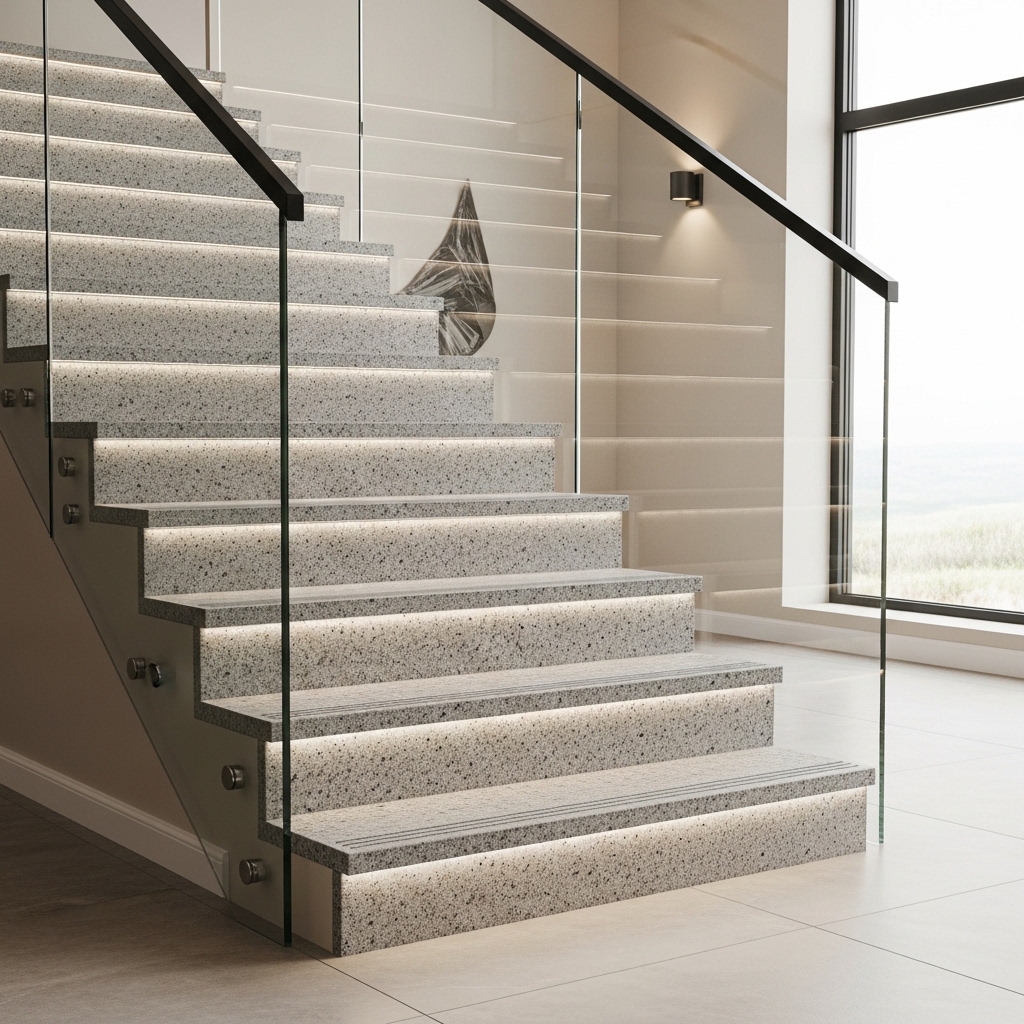
Granite slab measurement planning for stairs focuses on translating the full slab into efficient step components—treads, risers, skirting, and landing pieces—while keeping grain direction consistent and minimizing waste.
Starting slabs often fall into broad ranges like 2400–3300 mm in length and 1400–2000 mm in width (typical examples), and those dimensions allow fabricators to nest multiple tread cuts and risers within one slab while keeping shade and movement uniform.
For stair durability, many projects choose 20 mm or 30 mm thickness, then select an edge detail (eased, chamfered, bullnose) that suits traffic level and design style; thicker or built-up noses are used when a more substantial look is required.
For example, a landing piece may be cut as a single larger panel, while tread pieces are cut in a repeated direction so the staircase reads cohesive from bottom to top.
Measurement planning also includes allowances for overhang at the step nose, skirting returns at wall edges, and tight tolerances so each piece fits cleanly without uneven gaps between treads and risers.
In the UAE, granite slab size commonly falls around 3000–3200 mm in length and 1500–1800 mm in width for many stocked colors, with 20 mm thickness as a standard and 30 mm frequently used for heavier-looking edge profiles. These dimensions are important because a typical kitchen run can be 2400–3600 mm long, and an island can reach 900–1200 mm wide—so slab selection directly impacts seam placement and waste. For accurate estimating, match your template to the exact batch dimensions and compare it with your kitchen slab size requirement (including overhangs like 20–40 mm and any waterfall panels) to ensure the best yield and the cleanest layout.
Granite Slab Size Specifications for Moon White Granite Installations
Granite slab size specifications for Moon White Granite installations usually fall within the 2800–3100 mm length range and about 1500–1700 mm in width, depending on the specific block and shipment. These dimensions make it suitable for kitchen countertops, islands, staircases, and flooring when vein and grain direction are carefully planned. Using moon white granite in slab form allows fabricators to achieve clean, continuous surfaces with minimal joints, especially when paired with standard 20 mm or 30 mm thickness for both functional strength and aesthetic balance.
Granite Slab Size Guidelines for Raised Floor Installations
Granite slab size guidelines for architectural projects often account for compatibility with a raised floor installation, where precision and modular planning are essential. Full slabs usually come in sizes close to 3000 × 1600 mm, allowing efficient cutting into panels, thresholds, or border elements without excessive wastage. Selecting the right slab size supports accurate level matching, smooth edge detailing, and reliable performance in commercial environments that rely on underfloor access systems.