
Kitchen Slab Size Guide
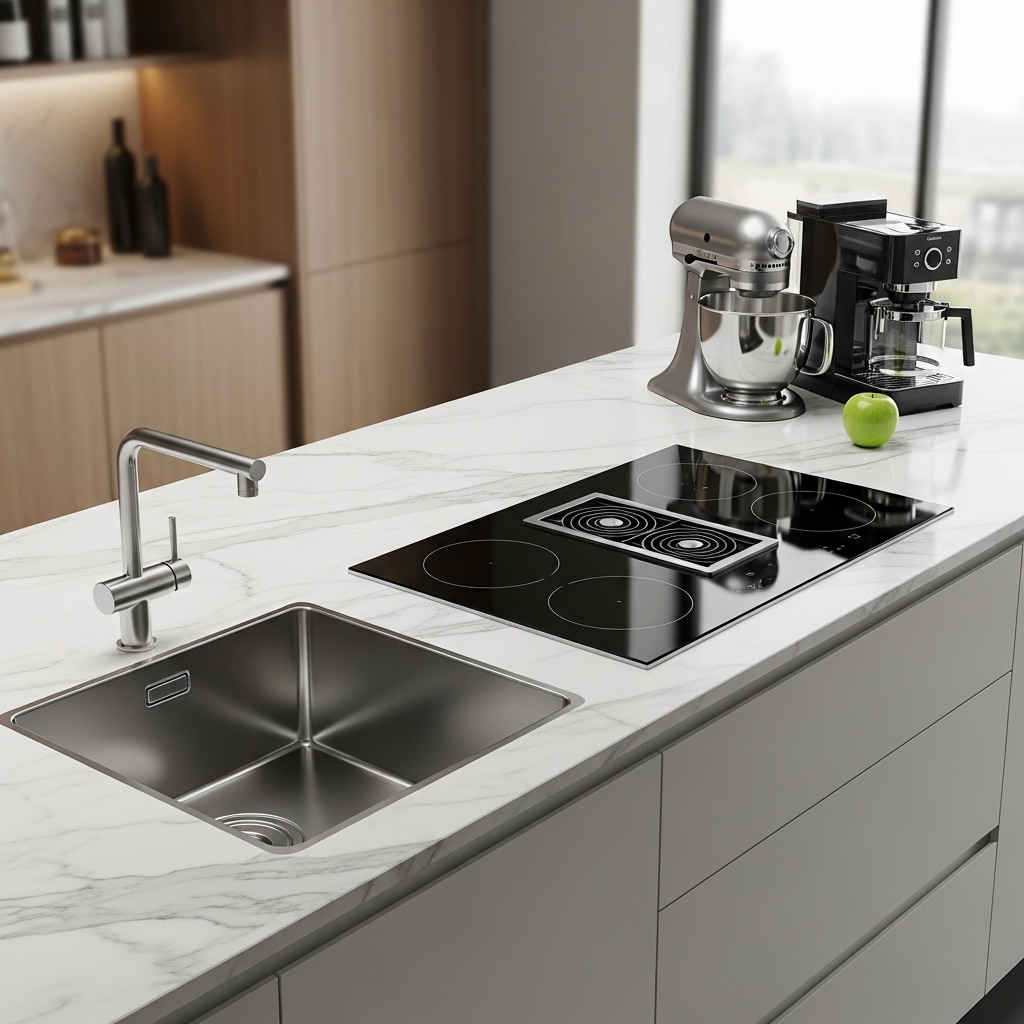
Kitchen slab size (kitchen countertop size) is usually planned around standard cabinet dimensions: a typical kitchen counter run is about 25–25.5 in deep (63.50–64.77 cm) to cover 24 in (60.96 cm) base cabinets, while finished counter height is commonly about 36 in (91.44 cm) from the floor. Individual countertop pieces are cut to suit the layout, but common straight-run sections often fall around 72–120 in long (182.88–304.80 cm) before seams are added for longer kitchens, and island tops are frequently 36–60 in wide (91.44–152.40 cm) with lengths around 72–120 in (182.88–304.80 cm) depending on space. Thickness depends on material and style: most stone and quartz kitchen slabs are fabricated at 2 cm (0.79 in) or 3 cm (1.18 in; often marketed as “1¼ in” nominal), and thicker “built-up” edges may visually read as about 1.5 in (3.81 cm) by laminating or edging.
Regular Size
25–25.5 in deep and commonly 96–120 in long per section, thickness 0.79 in (2 cm) or 1.18 in (3 cm).
Jumbo Size
25–25.5 in deep and commonly 120–144 in long per section, thickness 0.79 in (2 cm) or 1.18 in (3 cm).
Super Size
25–25.5 in deep and commonly 144–168 in long per section, thickness 0.79 in (2 cm) or 1.18 in (3 cm).
Super Jumbo
25–25.5 in deep and commonly 168–180 in long per section, thickness 0.79 in (2 cm) or 1.18 in (3 cm).
Mini Slab
25–25.5 in deep and commonly 60–72 in long per section, thickness 0.79 in (2 cm) or 1.18 in (3 cm).
Choosing Proper Kitchen Countertop Measurements
Choosing the proper kitchen countertop measurements involves a careful consideration of several factors that can significantly impact both functionality and aesthetics.
First, project dimensions are crucial; standard countertop height is typically 36 inches, but this can vary based on the user’s height and preferences. Depth usually ranges from 24 to 30 inches, depending on the layout and appliances.
Desired aesthetic plays a vital role in the selection process; for instance, a sleek, modern look may require thinner countertops, around 1 to 1.5 inches thick, while a more traditional style might benefit from thicker options, such as 2 to 3 inches.
Budget constraints are another essential factor; granite and quartz can range from $50 to $200 per square foot, while laminate options may be as low as $10 to $40 per square foot.
The fabricator’s expertise should not be overlooked; experienced fabricators can provide insights on the best materials and techniques for your specific design, ensuring that the measurements align with the overall kitchen layout.
Lastly, specific design requirements, such as the need for integrated sinks or unique edge profiles, can influence measurements; for example, a farmhouse sink may require a cutout that adds to the overall dimensions. By carefully evaluating these aspects, you can achieve a kitchen countertop that meets both functional needs and aesthetic desires.
Perks of Jumbo Kitchen Worktop Measurements
Choosing proper kitchen countertop measurements is crucial for both functionality and aesthetics in any kitchen design. A well-measured countertop can enhance the overall workflow, allowing for efficient meal preparation and cooking. For instance, a standard countertop height of 36 inches is ideal for most users, providing comfort while standing or working. Additionally, opting for jumbo kitchen worktop measurements, such as 3 meters in length, can create a spacious and inviting environment, perfect for families or those who entertain frequently.
The increased surface area not only allows for more room to spread out ingredients but also provides ample space for appliances, cutting boards, and other kitchen tools, minimizing clutter. Furthermore, larger countertops can serve as a gathering spot for family and friends, making the kitchen a central hub in the home.
By investing in proper measurements, homeowners can avoid common pitfalls such as cramped spaces or awkward layouts, ultimately leading to a more enjoyable cooking experience. In summary, the advantages of choosing the right kitchen countertop measurements extend beyond mere aesthetics; they significantly impact functionality, comfort, and the overall atmosphere of the kitchen.
Practical Waste Estimate for Kitchen Countertops
When estimating waste for kitchen countertops, it is essential to consider various factors that can impact the final amount of material needed. Typically, a waste factor of 10% to 15% is recommended for standard installations, which accounts for cuts, seams, and potential mistakes. For instance, if you are installing 50 square feet of granite countertops, you should plan for an additional 5 to 7.5 square feet of material to cover any unforeseen issues.
Additionally, the type of material plays a significant role in waste estimation; natural stones like granite and marble may have more waste due to their irregular shapes and patterns, while engineered stones often have more uniformity, resulting in less waste.
It is also crucial to consider the layout of the kitchen and the design of the countertops. Complex designs with curves or intricate edges may require more material, leading to increased waste. Furthermore, if you are working with large slabs, the size and number of seams can affect how much material is ultimately wasted.
To ensure an accurate estimate, it is advisable to consult with a professional fabricator who can provide insights based on their experience and the specific materials being used. By carefully calculating the waste factor and considering these variables, you can avoid over-purchasing or running short on materials, ultimately leading to a more efficient and cost-effective project.
Top-End Kitchen Worktop Format Options
When considering top-end kitchen worktop options, homeowners are often faced with a variety of materials, each offering unique benefits and aesthetic appeal. Granite is one of the most popular choices due to its durability and natural beauty. Available in a wide range of colors and patterns, granite can withstand heat and scratches, making it ideal for busy kitchens. Prices typically range from $40 to $100 per square foot, depending on the quality and origin of the stone.
Another premium option is quartz, an engineered stone that combines natural quartz crystals with resins and pigments. This material is non-porous, which means it is resistant to stains and bacteria, making it a hygienic choice for food preparation. Quartz worktops can cost between $50 and $150 per square foot, and they come in a variety of finishes and colors, allowing for greater customization.
For those seeking a more contemporary look, concrete worktops offer a unique, industrial aesthetic. They can be molded into various shapes and sizes, providing flexibility in design. While concrete is incredibly durable, it requires sealing to prevent staining and can cost anywhere from $70 to $150 per square foot.
Marble is another luxurious option, known for its timeless elegance and unique veining. However, it is softer than granite and quartz, making it more susceptible to scratches and stains. Marble worktops typically range from $50 to $200 per square foot, depending on the quality and rarity of the stone.
Lastly, solid surface materials, such as Corian, provide a seamless appearance and are available in a wide array of colors and patterns. They are easy to maintain and repair, as scratches can often be sanded out. Prices for solid surface worktops generally range from $40 to $100 per square foot.
In conclusion, the choice of worktop material significantly impacts both the functionality and aesthetic of a kitchen. Each option has its own set of advantages and price points, allowing homeowners to select the best fit for their lifestyle and design preferences.
Floor-Grade Thickness Guide for Kitchen Countertops
When selecting kitchen countertops, one of the critical factors to consider is the floor-grade thickness, which significantly impacts both aesthetics and functionality. Standard thicknesses for kitchen countertops typically range from 1.5 inches to 2 inches, with variations depending on the material used. For instance, granite and quartz countertops often come in a thickness of 3 cm (approximately 1.18 inches), while laminate options may be thinner, around 1 inch.
The choice of thickness not only affects the overall look of the kitchen but also its durability and resistance to wear and tear. Thicker countertops tend to be more robust and can withstand heavy use, making them ideal for busy kitchens. For example, a 2-inch thick granite countertop can support significant weight and is less prone to chipping compared to a thinner option.
Moreover, the thickness of the countertop can influence the installation process. Thicker materials may require additional support during installation, especially if they are being mounted on cabinets without a solid base. It is essential to ensure that the cabinetry can support the weight of the countertop, particularly when opting for heavier materials like natural stone.
In terms of design, the thickness of the countertop can create a more substantial visual impact. A thicker countertop can provide a more luxurious appearance, while a thinner profile may lend a more modern and sleek look. For example, a 1.5-inch thick countertop can create a minimalist aesthetic, while a 2-inch thick countertop can add a sense of grandeur to the kitchen space.
Ultimately, the choice of floor-grade thickness for kitchen countertops should align with both personal style preferences and practical considerations. It is advisable to consult with a professional to determine the best thickness based on the specific material, kitchen layout, and intended use. By carefully considering these factors, homeowners can select countertops that not only enhance the beauty of their kitchen but also provide lasting functionality.
Kitchen slab dimensions for walls & decorative surfaces
Kitchen slabs are often extended onto walls and decorative surfaces to create a cohesive, high-end look that visually ties together countertops, waterfall ends, backsplashes, bar fronts, and feature zones in one continuous material story.
In vertical applications, slabs are especially valued for reducing grout lines behind sinks and cooktops, improving cleanability while giving a sleek, contemporary finish that works well with modern cabinetry and minimal hardware styles.
Designers frequently plan a single “hero panel” for a full-height backsplash (counter to upper cabinets or even to the ceiling), then cut coordinating pieces for side returns, shelving details, or niche backs so the pattern direction remains consistent.
For example, one large slab can be optimized to produce a full-height backsplash plus matching side splashes and a small ledge, allowing veining to flow in the same direction and making the installation feel like one composed surface rather than separate parts.
When kitchen materials are used on walls, it’s common to coordinate edge treatments and seam placement with cabinetry lines—placing joints at cabinet edges or inside corners—so the overall installation looks clean, balanced, and intentionally designed.
Kitchen slab dimensions for stairs
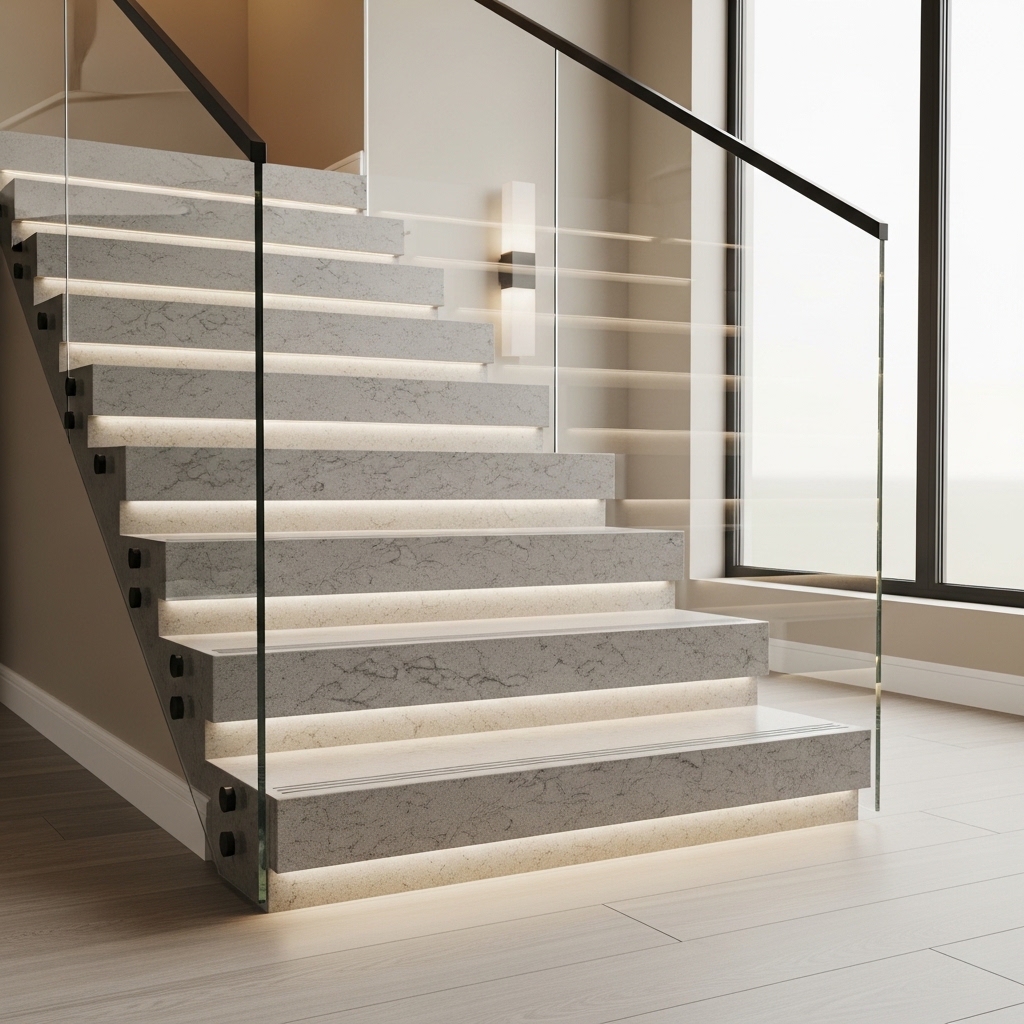
Kitchen slabs are sometimes used on stairs when a project wants visual continuity between kitchen surfaces and adjacent staircases, especially in open-plan layouts where materials flow between zones.
These slabs are typically sourced from the same material families used for countertops, so large slab formats can be cut into treads, risers, and landing surfaces with consistent pattern direction and a unified look across the home.
For stair use, thickness is usually selected to match performance needs—commonly 20 mm for many tread applications, with options to create thicker-looking step noses using laminated build-ups for a bold edge profile.
As an example, a slab that matches the kitchen island cladding can be used to form stair treads and a landing, creating a coordinated design language between the kitchen feature and the staircase.
Because stairs are a high-contact area, finish choice is important—many designers favor matte or honed finishes for a softer feel and improved grip compared to high gloss on step surfaces.
In the UAE, kitchen slab size is planned around real site dimensions and fabrication limits: most straight kitchen counters are 600–650 mm deep, islands are commonly 900–1200 mm wide, and comfortable working heights are usually 900–950 mm (including the stone). For long runs, designers try to keep visible joints minimal by choosing materials that come in larger formats, and the standard quartz slab size is often used as the baseline for planning—typically around 3040 × 1440 mm—so a 3.0 m run can often be cut as a single piece with a clean front edge and a separate backsplash strip.
Kitchen Slab Size Options for Omani Beige Marble Countertops and Surfaces
Kitchen slab size options for Omani Beige marble countertops and surfaces are usually planned around standard kitchen ergonomics, with counter depths of 600–650 mm, island widths between 900–1200 mm, and finished heights close to 900–950 mm including the stone. Slabs selected for these applications typically measure around 2800–3000 mm in length and 1400–1600 mm in width, allowing clean layouts with controlled seam placement. Using omani beige marble in these sizes provides a warm, uniform appearance across counters, backsplashes, and matching wall or niche surfaces.
Kitchen Slab Size Planning for Raised Floor Projects
Kitchen slab size planning becomes more precise when projects are designed around a raised floor system, especially in commercial kitchens and modern residential layouts. Standard kitchen slabs are typically planned at depths of 600–650 mm with lengths cut from slabs measuring around 3000 × 1400 mm. Allowing for access panels and service voids beneath the floor, designers often select slab thicknesses of 20 mm or 30 mm to ensure structural stability, clean alignment, and smooth transitions at floor junctions.