
What Size Do Quartz Slabs Come In?
Quartz slabs typically come in standard and jumbo formats, so when someone asks “what size do quartz slabs come in,” the most common answers are 56 in × 120 in (142.24 cm × 304.80 cm) for a standard slab and 63 in × 126 in (160.02 cm × 320.04 cm) for a jumbo slab. Depending on the manufacturer, you may also find larger choices such as 65 in × 130 in (165.10 cm × 330.20 cm) and occasional super-jumbo offerings around 78 in × 138 in (198.12 cm × 350.52 cm) for big, seam-minimizing installations. Thickness is most often sold in 2 cm (0.79 in / 20 mm) and 3 cm (1.18 in / 30 mm), with some specialty lines offered at 12 mm (0.47 in / 1.2 cm).
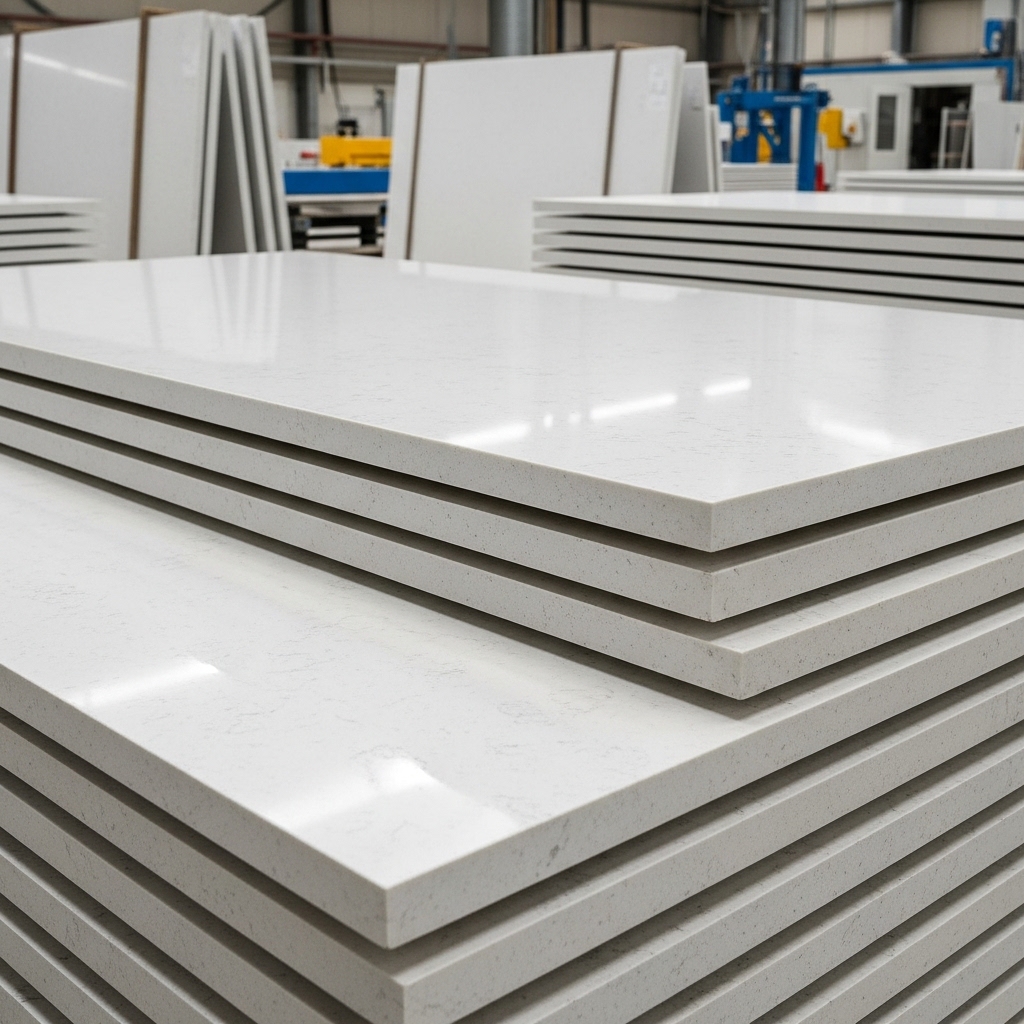
Regular Size
56 in × 120 in (standard) or 63 in × 126 in (jumbo), thickness 0.79 in (2 cm) or 1.18 in (3 cm).
Jumbo Size
63 in × 126 in (jumbo) or up to 78 in × 138 in (super-jumbo), thickness 0.79 in (2 cm) or 1.18 in (3 cm).
Super Size
78 in × 138 in (super) or up to 137.80 in × 78.74 in (max), thickness 0.79 in (2 cm) or 1.18 in (3 cm).
Super Jumbo
137.80 in × 78.74 in (super jumbo) with common oversized option 78 in × 138 in, thickness 0.79 in (2 cm) or 1.18 in (3 cm).
Mini Slab
48 in × 96 in (mini) or 56 in × 120 in (standard), thickness 0.79 in (2 cm) or 1.18 in (3 cm).
Quartz Slab Format Guide: What’s Available
When considering quartz slabs for your project, it is essential to evaluate the available formats based on several key factors.
Project dimensions play a crucial role, as quartz slabs typically come in standard sizes of 120” x 55” or 126” x 63”, which can affect how many seams are visible in your installation. For larger spaces, opting for larger slabs can minimize seams and create a more cohesive look.
The desired aesthetic is another critical consideration; quartz offers a wide range of colors and patterns, from solid hues to intricate veining, allowing you to achieve everything from a modern minimalist vibe to a classic, luxurious feel.
Budget constraints are also vital, as quartz slabs can range from $50 to $150 per square foot, depending on the quality and design complexity. It’s important to balance your aesthetic desires with what you can afford, as custom designs or rare colors may significantly increase costs.
Additionally, the fabricator’s expertise can influence the final outcome; working with a skilled fabricator who understands the nuances of quartz can ensure that your design is executed flawlessly, especially for intricate cuts or finishes.
Lastly, specific design requirements, such as edge profiles or integrated sinks, should be discussed early in the planning process, as these can affect both the material choice and the overall budget. By carefully considering these factors, you can select the right quartz slab format that aligns with your vision and practical needs.
Quartz Slab Formats: Why Jumbo Is Preferred
Quartz slabs offer numerous advantages that make them a popular choice for countertops and surfaces in both residential and commercial settings. One of the primary benefits is their durability; quartz is engineered to be non-porous, which means it resists stains, scratches, and bacteria, making it an ideal option for kitchens and bathrooms. Additionally, quartz slabs come in various formats, including standard and jumbo sizes, with jumbo slabs typically measuring around 126 inches by 63 inches. This larger format reduces the number of seams required in installations, creating a more seamless and aesthetically pleasing appearance. Furthermore, the availability of diverse colors and patterns allows homeowners and designers to achieve a customized look that can mimic natural stone while providing superior performance. The consistency in color and texture across quartz slabs also ensures that the final product meets high-quality standards, making it a reliable choice for any project. Overall, the combination of durability, aesthetic versatility, and ease of maintenance makes quartz slabs a preferred material in modern design.
Material Loss Guide for Quartz Sheet Options
When considering quartz sheet options, understanding the Material Loss Guide is essential for effective planning and budgeting. Quartz surfaces, known for their durability and aesthetic appeal, can incur material loss during fabrication and installation. Typically, the material loss can range from 5% to 15%, depending on the complexity of the design and the cutting techniques employed.
For instance, intricate patterns or custom shapes may lead to higher waste percentages, while standard sizes and shapes can minimize loss. It is crucial to account for this potential waste when ordering materials; for example, if a project requires 100 square feet of quartz, ordering an additional 10 to 15 square feet can help ensure sufficient material is available.
Additionally, factors such as the skill level of the fabricator and the tools used can significantly impact material loss. Investing in high-quality tools and experienced professionals can reduce waste and enhance the overall efficiency of the project. By carefully considering these aspects, homeowners and contractors can optimize their quartz sheet selections while minimizing material loss.
Quartz Sheet Range: What’s the Largest Option?
Quartz sheets are a popular choice in both residential and commercial applications due to their durability, aesthetic appeal, and low maintenance requirements. Among the various options available, the largest quartz sheet typically measures around 126 inches by 63 inches, which translates to approximately 10.5 feet by 5.25 feet. This size is particularly advantageous for large countertops, kitchen islands, and expansive surfaces, as it minimizes the need for seams and joints, creating a more seamless and visually appealing finish.
The thickness of quartz sheets can vary, with common options ranging from 1 cm to 3 cm. Thicker sheets not only provide enhanced durability but also offer a more substantial appearance, which is often preferred in high-end installations. For instance, a 3 cm thick quartz sheet can weigh around 20-25 pounds per square foot, making it a robust choice for heavy-use areas.
In terms of color and design, the largest quartz sheets are available in a wide array of patterns and finishes, including solid colors, veined designs, and even those mimicking natural stone. This versatility allows homeowners and designers to select options that complement their overall aesthetic vision. Additionally, many manufacturers offer custom sizes and finishes, enabling clients to achieve their desired look without compromising on quality or durability.
When considering the largest quartz sheet options, it is essential to factor in the installation process, as larger sheets may require specialized handling and equipment. Professional installation is often recommended to ensure that the sheets are properly supported and secured, particularly in larger applications where weight distribution is critical. Overall, the largest quartz sheet options provide an excellent solution for those seeking both functionality and style in their spaces.
Quartz Sheet Options: High-Traffic Thickness Guide
Quartz sheets are increasingly popular in both residential and commercial applications due to their durability and aesthetic appeal. When considering quartz sheet options, particularly for high-traffic areas, the thickness of the material plays a crucial role in its performance and longevity.
Typically, quartz sheets are available in various thicknesses, with the most common being 1 cm (approximately 0.39 inches), 2 cm (about 0.79 inches), and 3 cm (around 1.18 inches). For high-traffic environments such as restaurants, retail spaces, and busy kitchens, a thickness of 2 cm or 3 cm is often recommended. 2 cm thickness provides a good balance between weight and durability, making it suitable for countertops and surfaces that will see regular use.
On the other hand, 3 cm thickness offers enhanced strength and resistance to chipping and cracking, making it ideal for heavy-duty applications. This thickness is particularly advantageous in settings where heavy objects may be placed on the surface or where the material is subjected to frequent impacts. Additionally, thicker quartz sheets can provide a more substantial appearance, contributing to the overall design aesthetic of the space.
It is also essential to consider the edge profiles when selecting quartz sheets for high-traffic areas. Thicker sheets allow for more intricate edge designs, which can enhance the visual appeal while also providing additional durability. For instance, a beveled or bullnose edge on a 3 cm quartz sheet not only looks elegant but also minimizes the risk of chipping at the edges, which is a common concern in high-traffic environments.
In conclusion, when choosing quartz sheet options for high-traffic areas, it is vital to prioritize thickness based on the expected usage and aesthetic preferences. Opting for 2 cm or 3 cm thickness can significantly impact the durability and longevity of the surfaces, ensuring they withstand the rigors of daily use while maintaining their beauty over time.
Quartz slab format options for walls & decorative surfaces
Quartz slab format options for walls and decorative surfaces usually refer to how the material is supplied and planned—standard large slabs, jumbo slabs, and panelized layouts that are cut from full slabs to suit the design and site conditions.
Standard formats (often around 3000 × 1400 mm or 3200 × 1600 mm) work well for many interiors, while jumbo formats (for example, around 3300 × 1650 mm) are preferred when the goal is fewer joints and a more “single-surface” appearance on large feature walls.
Panelized formats are also common, where full slabs are cut into repeatable wall panels (for example, pieces such as 800 × 1600 mm or 900 × 1800 mm as illustrative options) to make installation safer and to create a deliberate joint rhythm across the elevation.
A useful example is a feature wall designed as two or three large quartz panels with seams aligned to architectural lines; this approach keeps the look minimal while ensuring each piece can be transported and installed without excessive risk.
The best format choice depends on the overall wall size, access routes, and the intended visual—veined patterns often benefit from fewer seams and sequenced panels, while uniform designs can look great in a grid-style panel layout with consistent joints.
Quartz slab format options for stairs
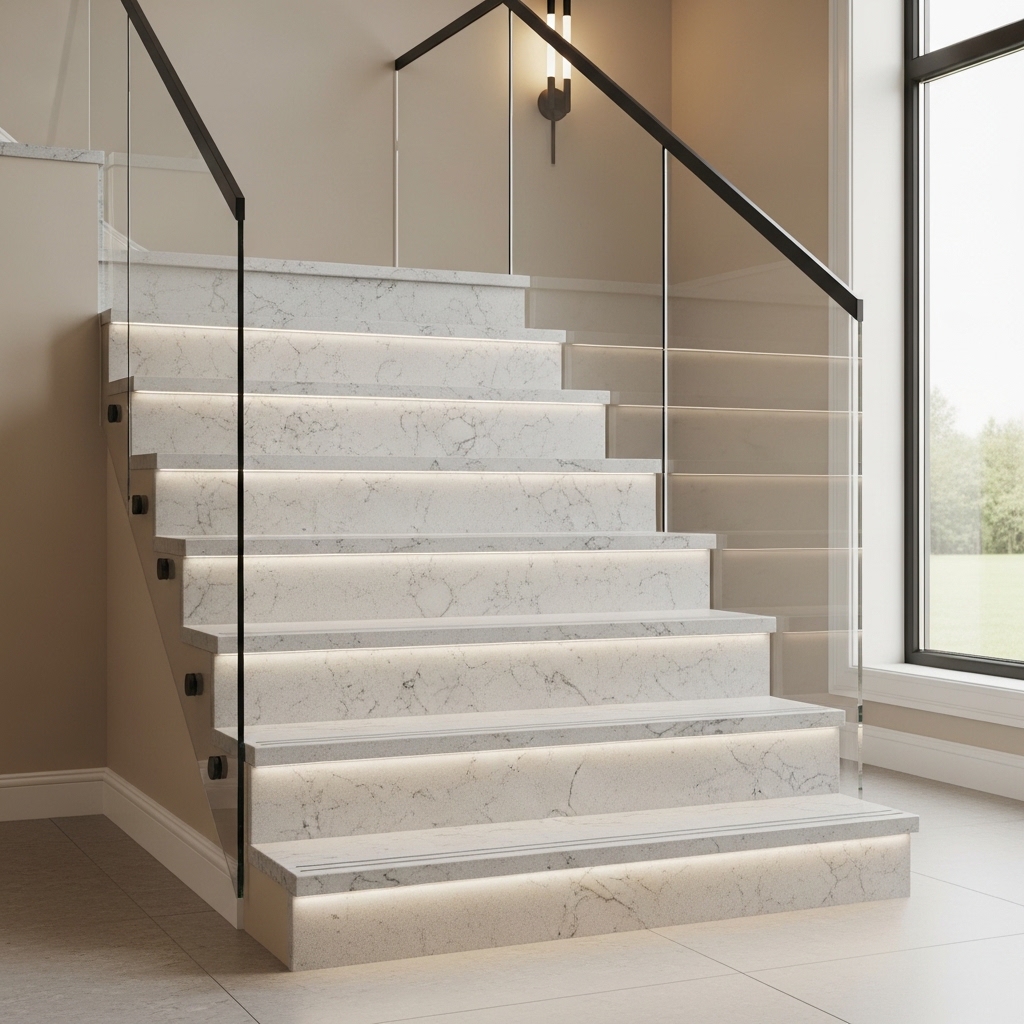
Quartz slab format options for stairs describe how the material is planned and supplied for installation—full tread pieces, tread-and-riser sets, landing panels, and optional skirting or stringer cladding.
One format approach uses full-width tread pieces cut consistently in the same direction for a clean, uniform look, while another approach sequences pieces so veining appears to “flow” up the staircase for a more dramatic design statement.
For example, a stair design may use one landing panel plus matching tread pieces from the same slab batch, ensuring tone consistency and avoiding noticeable shade jumps between steps.
Format planning also includes edge strategy: a simple eased edge suits modern minimal stairs, while a bullnose or deeper nosing detail may be selected for traditional designs or where extra durability is desired.
The best format option balances visual goals with practical factors like safe panel sizes, access routes, and the need to reduce seams in the most visible areas such as landings and turning steps.
When clients in the UAE ask what size do quartz slabs come in, suppliers typically explain that standard slabs measure about 3040 × 1440 mm, while jumbo options increase to roughly 3200 × 1600 mm, with premium lines extending slightly beyond that. These dimensions are designed to suit common counter depths of 600–650 mm and island widths up to 1200 mm with smart cutting layouts. For larger kitchens and statement islands, opting for a jumbo slab size can significantly reduce the number of visible joints and improve the overall finish.
What Size Do Quartz Slabs Come In for Travertine Slab Applications
When clients ask what size do quartz slabs come in for travertine slab applications, suppliers usually explain that standard quartz slabs are around 3040 × 1440 mm, while jumbo options reach approximately 3200 × 1600 mm. These sizes are well suited for kitchens, vanities, and feature counters that complement natural stone installations. Using quartz alongside a travertine slab allows for clean, modern surfaces that balance the natural texture of travertine.
What Size Do Quartz Slabs Come In for Raised Floor Projects
Understanding what size do quartz slabs come in helps streamline planning for interiors built on a raised floor. Standard slabs are usually supplied at around 3040 × 1440 mm, while jumbo variants extend to approximately 3200 × 1600 mm. These size options allow designers to choose between easier handling or maximum surface coverage depending on project scale and access floor configuration.