
What is the Size of a Quartz Slab?
The size of a quartz slab is most commonly one of the standard manufacturing formats used for countertop fabrication: a typical standard slab is 56 in × 120 in (142.24 cm × 304.80 cm), while a typical jumbo slab is 63 in × 126 in (160.02 cm × 320.04 cm) for larger kitchens and islands. Some manufacturers also produce extra-large slabs around 65 in × 130 in (165.10 cm × 330.20 cm) to further reduce seams on wide islands and waterfall ends. Standard thicknesses are usually 2 cm (0.79 in / 20 mm) and 3 cm (1.18 in / 30 mm), with certain product lines also offered in 12 mm (0.47 in / 1.2 cm) for specialized uses.
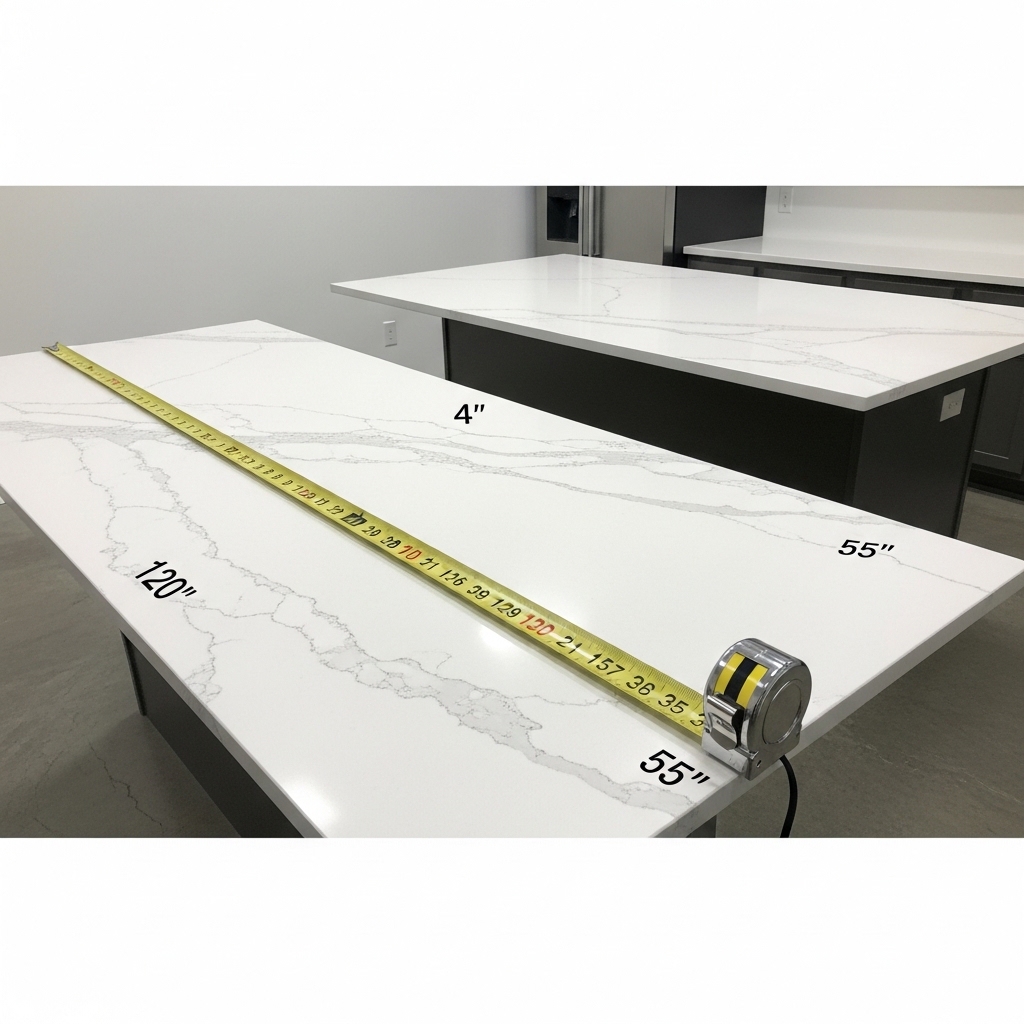
Regular Size
56 in × 120 in, thickness 0.79 in (2 cm) or 1.18 in (3 cm).
Jumbo Size
63 in × 126 in, thickness 0.79 in (2 cm) or 1.18 in (3 cm).
Super Size
78 in × 138 in, thickness 0.79 in (2 cm) or 1.18 in (3 cm).
Super Jumbo
137.80 in × 78.74 in, thickness 0.79 in (2 cm) or 1.18 in (3 cm).
Mini Slab
48 in × 96 in, thickness 0.79 in (2 cm) or 1.18 in (3 cm).
Understanding Quartz Slab Measurements
When embarking on a project that involves quartz slabs, understanding the measurements is crucial for achieving the desired outcome.
First, consider the project dimensions; accurate measurements of the space where the quartz will be installed are essential. For instance, if you’re working with a kitchen countertop, you might need a slab that measures 96 inches by 26 inches to fit standard cabinetry.
Next, the desired aesthetic plays a significant role in selecting the right quartz slab. Whether you prefer a sleek, modern look with a polished finish or a more rustic appearance with veining, the choice of color and pattern can influence the overall design.
Budget constraints are another critical factor; quartz slabs can range from $50 to $150 per square foot, so it’s important to establish a budget early on to avoid overspending.
Additionally, the fabricator’s expertise should not be overlooked. A skilled fabricator can provide valuable insights into the best practices for cutting and installing quartz, ensuring that the final product meets your expectations.
Lastly, specific design requirements, such as the need for cutouts for sinks or appliances, must be communicated clearly to the fabricator. For example, if you require a sink cutout that measures 30 inches by 22 inches, this should be factored into the overall slab measurements to avoid any last-minute adjustments. By carefully considering these elements, you can ensure a successful quartz slab installation that aligns with your vision and practical needs.
Quartz Sheet Measurements: Jumbo Upsides
Understanding quartz slab measurements offers numerous advantages that can significantly enhance both the design and installation processes in various applications.
One of the primary benefits is the ability to maximize material usage; for instance, a standard quartz slab typically measures 120 inches by 55 inches, while jumbo slabs can reach up to 126 inches by 63 inches. This larger size allows for fewer seams in countertops, resulting in a more seamless and aesthetically pleasing finish.
Additionally, knowing the precise measurements helps in accurate budgeting and reduces waste, as fabricators can plan cuts more effectively.
Furthermore, understanding these measurements aids in ensuring compatibility with existing cabinetry and appliances, which is crucial for achieving a polished look in kitchens and bathrooms.
Lastly, familiarity with quartz sheet measurements can streamline the installation process, as installers can better anticipate the handling and transportation requirements of larger slabs, ultimately saving time and labor costs. Overall, a comprehensive grasp of quartz slab measurements not only enhances the visual appeal of a space but also contributes to cost efficiency and project success.
Common Wastage Range for Quartz Material
Common wastage range for quartz material typically falls between 5% to 15%, depending on various factors such as the type of project, the complexity of the design, and the cutting techniques employed.
In fabrication, wastage can occur due to the need for precise cuts, which often results in off-cuts that cannot be reused. For instance, when working with large slabs, it is common to lose around 10% of the material during the cutting process.
Additionally, the installation phase can contribute to wastage, particularly if adjustments are needed to fit the material into specific spaces. It is advisable to account for an additional 5% to 10% wastage when ordering quartz, especially for intricate designs or large installations.
By understanding these figures, contractors and homeowners can better plan their budgets and material needs, ensuring that they have sufficient quartz to complete their projects without significant delays or excess costs.
Quartz Material: Largest Format Explained
Quartz material has gained significant popularity in the realm of interior design and architecture, particularly when it comes to large format surfaces. Large format quartz slabs are typically available in sizes that can exceed 120 inches in length and 60 inches in width, allowing for expansive applications without the need for multiple seams. This feature not only enhances the aesthetic appeal of a space but also simplifies installation, making it a preferred choice for countertops, wall cladding, and flooring.
One of the most compelling advantages of large format quartz is its versatility. It can be engineered to mimic the appearance of natural stone, wood, or even concrete, providing a wide array of design options. For instance, quartz surfaces can be produced in various colors and patterns, including striking veining and rich textures, which can elevate the overall ambiance of a room.
In terms of durability, quartz is non-porous, which means it is resistant to stains, bacteria, and moisture. This characteristic makes it an ideal choice for high-traffic areas such as kitchens and bathrooms. Additionally, large format quartz slabs are less likely to chip or crack compared to smaller tiles, further enhancing their longevity.
The installation process for large format quartz is also noteworthy. With fewer seams, the risk of dirt accumulation and maintenance issues is significantly reduced. Professional installers often recommend using a strong adhesive and proper support structures to ensure the slabs are securely placed.
Moreover, the environmental impact of quartz material is becoming increasingly relevant. Many manufacturers are now producing quartz surfaces with sustainable practices, utilizing recycled materials and eco-friendly processes. This shift not only caters to the growing demand for sustainable building materials but also aligns with the values of environmentally conscious consumers.
In conclusion, large format quartz material stands out as a remarkable choice for modern interiors, combining aesthetic appeal, durability, and sustainability. Its ability to transform spaces while offering practical benefits makes it a top contender in the world of surface materials. As the trend continues to grow, it is likely that we will see even more innovative designs and applications emerge in the coming years.
Quartz Material: Floor-Ready Thickness Options
Quartz material has gained immense popularity in recent years, particularly for flooring applications, due to its durability, aesthetic appeal, and low maintenance requirements. One of the key aspects of quartz flooring is its thickness options, which can significantly influence both the performance and the installation process. Typically, quartz flooring is available in thicknesses ranging from 1 cm to 3 cm, with 2 cm being the most common choice for residential applications. This thickness provides a balance between strength and weight, making it easier to handle during installation while still offering the necessary durability for high-traffic areas. When considering quartz flooring, it is essential to understand that the thickness can affect not only the overall look but also the functionality of the surface. Thicker slabs, such as those at 3 cm, are often preferred for commercial spaces or areas that require additional strength, such as kitchens and bathrooms. These thicker options can withstand heavier loads and are less prone to chipping or cracking. On the other hand, the 1 cm thickness is often used for wall applications or as a decorative accent, where the weight is a concern, and the surface is not subjected to heavy foot traffic. Moreover, the choice of thickness can also impact the installation process. Thicker slabs may require specialized tools and techniques for cutting and fitting, which can increase labor costs and installation time. Conversely, thinner options are generally easier to work with, allowing for quicker installations. It is also worth noting that the substrate on which the quartz is installed must be adequately prepared to support the chosen thickness, ensuring a stable and long-lasting floor. In conclusion, selecting the right thickness for quartz flooring is crucial for achieving the desired aesthetic and functional outcomes. Homeowners and designers should carefully consider the specific needs of their space, including traffic levels, weight-bearing requirements, and installation capabilities, to make an informed decision. By understanding the implications of different thickness options, one can ensure that the chosen quartz flooring not only enhances the beauty of the environment but also stands the test of time.
Quartz slab measurement overview for walls & decorative surfaces
A quartz slab measurement overview for walls and decorative surfaces covers three core decisions: the slab’s overall format (length and width), the thickness suitable for vertical use, and the layout strategy that controls seam placement and pattern flow.
Common quartz slab examples include 3000 × 1400 mm and 3200 × 1600 mm, while large-format and jumbo options can extend beyond that range, giving designers more freedom to span feature areas with fewer joints.
Thickness is often selected around 6–12 mm for wall panels to manage weight and installation practicality, while 20 mm may be used when matching countertop profiles, creating stronger edge returns, or building more substantial architectural details.
For example, a 3200 × 1600 mm slab covers about 5.12 m² (roughly 55 ft²), which can reduce seam count on a decorative wall and help veining styles look more continuous and intentional.
To keep the final look premium, fabricators typically pre-map the veining direction, sequence adjacent panels for continuity, and align seams to architectural break lines like corners, cabinetry edges, or niche borders.
Quartz slab measurement overview for stairs
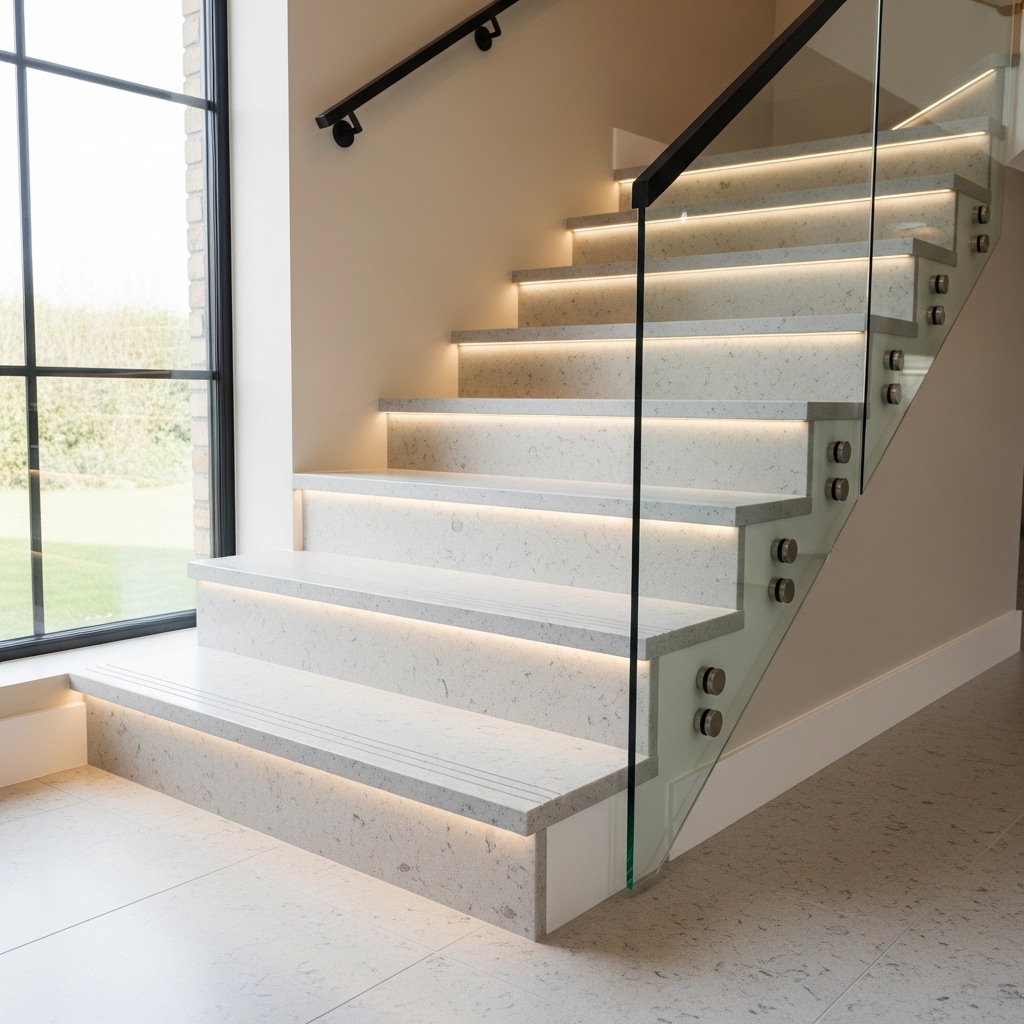
A quartz slab measurement overview for stairs begins by capturing precise stair geometry (tread depth, riser height, flight width, landings), then turning those numbers into a cut plan that controls seams, pattern direction, and edge detailing.
Large quartz slab formats such as 3000 × 1400 mm or 3200 × 1600 mm (typical examples) make it easier to cut repeated tread pieces from a single batch, improving consistency across the entire staircase.
For performance, many stair treads use 20 mm thickness, paired with a practical nose finish like a small chamfer or eased edge that helps reduce edge damage in high-traffic areas.
As an example, a cut plan can keep tread pieces oriented in one direction and place any unavoidable seams in less visible locations such as skirting runs or under nosing returns.
A strong overview also accounts for grip and maintenance—matte or honed finishes often feel more practical on steps, and consistent joint gaps help keep the staircase visually straight and easy to clean.
In the UAE, when homeowners ask what is the size of a quartz slab, the answer usually depends on whether they are considering standard slabs at about 3040 × 1440 mm or jumbo slabs around 3200 × 1600 mm, with a few brands offering even larger formats. These sizes are well suited to modern kitchen layouts, covering typical depths and long runs with fewer seams. During material comparison, fabricators may also look at granite stone size to evaluate which surface best fits the project’s dimensional and aesthetic requirements.
What Is the Size of a Quartz Slab for Seamless Marble Countertops
When evaluating what is the size of a quartz slab for seamless marble countertops, most projects rely on slabs measuring about 3040 × 1440 mm, with jumbo slabs up to 3200 × 1600 mm used for wider islands. These sizes allow long surfaces to be fabricated with fewer joints, improving durability and appearance. Using quartz slabs correctly sized for marble countertops ensures smooth transitions between materials and consistent working heights across the kitchen.
What Is the Size of a Quartz Slab for Raised Floor Design
When asking what is the size of a quartz slab for effective raised floor design, the most common answer lies between 3040 × 1440 mm and 3200 × 1600 mm. These sizes offer enough flexibility to fabricate multiple elements from a single slab while ensuring compatibility with access floor panels, service voids, and height tolerances.