
Typical Quartz Slab Size
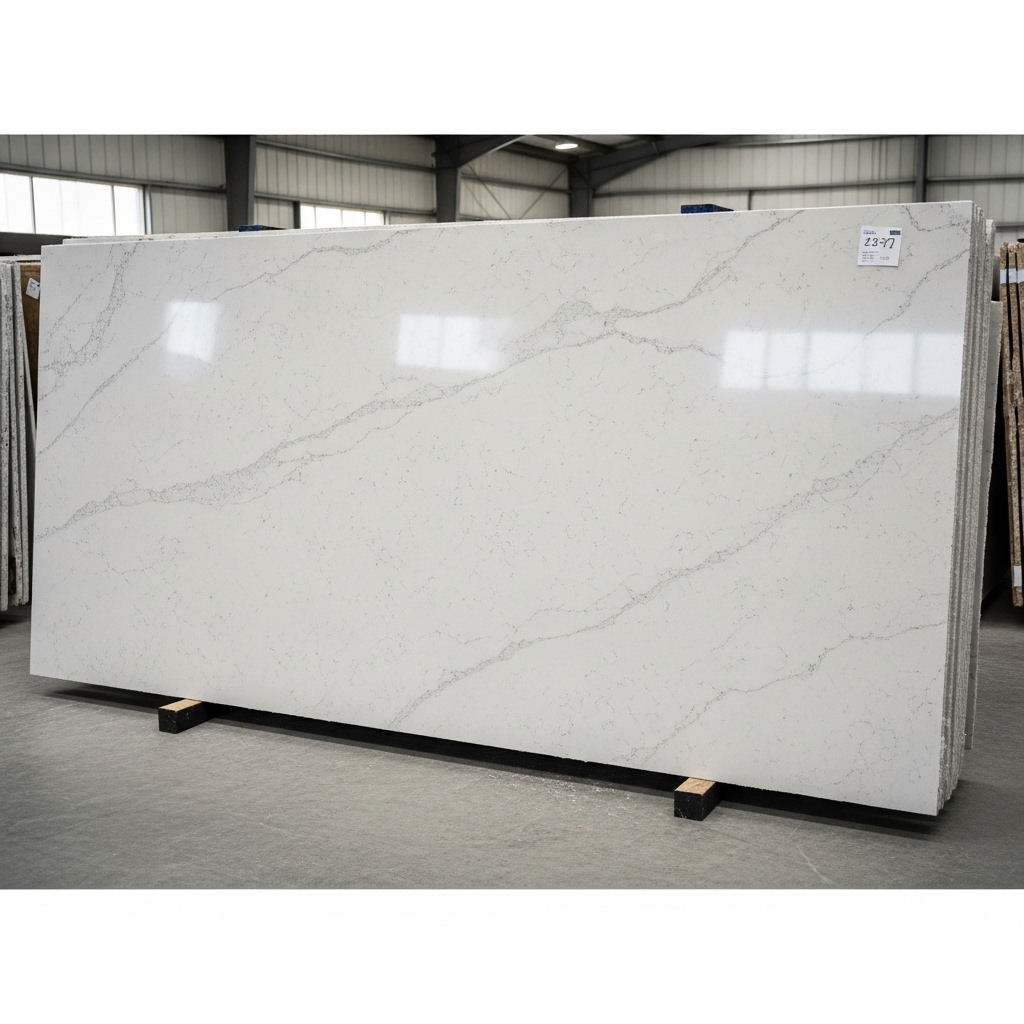
Typical quartz slab size usually refers to the two most common factory formats used in countertop fabrication: a standard slab of 56 in × 120 in (142.24 cm × 304.80 cm) and a jumbo slab of 63 in × 126 in (160.02 cm × 320.04 cm). Many suppliers also list an “extra-large” option around 65 in × 130 in (165.10 cm × 330.20 cm) depending on brand, mainly to help cover wide islands and waterfall panels with fewer seams. Typical thicknesses for quartz are 2 cm (0.79 in / 20 mm) and 3 cm (1.18 in / 30 mm), with some lines also available in 12 mm (0.47 in / 1.2 cm) for specific applications.
Regular Size
56 in × 120 in (standard) or 63 in × 126 in (jumbo), thickness 0.79 in (2 cm) or 1.18 in (3 cm).
Jumbo Size
63 in × 126 in, thickness 0.79 in (2 cm) or 1.18 in (3 cm).
Super Size
78 in × 138 in, thickness 0.79 in (2 cm) or 1.18 in (3 cm).
Super Jumbo
137.80 in × 78.74 in, thickness 0.79 in (2 cm) or 1.18 in (3 cm).
Mini Slab
48 in × 96 in, thickness 0.79 in (2 cm) or 1.18 in (3 cm).
Selecting a Typical Quartz Sheet Format
When selecting a typical quartz sheet format for your project, it is essential to consider several key factors that will influence the final outcome.
First, assess the project dimensions; for larger surfaces such as kitchen countertops, a standard slab size of 120” x 55” may be ideal, while smaller applications like bathroom vanities might benefit from smaller formats, allowing for easier handling and installation.
Next, the desired aesthetic plays a crucial role; quartz sheets come in various colors and patterns, so if a sleek, modern look is preferred, a polished finish in a solid color might be suitable, whereas a more rustic design could call for a textured surface with veining.
Budget constraints are also a significant consideration; high-quality quartz can range from $50 to $100 per square foot, so it’s important to balance your aesthetic desires with what you can afford.
Additionally, the fabricator’s expertise should not be overlooked; some fabricators may specialize in intricate designs or custom shapes, which can impact both the cost and the feasibility of your project.
Finally, specific design requirements, such as the need for cutouts for sinks or appliances, should be clearly communicated to ensure that the selected quartz sheet format meets all functional and aesthetic needs. By carefully evaluating these factors, you can select the most appropriate quartz sheet format that aligns with your vision and practical requirements.
Typical Quartz Formats: Why Upsizing Helps
Selecting a typical quartz sheet format offers numerous advantages, particularly when it comes to upsizing for larger projects. One significant benefit is the enhanced aesthetic appeal; larger quartz slabs can create a seamless and luxurious look in spaces such as kitchens and bathrooms. For instance, a 120-inch by 55-inch quartz slab can cover more area without the need for multiple seams, resulting in a more cohesive design. Additionally, upsizing can lead to cost savings in both material and labor; fewer seams mean less material waste and reduced installation time. This efficiency can translate to savings of up to 20% in installation costs. Furthermore, larger formats often come with improved durability and strength, as they are less prone to cracking and chipping compared to smaller pieces that require more joints. The versatility of typical quartz formats also allows for a wide range of design possibilities, enabling homeowners and designers to achieve their desired aesthetic while benefiting from the practical advantages of quartz, such as its resistance to stains and scratches. Overall, choosing a typical quartz sheet format and considering upsizing can significantly enhance both the functionality and visual appeal of any space.
Typical Offcuts for Quartz Surfaces
Typical offcuts for quartz surfaces refer to the leftover pieces generated during the fabrication process of quartz countertops and other surfaces. These offcuts can vary in size and shape, often depending on the specific design and layout of the project. For instance, when a large slab of quartz is cut to fit a kitchen countertop, the remnants may include smaller sections that are still usable. It is common to find offcuts ranging from a few inches to several feet in length, with widths typically around 24 inches or less.
These offcuts can be repurposed in various ways, such as creating smaller countertops, backsplashes, or even decorative elements like coasters and cutting boards. In fact, many fabricators and designers encourage the use of offcuts to minimize waste and promote sustainability in the industry.
Additionally, some companies offer offcut sales, allowing customers to purchase these remnants at a reduced price, which can be an economical option for smaller projects. By utilizing offcuts, homeowners can achieve a high-end look without the full cost of new slabs, making quartz surfaces more accessible.
Typical Quartz Formats: Biggest Option
Quartz is one of the most abundant minerals on Earth, and it comes in various formats that cater to different applications and aesthetic preferences. Among the typical quartz formats, the biggest option is undoubtedly the large quartz slabs, which are increasingly popular in both residential and commercial spaces. These slabs are typically available in sizes that can exceed 120 inches in length and 60 inches in width, making them ideal for countertops, flooring, and wall cladding.
The appeal of large quartz slabs lies not only in their size but also in their versatility and durability. Engineered quartz, which is composed of about 90-95% crushed natural quartz crystals mixed with resins and pigments, offers a non-porous surface that is resistant to stains, scratches, and heat. This makes it an excellent choice for high-traffic areas and surfaces that require low maintenance. For instance, a large quartz countertop can easily withstand the rigors of daily use in a busy kitchen without showing signs of wear.
Moreover, the aesthetic options available with large quartz slabs are virtually limitless. Manufacturers can produce slabs in a wide range of colors and patterns, mimicking the look of natural stones like marble or granite. Some slabs feature intricate veining and unique textures that can elevate the design of any space. For example, a large white quartz slab with subtle gray veining can create a stunning focal point in a modern kitchen.
In terms of installation, the size of these slabs can pose challenges, requiring skilled professionals to handle and install them properly. However, the end result is often worth the effort, as large quartz formats can create a seamless and luxurious appearance. Additionally, the trend towards open-concept living spaces has further fueled the demand for large quartz surfaces, as they can be used to create cohesive designs that flow throughout a home.
Overall, the biggest option in typical quartz formats, represented by large slabs, offers a combination of beauty, durability, and functionality that is hard to match. With their impressive size and versatility, they continue to be a favored choice among homeowners and designers alike, transforming spaces into elegant and practical environments.
Typical Quartz Surfacing: High-Traffic Thickness Guide
Typical quartz surfacing is a popular choice for high-traffic areas due to its durability and aesthetic appeal. When considering the thickness of quartz surfaces for such environments, it is essential to understand the implications of different thicknesses on performance and longevity. Generally, quartz surfacing is available in various thicknesses, with 1 cm (approximately 0.39 inches), 2 cm (approximately 0.79 inches), and 3 cm (approximately 1.18 inches) being the most common options.
For high-traffic areas, a thickness of 2 cm is often recommended as it strikes a balance between weight, strength, and ease of installation. This thickness provides adequate resistance to chipping and cracking, which is crucial in environments where heavy objects may be dropped or where there is frequent movement of furniture. Additionally, 2 cm quartz surfaces can be easily fabricated for various applications, including countertops, vanities, and wall cladding.
In contrast, 3 cm quartz surfaces offer even greater durability and are ideal for applications that require additional strength, such as commercial kitchens or busy retail spaces. The increased thickness not only enhances the surface’s resistance to impact but also allows for more intricate edge profiles, which can elevate the overall design aesthetic. However, the added weight of 3 cm slabs may necessitate additional support during installation, which is an important consideration for builders and designers.
It is also worth noting that while 1 cm quartz surfaces are lighter and can be suitable for less demanding applications, they may not hold up as well in high-traffic areas. This thickness is often used for wall applications or decorative elements rather than surfaces that will experience heavy use.
In summary, when selecting quartz surfacing for high-traffic areas, opting for a thickness of 2 cm or 3 cm is advisable to ensure durability and longevity. The choice ultimately depends on the specific requirements of the space, including the expected level of wear and tear, the type of installation, and the desired aesthetic. By carefully considering these factors, one can ensure that the quartz surfacing will not only withstand the rigors of daily use but also maintain its beauty over time.
Typical quartz slab dimensions for walls & decorative surfaces
Typical quartz slab dimensions for walls and decorative surfaces are chosen to balance wide coverage with practical fabrication, transport, and installation considerations, while still delivering the clean, minimal-joint look that slab cladding is known for.
Many typical quartz slab formats are around 3000 × 1400 mm or 3200 × 1600 mm, providing enough area to cover tall backsplashes, fireplace walls, and feature elevations with fewer seams than smaller-format materials.
As an example, a 3200 × 1600 mm slab covers about 5.12 m² (around 55 ft²), which can significantly reduce seam lines on a decorative wall compared to using multiple smaller panels.
For walls, thickness often sits around 6–12 mm to manage weight and installation ease, while thicker materials may be selected when matching countertop edges or creating more pronounced architectural returns.
To achieve a high-end result, typical slab layouts are planned so pattern direction remains consistent and seams land on logical break points like corners, cabinetry edges, or inside shadow gaps.
Typical quartz slab dimensions for stairs
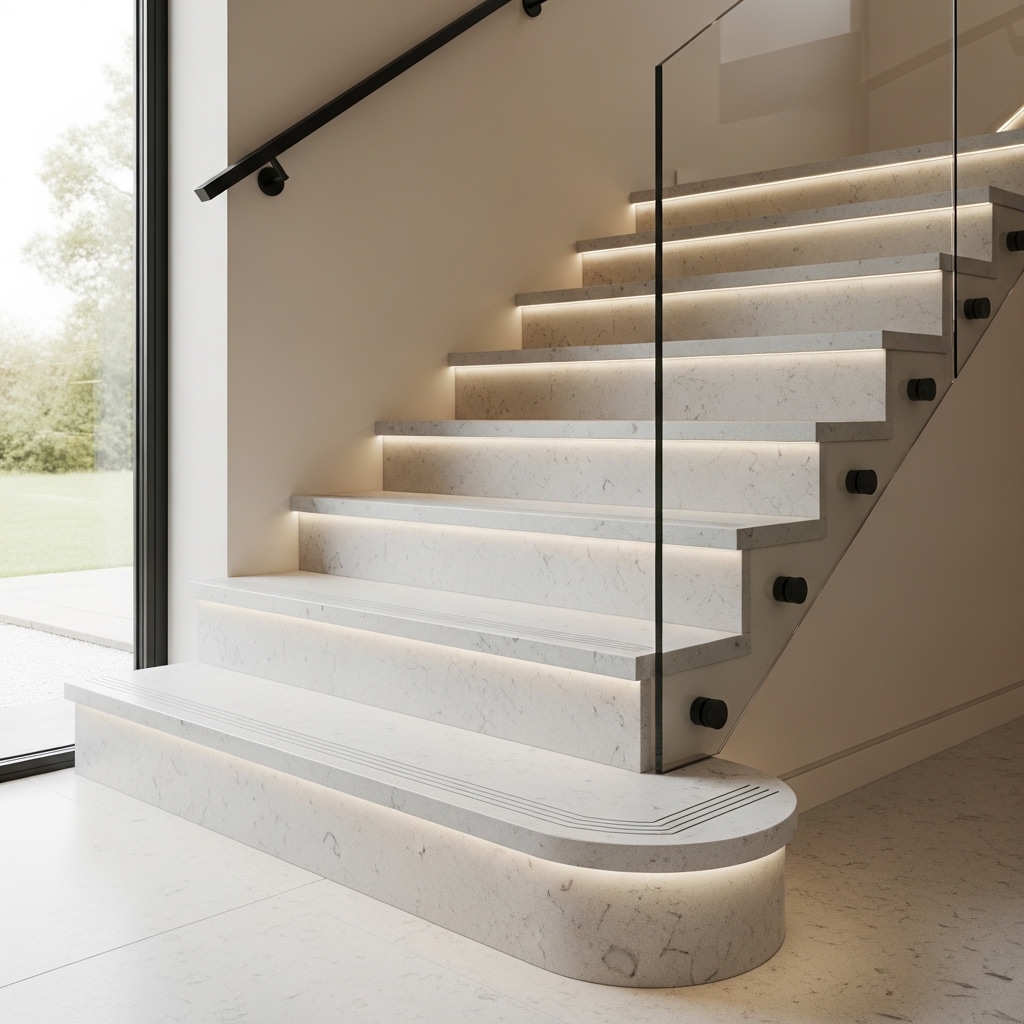
Typical quartz slab dimensions used for stairs often match the widely available large-format slabs used across interior surfaces, giving enough area to fabricate multiple step components with consistent patterning.
Common examples include 3000 × 1400 mm and 3200 × 1600 mm, with larger options available when a project needs fewer joins on landings or wider flights.
For example, using large slabs allows tread pieces to be cut in a repeated orientation, which helps the staircase look unified rather than visually fragmented from step to step.
Many stair treads use 20 mm thickness for durability, and designers often specify a practical nose finish (small chamfer or eased edge) to reduce chipping and create a comfortable touch point.
When the staircase includes a prominent landing, larger slabs can help reduce seams in that focal zone, improving the overall premium impression of the stair design.
Rather than varying widely, the typical quartz slab size in the UAE is fairly consistent at approximately 3040 × 1440 mm, making it easy to plan kitchens, vanities, and commercial counters with reliable seam placement. This consistency reduces surprises during fabrication and helps control wastage on site. While reviewing options, it’s common to discuss overall quartz size availability to see whether standard or jumbo formats better suit the design.
Typical Quartz Slab Size for Seamless Kitchen Countertop Layouts
A typical quartz slab size for seamless kitchen countertop layouts is around 3040 × 1440 mm, which comfortably supports standard counter depths of 600–650 mm and long straight runs. For larger islands, jumbo slabs up to 3200 × 1600 mm help reduce visible joints. Using slabs of this size for a kitchen countertop results in cleaner lines, improved durability, and a more cohesive overall design.
Typical Quartz Slab Size for Raised Floor Fit-Outs
A typical quartz slab size selected for raised floor fit-outs is approximately 3040 × 1440 mm, making it ideal for modular planning in offices and commercial interiors. This size minimizes joints across counters and panels while remaining manageable during installation. It also aligns well with standard raised floor grids, ensuring visual consistency and functional access.