
Kitchen Top Size Guide
Kitchen top size (kitchen countertop size) is generally designed around standard base cabinets: the most common finished depth is 25–25.5 in (63.50–64.77 cm) to cover 24 in (60.96 cm) cabinets with a typical front overhang of about 1–1.5 in (2.54–3.81 cm). Standard finished counter height is usually about 36 in (91.44 cm) from floor level (including countertop), while straight countertop runs are cut to suit the room, often landing around 72–120 in long (182.88–304.80 cm) per section before seams are introduced for longer walls. Island tops commonly range about 36–60 in wide (91.44–152.40 cm) and 72–120 in long (182.88–304.80 cm) depending on kitchen size. For stone/quartz kitchen tops, the most common thicknesses are 2 cm (0.79 in / 20 mm) and 3 cm (1.18 in / 30 mm), and thicker-looking edges are often “built up” to appear about 1.5 in (3.81 cm) without using a full 1.5 in slab.
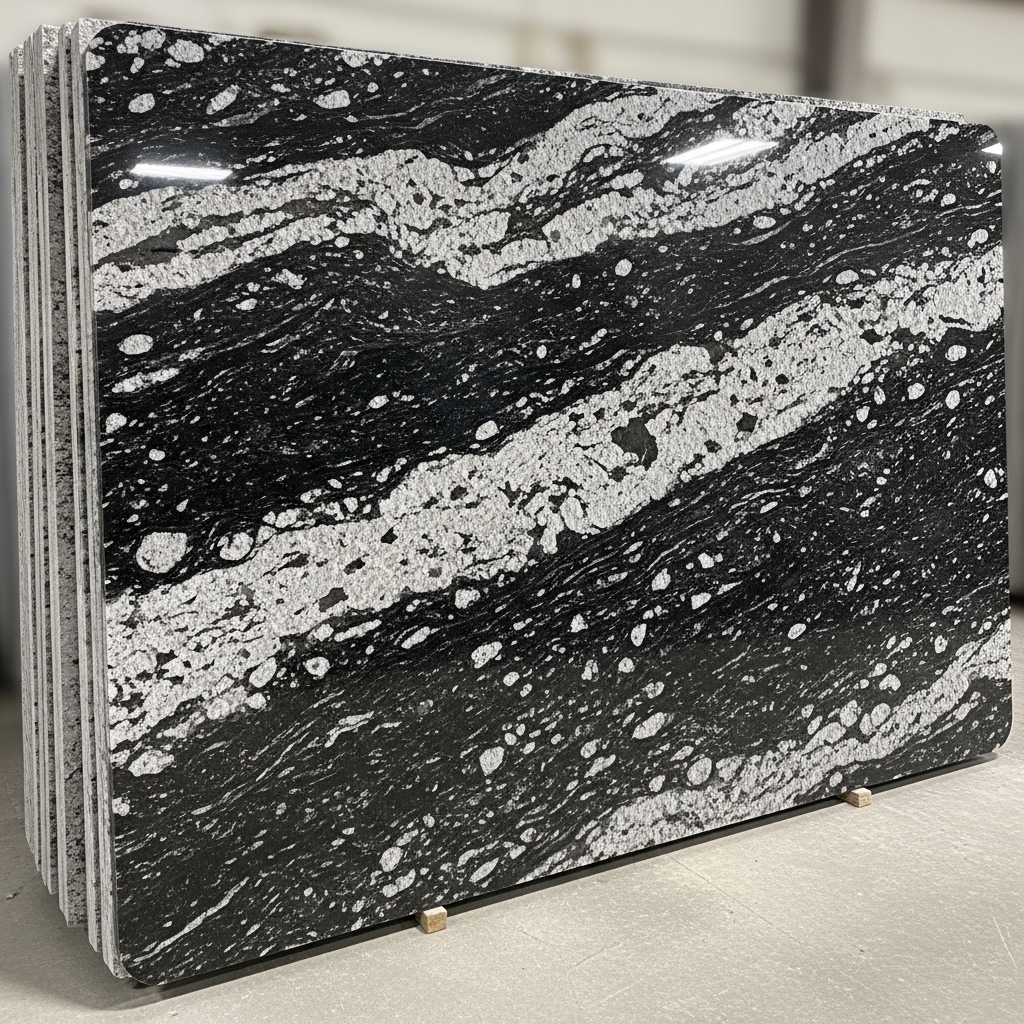
Regular Size
25–25.5 in deep and commonly 96–120 in long per section, thickness 0.79 in (2 cm) or 1.18 in (3 cm).
Jumbo Size
25–25.5 in deep and commonly 120–144 in long per section, thickness 0.79 in (2 cm) or 1.18 in (3 cm).
Super Size
25–25.5 in deep and commonly 144–168 in long per section, thickness 0.79 in (2 cm) or 1.18 in (3 cm).
Super Jumbo
25–25.5 in deep and commonly 168–180 in long per section, thickness 0.79 in (2 cm) or 1.18 in (3 cm).
Mini Slab
25–25.5 in deep and commonly 60–72 in long per section, thickness 0.79 in (2 cm) or 1.18 in (3 cm).
Kitchen Countertop Measurements Guide
When planning for kitchen countertop measurements, it is essential to consider project dimensions, which typically include the length, width, and height of the countertops. Standard countertop height is usually around 36 inches, while depth can range from 24 to 30 inches, depending on the design and functionality desired.
The desired aesthetic plays a crucial role in the selection of materials and finishes, with options ranging from sleek granite to warm butcher block. For instance, if a modern look is preferred, a minimalist quartz surface might be ideal, while a rustic farmhouse style may call for reclaimed wood.
Budget constraints are another significant factor; high-end materials like marble can cost between $50 to $150 per square foot, while more affordable options like laminate can range from $10 to $40 per square foot. It’s important to balance quality and cost to ensure the best value for your investment.
The fabricator’s expertise should not be overlooked, as their skill level can influence the precision of cuts and the overall finish of the countertops. Engaging a fabricator with experience in your chosen material can lead to better results and longevity.
Lastly, specific design requirements, such as integrated sinks or unique edge profiles, must be clearly communicated to ensure that the final product meets your functional and aesthetic needs. For example, a countertop with a waterfall edge may require additional material and precise measurements to achieve the desired effect.
Bigger Kitchen Worktops: Why Jumbo Helps
A comprehensive kitchen countertop measurements guide is essential for homeowners looking to optimize their kitchen space effectively. Accurate measurements ensure that countertops fit seamlessly, enhancing both functionality and aesthetics. For instance, a standard kitchen countertop height is typically 36 inches, which is ergonomically designed for comfortable food preparation. Additionally, larger kitchen worktops, often referred to as jumbo countertops, provide significant advantages. With sizes reaching up to 10 feet in length, these expansive surfaces allow for multiple cooking tasks to be performed simultaneously, accommodating larger families or those who enjoy entertaining. The increased surface area also offers more room for appliances, cutting boards, and meal prep, reducing clutter and improving workflow. Furthermore, jumbo countertops can create a more cohesive look in open-concept kitchens, where they serve as a central gathering point. By investing in a proper measurements guide and considering larger worktops, homeowners can enhance their kitchen’s functionality and style, ultimately increasing the value of their home.
Kitchen Worktops: Typical Waste Allowance
When planning for kitchen worktops, it is essential to consider the typical waste allowance, which generally ranges from 5% to 15% of the total material required. This allowance accounts for potential mistakes during cutting, fitting, and installation, as well as natural imperfections in the material itself. For instance, if you are installing a granite worktop that measures 20 square meters, you should plan for an additional 1 to 3 square meters of material to ensure you have enough to cover any unforeseen issues.
Additionally, different materials may have varying waste allowances; for example, laminate worktops might require a lower allowance of around 5% due to their easier handling and installation, while solid wood may necessitate a higher allowance of up to 15% because of its susceptibility to warping and the need for precise cuts.
It is also advisable to consult with your supplier or installer, as they can provide insights based on their experience and the specific characteristics of the materials you choose. By factoring in these considerations, you can ensure a smoother installation process and minimize the risk of running short on materials, ultimately leading to a more successful kitchen renovation project.
Kitchen Worktops: Largest Format Options
Kitchen worktops are a crucial element in any kitchen design, serving both functional and aesthetic purposes. Among the various options available, the largest format worktops have gained significant popularity due to their seamless appearance and versatility. Large format worktops typically come in sizes that can exceed 3 meters in length and 1.5 meters in width, allowing for expansive surfaces that minimize joints and seams. This not only enhances the visual appeal but also simplifies cleaning and maintenance, as there are fewer crevices for dirt and grime to accumulate.
One of the most sought-after materials for large format worktops is porcelain, known for its durability and resistance to scratches, stains, and heat. Porcelain slabs can be produced in thicknesses ranging from 6mm to 20mm, providing options that cater to both aesthetic preferences and practical needs. For instance, a 12mm thick porcelain worktop can weigh around 30-40 kg per square meter, making it a robust choice for busy kitchens.
Additionally, quartz and granite are also popular choices, with large slabs available that can create a stunning focal point in the kitchen. These natural stones not only offer a luxurious look but also boast impressive durability, with granite being one of the hardest materials available, rated at 6-7 on the Mohs hardness scale.
The installation of large format worktops requires careful planning and skilled craftsmanship, as the weight and size of the slabs necessitate precise handling and support. It is essential to ensure that the underlying cabinetry is adequately reinforced to bear the load of these substantial surfaces. Moreover, the trend towards open-plan living has further fueled the demand for large worktops, as they can effectively define spaces while providing ample room for food preparation, dining, and socializing. A well-designed large format worktop can seamlessly integrate with kitchen islands, creating a cohesive look that enhances the overall functionality of the space.
In terms of cost, large format worktops can vary significantly depending on the material chosen. For example, high-quality porcelain can range from $50 to $150 per square foot, while granite and quartz may fall within a similar price range, depending on the rarity and finish of the stone.
Ultimately, investing in large format worktops not only elevates the aesthetic of a kitchen but also provides a practical solution for modern living, making them a worthwhile consideration for any kitchen renovation or new build.
Kitchen Worktops: Thickness for High-Use Spaces
When selecting kitchen worktops for high-use spaces, thickness plays a crucial role in both functionality and aesthetics. Typically, worktops range from 20mm to 40mm in thickness, with thicker options often providing enhanced durability and resistance to wear and tear. In high-use areas, such as family kitchens or commercial settings, a thicker worktop can withstand the daily rigors of chopping, cooking, and cleaning without showing signs of damage.
For instance, a 30mm thick granite or quartz worktop not only offers a robust surface but also adds a sense of luxury to the kitchen. Thicker surfaces are less prone to chipping and cracking, making them ideal for busy environments where heavy pots and pans are frequently placed on the counter. Additionally, the weight of a thicker worktop can contribute to a more stable installation, reducing the likelihood of movement or shifting over time.
Moreover, the choice of thickness can also influence the overall design of the kitchen. A thicker worktop can create a bold statement, especially when paired with sleek cabinetry. For example, a 40mm thick worktop can provide a dramatic overhang that serves as a breakfast bar or additional seating area, enhancing both functionality and style. In contrast, a thinner worktop may lend a more minimalist look, which can be appealing in modern kitchen designs.
Ultimately, when choosing the thickness of kitchen worktops for high-use spaces, it is essential to consider not only the practical aspects of durability and maintenance but also how the thickness will complement the overall design of the kitchen. Investing in a thicker worktop can provide long-term benefits, ensuring that the kitchen remains both beautiful and functional for years to come.
Kitchen top measurement guide for walls & decorative surfaces
A kitchen top measurement guide for wall and decorative surfaces focuses on achieving visual continuity between the worktop and vertical panels such as backsplashes, side returns, and waterfall ends.
A common design method is to cut backsplash panels from the same slab batch as the top so the tone matches and the pattern direction feels connected from horizontal to vertical.
For example, a single slab can sometimes be optimized to produce a main worktop run plus a full-height backsplash section, keeping seams away from high-visibility areas like behind the hob.
Wall use often benefits from thinner panel builds (such as 6–12 mm) while maintaining the same surface look as thicker countertop pieces.
Seams are typically placed at cabinet edges, corners, or within shadow gaps to maintain a clean line and simplify day-to-day cleaning in splash zones.
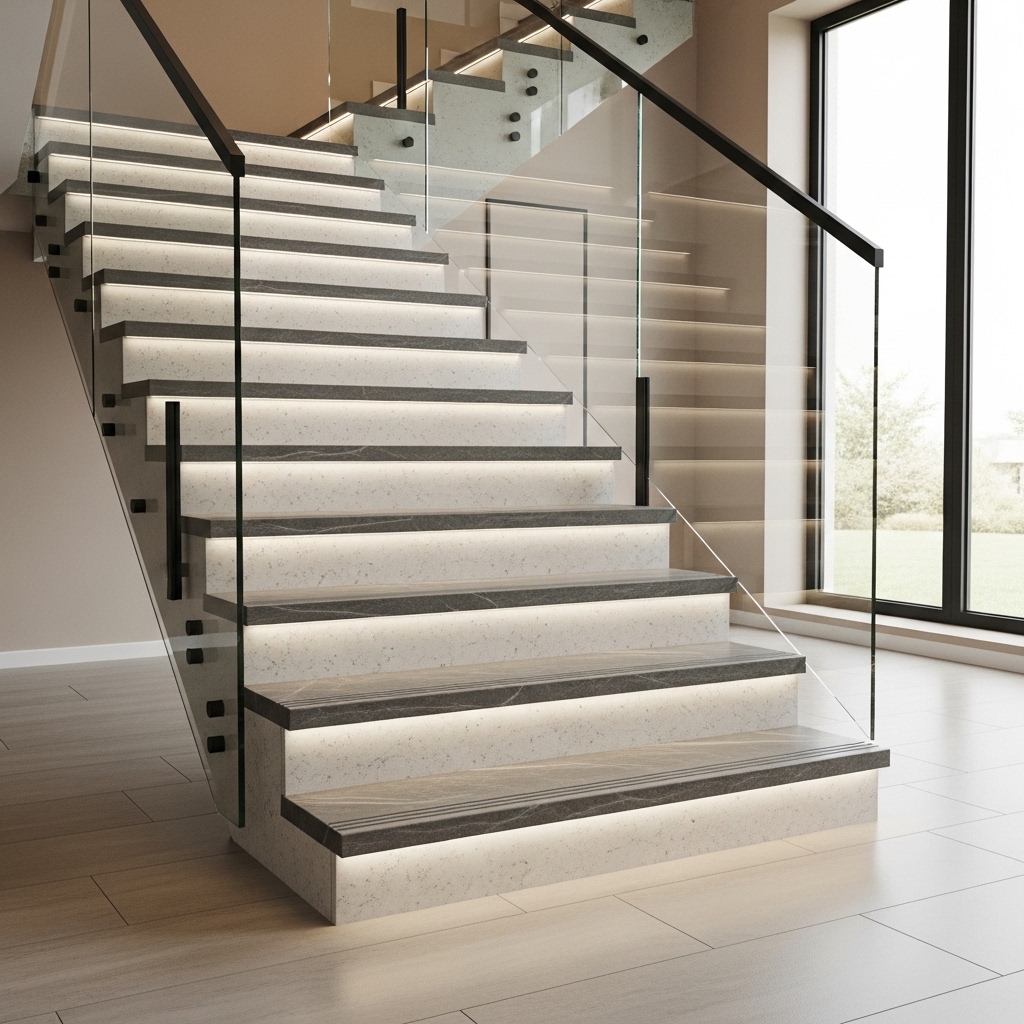
Kitchen top measurement guide for stairs
When stairs are designed to match kitchen finishes, the measurement plan often starts with the worktop material selection and then extends that same surface language to stair treads, risers, and landings.
Common kitchen benchmarks like a counter height around 900 mm and depth around 600 mm (typical examples) help define alignment lines and seam placement where the kitchen and stair zone connect visually.
For example, using the same slab design on an island and the stair treads can look seamless if the pattern direction is coordinated and the edge profile is consistent across both areas.
Stair treads typically need a robust thickness (often 20 mm) and a durable nose finish, even if the kitchen uses lighter vertical panels elsewhere.
A good measurement plan also marks all transitions—skirting edges, wall returns, and landing junctions—so joints remain clean and the staircase feels like a deliberate extension of the kitchen design.
For residential projects across the UAE, kitchen top size is usually designed around practical ergonomics and slab availability, with standard depths of 600–650 mm, island widths between 900–1200 mm, and finished heights close to 900–950 mm including the stone. These dimensions work well for daily use while allowing clean seam placement on longer runs. During material selection, fabricators often compare these layouts with granite standard size to decide whether natural stone or engineered stone offers better coverage with fewer joints.
Kitchen Top Size Guide for Omani Beige Marble Countertops
A kitchen top size guide for Omani Beige marble countertops typically follows standard kitchen ergonomics, with counter depths of 600–650 mm, island widths between 900–1200 mm, and finished heights around 900–950 mm including the stone. Slabs selected for these applications often measure roughly 2800–3000 mm in length, allowing clean layouts with controlled seam placement. Using omani beige marble in these sizes delivers a warm, uniform appearance across worktops, backsplashes, and adjoining surfaces.
Kitchen Top Size Planning for Raised Floor Projects
Kitchen top size planning becomes especially important in projects that integrate a raised floor system, as finished heights and access clearances must align precisely. Standard kitchen tops are usually planned at depths of 600–650 mm with finished heights around 900–950 mm, accounting for floor build-up below. When services run under the floor, accurate sizing ensures smooth transitions, proper ergonomics, and uninterrupted access to underfloor panels.