
Granite Standard Size Guide
Granite standard size can mean either full granite slabs or common prefabricated countertop blanks, and both follow typical ranges: full slabs are often around 108–120 in long × 60–72 in wide (274.32–304.80 cm × 152.40–182.88 cm), with some bundles reaching about 126 in × 78 in (320.04 cm × 198.12 cm) depending on quarry and shipment. Prefabricated granite countertop pieces (often called “standard” prefab) are commonly sold around 96 in × 26 in (243.84 cm × 66.04 cm) for straight runs before final trimming and edging. Standard granite thickness is usually 2 cm (0.79 in / 20 mm) or 3 cm (1.18 in / 30 mm), with 1.5 cm (0.59 in / 15 mm) sometimes used for vertical panels or lighter applications.
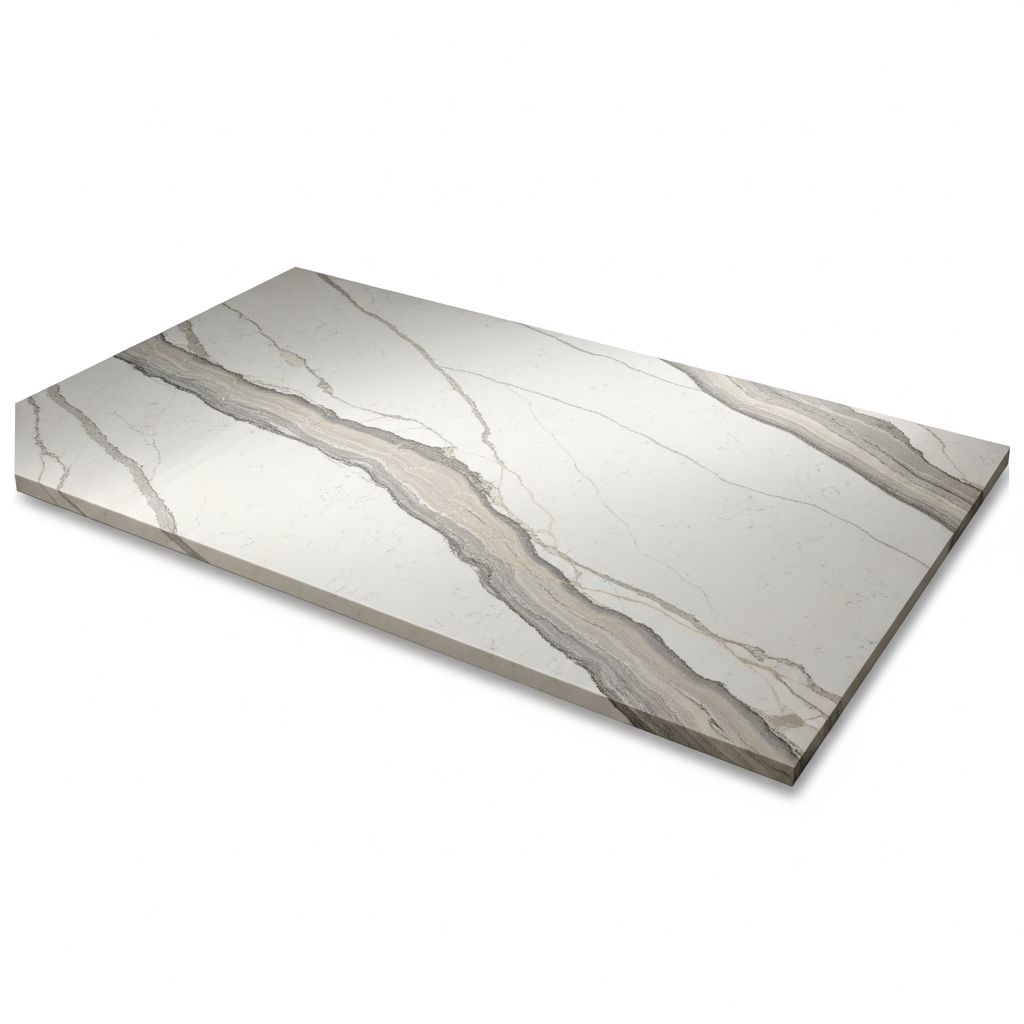
Regular Size
108–120 in × 60–72 in, thickness 0.79 in (2 cm) or 1.18 in (3 cm).
Jumbo Size
120 in × 72 in, thickness 0.79 in (2 cm) or 1.18 in (3 cm).
Super Size
138 in × 78 in, thickness 0.79 in (2 cm) or 1.18 in (3 cm).
Super Jumbo
138 in × 78 in, thickness 0.79 in (2 cm) or 1.18 in (3 cm).
Mini Slab
96 in × 48 in, thickness 0.79 in (2 cm) or 1.18 in (3 cm).
Granite Slab Dimensions Made Simple
Granite slab dimensions can significantly influence the outcome of your project, and understanding how to navigate these dimensions is essential for achieving your desired aesthetic.
When considering project dimensions, it’s crucial to measure the space accurately; for instance, a kitchen countertop typically requires slabs that are 96 inches long and 25 inches wide, while a bathroom vanity might need smaller dimensions, such as 60 inches by 22 inches.
Your desired aesthetic plays a vital role in selecting the right granite; if you’re aiming for a modern look, you might prefer larger, seamless slabs, while a more traditional design could benefit from smaller, patterned pieces.
Budget constraints also dictate your choices; granite can range from $40 to $200 per square foot, so knowing your budget upfront helps in selecting the right size and quality.
Additionally, the fabricator’s expertise is essential; some may specialize in intricate designs that require precise cuts, while others may focus on larger installations that can accommodate fewer seams.
Lastly, specific design requirements, such as cutouts for sinks or cooktops, must be factored into the dimensions; for example, a standard sink cutout typically measures around 30 inches by 22 inches, which can affect the overall slab size needed. By carefully considering these factors, you can simplify the process of selecting granite slab dimensions that align with your vision and practical needs.
Granite Slab Standards: Benefits of Going Larger
Granite slab dimensions made simple offer numerous advantages, particularly when opting for larger sizes. One of the primary benefits is the reduction of seams in countertops, which not only enhances the aesthetic appeal but also minimizes potential weak points where moisture can seep in. For instance, a single slab measuring 120 inches by 60 inches can cover a large kitchen island without any joints, creating a seamless look that is both elegant and functional. Additionally, larger slabs provide more design flexibility, allowing for unique shapes and configurations that can better fit the specific layout of a space. This can be particularly beneficial in open-concept areas where continuity in design is key. Furthermore, larger granite slabs often come with a more uniform pattern, which can enhance the overall visual impact of the installation. In terms of durability, larger slabs can be more robust, as they are less likely to crack or chip compared to smaller pieces that are joined together. Overall, choosing larger granite slab dimensions simplifies the installation process, reduces maintenance concerns, and elevates the overall design of any space.
Granite Material: Standard Waste Range
Granite is a popular natural stone material known for its durability and aesthetic appeal, often used in countertops, flooring, and various architectural applications. The standard waste range for granite typically falls between 10% to 20% of the total material ordered, depending on the complexity of the project and the cutting patterns used. For instance, when fabricating a countertop, if a homeowner orders 100 square feet of granite, they should anticipate a waste range of 10 to 20 square feet due to cuts, imperfections, and the need for precise fitting.
To minimize waste, it is essential to plan the layout carefully, considering the size and shape of the slabs, as well as the design of the installation. Additionally, utilizing advanced cutting techniques and tools can help reduce the amount of waste generated during the fabrication process.
Proper handling and storage of granite slabs are also crucial, as improper techniques can lead to breakage and further waste. By understanding the standard waste range and implementing effective strategies, homeowners and contractors can optimize their granite usage, ensuring a more cost-effective and sustainable approach to their projects.
Granite Material: Largest Standard Format
Granite is one of the most sought-after materials in the construction and design industries, particularly known for its durability and aesthetic appeal. As a natural stone, granite is formed from the slow crystallization of magma beneath the Earth’s surface, resulting in a dense and resilient material. Its unique composition gives it a variety of colors and patterns, making each slab distinct.
The largest standard format for granite slabs typically measures around 126 inches by 76 inches, although custom sizes can be produced to meet specific project requirements. This expansive format allows for fewer seams in installations, creating a more seamless and visually appealing surface.
In terms of thickness, granite slabs usually come in 2 cm (approximately 0.79 inches) and 3 cm (approximately 1.18 inches) options, with the thicker slabs providing enhanced durability and resistance to chipping and cracking. Granite’s hardness, rated at 6 to 7 on the Mohs scale, makes it an ideal choice for high-traffic areas such as kitchens and commercial spaces. Additionally, its resistance to heat and scratches further solidifies its position as a preferred material for countertops, flooring, and wall cladding.
The installation of large-format granite slabs requires skilled craftsmanship, as the weight and size necessitate careful handling and precise cutting. When properly installed, granite surfaces can last a lifetime, making them a worthwhile investment. Furthermore, the maintenance of granite is relatively straightforward; regular sealing can help protect the stone from stains and enhance its longevity.
Overall, granite’s combination of beauty, strength, and versatility makes it a top choice for architects, designers, and homeowners alike. Its ability to elevate the aesthetic of any space while providing practical benefits ensures that granite remains a timeless material in the world of construction and design.
Granite Material: Floor Thickness for High Traffic
Granite is a popular choice for flooring in high-traffic areas due to its durability and aesthetic appeal. When considering granite flooring for such environments, the thickness of the material plays a crucial role in its performance and longevity. Typically, granite tiles come in various thicknesses, with the most common being 1 cm (approximately 3/8 inch) and 2 cm (approximately 3/4 inch). For high-traffic areas, a thickness of 2 cm is often recommended, as it provides enhanced strength and resistance to cracking or chipping under heavy loads.
In addition to thickness, the installation method also impacts the overall durability of granite flooring. A thicker tile can withstand more weight and is less likely to flex, which is essential in commercial spaces such as shopping malls, airports, and restaurants where foot traffic is constant. Furthermore, a thicker granite floor can better absorb impacts, making it less susceptible to damage from dropped objects or heavy equipment.
Moreover, the choice of granite finish can also influence its performance in high-traffic areas. Polished granite, while visually striking, can be slippery when wet, which may pose safety risks. In contrast, honed or textured finishes provide better traction, making them more suitable for environments where spills are likely.
Ultimately, investing in thicker granite flooring not only enhances the aesthetic appeal of a space but also ensures that it can withstand the rigors of daily use. With proper care and maintenance, granite floors can last for decades, making them a cost-effective choice for high-traffic areas. The initial investment in thicker tiles may be higher, but the long-term benefits in durability and reduced maintenance costs make it a wise decision for both residential and commercial applications.
Granite standard measurements for walls & decorative surfaces
Granite standard measurements for walls and decorative surfaces are usually expressed as practical ranges because granite slabs depend on quarry block yield and natural stone movement.
Common workable slab ranges often fall around 2400–3300 mm in length and 1400–2000 mm in width (typical examples), which gives flexibility for large decorative panels and feature cladding.
For vertical use, many projects select thickness around 10–20 mm to balance strength and weight, while thicker 30 mm pieces are typically used when bold edges or strong returns are part of the design.
As an example, a granite feature wall can be planned with larger panels to reduce seams, placing joints at corners or aligned with niches for a cleaner look.
Standardization on consistent joint widths and careful edge finishing helps granite wall installations look refined rather than patchwork.
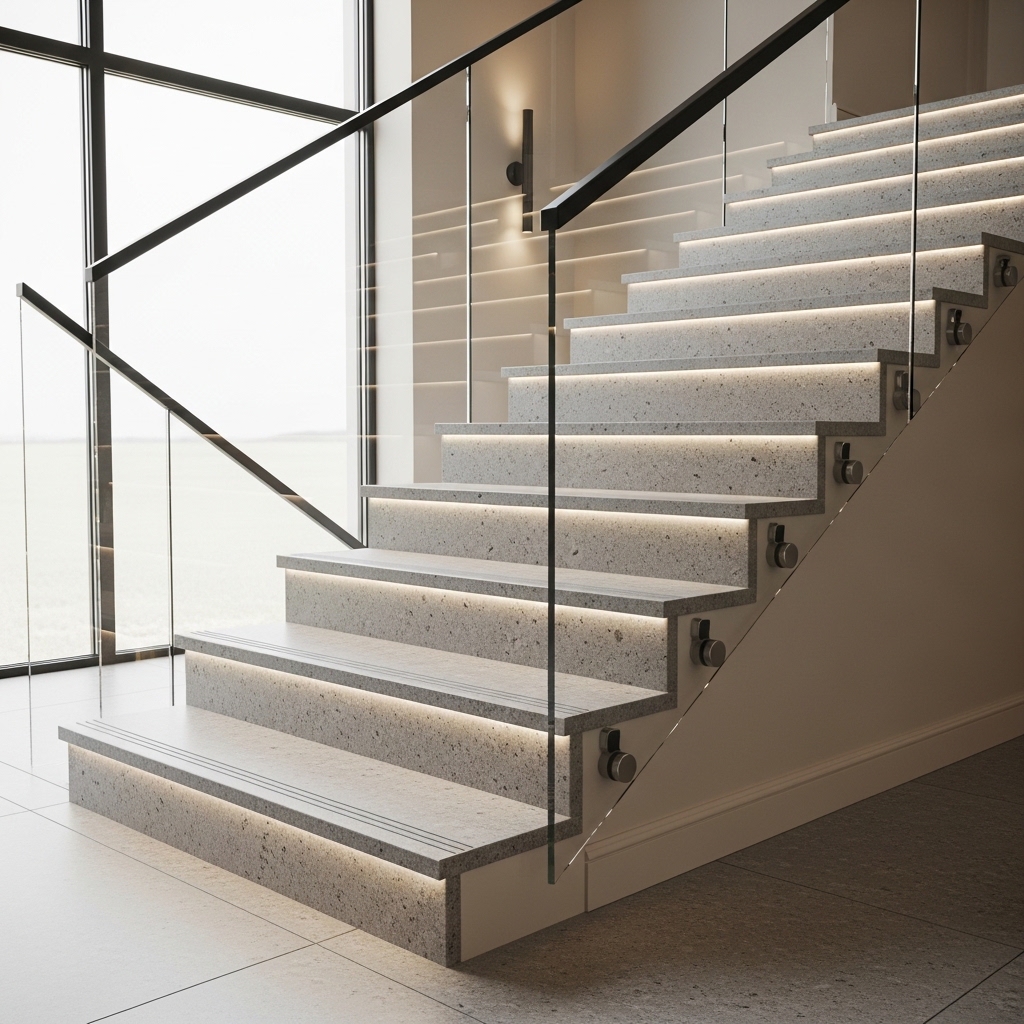
Granite standard measurements for stairs
Granite stair projects often reference practical measurement ranges because slab availability varies by quarry yield and stone selection rather than following one fixed universal size.
Many granite slabs fall within workable ranges such as 2400–3300 mm long and 1400–2000 mm wide (typical examples), allowing multiple tread and riser pieces to be cut with consistent tone from the same batch.
For durability, granite treads commonly use 20–30 mm thickness depending on span and detailing, and the step nose is often eased or chamfered to reduce chipping at the front edge.
For example, the most visually consistent sections of a slab can be reserved for the most visible treads and landings, while risers are cut from calmer areas to keep the vertical faces neat.
Measurement planning also includes allowances for nosing overhang, side skirting, and tight tolerances so joints remain uniform and the staircase reads straight.
Granite standard size in the UAE typically varies by quarry, but most commonly stocked slabs fall within 2800–3200 mm in length and 1500–1800 mm in width, with thicknesses of 20 mm and 30 mm widely available. These dimensions suit a wide range of kitchen counters, islands, and vanity tops, though exact slab yield depends on color and batch. For larger, seam-free layouts, designers often compare these measurements with jumbo slab size quartz options.
Granite Standard Size for Door Threshold Marble Installations
Granite standard size for door threshold marble installations generally refers to slabs measuring between 2800–3200 mm in length and 1500–1800 mm in width, with thickness options of 20 mm or 30 mm. These dimensions provide enough material to fabricate both countertops and transition pieces from the same slab. A matching door threshold marble cut from granite slab offcuts ensures consistent color, finish, and durability at doorways.
Granite Standard Size for Raised Floor Applications
Granite standard size selection plays a vital role when stone surfaces are installed alongside a raised floor. Most granite slabs are supplied in sizes ranging from 2800 to 3200 mm in length and 1500 to 1800 mm in width, with thicknesses of 18–30 mm. These standards help designers coordinate slab cutting with floor panel grids while maintaining structural stability and visual balance.