
Standard Granite Slab Size
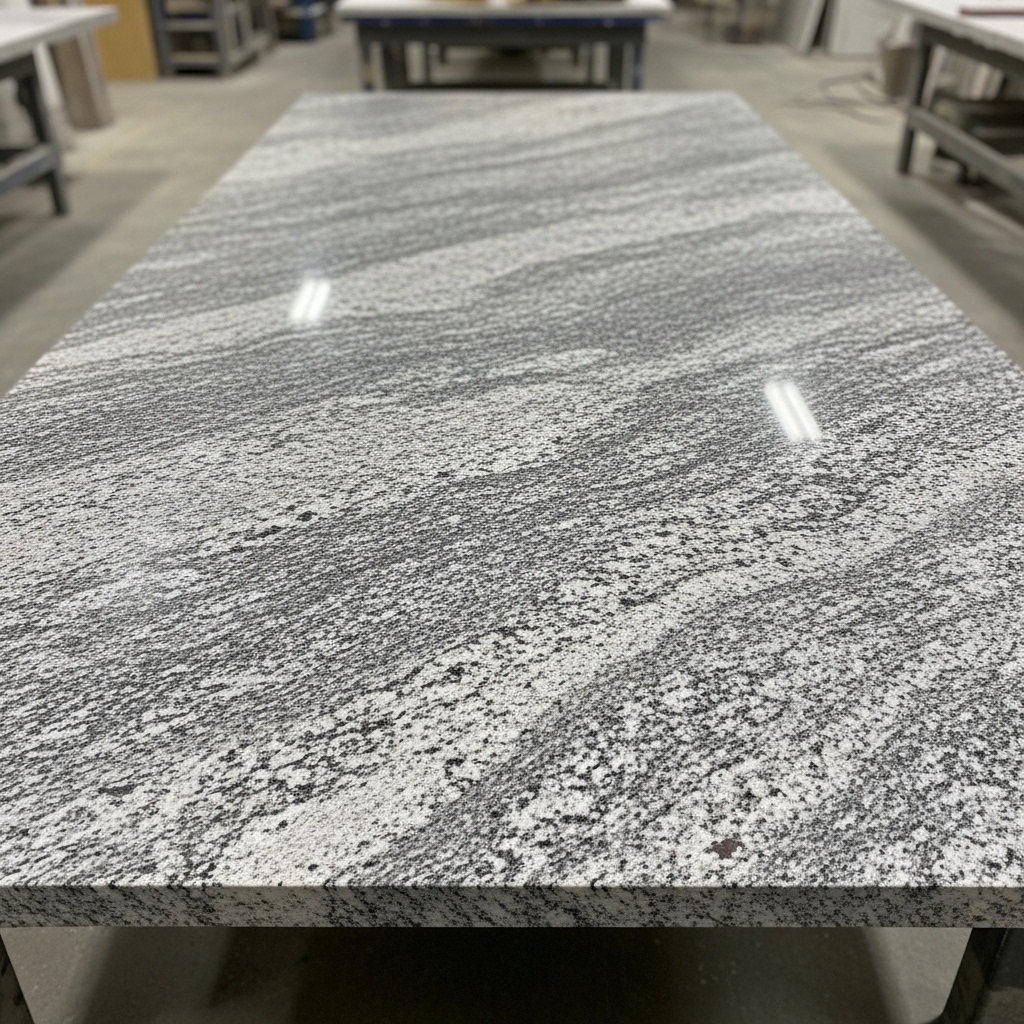
Standard granite slab size (full slabs for fabrication) varies by quarry and shipment bundle, but common “standard” ranges are often around 108–120 in long × 60–72 in wide (274.32–304.80 cm × 152.40–182.88 cm). Many suppliers also stock wider or longer pieces around 126 in × 78 in (320.04 cm × 198.12 cm) when available, and smaller half-slabs can be about 96 in × 48 in (243.84 cm × 121.92 cm) for compact projects. Granite slab thickness is typically 2 cm (0.79 in / 20 mm) or 3 cm (1.18 in / 30 mm), with 1.5 cm (0.59 in / 15 mm) sometimes used for wall panels, backsplashes, and lighter installations.
Regular Size
120 in × 72 in (common range), thickness 0.79 in (2 cm) or 1.18 in (3 cm).
Jumbo Size
126 in × 78 in, thickness 0.79 in (2 cm) or 1.18 in (3 cm).
Super Size
138 in × 78 in, thickness 0.79 in (2 cm) or 1.18 in (3 cm).
Super Jumbo
138 in × 78 in, thickness 0.79 in (2 cm) or 1.18 in (3 cm).
Mini Slab
96 in × 48 in, thickness 0.79 in (2 cm) or 1.18 in (3 cm).
Choosing Standard Granite Slab Dimensions
When selecting standard granite slab dimensions for a project, it is essential to consider various factors that align with the overall design and functionality.
First, assess the project dimensions; for instance, countertops typically require slabs that are at least 3 cm thick for durability, while larger surfaces may necessitate slabs measuring 120″ x 72″ or more to minimize seams.
The desired aesthetic plays a crucial role as well; if a sleek, modern look is preferred, opting for larger, continuous slabs can create a seamless appearance, while smaller tiles may suit a more traditional or rustic design.
Budget constraints are another critical factor; standard granite slabs can range from $40 to $100 per square foot, so it is vital to balance quality with cost.
Additionally, the fabricator’s expertise should not be overlooked; some may specialize in intricate designs or custom cuts, which can influence the choice of slab dimensions.
Lastly, specific design requirements, such as the need for cutouts for sinks or appliances, may dictate the dimensions of the slabs chosen, ensuring that they meet both functional and aesthetic needs.
Standard Granite Slab Formats: Jumbo Advantages
Choosing standard granite slab dimensions offers numerous advantages for both homeowners and contractors.
Firstly, standard sizes, typically around 3 cm thick and available in dimensions like 3’x6′ or 4’x8′, simplify the planning and installation process, reducing the time and effort required for cutting and fitting.
This not only minimizes waste but also helps in maintaining a consistent aesthetic across large surfaces, such as countertops or flooring.
Additionally, opting for standard formats often leads to cost savings, as manufacturers produce these slabs in bulk, resulting in lower prices compared to custom sizes.
Jumbo slabs, which can measure up to 6’x10′, provide even greater benefits by allowing for fewer seams in expansive areas, enhancing the visual appeal and structural integrity of the installation.
Furthermore, the availability of standard sizes ensures that materials are readily accessible, reducing lead times and allowing for quicker project completion.
Overall, selecting standard granite slab dimensions streamlines the renovation process while offering aesthetic and economic advantages.
Standard Granite Slab Material: Waste Margin Guide
When working with standard granite slab material, understanding the waste margin is crucial for effective project planning and budgeting. Typically, the waste margin for granite slabs ranges from 10% to 20%, depending on the complexity of the project and the layout of the installation. For instance, if a project requires 100 square feet of granite, it is advisable to order between 110 to 120 square feet to account for cuts, breaks, and design adjustments.
This waste margin is particularly important in intricate designs where precise cuts are necessary, as the risk of errors increases. Additionally, factors such as the size of the slabs, the pattern of the installation, and the skill level of the fabricator can influence the amount of waste generated.
It is also essential to consider the type of granite being used, as some varieties may be more prone to chipping or cracking during installation. By carefully calculating the waste margin and ordering the appropriate amount of material, homeowners and contractors can ensure a smoother installation process and minimize unexpected costs.
Standard Granite Slab Material: Largest Option
Standard granite slabs are among the most sought-after materials in the construction and design industries, particularly for countertops, flooring, and various architectural applications. One of the largest options available in granite slabs can measure up to 10 feet long and 5 feet wide, providing ample surface area for a variety of uses. This size is particularly advantageous for large kitchen islands or expansive countertops, where seamless installation is desired.
The thickness of these slabs typically ranges from 2 cm to 3 cm, with the thicker options offering greater durability and resistance to chipping and cracking. Granite is renowned for its strength and longevity, making it an ideal choice for high-traffic areas. Additionally, the natural beauty of granite, with its unique patterns and colors, adds an aesthetic appeal that can elevate the overall design of any space.
When considering the weight of standard granite slabs, it is important to note that they can weigh anywhere from 15 to 20 pounds per square foot, depending on the thickness and specific type of granite. This substantial weight necessitates proper support and installation techniques to ensure stability and safety. Granite is also heat and scratch-resistant, making it a practical choice for kitchen environments where hot pots and sharp knives are frequently used.
Furthermore, the maintenance of granite slabs is relatively straightforward. While they require periodic sealing to maintain their resistance to stains and moisture, the overall upkeep is minimal compared to other materials. With proper care, granite can last a lifetime, making it a worthwhile investment for homeowners and businesses alike. The combination of size, durability, and aesthetic appeal makes standard granite slabs a top choice for those looking to enhance their spaces with a touch of elegance and functionality.
Standard Granite Slab Material: Floor Thickness Guide
Standard granite slabs are a popular choice for flooring due to their durability, aesthetic appeal, and low maintenance requirements. When considering granite for flooring, one of the most critical factors to take into account is the thickness of the slabs. Typically, granite slabs come in various thicknesses, with the most common being 2 cm (approximately 0.79 inches) and 3 cm (approximately 1.18 inches).
The thickness of the granite slab can significantly impact its performance and suitability for different applications. For residential flooring, a 2 cm thick slab is often sufficient, especially in areas with low to moderate foot traffic. This thickness provides a balance between weight and durability, making it easier to handle and install. However, in high-traffic areas such as commercial spaces or entryways, a 3 cm thick slab is recommended. The added thickness not only enhances the slab’s strength but also reduces the risk of cracking or chipping under heavy loads.
In addition to the thickness, the installation method also plays a crucial role in the overall performance of granite flooring. Thicker slabs may require additional support during installation, such as reinforced subfloors or proper underlayment, to ensure stability and prevent any potential issues over time. Furthermore, the choice of adhesive and grout can also affect the longevity and appearance of the flooring.
When selecting granite slabs for flooring, it is essential to consider the specific needs of the space. For instance, areas prone to moisture, such as bathrooms or kitchens, may benefit from thicker slabs that can withstand water exposure without compromising structural integrity. Additionally, the aesthetic aspect should not be overlooked; thicker slabs can provide a more luxurious appearance, enhancing the overall design of the space.
In conclusion, the thickness of standard granite slabs is a vital consideration when planning for flooring. Choosing between 2 cm and 3 cm slabs depends on the intended use, foot traffic levels, and aesthetic preferences. By understanding the implications of slab thickness and ensuring proper installation, homeowners and designers can achieve a beautiful and durable granite floor that stands the test of time.
Standard granite slab measurement guide for walls & decorative surfaces
A standard granite slab measurement guide for walls focuses on selecting workable slab ranges, choosing thickness appropriate for vertical installation, and planning panel cuts for safe handling and consistent alignment.
Granite slabs typically come in broad ranges rather than fixed sizes, with many projects working within common ranges like 2400–3300 mm long and 1400–2000 mm wide (typical examples).
For walls, thickness is often selected around 10–20 mm, balancing strength and weight, while thicker 30 mm material is generally used where bold edges or heavy architectural detailing is desired.
As an example, a granite cladding wall can be planned with fewer large panels to reduce seams, placing joints at corners, niches, or trim lines to keep the visual field clean.
Because granite has natural movement, standard planning often includes slab selection and sequencing so adjacent panels share compatible grain direction and tone.
Standard granite slab measurement guide for stairs
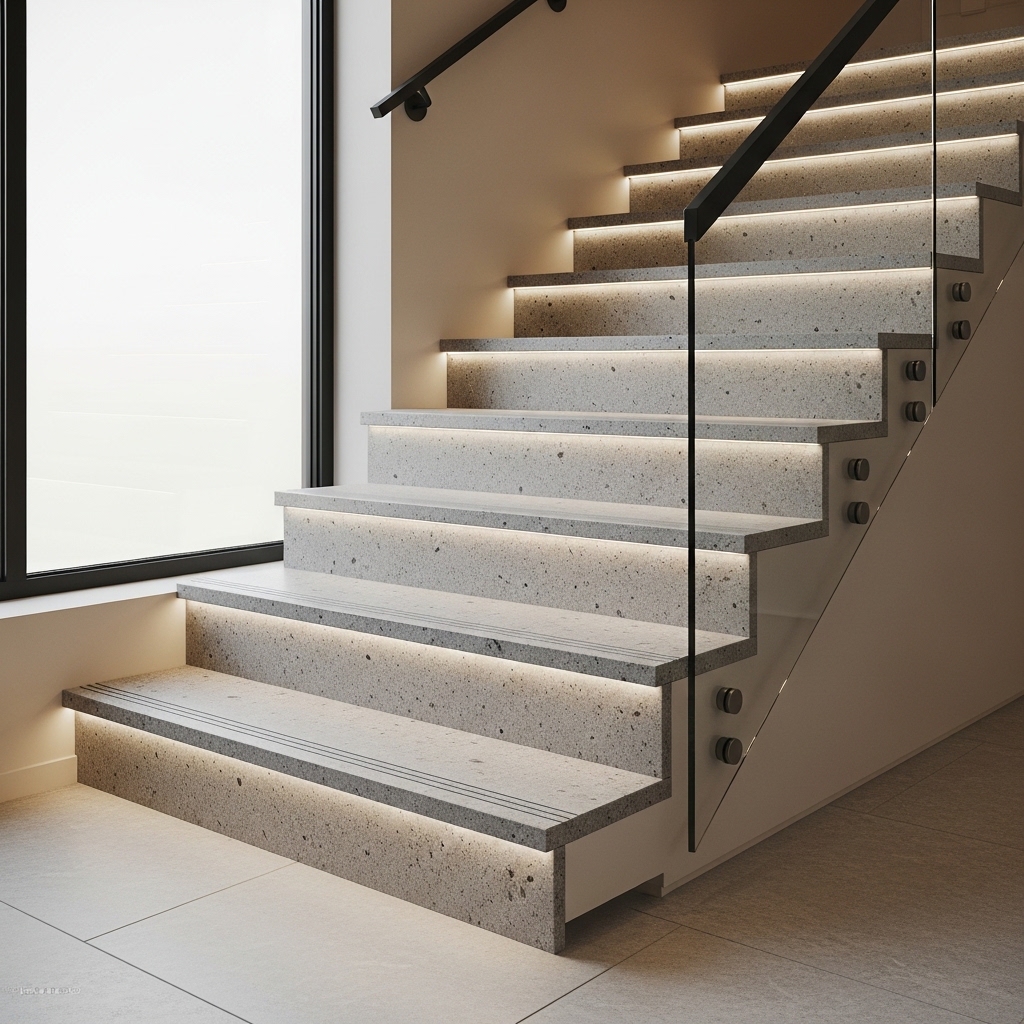
A standard granite slab measurement guide for stairs uses practical slab availability ranges and proven detailing choices to produce durable, aligned steps with consistent tone across the flight.
Granite slabs commonly fall within ranges like 2400–3300 mm long and 1400–2000 mm wide (typical examples), allowing multiple tread pieces to be cut from one slab batch for better consistency.
For example, the most uniform sections can be used for the most visible treads and landings, while risers are cut from calmer areas to keep vertical faces clean.
Granite stair treads often use 20–30 mm thickness depending on design, and an eased or chamfered step nose helps reduce chipping under heavy use.
Standard planning also includes nosing overhang allowances, skirting returns at walls, and consistent joint widths so the finished staircase looks straight, precise, and professionally fabricated.
The standard granite slab size stocked in UAE stone yards typically falls between 2800–3200 mm in length and 1500–1800 mm in width, with 20 mm and 30 mm thicknesses commonly available. These slabs are suitable for countertops, islands, and vanity tops, though exact yield varies by quarry and batch. During kitchen planning, these dimensions are aligned with the kitchen counter standard size to ensure comfortable proportions.
Standard Granite Slab Size for Black Marquina Marble Look Kitchens
Standard granite slab size for black Marquina marble look kitchens usually falls within the 2800–3200 mm length range and 1500–1800 mm width range, with thickness options of 20 mm and 30 mm. These sizes support long counter runs and islands with minimal waste. Choosing granite slabs in these dimensions is an effective way to replicate the dramatic appearance of black marquina marble while maintaining strength and consistency.
Standard Granite Slab Size Guidelines for Raised Floors
Standard granite slab size guidelines are particularly important when granite is installed alongside a raised floor. Granite slabs are typically supplied in sizes ranging from 2800 to 3200 mm in length and 1500 to 1800 mm in width, with thicknesses of 18–30 mm. These standards help achieve accurate cutting, level coordination, and durable performance.