
Average Size of Granite Slab
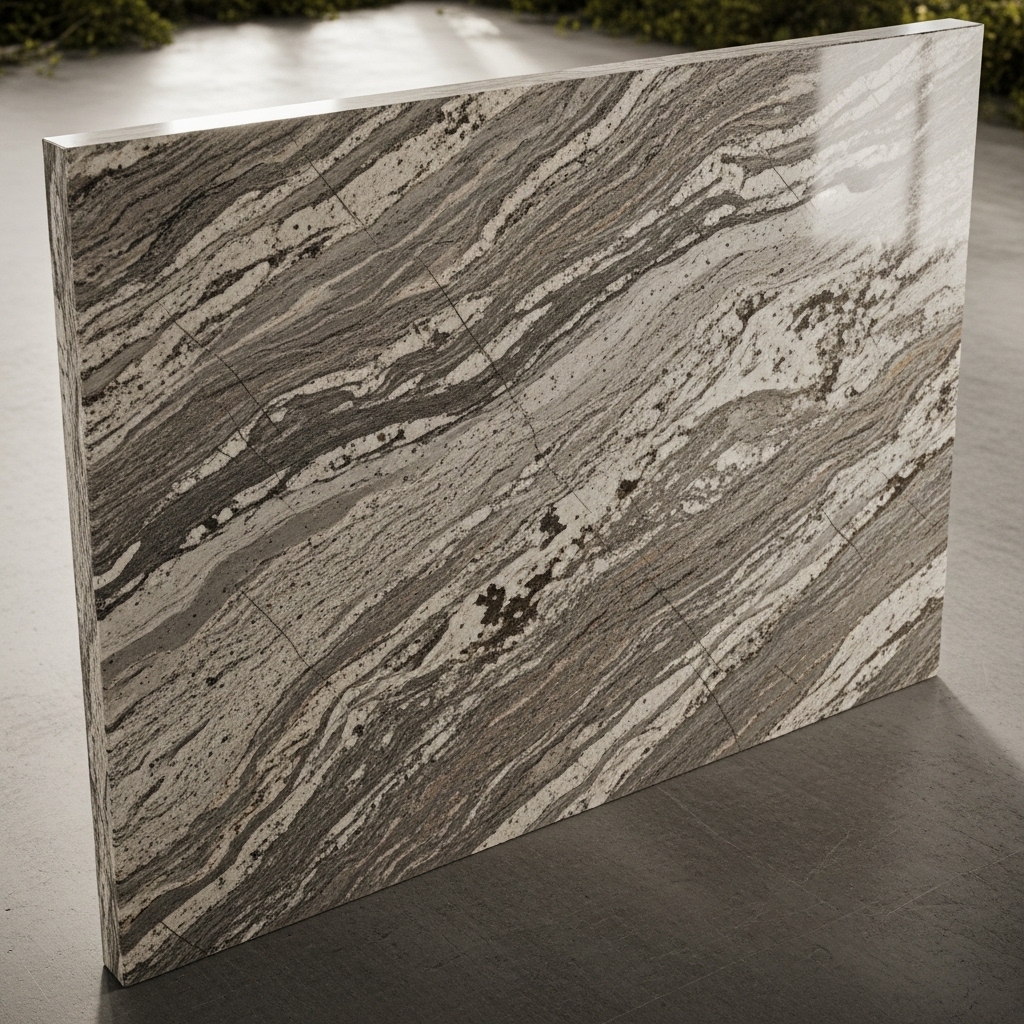
Average size of a granite slab is usually taken as the middle of the most common “standard” supply range, which often falls between about 108–120 in long and 60–72 in wide (274.32–304.80 cm × 152.40–182.88 cm). Using the midpoint of those typical ranges as a planning reference, an “average” granite slab is roughly 114 in × 66 in (289.56 cm × 167.64 cm), though actual slabs are purchased in the specific sizes available from the quarry bundle. Granite thickness is typically 2 cm (0.79 in / 20 mm) or 3 cm (1.18 in / 30 mm), with 1.5 cm (0.59 in / 15 mm) sometimes supplied for vertical or lighter-duty applications.
Regular Size
114 in × 66 in (average reference), thickness 0.79 in (2 cm) or 1.18 in (3 cm).
Jumbo Size
126 in × 78 in (average jumbo reference), thickness 0.79 in (2 cm) or 1.18 in (3 cm).
Super Size
138 in × 78 in (average super reference), thickness 0.79 in (2 cm) or 1.18 in (3 cm).
Super Jumbo
138 in × 78 in (average super jumbo reference), thickness 0.79 in (2 cm) or 1.18 in (3 cm).
Mini Slab
96 in × 48 in (average mini reference), thickness 0.79 in (2 cm) or 1.18 in (3 cm).
Finding the Typical Granite Slab Range
When searching for the typical granite slab range, it is essential to consider several factors that will influence your selection.
First, project dimensions play a crucial role; for instance, a standard kitchen countertop typically requires slabs measuring 108” x 26” or larger, while a bathroom vanity may only need smaller dimensions.
Desired aesthetic is another key aspect; if you are aiming for a luxurious look, you might opt for high-end varieties like Blue Bahia or White Macaubas, which can range from $100 to $300 per square foot, whereas more common options like Ubatuba or Baltic Brown may cost between $40 to $70 per square foot.
Budget constraints are vital to keep in mind; setting a clear budget will help narrow down your choices, as granite prices can vary significantly based on color, rarity, and finish.
Additionally, the fabricator’s expertise can greatly impact the final outcome; choosing a skilled fabricator familiar with your specific granite type ensures proper installation and minimizes waste.
Lastly, specific design requirements, such as edge profiles or custom cuts, can affect both the cost and availability of the granite slabs; for example, a simple straight edge may incur lower costs compared to a more intricate ogee edge, which could add $5 to $15 per linear foot. By carefully considering these factors, you can effectively find the granite slab range that best suits your project.
Typical Granite Slab Range: Jumbo Pros
Finding the typical granite slab range offers numerous advantages for homeowners and designers alike.
One of the primary benefits is the consistency in quality and appearance, as typical granite slabs are often sourced from the same quarry, ensuring a uniform look that can enhance the aesthetic appeal of any space.
Jumbo granite slabs, typically measuring 126 inches by 76 inches, provide a larger surface area, reducing the number of seams required in installations, which not only improves the visual continuity but also minimizes potential weak points in the material.
Additionally, these larger slabs can be more cost-effective, as they often lead to less waste and lower labor costs due to fewer cuts and installations.
The durability of granite, with a hardness rating of 6 to 7 on the Mohs scale, makes it an ideal choice for high-traffic areas, ensuring longevity and resistance to scratches and heat.
Furthermore, the wide variety of colors and patterns available in typical granite slabs allows for greater design flexibility, enabling homeowners to find the perfect match for their interior decor.
Overall, understanding the typical granite slab range and the benefits of jumbo sizes can significantly enhance the decision-making process for any renovation or construction project.
Typical Granite Material: Expected Offcuts
Typical granite material is renowned for its durability and aesthetic appeal, making it a popular choice for countertops, flooring, and various architectural applications. When working with granite, it is essential to consider the expected offcuts, which are the leftover pieces generated during the cutting and shaping process. Generally, the offcuts can account for approximately 10-20% of the total material used, depending on the complexity of the design and the size of the slabs.
These offcuts can vary in size, with some pieces being large enough to be repurposed for smaller projects, such as vanity tops or decorative elements, while others may be too small for practical use.
To minimize waste, it is advisable to plan the layout of the cuts meticulously, ensuring that larger pieces are utilized first and that the design allows for efficient use of the material. Additionally, many fabricators offer services to help clients maximize their granite usage, providing guidance on how to best utilize offcuts for future projects. By understanding the typical offcuts associated with granite and implementing strategic planning, one can achieve both aesthetic and economic benefits while reducing material waste.
Typical Granite Material: Largest Option
Granite is one of the most popular natural stones used in construction and design, known for its durability and aesthetic appeal. Typical granite material is formed from the slow crystallization of magma beneath the Earth’s surface, resulting in a coarse-grained texture that is both visually striking and robust. The largest option available in granite slabs can reach impressive dimensions, often measuring up to 10 feet long and 5 feet wide. This size makes it ideal for expansive countertops, large tabletops, and even flooring applications where a seamless look is desired.
The composition of granite primarily includes quartz, feldspar, and mica, which contribute to its strength and resistance to scratching and heat. The mineral content not only affects the color of the granite but also its overall durability. For instance, a granite slab with a higher quartz content may exhibit a lighter color and a more polished finish, while darker varieties often contain more feldspar and mica.
In terms of maintenance, granite is relatively easy to care for, requiring only periodic sealing to maintain its luster and prevent staining. With proper care, granite can last for decades, making it a cost-effective choice in the long run. The typical thickness of granite slabs ranges from 2 cm to 3 cm, with thicker options providing added strength and a more substantial appearance.
When considering the largest granite options, it is essential to account for transportation and installation logistics, as these massive slabs can weigh several hundred pounds. Professional installation is often recommended to ensure that the granite is properly supported and secured. Overall, the combination of beauty, durability, and size makes typical granite material a favored choice for both residential and commercial projects.
Typical Granite Material: Floor-Grade Thickness
Granite is a popular choice for flooring due to its durability, aesthetic appeal, and variety of colors and patterns. Typical granite material used for flooring is often available in thicknesses ranging from 1 cm to 3 cm, with 2 cm being the most common for residential applications. This thickness provides a balance between strength and weight, making it suitable for both residential and commercial spaces.
When selecting granite for flooring, it is essential to consider the grade of the material. Floor-grade granite is specifically engineered to withstand heavy foot traffic and is often treated to enhance its resistance to stains and scratches. The surface is usually polished to a high gloss, which not only enhances its visual appeal but also makes it easier to clean and maintain.
In terms of installation, granite flooring typically requires a solid substrate to support its weight, which can range from 10 to 15 pounds per square foot, depending on the thickness and type of granite. Proper installation techniques are crucial to ensure that the tiles do not crack or become loose over time. This often involves using a thin-set mortar and ensuring that the subfloor is level and free of moisture.
Another important aspect to consider is the finish of the granite. Honed finishes are less slippery and provide a more matte appearance, making them suitable for areas prone to moisture, such as bathrooms and kitchens. In contrast, polished finishes offer a glossy look that enhances the color and pattern of the stone but may require more maintenance to keep them slip-resistant.
Overall, choosing the right thickness and finish of granite flooring can significantly impact both the functionality and aesthetic of a space. With proper care, granite can last for decades, making it a worthwhile investment for homeowners and businesses alike.
Average granite slab measurements for walls & decorative surfaces
Average granite slab measurements for walls and decorative surfaces are usually expressed as workable ranges because granite slabs depend on quarry block yield and stone selection.
Many suppliers commonly provide slabs within ranges around 2400–3300 mm in length and 1400–2000 mm in width (typical examples), which supports large decorative panels with fewer seams than smaller cladding pieces.
For walls, thickness is often selected around 10–20 mm to balance strength and manageable load, while heavier 30 mm granite is typically chosen when bold edges or strong architectural detailing is required.
As an example, using larger average slabs allows seam placement to be shifted toward corners or returns, keeping the central viewing area of a feature wall more continuous.
Because granite varies naturally, slab selection and layout mapping are often part of the measurement process to keep tone, grain direction, and movement visually consistent across panels.
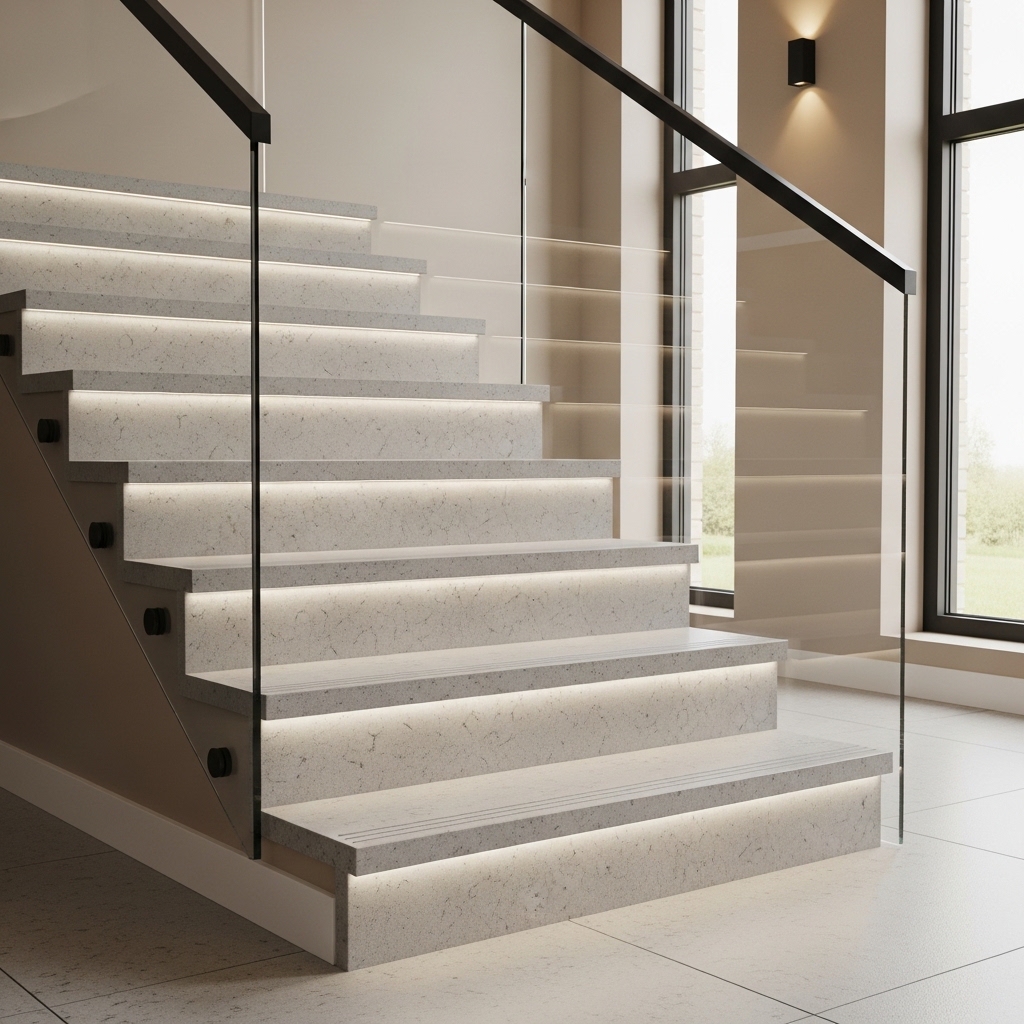
Average granite slab measurements for stairs
Average granite slab measurements for stairs are usually expressed as workable ranges because granite is quarried and slab sizes depend on block yield and stone selection.
Many projects work within typical ranges such as 2400–3300 mm in length and 1400–2000 mm in width (examples), allowing multiple tread pieces and risers to be cut from one batch for better consistency.
Granite treads commonly use 20–30 mm thickness depending on design and traffic level, and a small chamfer or eased edge is often specified to protect the step nose from chipping.
For example, a stair plan can reserve the most consistent color field for the most visible treads, while using calmer grain areas for risers to keep the vertical faces neat and uniform.
A good average-slab plan also includes allowances for nosing overhang, skirting returns, and uniform joint gaps so the staircase installs cleanly and looks refined.
The average size of granite slab found in UAE warehouses usually sits in the 2800–3200 mm length range with widths between 1500–1800 mm, making it suitable for most kitchens and vanities. Because granite is a natural product, individual slabs may vary slightly, which should be checked before templating. These figures are often discussed alongside the average slab size used across different stone types.
Average Size of Granite Slab for Countertop Fabrication Planning
The average size of granite slab for countertop fabrication planning in the UAE typically ranges between 2800–3200 mm in length and 1500–1800 mm in width. These dimensions are suitable for straight runs, islands, and backsplashes when layouts are carefully templated. Selecting the right slab size ensures a durable and visually clean countertop with minimal seams and efficient material use.
Average Size of Granite Slab for Raised Floor Planning
The average size of granite slab used for raised floor planning is approximately 2900–3100 mm in length and 1500–1700 mm in width. This size offers a practical balance between coverage and handling on site. When coordinated with a raised floor, it supports efficient installation and consistent finished levels.