
Stepping Stone Size Guide
Stepping stone size varies by landscape style, but common round stepping stones are often 12 in, 16 in, or 18 in in diameter (30.48 cm, 40.64 cm, or 45.72 cm), while square/rectangular stepping stones are frequently 12 in × 12 in (30.48 cm × 30.48 cm), 16 in × 16 in (40.64 cm × 40.64 cm), or 24 in × 24 in (60.96 cm × 60.96 cm). For longer stride patterns, rectangular pieces like 12 in × 24 in (30.48 cm × 60.96 cm) are also common. Typical stepping stone thickness is often about 1.5–2 in (3.81–5.08 cm) for standard garden use, while heavier-duty stones can be 2.5–3 in thick (6.35–7.62 cm) for extra stability and durability.

Regular Size
12–18 in diameter (round) or 12 in × 12 in to 24 in × 24 in (square), thickness 1.5–2 in (common).
Jumbo Size
24 in × 24 in (large), thickness 2–3 in (common).
Super Size
24 in × 24 in (large), thickness 2–3 in (common).
Super Jumbo
24 in × 24 in (large), thickness 2–3 in (common).
Mini Slab
12–16 in diameter (round) or 12 in × 12 in (square), thickness 1.5–2 in (common).
Choosing Stepping Stone Dimensions
When choosing stepping stone dimensions, it is essential to consider project dimensions, desired aesthetic, budget constraints, fabricator’s expertise, and specific design requirements.
The project dimensions will dictate the size and spacing of the stepping stones; for instance, a pathway that is 3 feet wide may require stones that are 18 to 24 inches in diameter to ensure a comfortable walking experience.
The desired aesthetic plays a crucial role as well; larger stones can create a more dramatic look, while smaller, irregularly shaped stones may lend a more natural feel to the landscape.
Budget constraints must also be taken into account, as larger stones or custom shapes can significantly increase costs; for example, while standard concrete stepping stones may cost around $3 to $5 per square foot, custom-cut natural stone can range from $10 to $30 per square foot.
Additionally, the fabricator’s expertise is vital; if the fabricator specializes in certain materials or styles, it may be beneficial to align your choices with their strengths to ensure quality and durability.
Finally, specific design requirements, such as drainage considerations or integration with existing landscaping features, should guide the selection of dimensions to ensure functionality alongside aesthetics.
Stepping Stone Measurements: Large-Size Benefits
Choosing large stepping stone dimensions offers numerous advantages that enhance both functionality and aesthetics in landscaping.
Firstly, larger stepping stones provide a more stable surface for walking, reducing the risk of tripping and improving safety, especially in high-traffic areas. For instance, stones measuring 24 inches in diameter can accommodate a wider foot placement compared to smaller stones, making navigation easier for individuals of all ages.
Additionally, large stepping stones can create a more visually appealing pathway, as they can be spaced further apart while still maintaining a cohesive look. This spacing allows for the incorporation of lush greenery or decorative gravel between the stones, enhancing the overall landscape design.
Furthermore, larger stones can withstand the elements better than smaller ones, as they are less likely to shift or sink over time. This durability means less maintenance and replacement costs in the long run.
Lastly, large stepping stones can serve as a focal point in a garden or yard, drawing attention and adding character to the outdoor space. By choosing the right dimensions, homeowners can create a functional and attractive pathway that complements their landscape beautifully.
Stepping Stone Material: Expected Wastage
When selecting stepping stone materials for landscaping projects, it is crucial to consider the expected wastage during installation. Typically, wastage can range from 5% to 15%, depending on the type of material used and the complexity of the design. For instance, natural stone may have a higher wastage rate due to its irregular shapes and the need for cutting, while precast concrete stones might have a lower wastage percentage.
To minimize wastage, it is advisable to accurately measure the area where the stepping stones will be placed and calculate the number of stones required based on their dimensions. Additionally, purchasing a little extra material can account for any unforeseen breakage or miscalculations.
It is also beneficial to have a plan for the layout before starting the installation, as this can help in reducing cuts and optimizing the use of each stone. By understanding the expected wastage and planning accordingly, homeowners and landscapers can ensure a more efficient and cost-effective project.
Stepping Stone Materials: Largest Format Options
Stepping stone materials have evolved significantly over the years, with the largest format options gaining popularity for their aesthetic appeal and functional benefits. Large format stepping stones can create a seamless and modern look in outdoor spaces, making them an attractive choice for homeowners and landscape designers alike. These stones typically range from 24 inches to 48 inches in diameter, allowing for fewer joints and a more cohesive appearance in gardens, pathways, and patios.
One of the primary advantages of using large format stepping stones is their ability to cover more ground with fewer pieces. This not only reduces installation time but also minimizes the amount of grout or joint material needed, which can lead to a cleaner and more streamlined look. For instance, a single 36-inch stone can cover an area equivalent to four standard 12-inch stones, making it a practical choice for larger landscapes.
In terms of materials, large format stepping stones are available in various options, including concrete, natural stone, and porcelain. Concrete stepping stones are often favored for their durability and versatility, as they can be molded into various shapes and sizes. Natural stone options, such as granite or slate, offer unique textures and colors, enhancing the visual appeal of outdoor spaces. Porcelain stones, on the other hand, are gaining traction due to their low maintenance requirements and resistance to fading, making them ideal for high-traffic areas.
When considering the installation of large format stepping stones, it is essential to account for the base preparation and drainage. A well-prepared base ensures stability and longevity, while proper drainage prevents water pooling, which can lead to shifting or cracking over time. Typically, a base of compacted gravel or sand is recommended, providing a solid foundation for the stones.
In conclusion, large format stepping stones offer a stylish and practical solution for enhancing outdoor spaces. With their ability to create a modern aesthetic, reduce installation time, and provide a variety of material options, they are an excellent choice for anyone looking to elevate their landscape design. As trends continue to shift towards larger formats, the versatility and appeal of these stepping stones are likely to remain strong in the years to come.
Stepping Stone Materials: Thickness for High Footfall
Stepping stone materials play a crucial role in landscaping and outdoor design, particularly in areas with high footfall. When selecting stepping stones, the thickness of the material is a vital consideration, as it directly impacts durability and performance under heavy use. Generally, a thickness of at least 2 to 3 inches is recommended for areas that experience significant foot traffic. This thickness ensures that the stones can withstand the weight and pressure exerted by pedestrians without cracking or breaking over time.
In addition to thickness, the type of material used also influences the overall strength and longevity of the stepping stones. Concrete, natural stone, and porcelain are popular choices, each offering unique benefits. For instance, concrete stepping stones can be poured to a desired thickness and are often reinforced with steel to enhance their load-bearing capacity. Natural stone, such as granite or slate, typically has inherent strength due to its geological formation, making it an excellent choice for high-traffic areas.
Porcelain tiles, while aesthetically pleasing, may require a thicker profile, around 1.5 inches or more, to ensure they can handle the demands of foot traffic without chipping or cracking.
Moreover, the installation method can also affect the performance of stepping stones in high footfall areas. Properly setting the stones in a stable base, such as compacted gravel or sand, can significantly enhance their durability. This base not only provides support but also helps with drainage, reducing the risk of water pooling and subsequent erosion around the stones.
It is also essential to consider the spacing between the stones; closer spacing can distribute weight more evenly and reduce the likelihood of movement or shifting, which is particularly important in high-traffic zones.
In summary, when selecting stepping stone materials for areas with high footfall, a thickness of 2 to 3 inches is advisable, with careful consideration given to the type of material and installation method. By ensuring that the stepping stones are adequately thick and properly installed, homeowners and landscapers can create durable pathways that withstand the test of time and heavy use.
Stepping stone format guide for walls & decorative surfaces
A stepping stone format guide for walls and decorative surfaces focuses on how stepping stones are shaped, spaced, and finished, and how the same stone formats can be adapted into vertical decorative layouts.
Stepping stones are often planned as individual units with consistent thickness and surface texture for grip, while decorative wall use may rely on the same pieces as cladding accents or feature bands.
For example, flat stepping stones can be used as stacked accents on a garden wall, creating a layered look that echoes the pathway design while adding strong shadow lines.
Format planning typically considers surface finish (textured for slip resistance outdoors, smoother for interior decorative use) and edge style (tumbled for rustic, sawn for modern).
A good guide also accounts for transitions and terminations, ensuring the stone edges are finished cleanly at wall ends so the decorative surface looks complete and intentional.
Stepping stone format guide for stairs
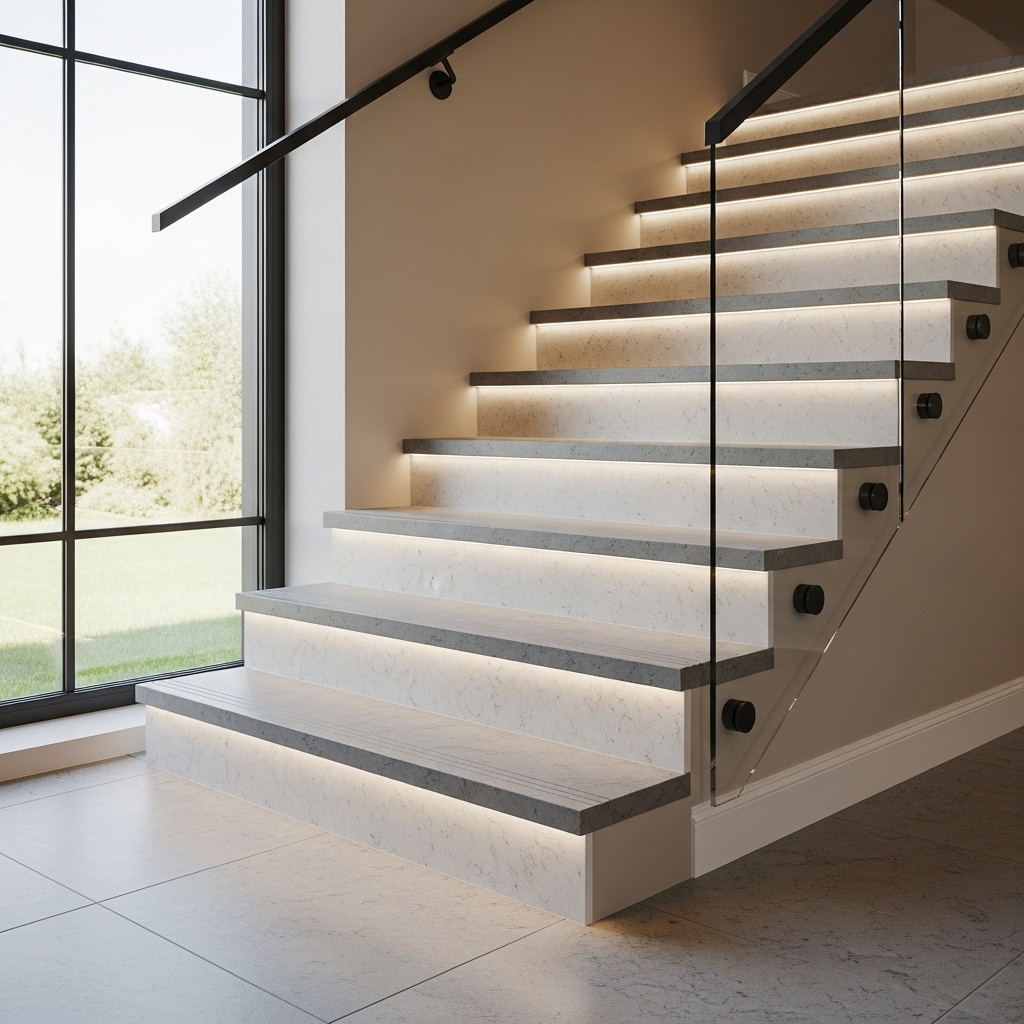
A stepping stone format guide for stairs focuses on how stepping stones can be used as stair treads, landings, or adjacent pathway elements, and how their format choices affect both appearance and usability.
Stepping stones are typically planned as repeated units with consistent thickness and surface texture, and on stair applications the goal is a stable, even walking surface with clean terminations at edges.
For example, larger stepping stones can reduce joint lines on each tread and create a calmer look, while smaller pieces can produce a more textured, handcrafted aesthetic with more visible joint rhythm.
Finish matters: textured or lightly riven surfaces can improve perceived grip outdoors, while smoother finishes may be used for decorative side cladding rather than the main walking line.
A good format plan also includes edge returns, consistent spacing, and neat transitions at landings so the stair zone looks intentional and remains comfortable to use.
Stepping stone size in the UAE is often specified in circular or rectangular pieces ranging from 300–600 mm across, allowing comfortable foot placement and flexible garden layouts. These stones are spaced to guide movement rather than cover continuous surfaces. Indoors, measurements are much more linear, and designers focus instead on counter top size for kitchens and work areas.
Stepping Stone Size Ideas for Black Marble Look Landscaping
Stepping stone size ideas for black marble look landscaping usually include circular or square stones ranging from 300–600 mm, spaced comfortably for walking paths and garden features. These sizes offer durability while maintaining visual rhythm across outdoor areas. Using finishes inspired by black marble gives stepping stones a bold, elegant appearance that complements modern landscape designs.
Stepping Stone Size Ideas for Raised Floor Areas
Stepping stone size ideas are increasingly used to complement outdoor or semi-outdoor zones adjoining a raised floor. Typical stepping stone sizes include 400 × 400 mm, 500 × 500 mm, and 600 × 600 mm, providing safe walking paths while maintaining compatibility with access flooring and drainage requirements.