
Average Quartz Slab Size
Average quartz slab size is usually understood as the “typical” size you’ll encounter across most brands, which falls between the two most common formats: a standard slab of 56 in × 120 in (142.24 cm × 304.80 cm) and a jumbo slab of 63 in × 126 in (160.02 cm × 320.04 cm). Using those two mainstream sizes as the baseline, an “average” planning reference is roughly 60 in × 123 in (152.40 cm × 312.42 cm), although actual purchased slabs are normally one of the standard sizes above. Quartz thickness is most commonly 2 cm (0.79 in / 20 mm) and 3 cm (1.18 in / 30 mm, often marketed as “1¼ in” nominal), with some collections also available in 12 mm (0.47 in / 1.2 cm) for specific applications.
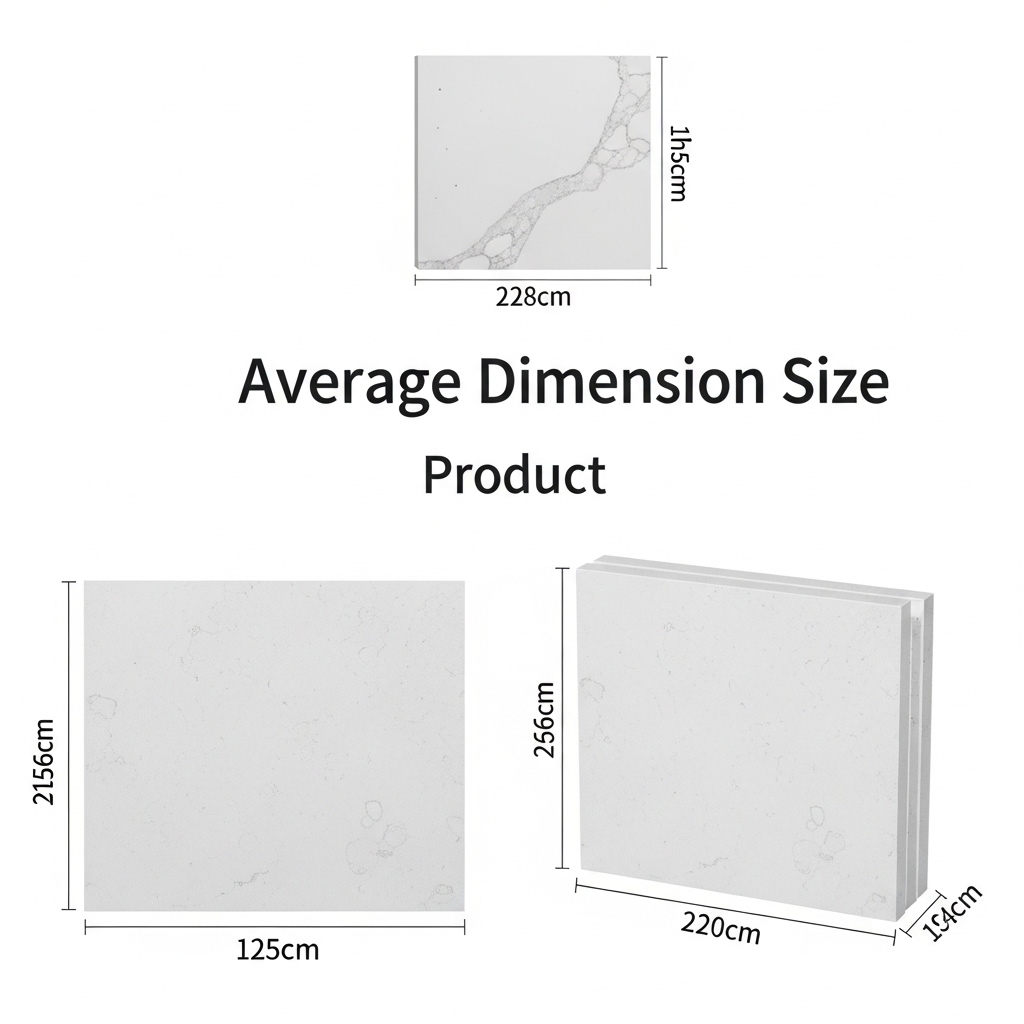
Regular Size
60 in × 123 in (average reference), thickness 0.79 in (2 cm) or 1.18 in (3 cm).
Jumbo Size
63 in × 126 in (jumbo reference), thickness 0.79 in (2 cm) or 1.18 in (3 cm).
Super Size
78 in × 138 in (super reference), thickness 0.79 in (2 cm) or 1.18 in (3 cm).
Super Jumbo
137.80 in × 78.74 in (super jumbo reference), thickness 0.79 in (2 cm) or 1.18 in (3 cm).
Mini Slab
48 in × 96 in (mini reference), thickness 0.79 in (2 cm) or 1.18 in (3 cm).
Finding the Right Mid-Range Quartz Format
Finding the right mid-range quartz format for your project involves careful consideration of several key factors.
First, assess the project dimensions; larger spaces may require slabs that are at least 120 inches long to minimize seams, while smaller areas can utilize 60-inch slabs effectively.
Next, consider the desired aesthetic; quartz comes in a variety of colors and patterns, so if you’re aiming for a sleek, modern look, opt for solid colors or subtle veining, whereas a more traditional style might benefit from bold patterns.
Budget constraints are also crucial; mid-range quartz typically costs between $50 to $100 per square foot, so it’s essential to calculate the total area needed and factor in installation costs, which can add another $30 to $50 per square foot.
Additionally, the fabricator’s expertise plays a significant role; ensure that your chosen fabricator has experience with the specific quartz brand and style you prefer, as this can affect the quality of the finish and installation.
Lastly, specific design requirements, such as edge profiles or custom cutouts for sinks, should be discussed upfront to ensure that the fabricator can meet your needs without compromising the integrity of the material. By carefully evaluating these aspects, you can select the perfect mid-range quartz format that aligns with your vision and practical requirements.
Mid-Range Quartz Formats: Why Go Bigger
Finding the right mid-range quartz format offers numerous advantages that can significantly enhance both aesthetic appeal and functionality in various applications.
One of the primary benefits is the balance between cost and quality; mid-range quartz formats typically provide a luxurious appearance similar to high-end options but at a more accessible price point, often ranging from $50 to $100 per square foot.
This affordability allows homeowners and designers to achieve a sophisticated look without breaking the bank. Additionally, mid-range quartz formats are known for their durability and low maintenance requirements, making them ideal for high-traffic areas.
With a non-porous surface, they resist staining and bacterial growth, ensuring a hygienic environment, which is particularly important in kitchens and bathrooms.
Furthermore, the variety of colors and patterns available in mid-range quartz formats allows for greater design flexibility, enabling homeowners to create personalized spaces that reflect their style.
By opting for larger slabs, which can range from 10 to 12 feet in length, the need for seams is minimized, resulting in a more seamless and visually appealing installation.
Overall, choosing the right mid-range quartz format not only elevates the aesthetic of a space but also provides practical benefits that enhance the overall value and longevity of the investment.
Mid-Range Quartz Surfacing: Expected Offcuts
Mid-range quartz surfacing is a popular choice for both residential and commercial applications due to its durability, aesthetic appeal, and low maintenance requirements. When working with mid-range quartz, it is essential to consider the expected offcuts during the fabrication process. Typically, offcuts can range from 10% to 20% of the total slab material, depending on the complexity of the design and the layout of the installation. For instance, if a fabricator is working with a 100 square foot slab, they might anticipate generating 10 to 20 square feet of offcuts. These offcuts can often be repurposed for smaller projects, such as backsplashes, countertops in laundry rooms, or even decorative elements, maximizing the value of the original material. To minimize waste, it is advisable to plan the layout meticulously, taking into account the dimensions of the final product and the potential for reusing offcuts. Additionally, some fabricators offer a guide for optimizing the use of quartz slabs, which includes tips on measuring accurately, selecting the right tools, and understanding the characteristics of the material. By following these guidelines, homeowners and contractors can ensure a more efficient use of mid-range quartz surfacing, ultimately leading to cost savings and a more sustainable approach to material usage.
Mid-Range Quartz Surfacing: Largest Option
Mid-range quartz surfacing has emerged as a popular choice for homeowners and designers seeking a balance between aesthetics and functionality. This engineered stone is composed of approximately 90-95% crushed natural quartz, combined with resins and pigments, resulting in a durable and versatile material. One of the most significant advantages of mid-range quartz surfacing is its ability to mimic the appearance of natural stone while offering enhanced durability and lower maintenance requirements.
The largest options available in mid-range quartz surfacing can reach dimensions of up to 120 inches by 55 inches, providing ample coverage for expansive countertops, islands, and other surfaces. This size not only minimizes seams but also allows for a more cohesive and uninterrupted look, which is particularly desirable in modern kitchen and bathroom designs. With a thickness typically ranging from 1.2 to 3 centimeters, these slabs can withstand daily wear and tear, making them ideal for high-traffic areas.
In terms of color and design, mid-range quartz surfacing offers a vast array of options, from classic whites and grays to bold, vibrant hues. Many manufacturers provide custom color matching, allowing homeowners to achieve a unique look that complements their overall design scheme. Additionally, the non-porous nature of quartz surfacing means it is resistant to staining and bacteria, making it a hygienic choice for food preparation areas.
The cost of mid-range quartz surfacing typically ranges from $50 to $100 per square foot, depending on the brand, design complexity, and installation requirements. This pricing positions it as an attractive alternative to higher-end natural stones like granite or marble, which can exceed $100 per square foot. Furthermore, the longevity and low maintenance of quartz surfacing can lead to cost savings over time, as it does not require sealing or special cleaning products.
Overall, mid-range quartz surfacing stands out as a practical and stylish option for those looking to enhance their living spaces. Its large slab sizes, diverse design options, and durability make it a favored choice among homeowners and designers alike, ensuring that it remains a staple in contemporary interior design.
Mid-Range Quartz Surfacing: Floor-Grade Thickness
Mid-range quartz surfacing has gained popularity in both residential and commercial applications due to its durability, aesthetic appeal, and low maintenance requirements. Floor-grade thickness is a critical aspect of this material, typically ranging from 12mm to 20mm. This thickness not only provides a robust surface that can withstand heavy foot traffic but also enhances the overall visual appeal of the flooring.
The 12mm thickness is often preferred for residential spaces, offering a balance between strength and weight, making it easier to install. In contrast, the 20mm thickness is more commonly used in commercial settings where durability is paramount. This thicker option can support heavier loads and is less prone to chipping or cracking, which is essential in high-traffic areas such as retail stores or office buildings.
Moreover, mid-range quartz surfacing is engineered to mimic the look of natural stone while providing superior performance. With a wide variety of colors and patterns available, it can complement any design aesthetic, from modern to traditional. The non-porous nature of quartz surfacing also means that it is resistant to stains and bacteria, making it a hygienic choice for flooring.
In terms of installation, the weight of the material must be considered, especially when dealing with larger slabs. For instance, a 20mm thick slab can weigh approximately 50-60 pounds per square foot, necessitating proper support and handling during the installation process.
Overall, mid-range quartz surfacing in floor-grade thickness offers an excellent combination of beauty, strength, and practicality, making it an ideal choice for various applications. Its ability to withstand the rigors of daily use while maintaining its aesthetic appeal is a significant advantage for homeowners and business owners alike.
Average quartz slab dimensions for walls & decorative surfaces
Average quartz slab dimensions for walls and decorative surfaces typically fall into widely available large-format ranges that balance coverage with manageable fabrication, transport, and installation requirements.
Many suppliers commonly offer slabs around 3000 × 1400 mm or 3200 × 1600 mm (typical examples), which helps reduce seam lines compared to smaller cladding pieces or tile layouts.
For instance, a 3000 × 1400 mm slab covers about 4.2 m² (around 45 ft²), while a 3200 × 1600 mm slab covers about 5.12 m² (around 55 ft²), giving enough surface area for feature zones with fewer joints.
Wall installations often favor 6–12 mm thickness to control weight, while thicker options like 20 mm may be chosen when edges or returns are exposed and a stronger architectural look is desired.
To make average slab formats look premium on walls, projects typically sequence panels for consistent pattern flow and place seams at corners, niches, or cabinetry lines where they are less visible.
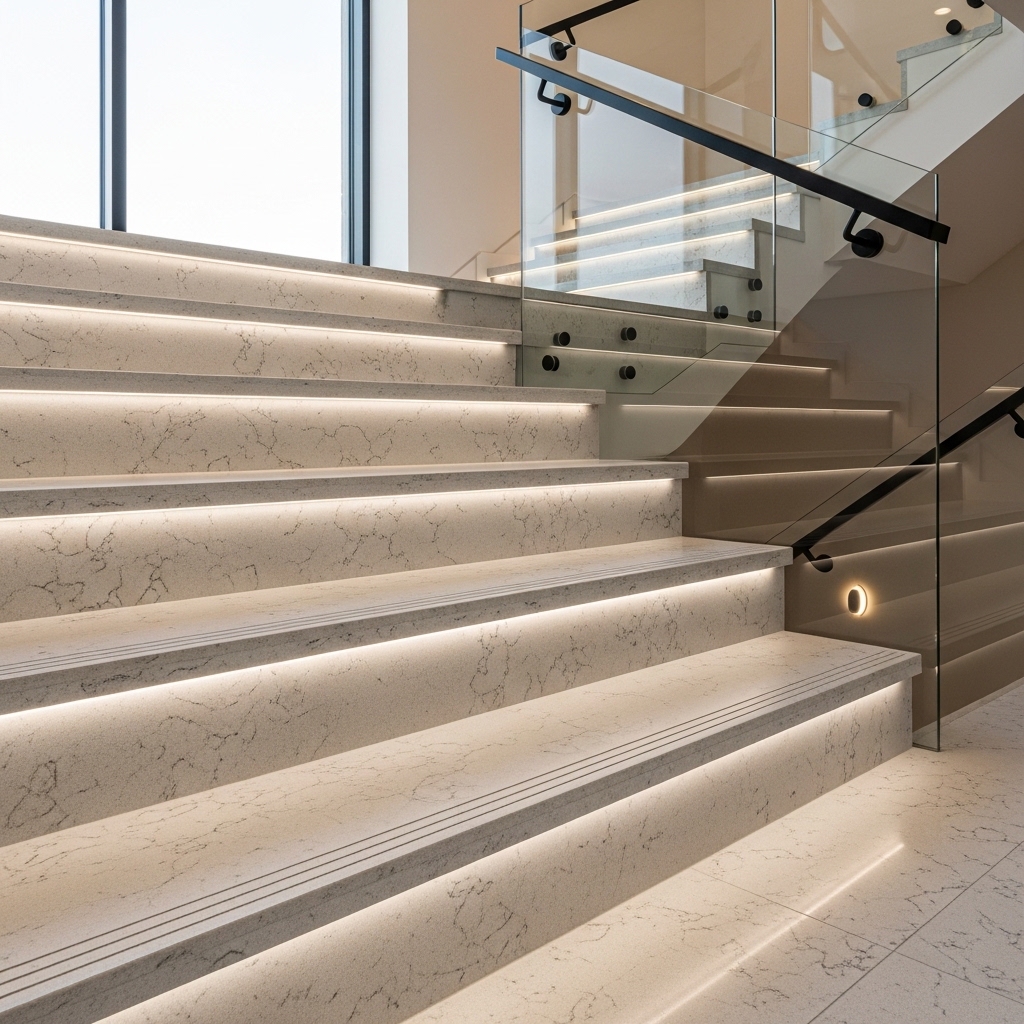
Average quartz slab dimensions for stairs
Average quartz slab dimensions used for stair fabrication are typically the most commonly stocked large formats that balance coverage area with practical handling and transport.
Typical “average” examples include 3000 × 1400 mm and 3200 × 1600 mm, which are widely used because they provide enough surface to cut multiple treads and risers with consistent shading.
For instance, a 3000 × 1400 mm slab covers about 4.2 m² (~45 ft²), while a 3200 × 1600 mm slab covers about 5.12 m² (~55 ft²), giving solid cutting flexibility for repeated step components.
Stair treads commonly use 20 mm thickness for strength and a premium feel, and the step nose is usually finished with a small chamfer or eased edge to help reduce edge damage over time.
To keep the staircase cohesive, fabricators typically cut all treads in the same direction and reserve calmer pattern areas for risers so the vertical faces stay visually neat.
Across UAE stone suppliers, the average quartz slab size commonly available measures around 3040 × 1440 mm, offering a practical balance between coverage and ease of handling during fabrication. This size works well for most kitchens, allowing straight runs to be cut with minimal joins. During specification, designers may also review quartz sheet size options, especially when comparing different brands or collections.
Average Quartz Slab Size Guide for Belgium Black Marble Style Designs
An average quartz slab size guide for Belgium Black marble style designs typically focuses on slabs measuring about 3040 × 1440 mm, which work well for most kitchen counters and vanity tops. This size supports standard counter depths and allows long straight runs with minimal jointing. Replicating the bold contrast of belgium black marble using quartz slabs in this average size helps achieve a dramatic, seamless look with consistent color and finish.
Average Quartz Slab Size for Raised Floor Planning
The average quartz slab size used for raised floor planning is typically around 3040 × 1440 mm, offering a balanced option between coverage and manageability. This size allows efficient fabrication of countertops and panels while keeping joint lines minimal. Coordinating this slab size with a raised floor system ensures proper alignment with access panels and consistent load distribution.