
Average Size of Quartz Slab
Average size of a quartz slab (what most people mean by “typical”) usually sits between the two most common factory formats: a standard slab of about 56 in × 120 in (142.24 cm × 304.80 cm) and a jumbo slab of about 63 in × 126 in (160.02 cm × 320.04 cm). If you take the midpoint of those two popular sizes, the “average” works out to roughly 60 in × 123 in (152.40 cm × 312.42 cm), which is a helpful planning reference for seam layouts (even though actual slabs are normally purchased in one of the standard sizes above). Thickness options are most commonly 2 cm (0.79 in / 20 mm) and 3 cm (1.18 in / 30 mm), and some collections are also produced in 12 mm (0.47 in / 1.2 cm) for specific applications.
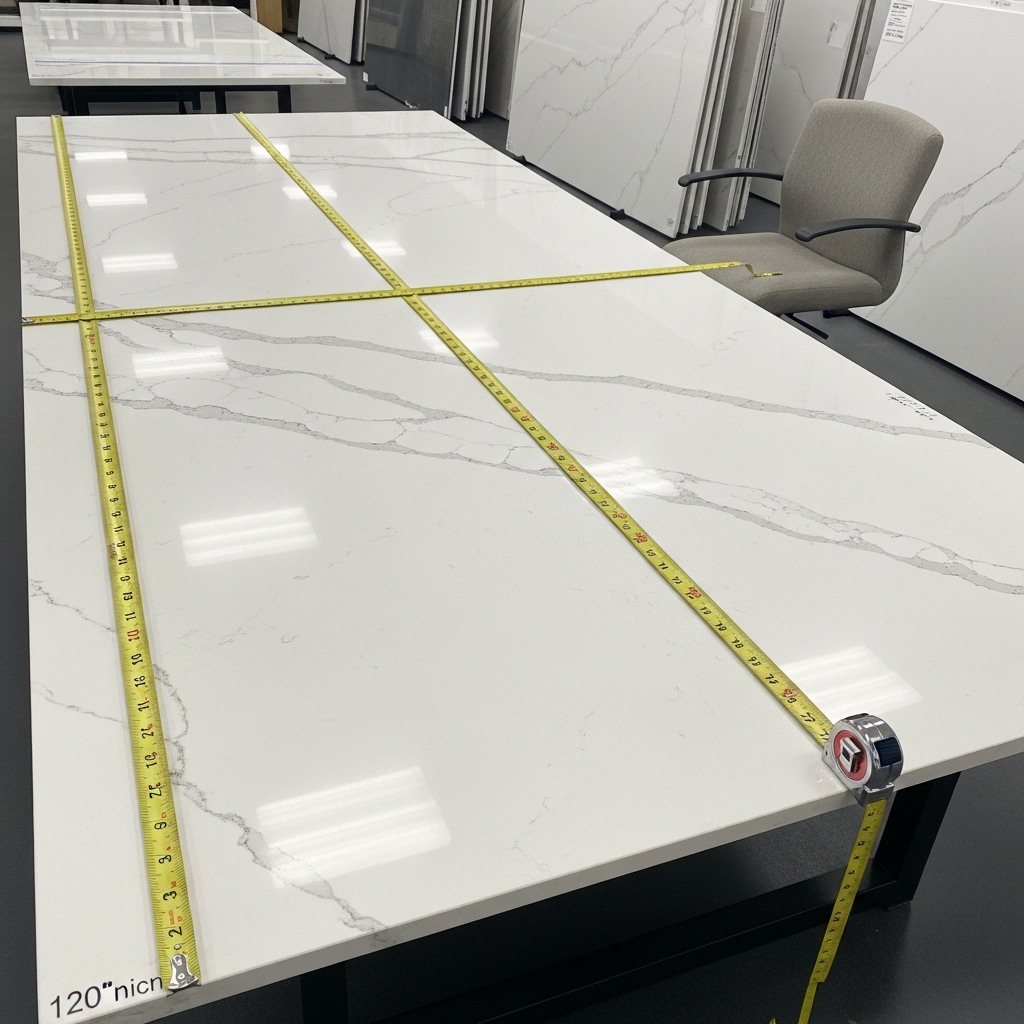
Regular Size
60 in × 123 in (average reference), thickness 0.79 in (2 cm) or 1.18 in (3 cm).
Jumbo Size
63 in × 126 in (jumbo reference), thickness 0.79 in (2 cm) or 1.18 in (3 cm).
Super Size
78 in × 138 in (super reference), thickness 0.79 in (2 cm) or 1.18 in (3 cm).
Super Jumbo
137.80 in × 78.74 in (super jumbo reference), thickness 0.79 in (2 cm) or 1.18 in (3 cm).
Mini Slab
48 in × 96 in (mini reference), thickness 0.79 in (2 cm) or 1.18 in (3 cm).
Finding the Right Mid-Range Quartz Dimensions
Finding the right mid-range quartz dimensions involves a careful consideration of several factors that can significantly impact the overall outcome of your project.
First, project dimensions play a crucial role; for instance, if you’re working on a kitchen countertop, standard dimensions typically range from 25 to 30 inches in depth and 96 to 120 inches in length. It’s essential to measure your space accurately to ensure a perfect fit.
Desired aesthetic is another key element; whether you prefer a sleek, modern look or a more traditional feel, the color and pattern of the quartz can vary widely, with options ranging from subtle whites and grays to bold, vibrant hues.
Budget constraints must also be taken into account, as mid-range quartz typically costs between $50 to $100 per square foot, depending on the quality and brand. Setting a clear budget will help narrow down your options and prevent overspending.
Additionally, the fabricator’s expertise is vital; working with a skilled fabricator can ensure that the quartz is cut and installed correctly, which is particularly important for intricate designs or larger slabs.
Lastly, specific design requirements, such as edge profiles or integrated sinks, should be discussed upfront to ensure that the chosen quartz dimensions align with your vision. By considering these factors, you can confidently select the right mid-range quartz dimensions that meet both your functional and aesthetic needs.
Why Jumbo Beats Mid-Range Quartz Dimensions
Finding the right mid-range quartz dimensions offers several advantages that can significantly enhance both aesthetic appeal and functionality in various applications. One of the primary benefits is the balance between cost and quality; mid-range quartz typically provides a luxurious look without the exorbitant price tag associated with high-end materials. For instance, while high-end quartz can range from $70 to $100 per square foot, mid-range options often fall between $40 and $60, making them more accessible for homeowners and designers alike.
Additionally, mid-range quartz dimensions often come in a variety of colors and patterns, allowing for greater customization in design projects. This versatility enables homeowners to achieve their desired look without compromising on durability, as quartz is known for its resistance to scratches and stains.
However, jumbo quartz slabs are increasingly gaining popularity over mid-range options due to their larger dimensions, which can reduce the number of seams in a project, creating a more seamless and visually appealing surface. Jumbo slabs, typically measuring 126 inches by 63 inches, can cover larger areas with fewer pieces, minimizing installation time and costs. Furthermore, the trend towards open-concept living spaces makes jumbo dimensions particularly advantageous, as they can provide expansive surfaces that enhance the overall flow and aesthetic of a room. In summary, while mid-range quartz dimensions offer a cost-effective and stylish solution, jumbo quartz slabs present compelling benefits that can elevate design projects to new heights.
Typical Waste Allowance for Mid-Range Quartz Surfacing
When considering mid-range quartz surfacing, it is essential to account for the typical waste allowance, which generally ranges from 10% to 20% of the total material required. This allowance is crucial as it accommodates for cuts, defects, and any unforeseen issues that may arise during installation. For instance, if a project requires 100 square feet of quartz, a waste allowance of 15% would mean ordering an additional 15 square feet, bringing the total to 115 square feet.
The waste percentage can vary based on the complexity of the design, the size of the slabs, and the layout of the installation. More intricate designs or layouts that require numerous cuts may necessitate a higher waste allowance, potentially reaching up to 20%.
Additionally, it is advisable to consult with the fabricator or supplier to determine the most accurate waste allowance for specific projects, as they can provide insights based on their experience and the particular characteristics of the quartz being used. Properly accounting for waste not only ensures that there is enough material to complete the project but also helps in minimizing delays and additional costs associated with ordering extra material later on.
Largest Option Beyond Typical Quartz Formats
The largest option beyond typical quartz formats is often represented by engineered stone, which combines natural quartz crystals with resins and pigments to create a durable and versatile surface material.
This innovative approach allows for larger slabs, often exceeding 120 inches in length and 60 inches in width, which is significantly larger than traditional quartz countertops that typically come in smaller, modular sizes.
The manufacturing process of engineered stone involves mixing about 90-95% crushed natural quartz with polymer resins, resulting in a non-porous surface that is resistant to stains, scratches, and heat.
In addition to size, engineered stone offers a wide range of aesthetic options, including colors and patterns that mimic natural stones like marble and granite.
This versatility makes it an attractive choice for homeowners and designers looking for both functionality and style.
For instance, some manufacturers produce slabs that can be as thick as 3 centimeters, providing a substantial feel and appearance that enhances the overall design of kitchens and bathrooms.
Moreover, the sustainability aspect of engineered stone cannot be overlooked.
Many brands are now incorporating recycled materials into their products, further reducing the environmental impact associated with quarrying natural stone.
This shift towards eco-friendly options is becoming increasingly important to consumers, who are more conscious of their choices and the effects on the planet.
Overall, the largest options beyond typical quartz formats not only provide practical benefits in terms of size and durability but also offer a plethora of design possibilities that cater to modern aesthetic preferences.
As technology continues to advance, the potential for even larger and more innovative surfaces will likely expand, making engineered stone a leading choice in the realm of countertop materials.
Floor-Grade Thickness for Mid-Range Quartz Surfacing
Mid-range quartz surfacing is a popular choice for both residential and commercial applications due to its durability and aesthetic appeal. One of the critical factors to consider when selecting quartz surfacing is the floor-grade thickness, which typically ranges from 1 cm to 3 cm.
The thickness of the material plays a significant role in its performance, especially in high-traffic areas where durability is paramount. A thickness of 2 cm is often recommended for countertops and surfaces that will experience regular use, as it provides a balance between strength and weight.
In contrast, a thicker 3 cm option is ideal for applications requiring additional support, such as large islands or heavy-duty work surfaces. This increased thickness not only enhances the structural integrity of the surface but also allows for more elaborate edge profiles, which can add to the overall design aesthetic.
Furthermore, the choice of thickness can impact installation methods; for instance, 1 cm slabs may require additional support or backing to prevent cracking, while thicker slabs can often be installed directly onto cabinetry without the need for extra reinforcement.
When considering mid-range quartz surfacing, it is essential to evaluate the specific needs of the project, including the intended use and the expected load on the surface. For example, a kitchen countertop that will see daily use may benefit from a thicker slab, while a decorative wall panel may not require the same level of thickness.
Ultimately, selecting the appropriate floor-grade thickness is crucial for ensuring the longevity and functionality of quartz surfaces, making it a vital consideration in any design project.
Average quartz slab dimensions for walls & decorative surfaces
Average quartz slab dimensions for walls and decorative surfaces typically fall into widely available large-format ranges that balance coverage with manageable fabrication and transport requirements.
Many suppliers commonly offer slabs around 3000 × 1400 mm or 3200 × 1600 mm (typical examples), which provides enough surface area to cover feature sections with fewer joints compared to tiles or smaller panels.
As an example of coverage, a 3000 × 1400 mm slab covers about 4.2 m² (around 45 ft²), while 3200 × 1600 mm covers about 5.12 m² (around 55 ft²), giving designers flexibility to reduce seam lines on accent walls and tall backsplashes.
For walls, thickness is often selected in the 6–12 mm range to help reduce load, while 20 mm may be preferred where you want a stronger edge profile or when matching thicker adjacent surfaces in the same space.
To make “average” slab formats look premium in large wall areas, installers typically plan for consistent joint spacing and align patterns across panels so the decorative surface reads as one intentional composition.
Average quartz slab dimensions for stairs
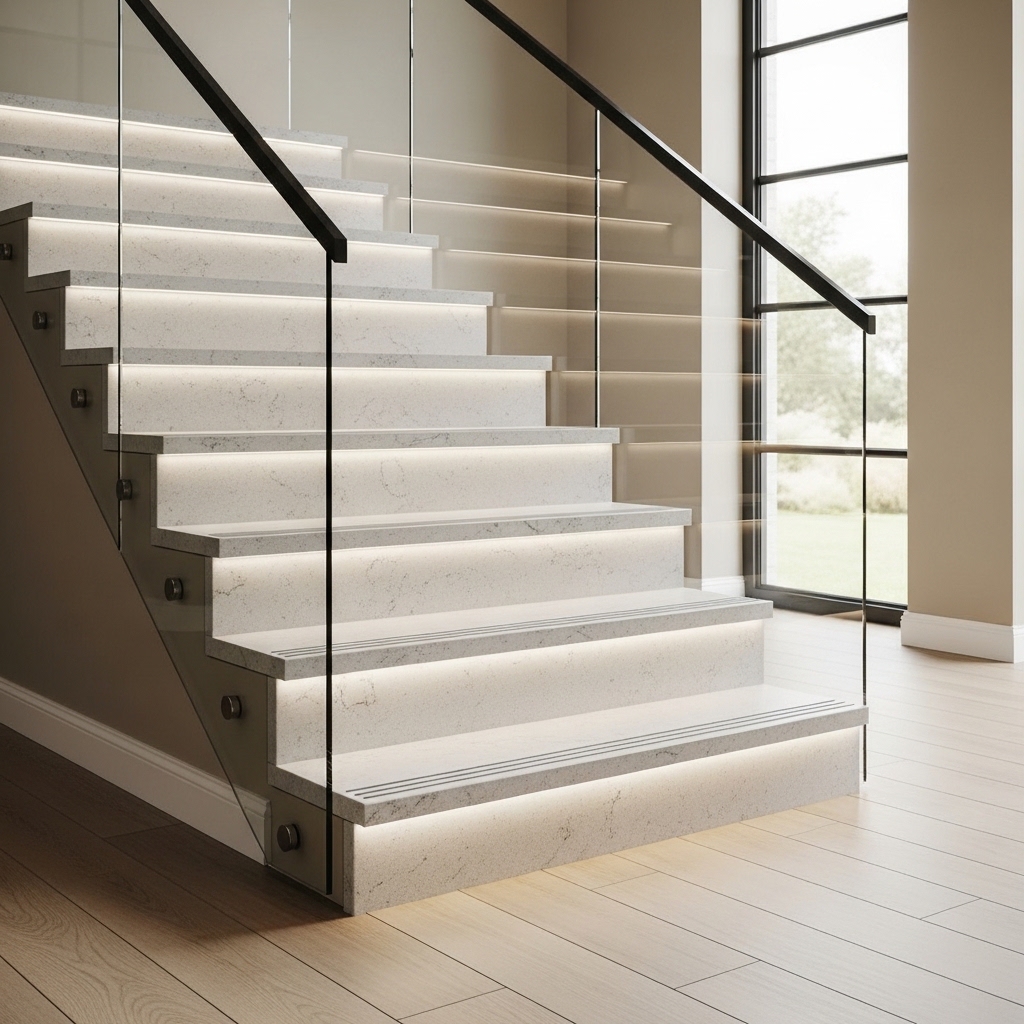
Average quartz slab dimensions used for stair projects are typically the widely available large formats that provide enough surface area to cut multiple treads, risers, and even landing pieces from one consistent batch.
Common “average” supply examples include 3000 × 1400 mm and 3200 × 1600 mm, which are large enough for efficient cutting while still practical for transport and fabrication.
For instance, a 3000 × 1400 mm slab covers about 4.2 m² (around 45 ft²), while a 3200 × 1600 mm slab covers about 5.12 m² (around 55 ft²), allowing multiple step components to be nested with fewer seams and more consistent tone.
Stair treads often use 20 mm thickness for strength and edge presence, and designers frequently pair that with a chamfered or eased step nose to reduce chipping in high-traffic use.
When the goal is a cohesive look, fabricators usually keep the cut direction consistent across all treads so pattern flow looks intentional from the first step to the landing.
In the UAE market, the average size of quartz slab generally supplied by leading brands is around 3040 × 1440 mm (approximately 10 ft × 4.7 ft), which suits most residential kitchens and vanity installations with minimal cutting waste. This size comfortably covers standard counter depths of 600–650 mm and allows long straight runs to be fabricated with fewer seams, especially in apartments and villas. When comparing materials during planning, fabricators often look at granite size in feet alongside quartz dimensions to decide which stone offers better slab utilization for the specific layout.
Average Size of Quartz Slab for Projects Featuring Silver Travertine Marble
The average size of quartz slab used in UAE projects typically measures around 3040 × 1440 mm, which suits most residential kitchens, vanity tops, and commercial counters with minimal waste. This size supports standard counter depths of 600–650 mm and allows long straight runs to be fabricated with controlled seam placement. When projects feature silver travertine marble on floors or walls, matching quartz slabs in this average size help maintain visual balance and proportional consistency across different surfaces.
Average Size of Quartz Slab for Raised Floor Planning
The average size of quartz slab commonly used for planning over a raised floor is around 3040 × 1440 mm, which provides a balanced option between coverage and handling. This size allows designers to fabricate counters, panels, or worktops with fewer joints while aligning neatly with raised floor modules. With standard thicknesses of 20 mm or 30 mm, these slabs offer adequate strength without adding excessive dead load to the subfloor structure.