
Countertop Slab Size Guide
Countertop slab size usually refers to the large sheets (slabs) that countertops are cut from, and the common “standard” engineered-stone slab is 56 in × 120 in (142.24 cm × 304.80 cm), while a common jumbo engineered-stone slab is 63 in × 126 in (160.02 cm × 320.04 cm). Natural-stone countertop slabs such as granite, marble, and quartzite often arrive in quarry-style ranges around 108–120 in long × 60–72 in wide (274.32–304.80 cm × 152.40–182.88 cm), with some bundles going wider to about 78 in (198.12 cm). Thickness for countertop slabs is most commonly 2 cm (0.79 in / 20 mm) or 3 cm (1.18 in / 30 mm), and 1.5 cm (0.59 in / 15 mm) can also be used where lighter weight is needed, especially for vertical surfaces.
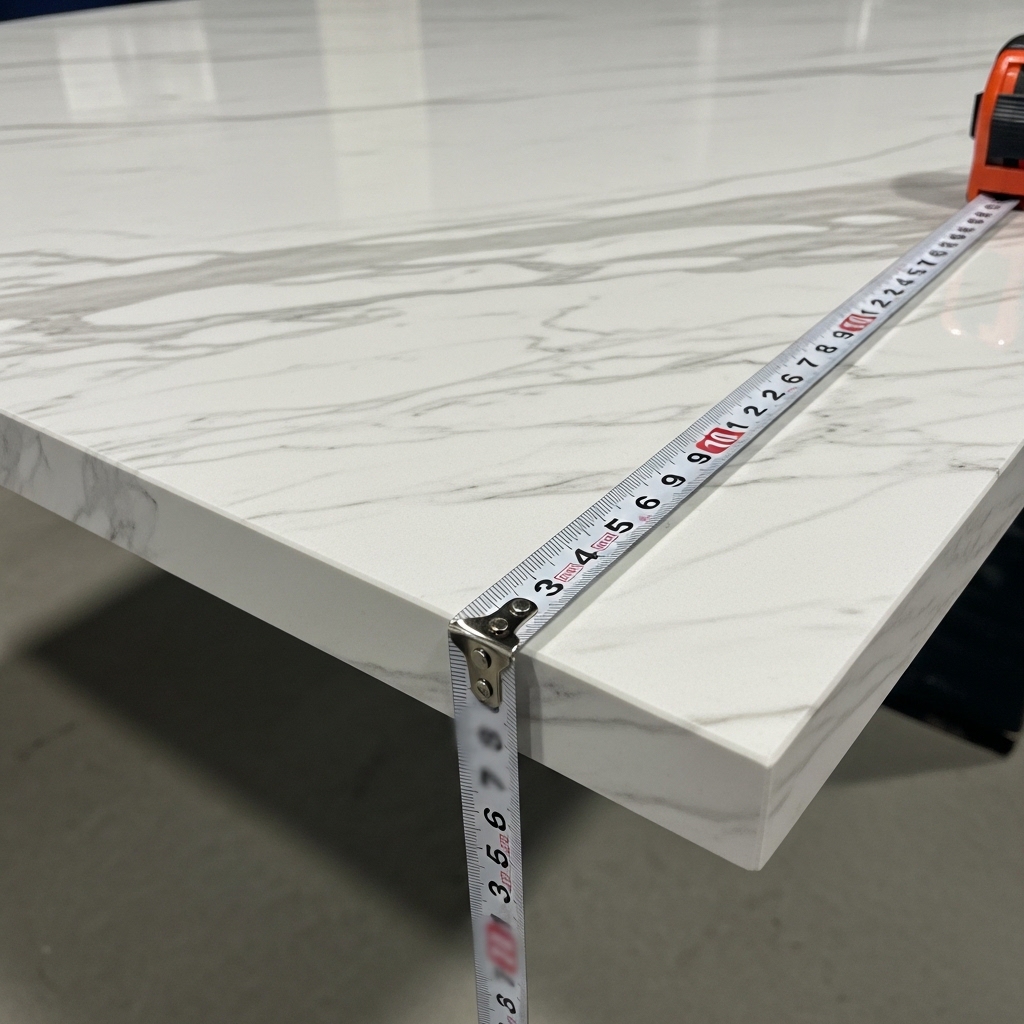
Regular Size
56 in × 120 in (engineered) or about 120 in × 72 in (natural stone), thickness 0.79 in (2 cm) or 1.18 in (3 cm).
Jumbo Size
63 in × 126 in (engineered jumbo) or 126 in × 78 in (natural-stone jumbo), thickness 0.79 in (2 cm) or 1.18 in (3 cm).
Super Size
78 in × 138 in (engineered super) or 138 in × 78 in (natural-stone super), thickness 0.79 in (2 cm) or 1.18 in (3 cm).
Super Jumbo
137.80 in × 78.74 in (engineered super jumbo) or 138 in × 78 in (natural-stone super), thickness 0.79 in (2 cm) or 1.18 in (3 cm).
Mini Slab
48 in × 96 in (mini engineered) or 96 in × 48 in (mini natural stone), thickness 0.79 in (2 cm) or 1.18 in (3 cm).
Choosing the Right Countertop Sheet Format
Choosing the right countertop sheet format involves careful consideration of several factors to ensure the final product meets both functional and aesthetic needs.
First, project dimensions play a crucial role; for instance, larger spaces may benefit from full slabs, typically measuring 120″ x 55″, while smaller areas might require custom-cut sheets to fit specific measurements.
Desired aesthetic is another significant factor; if a sleek, modern look is preferred, a polished finish with minimal seams is ideal, whereas a rustic design may incorporate textured surfaces that can be achieved with smaller sheets.
Budget constraints must also be taken into account, as full slabs can range from $50 to $200 per square foot, while smaller sheets may offer more economical options without compromising quality.
The fabricator’s expertise is essential; selecting a fabricator experienced in handling the chosen material ensures that the installation process is smooth and the final product is durable.
Lastly, specific design requirements, such as integrated sinks or unique edge profiles, may dictate the need for custom formats, which can add to the overall cost but ultimately enhance the functionality and appearance of the countertop.
Countertop Sheet Formats: Why Jumbo Matters
Choosing the right countertop sheet format is crucial for both aesthetic appeal and practical functionality in any space. One significant advantage of opting for a jumbo format is the reduction in seams, which not only enhances the visual continuity of the countertop but also minimizes potential weak points where moisture and bacteria can accumulate. For instance, a standard sheet size might require multiple seams in a large kitchen island, whereas a jumbo sheet can cover the entire surface with a single piece, creating a seamless look. This can be particularly beneficial in high-traffic areas, where durability is essential. Additionally, jumbo sheets often provide better value for money; they can cover larger areas with fewer materials, potentially reducing installation costs by up to 20%. Furthermore, the variety of finishes and colors available in jumbo formats allows homeowners and designers to achieve a more customized look, catering to specific design themes and personal preferences. In terms of sustainability, using fewer materials can also lead to less waste, making it an environmentally friendly choice. Overall, selecting the right countertop sheet format, especially jumbo, can significantly enhance the functionality, aesthetics, and sustainability of a space.
Countertop Sheet Material: Common Waste Range
Countertop sheet materials are essential in both residential and commercial settings, providing durability and aesthetic appeal. The common waste range for these materials typically falls between 10% to 20% of the total sheet area, depending on the complexity of the installation and the cutting patterns used. For instance, when working with a standard 4×8 foot sheet, which covers 32 square feet, a waste range of 10% would result in approximately 3.2 square feet of unusable material, while a 20% waste would yield about 6.4 square feet.
It is crucial to plan the layout carefully to minimize waste, especially when dealing with high-cost materials like quartz or granite, where the price can range from $50 to $200 per square foot.
Additionally, factors such as the shape of the countertop, the presence of cutouts for sinks or appliances, and the need for seams can significantly influence the amount of waste generated. By utilizing efficient cutting techniques and optimizing the design, homeowners and contractors can reduce waste and save on material costs, making it a vital consideration in any countertop project.
Countertop Sheet Material: Largest Format Options
Countertop sheet materials have evolved significantly, offering a variety of options for homeowners and designers looking for large format solutions. One of the most popular materials in this category is quartz, which can be manufactured in large slabs measuring up to 120 inches by 55 inches. This size allows for fewer seams and a more cohesive look, making it ideal for expansive kitchen islands or countertops.
Another noteworthy option is porcelain, which has gained traction due to its durability and aesthetic versatility. Large format porcelain slabs can reach dimensions of 126 inches by 63 inches, providing a sleek, modern appearance that mimics natural stone or even concrete. The non-porous nature of porcelain makes it resistant to stains and scratches, which is particularly beneficial in high-traffic areas.
For those seeking a more luxurious feel, natural stone such as granite and marble can also be found in large formats. While traditional slabs typically measure around 96 inches by 54 inches, some suppliers now offer custom sizes that can exceed 120 inches. This allows for dramatic, uninterrupted patterns that enhance the visual appeal of the countertop. However, it’s important to note that natural stone requires regular maintenance to preserve its beauty and functionality.
In addition to these materials, solid surface options like Corian can be fabricated in large sheets, often measuring up to 120 inches by 50 inches. Solid surfaces are known for their seamless appearance and ease of repair, making them a practical choice for busy kitchens. They can also be molded into various shapes, allowing for unique designs that can incorporate sinks and backsplashes without visible seams.
When considering large format countertop materials, it’s essential to factor in the installation process. Larger slabs can be heavier and may require professional installation to ensure proper support and alignment. Additionally, the cost can vary significantly based on the material chosen, with quartz and porcelain generally being more affordable than high-end natural stones.
Ultimately, the choice of countertop sheet material in large formats will depend on individual preferences, budget, and the specific requirements of the space. With a wide range of options available, homeowners can achieve both functionality and style, creating stunning surfaces that serve as the centerpiece of their kitchens or bathrooms.
Countertop Sheet Material: Thickness for Busy Floors
When selecting countertop sheet material for busy floors, thickness plays a crucial role in ensuring durability and longevity. Typically, countertop sheets come in various thicknesses, ranging from 0.5 inches to 1.5 inches. For high-traffic areas, a thickness of at least 1 inch is recommended to withstand the wear and tear that comes from constant use.
A thicker countertop not only provides better resistance to impacts and scratches but also contributes to the overall aesthetic appeal of the space. For instance, a 1.25-inch thick countertop can offer a more substantial look and feel, which is often preferred in commercial settings. Additionally, thicker materials tend to have better thermal resistance, making them suitable for environments where hot pots and pans may be placed directly on the surface.
Moreover, the choice of material also influences the required thickness. Materials like quartz and granite are naturally more robust, allowing for thinner applications without compromising strength. In contrast, laminate or softer materials may require additional thickness to achieve the same level of durability.
In busy environments, such as restaurants or kitchens, the countertop must endure not only physical stress but also exposure to various substances. Choosing a thickness of 1 inch or more can help mitigate the risk of chipping or cracking when heavy items are dropped or when the surface is subjected to frequent cleaning.
Ultimately, investing in a thicker countertop sheet material is a wise decision for busy floors, as it ensures that the surface remains functional and visually appealing over time. By considering both the thickness and the material type, one can create a resilient workspace that meets the demands of a bustling environment.
Countertop slab measurement guide for walls & decorative surfaces
A countertop slab measurement guide for walls and decorative surfaces explains how to translate countertop-grade slabs into vertical panels while keeping pattern flow, seam placement, and cut-outs coordinated.
Many slab materials used for counters are available in large formats (such as 3000 × 1400 mm or 3200 × 1600 mm as typical examples), allowing tall backsplashes and feature walls to be made with fewer joints.
Thickness is often chosen differently for vertical use—wall panels frequently use 6–12 mm where available, while thicker options like 20 mm may be used when edges are exposed or when matching the countertop’s profile matters.
As an example, a backsplash panel can be planned from the same slab batch as the counter so the vein direction appears continuous from horizontal to vertical.
Measurement planning also includes joint allowances, edge finishing, and safe panel sizing so the wall remains aligned and visually clean after installation.
Countertop slab measurement guide for stairs
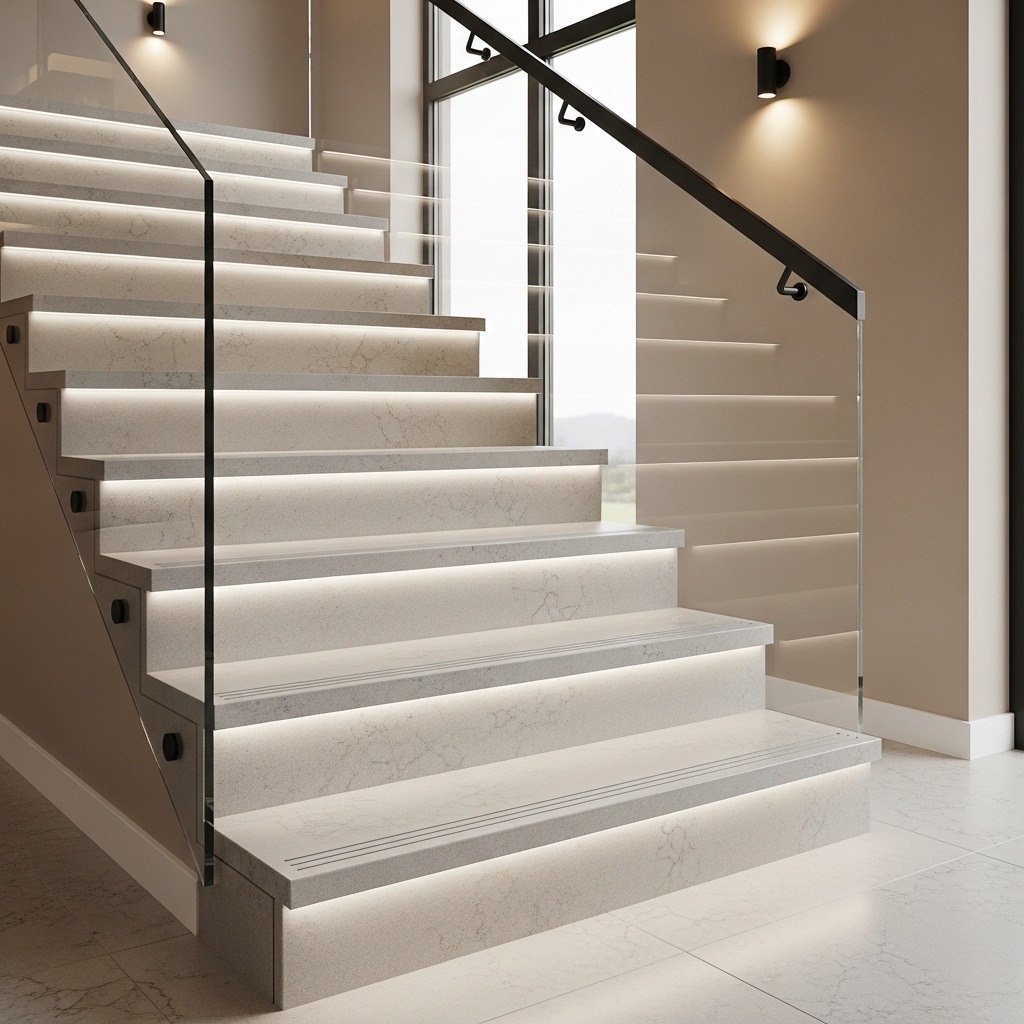
A countertop slab measurement guide for stairs explains how countertop-grade slabs can be planned into stair components while keeping continuity, durability, and seam placement under control.
Start with precise stair geometry (tread depth, riser height, flight width, landing sizes), then create a cut map that keeps all tread faces oriented consistently for a unified look.
Large slab examples like 3200 × 1600 mm can help reduce seams on landings, and mapping the layout in advance helps avoid placing joints in the most visible zones.
For example, the landing can be treated as one dominant panel, while tread pieces are cut as repeats, ensuring the staircase looks clean and intentionally designed.
Final measurement planning includes thickness choice (often 20 mm for treads), durable nose profiling, and uniform joint gaps so installation lines stay straight and refined.
For most UAE projects, countertop slab size depends on both material choice and kitchen layout, with common slab lengths ranging from 2800–3200 mm and widths between 1400–1600 mm. These sizes allow long counter runs and islands to be fabricated with fewer seams, improving visual continuity. When dimensions are discussed in imperial terms, designers often reference kitchen slab size in feet for easier comparison during early planning.
Countertop Slab Size Guide for Calacatta Viola Inspired Designs
A countertop slab size guide for Calacatta Viola inspired designs typically focuses on slabs around 3040 × 1440 mm for standard kitchens, with jumbo options up to 3200 × 1600 mm for expansive islands. These sizes allow bold veining patterns to flow naturally with minimal seams. Designing counters around calacatta viola aesthetics benefits from careful slab planning to preserve symmetry, visual balance, and a luxurious statement finish.
Countertop Slab Size Coordination with Raised Floor Systems
Countertop slab size coordination is essential for interiors that integrate surface finishes with a raised floor. Standard countertop slabs are commonly cut from slabs measuring around 3040 × 1440 mm, enabling long runs with minimal joints. Correct coordination prevents clashes with access panels and maintains consistent levels across worktops and adjacent raised floor zones.