
Quartz Countertop Size Guide
Quartz countertop size includes both the slab it is cut from and the finished counter dimensions: quartz is commonly supplied as a standard slab of 56 in × 120 in (142.24 cm × 304.80 cm) or a jumbo slab of 63 in × 126 in (160.02 cm × 320.04 cm), with some brands offering extra-large slabs around 65 in × 130 in (165.10 cm × 330.20 cm) for wide islands. Finished quartz countertops typically follow cabinet standards at 25–25.5 in deep (63.50–64.77 cm), while run lengths are cut to the kitchen and often fall around 72–120 in (182.88–304.80 cm) per section before seams; islands commonly range about 36–60 in wide (91.44–152.40 cm) and 72–120 in long (182.88–304.80 cm). Quartz thickness is usually 2 cm (0.79 in / 20 mm) or 3 cm (1.18 in / 30 mm), and built-up edges can make the front appear about 1.5 in thick (3.81 cm).
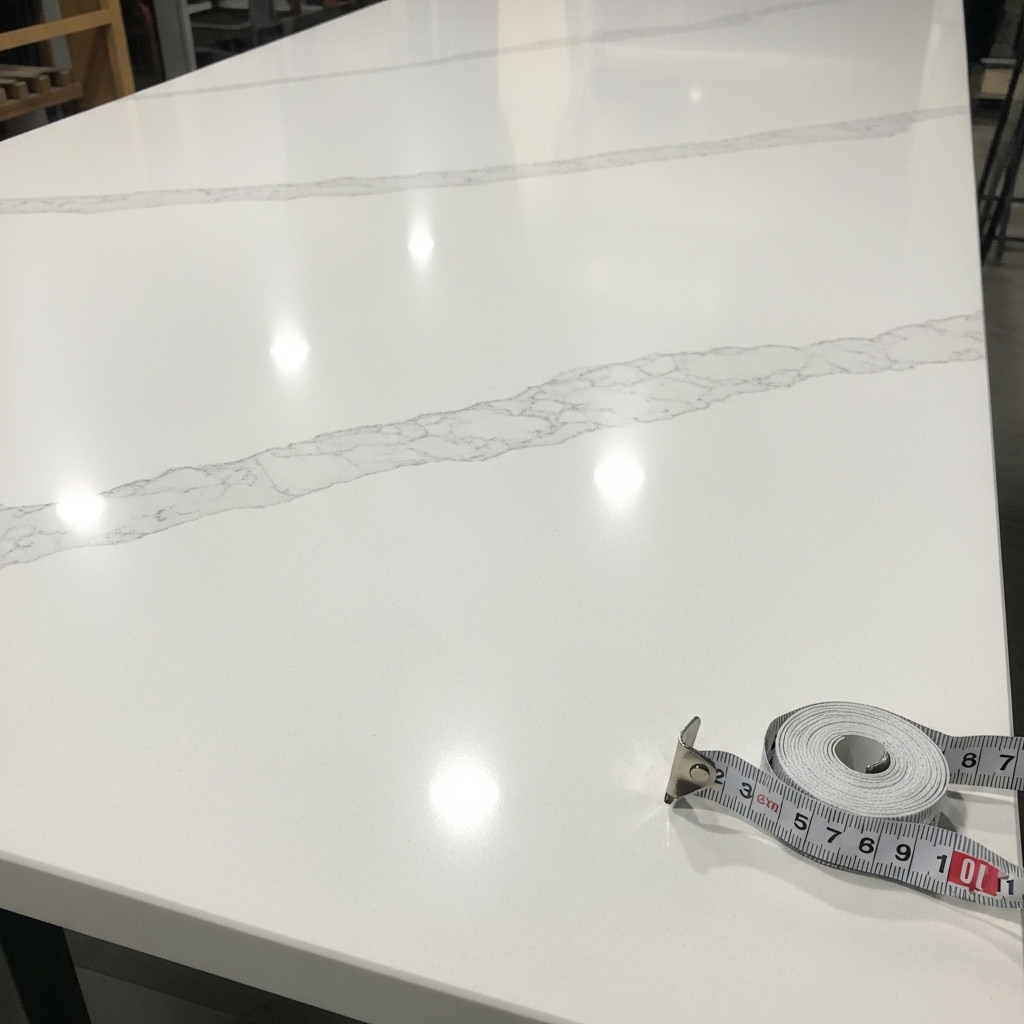
Regular Size
25–25.5 in deep (finished), cut from 56 in × 120 in slabs, thickness 0.79 in (2 cm) or 1.18 in (3 cm).
Jumbo Size
25–25.5 in deep (finished), cut from 63 in × 126 in slabs, thickness 0.79 in (2 cm) or 1.18 in (3 cm).
Super Size
25–25.5 in deep (finished), cut from 78 in × 138 in slabs, thickness 0.79 in (2 cm) or 1.18 in (3 cm).
Super Jumbo
25–25.5 in deep (finished), cut from 137.80 in × 78.74 in slabs, thickness 0.79 in (2 cm) or 1.18 in (3 cm).
Mini Slab
25–25.5 in deep (finished), cut from 48 in × 96 in slabs, thickness 0.79 in (2 cm) or 1.18 in (3 cm).
Quartz Countertop Measurements Guide
When planning for quartz countertops, precise measurements are crucial to ensure a perfect fit and aesthetic appeal.
Start by assessing the project dimensions, which include the length and width of the countertops, as well as any cutouts for sinks or appliances. For instance, a standard kitchen island might measure 4 feet by 2 feet, while a typical countertop runs about 25 inches deep.
The desired aesthetic plays a significant role in the selection of quartz, as colors and patterns can vary widely. If you aim for a modern look, consider lighter shades with minimal veining, while a more traditional style might benefit from darker hues with intricate patterns.
Budget constraints are another critical factor; quartz countertops can range from $50 to $150 per square foot, depending on the quality and brand. It’s essential to balance your aesthetic desires with what you can afford, as high-end options may not fit within a limited budget.
The fabricator’s expertise is vital in achieving the desired outcome. Experienced fabricators can provide insights on the best quartz options for your specific project and ensure precise cuts and installations.
Lastly, specific design requirements, such as edge profiles or backsplash preferences, should be clearly communicated to the fabricator. For example, a beveled edge might add a sophisticated touch, while a simple straight edge can maintain a clean, contemporary look. By considering these factors, you can create a stunning and functional quartz countertop that meets your needs.
Quartz Countertop Measurements: Why Jumbo Helps
Quartz countertops offer numerous advantages, particularly when it comes to measurements and installation. One significant benefit is the availability of jumbo slabs, which typically measure 126 inches by 63 inches, allowing for fewer seams and a more seamless appearance in larger spaces. This not only enhances the aesthetic appeal but also simplifies the installation process, reducing labor costs and time. Additionally, the uniformity in size and thickness of quartz slabs ensures that measurements are more straightforward, minimizing the risk of errors during cutting and fitting. With quartz being non-porous, it also provides a hygienic surface that is easy to clean, making it ideal for kitchens and bathrooms. Furthermore, the durability of quartz means that it can withstand heavy use without chipping or cracking, which is particularly advantageous in high-traffic areas. Overall, understanding the measurements and benefits of quartz countertops, especially with the option of jumbo slabs, can lead to a more efficient and visually pleasing installation, ultimately enhancing the value of your home.
Quartz Countertop Material: Typical Waste Margin
Quartz countertops are a popular choice for many homeowners due to their durability and aesthetic appeal. When considering the installation of quartz countertops, it is essential to account for the typical waste margin, which generally ranges from 10% to 20%. This waste margin accounts for the natural imperfections in the stone, cuts made during installation, and any design features that may require additional material. For instance, if you are planning to install 50 square feet of quartz, you should order between 55 to 60 square feet of material to ensure you have enough to cover any unforeseen issues.
Additionally, the waste margin can vary based on the complexity of the countertop design; intricate shapes or multiple cutouts for sinks and appliances may increase the waste percentage. It is also advisable to consult with your fabricator, as they can provide insights based on their experience and the specific quartz slab you choose.
Proper planning and understanding of the waste margin not only help in budgeting for the project but also ensure a smoother installation process, ultimately leading to a beautiful and functional kitchen or bathroom space.
Quartz Countertop Material: Biggest Format Options
Quartz countertops have gained immense popularity in recent years due to their durability, aesthetic appeal, and low maintenance requirements. One of the most significant advantages of quartz as a countertop material is the availability of large format options. Big format quartz slabs can measure up to 120 inches in length and 55 inches in width, allowing for fewer seams and a more cohesive look in kitchens and bathrooms. This is particularly beneficial in open-concept spaces where a seamless appearance is desired. The thickness of quartz slabs typically ranges from 1 cm to 3 cm, with the thicker options providing enhanced durability and a more substantial feel. Large format slabs not only reduce the number of seams but also create a striking visual impact, making them ideal for expansive countertops, kitchen islands, and even wall applications. For instance, a single slab can cover an entire island, measuring 10 feet by 4 feet, providing a continuous surface that enhances the overall design aesthetic. Moreover, the manufacturing process of quartz allows for a wide variety of colors and patterns, mimicking the look of natural stone while offering consistent quality. This versatility means that homeowners can choose from a range of finishes, including polished, honed, or textured, to suit their design preferences. Large format quartz also allows for creative design elements, such as waterfall edges or integrated sinks, which can elevate the overall look of the space. In terms of installation, the size and weight of large format quartz slabs require professional handling to ensure proper placement and support. It is essential to have a sturdy base and adequate support structures to accommodate the weight of these slabs, which can weigh over 100 pounds per square foot depending on the thickness. Investing in large format quartz countertops not only enhances the beauty of a space but also adds value to a home, making them a popular choice among homeowners and designers alike. Overall, the biggest format options in quartz countertops provide a unique blend of functionality and style, making them a top choice for modern interiors. With their impressive dimensions and aesthetic versatility, large format quartz slabs are redefining the standards for countertop materials in both residential and commercial applications.
Quartz Countertop Material: Thickness for Heavy Use
Quartz countertops are increasingly popular in both residential and commercial settings due to their durability and aesthetic appeal. When considering quartz for heavy use, thickness becomes a critical factor. Typically, quartz countertops are available in thicknesses of 1 cm, 2 cm, and 3 cm. For heavy-use environments, such as kitchens or commercial spaces, a thickness of 3 cm is often recommended. This thickness not only provides enhanced strength and resistance to chipping and cracking but also offers a more substantial appearance that can elevate the overall design of the space.
In terms of weight, a 3 cm thick quartz countertop weighs approximately 20-25 pounds per square foot. This added weight contributes to its stability, making it less prone to flexing under heavy loads, which is particularly important in busy kitchens where heavy pots and pans are frequently used. Additionally, the thicker material allows for more extensive overhangs without the need for additional support, which can be a significant advantage in kitchen islands or bar areas.
Moreover, the installation of thicker quartz countertops can be more forgiving when it comes to uneven surfaces, as they can better accommodate minor imperfections in cabinetry or substructures.
This is particularly beneficial in older homes where leveling can be an issue. Furthermore, the 3 cm thickness allows for a wider range of edge profiles, providing homeowners and designers with more options to customize the look of their countertops.
In summary, when selecting quartz countertops for heavy use, opting for a thickness of 3 cm is advisable. This choice not only enhances durability and functionality but also contributes to the overall aesthetic appeal of the space. With the right thickness, quartz countertops can withstand the rigors of daily use while maintaining their beauty and integrity for years to come.
Quartz countertop measurement guide for walls & decorative surfaces
A quartz countertop measurement guide for walls focuses on extending the same surface language from horizontal worktops into vertical panels such as backsplashes, bar fronts, and feature wall sections.
Large quartz slabs (often supplied in formats like 3000 × 1400 mm or 3200 × 1600 mm as typical examples) can be planned to produce both the countertop and coordinated wall panels with fewer seams.
For vertical use, many projects choose 6–12 mm wall panels where available to reduce load, while thicker 20 mm may be used for waterfall ends or exposed edges that need a strong profile match to the counter.
For example, a full-height backsplash can be cut from the same slab batch as the counter so veining appears to flow upward, creating a more premium, intentional look.
The guide typically includes exact positioning for sockets and fixtures, consistent joint gaps, and seam alignment to cabinet boundaries so the wall finish stays clean and easy to maintain.
Quartz countertop measurement guide for stairs
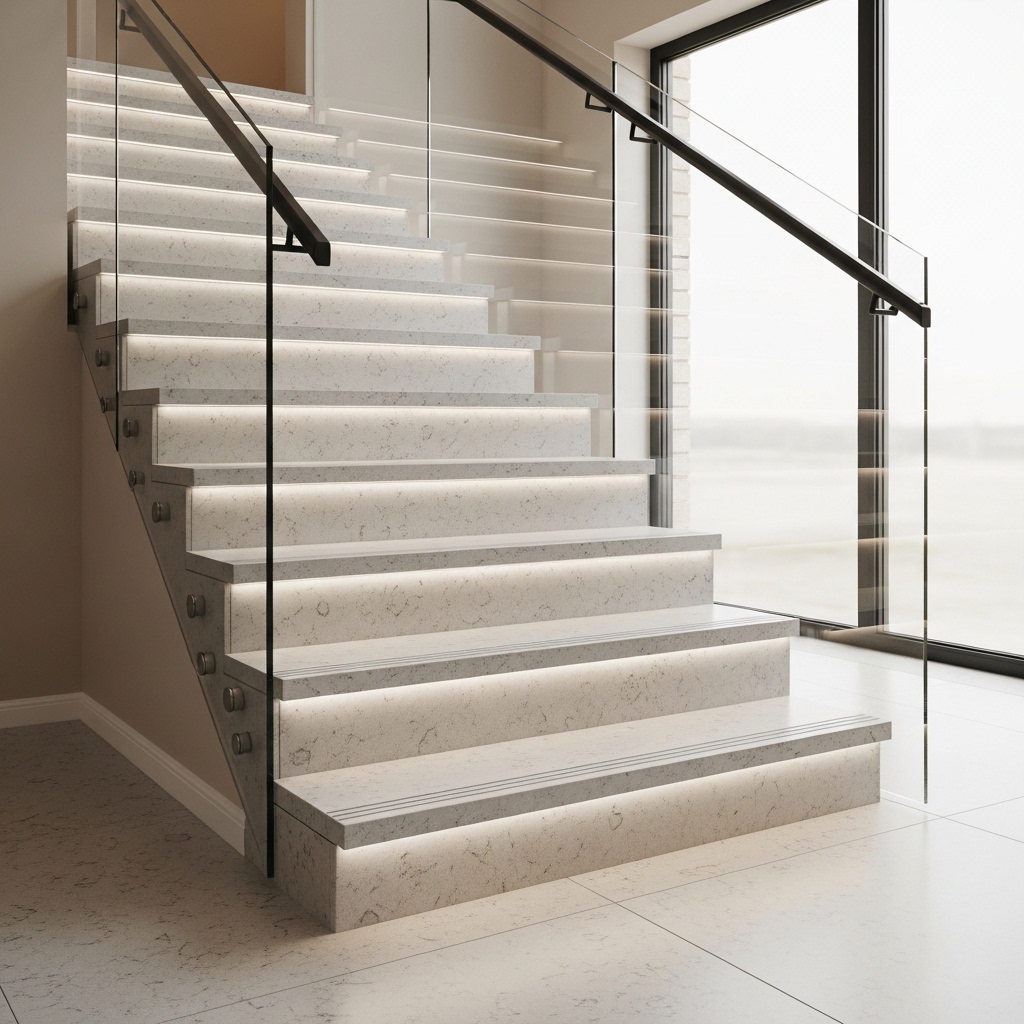
A quartz countertop measurement guide for stairs is useful when countertop-grade quartz is extended into treads, risers, and landings to create material continuity across the interior.
Quartz slabs often come in large formats such as 3000 × 1400 mm or 3200 × 1600 mm (typical examples), allowing multiple stair components to be cut from the same batch for consistent tone.
For example, the landing can be cut from a visually balanced area of the slab, while tread pieces are cut in a repeated orientation so movement stays consistent across the flight.
Stair treads commonly use 20 mm thickness for durability, and edge build-ups can be used if a thicker-looking step nose is desired without using full heavy thickness throughout.
Finish planning is also important—matte or honed tread surfaces can feel more practical—and consistent joint spacing helps the staircase look straight and professionally finished.
Quartz countertop size selection in the UAE is driven by both slab availability and kitchen layout, with standard slabs typically covering most needs and jumbo slabs used for larger islands. Counter depths of 600–650 mm and longer runs up to 3000 mm can often be achieved with minimal seams. Final decisions are usually coordinated with the overall countertop size to ensure a balanced and practical installation.
Quartz Countertop Size Planning for Corian Countertop Installations
Quartz countertop size planning for Corian countertop installations often involves aligning quartz slab dimensions, such as 3040 × 1440 mm or jumbo sizes up to 3200 × 1600 mm, with Corian sheet layouts. This coordination ensures uniform heights, smooth transitions, and consistent edge detailing. Combining quartz with a corian countertop requires precise size planning to achieve a cohesive and seamless kitchen design.
Quartz Countertop Size Planning for Raised Floor Areas
Quartz countertop size planning for areas with a raised floor requires careful coordination of slab dimensions and finished heights. Quartz slabs measuring 3040 × 1440 mm or larger are typically used to fabricate countertops with minimal joints. Proper planning ensures functional access to underfloor systems while maintaining a clean, modern finish.