
Quartz Countertops Size Guide
Quartz countertops size (the finished countertop dimensions) is customized to the kitchen, but it is cut from standard slab formats and usually follows standard cabinet sizing: most countertops finish at 25–25.5 in deep (63.50–64.77 cm), and straight runs often break into 72–120 in (182.88–304.80 cm) sections depending on seam planning. Islands commonly range about 36–60 in wide (91.44–152.40 cm) and 72–120 in long (182.88–304.80 cm), and fabricators choose slab size to reduce seams—most often using 56 in × 120 in slabs (142.24 cm × 304.80 cm) or jumbo 63 in × 126 in slabs (160.02 cm × 320.04 cm), with some brands offering 65 in × 130 in (165.10 cm × 330.20 cm) for wide islands. Quartz countertop thickness is typically 2 cm (0.79 in / 20 mm) or 3 cm (1.18 in / 30 mm), and built-up edges can make the front appear about 1.5 in thick (3.81 cm).
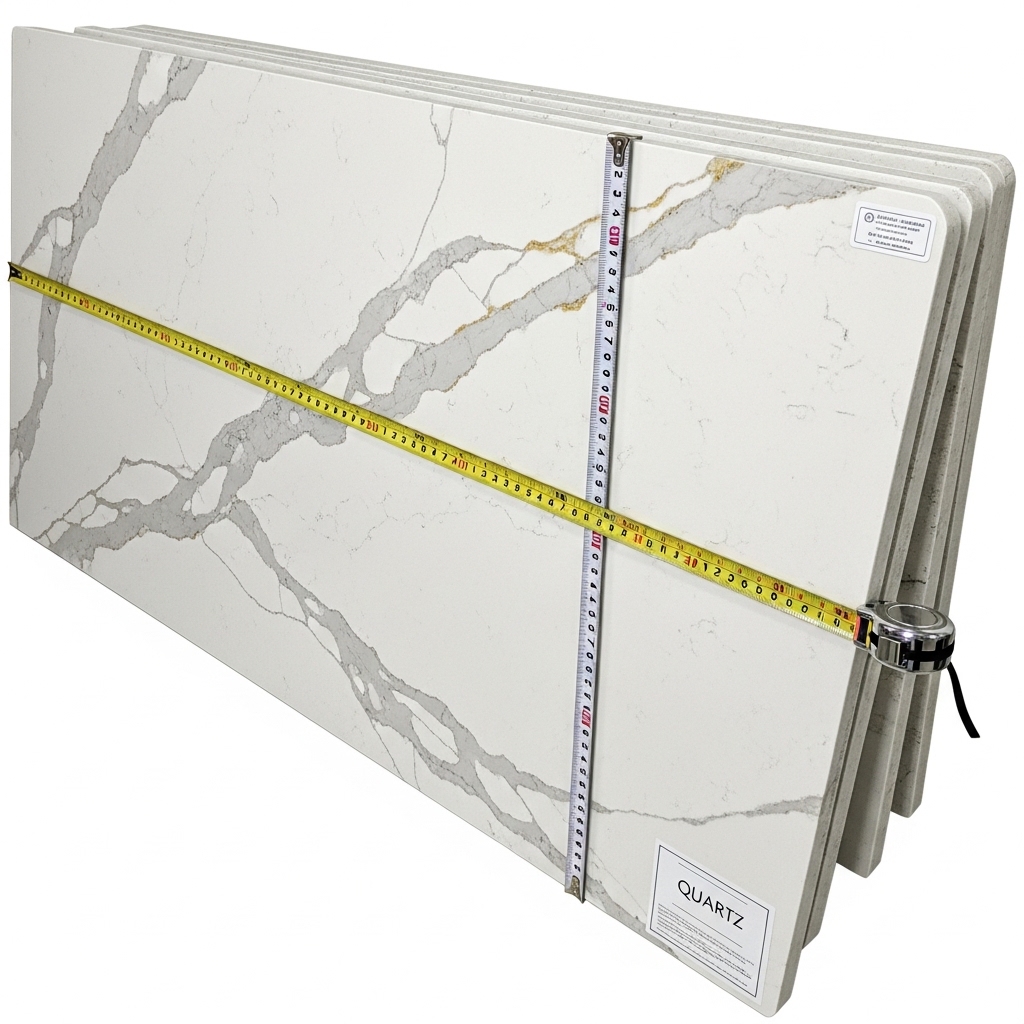
Regular Size
25–25.5 in deep (finished top), cut from 56 in × 120 in or 63 in × 126 in slabs, thickness 0.79 in (2 cm) or 1.18 in (3 cm).
Jumbo Size
25–25.5 in deep (finished top), cut from 63 in × 126 in slabs, thickness 0.79 in (2 cm) or 1.18 in (3 cm).
Super Size
25–25.5 in deep (finished top), cut from 78 in × 138 in slabs, thickness 0.79 in (2 cm) or 1.18 in (3 cm).
Super Jumbo
25–25.5 in deep (finished top), cut from 137.80 in × 78.74 in slabs, thickness 0.79 in (2 cm) or 1.18 in (3 cm).
Mini Slab
25–25.5 in deep (finished top), cut from 48 in × 96 in slabs, thickness 0.79 in (2 cm) or 1.18 in (3 cm).
Choosing Quartz Countertop Measurements
When choosing quartz countertop measurements, it is essential to consider the project dimensions, as accurate measurements ensure a perfect fit in your space. Begin by measuring the length and width of the area where the countertop will be installed, accounting for any overhangs or cutouts for sinks and appliances. For instance, if your kitchen island measures 72 inches by 36 inches, you will need to order a slab that accommodates these dimensions while allowing for any additional features.
The desired aesthetic plays a crucial role in selecting the right quartz. Whether you prefer a sleek, modern look with a polished finish or a more rustic appearance with veining, the color and pattern of the quartz should complement your overall design scheme. For example, a white quartz with gray veining can create a sophisticated ambiance, while a darker hue may lend a more dramatic effect.
Budget constraints are another critical factor; quartz countertops can range from $50 to $150 per square foot, depending on the quality and brand. It is vital to establish a budget early on to narrow down your options and avoid overspending.
The fabricator’s expertise is also significant, as experienced professionals can provide valuable insights into the best practices for installation and maintenance. Choosing a fabricator with a solid reputation can ensure that your countertop is not only beautiful but also durable and functional.
Lastly, specific design requirements, such as the need for custom edges or integrated sinks, should be discussed with your fabricator. Custom edges can add anywhere from $5 to $15 per linear foot, so it’s essential to factor these costs into your overall budget. By carefully considering these elements, you can select the perfect quartz countertop that meets your needs and enhances your space.
Quartz Countertop Measurements: Jumbo Gains
Choosing quartz countertop measurements offers several advantages that can significantly enhance both the aesthetic and functional aspects of your kitchen or bathroom. One of the primary benefits is the availability of jumbo slabs, which typically measure around 126 inches by 63 inches. This larger size reduces the number of seams required in your countertop, resulting in a more seamless and visually appealing surface. Additionally, fewer seams mean less maintenance, as there are fewer areas where dirt and grime can accumulate. The durability of quartz is another compelling reason to opt for this material; it is non-porous, making it resistant to stains and bacteria, which is particularly important in food preparation areas. Furthermore, quartz countertops come in a wide variety of colors and patterns, allowing homeowners to customize their spaces to match their personal style. With prices ranging from $50 to $150 per square foot, investing in quartz can also add significant value to your home, making it a wise choice for both functionality and aesthetics. Overall, the combination of durability, low maintenance, and design flexibility makes quartz countertop measurements a smart option for any renovation project.
Quartz Countertops: Expected Cutting Loss
Quartz countertops are a popular choice for many homeowners due to their durability and aesthetic appeal. When planning for a quartz countertop installation, it is essential to consider the expected cutting loss, which can significantly impact the overall cost and material requirements. Typically, cutting loss can range from 10% to 20%, depending on the complexity of the design and the layout of the slabs. For instance, if you are working with a 50 square foot countertop, you might need to purchase an additional 5 to 10 square feet of material to account for this loss.
To minimize cutting loss, it is advisable to work with a skilled fabricator who can optimize the layout of the slabs, ensuring that the most efficient cuts are made. Additionally, selecting larger slabs can help reduce waste, as they provide more surface area to work with.
It is also important to factor in the edge profiles and any cutouts for sinks or appliances, as these can contribute to additional material loss. By understanding and planning for cutting loss, homeowners can make informed decisions and ensure a successful quartz countertop installation that meets both aesthetic and functional needs.
Quartz Countertops: Biggest Format Available
Quartz countertops have gained immense popularity in recent years, particularly due to their durability and aesthetic appeal. One of the most significant advancements in this market is the availability of large-format quartz slabs. These slabs can measure up to 126 inches in length and 63 inches in width, providing a seamless and elegant look that is highly sought after in modern kitchen and bathroom designs.
The biggest format available allows for fewer seams, which not only enhances the visual appeal but also makes maintenance easier. With fewer joints, there are fewer places for dirt and bacteria to accumulate, making quartz countertops a hygienic choice for any home. Additionally, the large slabs can be fabricated to fit various designs, including waterfall edges and expansive islands, creating a striking focal point in any space.
In terms of thickness, these large-format slabs typically come in 1 cm, 2 cm, and 3 cm options, allowing homeowners to choose the right profile for their needs. The thicker slabs provide added durability and can withstand heavy use, making them ideal for busy kitchens. Furthermore, the versatility of quartz allows for a wide range of colors and patterns, from classic whites and grays to bold, vibrant hues, ensuring that there is a perfect option for every design aesthetic.
The manufacturing process of quartz countertops involves combining approximately 90% crushed natural quartz crystals with resins and pigments, resulting in a non-porous surface that is resistant to stains and scratches. This durability is particularly beneficial in high-traffic areas, where traditional materials may wear down over time. The large-format slabs also reduce the need for frequent replacements, making them a cost-effective choice in the long run.
Overall, the availability of large-format quartz countertops has revolutionized the way homeowners and designers approach kitchen and bathroom renovations. With their impressive size, durability, and aesthetic versatility, these countertops not only enhance the functionality of a space but also elevate its overall design. As more homeowners seek to create open-concept living areas, the demand for these expansive quartz slabs is likely to continue growing, solidifying their place as a top choice in the world of interior design.
Quartz Countertops: Thickness for High-Traffic Spaces
Quartz countertops are increasingly popular in both residential and commercial spaces due to their durability and aesthetic appeal. When considering quartz countertops for high-traffic areas, such as kitchens and bathrooms, the thickness of the material plays a crucial role in ensuring longevity and performance. Typically, quartz countertops are available in thicknesses of 1 cm (approximately 0.39 inches), 2 cm (approximately 0.79 inches), and 3 cm (approximately 1.18 inches). For high-traffic spaces, a thickness of 3 cm is often recommended, as it provides enhanced strength and resistance to chipping and cracking. In high-traffic environments, the wear and tear on surfaces can be significant. A thicker countertop can better withstand the daily rigors of cooking, cleaning, and entertaining. For instance, a 3 cm thick quartz countertop can support heavier loads without bowing or cracking, making it ideal for busy kitchens where heavy pots and pans are frequently placed on the surface. Additionally, the increased thickness allows for more extensive edge profiles, which can enhance the overall design and aesthetic of the space. Another important consideration is the maintenance of quartz countertops. Thicker countertops are generally easier to maintain, as they are less prone to damage from heat and impact. In high-traffic areas, where spills and stains are more likely to occur, a thicker surface can provide an added layer of protection. For example, a 3 cm countertop can better resist heat from hot cookware, reducing the risk of thermal shock that can lead to cracks. Furthermore, quartz is non-porous, which means it does not harbor bacteria or absorb liquids, making it a hygienic choice for kitchens and bathrooms. In conclusion, selecting the right thickness for quartz countertops in high-traffic spaces is essential for ensuring durability and functionality. A thickness of 3 cm is often the best choice, providing the strength needed to withstand daily use while also enhancing the visual appeal of the space. By investing in thicker quartz countertops, homeowners and business owners can enjoy a beautiful and resilient surface that stands the test of time.
Quartz countertop dimension guide for walls & decorative surfaces
A quartz countertop dimension guide for walls and decorative surfaces emphasizes how countertop slab formats can be adapted into vertical panels to create a unified material story across the kitchen and adjacent feature areas.
Large slab formats such as 3000 × 1400 mm or 3200 × 1600 mm (typical examples) can produce both the countertop and tall wall panels, especially when the goal is fewer seams and continuous veining.
For vertical use, many projects choose thinner panels like 6–12 mm (when available) to reduce wall load, while 20 mm thickness may be used where exposed edges, waterfall sides, or bold reveals are part of the design.
As an example, a full-height backsplash panel cut from the same slab as the counter can be sequenced so the vein movement appears to rise from the countertop into the wall.
Dimension planning also includes seam placement at corners or cabinet edges, ensuring the most visible wall area remains as uninterrupted as possible.
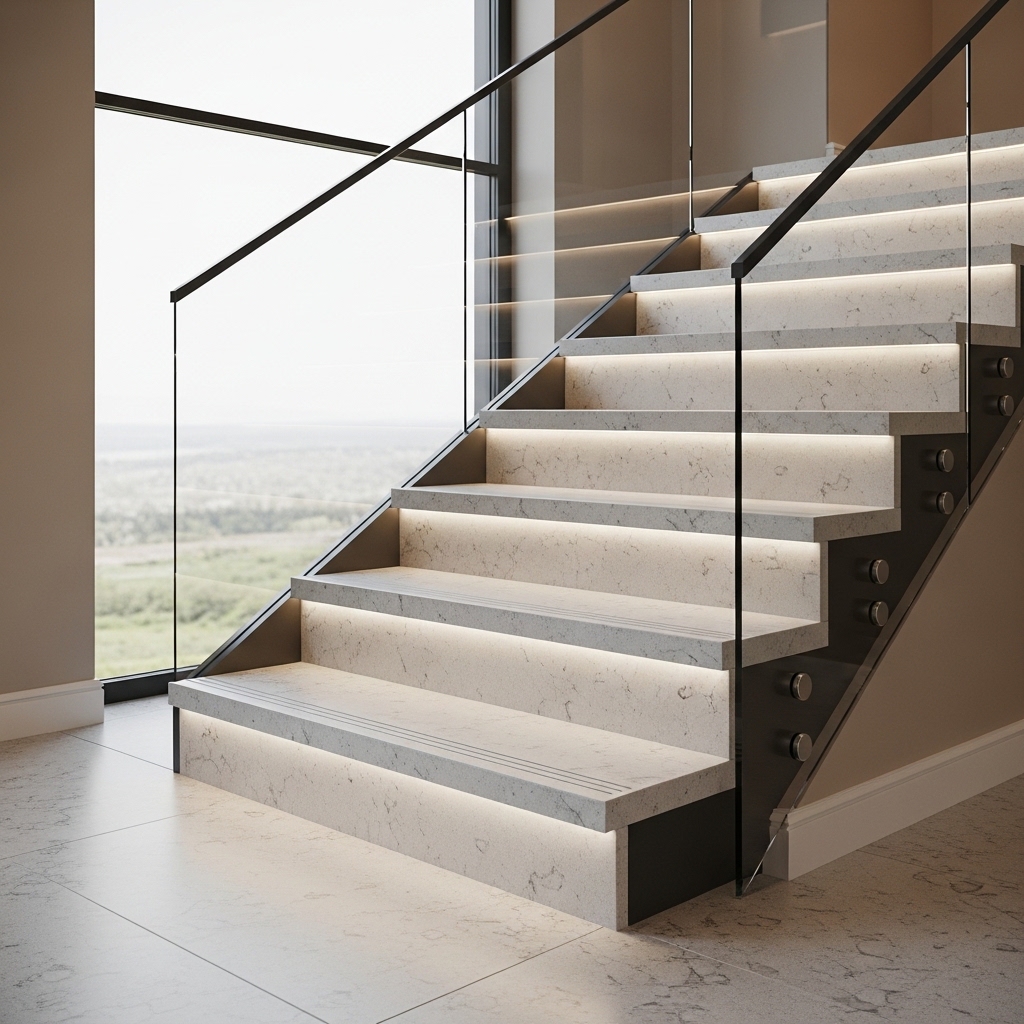
Quartz countertop dimension guide for stairs
A quartz countertop dimension guide for stairs explains how countertop-grade slabs can be converted into stair treads, risers, and landings while keeping the material look consistent and durable under heavy foot traffic.
Quartz countertop slabs often come in large formats like 3000 × 1400 mm or 3200 × 1600 mm, and these dimensions help fabricators cut multiple step components from one batch for better shade control.
For stairs, a common tread thickness is 20 mm, while a thicker visual nose can be created with laminated edge build-ups to achieve a bold profile without using full heavy thickness across every piece.
For example, the landing can be cut from a visually balanced area of the slab, while all treads are cut in a repeated orientation to keep movement consistent from bottom to top.
The guide also considers finish choice for practicality—many choose matte or honed tread surfaces—and specifies durable edge detailing to reduce chipping at the step nose.
Modern interiors in the UAE frequently specify quartz countertops size based on both layout and visual continuity, with standard slabs covering most needs and jumbo slabs reserved for expansive islands. Counter runs of 2800–3200 mm can often be fabricated in a single piece when slab dimensions allow. For wider or longer installations, designers may opt for quartz slab size jumbo to reduce joint lines.
Quartz Countertops Size Guide for Corian Countertops Projects
A quartz countertops size guide for Corian countertops projects often involves aligning quartz slab dimensions, such as 3040 × 1440 mm or larger jumbo sizes, with Corian sheet layouts to ensure consistent heights and clean transitions. These sizes support long counter runs and wide islands with minimal seams. Combining quartz with corian countertops requires precise size coordination to achieve a balanced, seamless overall finish.
Quartz Countertops Size Selection for Raised Floor Projects
Quartz countertops size selection plays a vital role in raised floor projects where seamless integration is required. Common quartz countertop slabs measure 3040 × 1440 mm or extend to jumbo sizes of 3200 × 1600 mm. Choosing the right size ensures compatibility with a raised floor grid and minimizes visible joints.