
Quartz Countertops Slab Size Guide
Quartz countertops slab size typically refers to the slab formats used to fabricate kitchen counters, islands, and vanity tops, and the most common are 56 in × 120 in (142.24 cm × 304.80 cm) for standard slabs and 63 in × 126 in (160.02 cm × 320.04 cm) for jumbo slabs, which are preferred when fewer seams are needed. Some manufacturers also offer extra-large slabs around 65 in × 130 in (165.10 cm × 330.20 cm), and select premium lines can provide super-jumbo sizes like 78 in × 138 in (198.12 cm × 350.52 cm) for oversized islands and long spans. Typical thicknesses for quartz countertop slabs are 2 cm (0.79 in / 20 mm) and 3 cm (1.18 in / 30 mm), with some specialty collections also available in 12 mm (0.47 in / 1.2 cm) thickness.
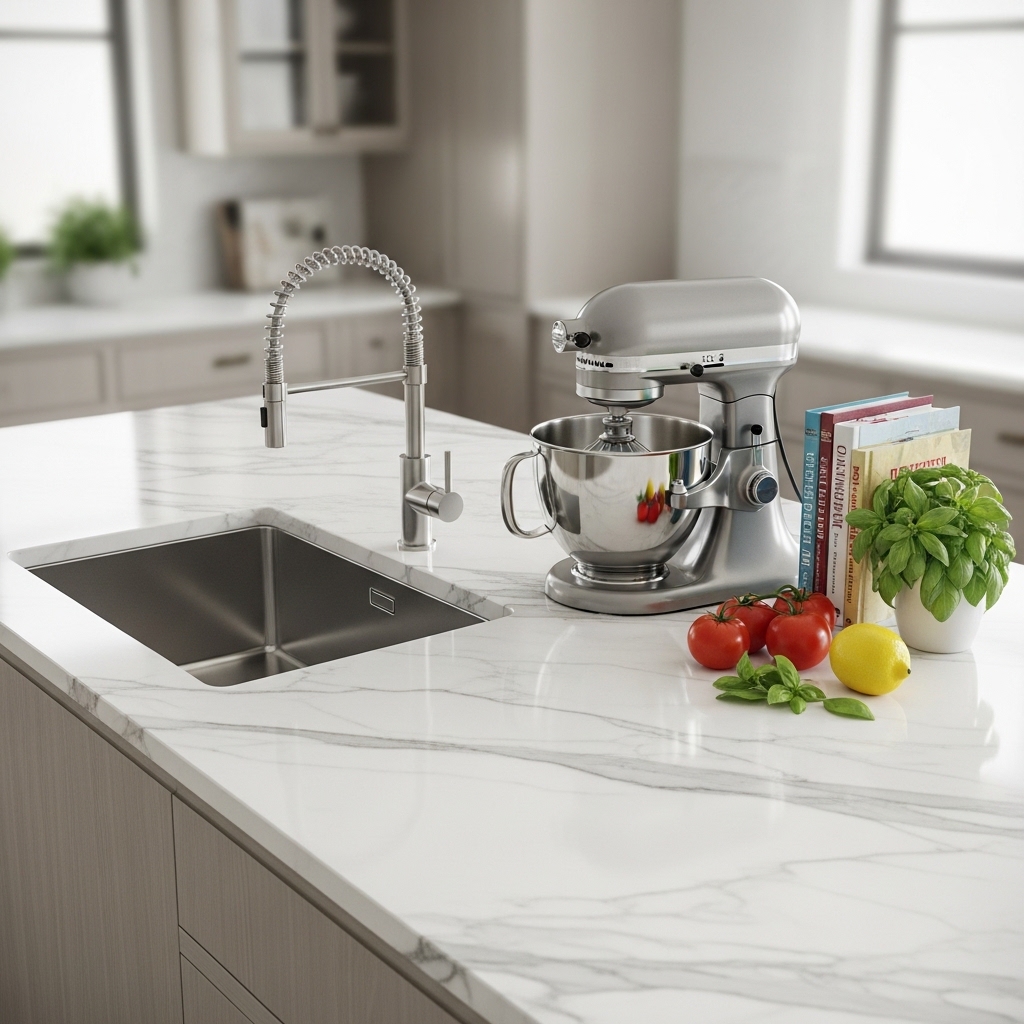
Regular Size
56 in × 120 in (standard) or 63 in × 126 in (jumbo), thickness 0.79 in (2 cm) or 1.18 in (3 cm).
Jumbo Size
63 in × 126 in, thickness 0.79 in (2 cm) or 1.18 in (3 cm).
Super Size
78 in × 138 in, thickness 0.79 in (2 cm) or 1.18 in (3 cm).
Super Jumbo
137.80 in × 78.74 in, thickness 0.79 in (2 cm) or 1.18 in (3 cm).
Mini Slab
48 in × 96 in, thickness 0.79 in (2 cm) or 1.18 in (3 cm).
Choosing Quartz Countertop Panel Dimensions
When choosing quartz countertop panel dimensions, it is essential to consider the project dimensions, as they dictate the overall layout and functionality of the space. For instance, a kitchen island measuring 6 feet by 3 feet may require a single slab of quartz that is at least 120 inches long and 60 inches wide to minimize seams.
The desired aesthetic also plays a crucial role; larger panels can create a seamless look, which is often preferred in modern designs, while smaller pieces may suit more traditional or intricate styles.
Budget constraints are another critical factor, as larger slabs typically come at a higher cost. For example, a standard 2 cm thick quartz slab can range from $50 to $100 per square foot, so calculating the total area needed—say, 30 square feet for a small kitchen—will help in budgeting effectively.
Additionally, the fabricator’s expertise should not be overlooked; some may specialize in larger formats, while others may excel in intricate cuts and designs. It is advisable to consult with the fabricator to ensure they can handle the chosen dimensions without compromising quality.
Lastly, specific design requirements, such as integrated sinks or custom edges, may necessitate unique dimensions that align with the overall vision. For example, if a farmhouse sink is to be integrated, the countertop must be cut precisely to accommodate its dimensions, which could affect the choice of panel size.
Jumbo Countertop Panels: Cleaner, Longer Runs
Choosing quartz countertop panel dimensions or jumbo countertop panels offers several advantages that can significantly enhance both the aesthetic and functional aspects of your space. One of the primary benefits is the cleaner appearance achieved through fewer seams. Standard quartz slabs typically measure around 60 inches by 120 inches, which can result in multiple seams in larger installations. In contrast, jumbo panels, often measuring up to 130 inches by 65 inches or more, allow for longer runs with minimal interruptions, creating a more seamless and visually appealing surface.
This not only enhances the overall look of your countertops but also simplifies maintenance, as fewer seams mean fewer areas for dirt and grime to accumulate. Additionally, the larger dimensions of jumbo panels can reduce installation time, as fewer pieces need to be cut and fitted together.
Furthermore, the durability of quartz ensures that these larger panels can withstand the rigors of daily use while maintaining their beauty over time. With options available in various colors and patterns, homeowners can achieve a cohesive design that complements their kitchen or bathroom, making quartz countertops a practical and stylish choice.
Quartz Countertop Panels: Expected Offcuts
Quartz countertop panels are a popular choice for both residential and commercial spaces due to their durability and aesthetic appeal. When installing quartz countertops, it is essential to consider the expected offcuts, which are the leftover pieces of material after the main sections have been cut to size. Typically, the offcuts can range from 10% to 20% of the total material used, depending on the complexity of the design and the layout of the countertops.
For instance, if you are working with a 50-square-foot slab of quartz, you might anticipate around 5 to 10 square feet of offcuts. These offcuts can often be repurposed for smaller projects, such as backsplashes, cutting boards, or even decorative elements, maximizing the value of the initial investment.
To effectively manage offcuts, it is advisable to plan the layout meticulously before cutting, ensuring that the most significant pieces are utilized first. Additionally, consulting with a professional fabricator can help in minimizing waste and optimizing the use of the quartz material. By understanding the potential offcuts and planning accordingly, homeowners and contractors can achieve a more sustainable and cost-effective installation process.
Quartz Countertop Panels: Biggest Format Available
Quartz countertop panels have revolutionized the way we approach kitchen and bathroom design, offering an unparalleled combination of beauty, durability, and versatility. One of the most significant advancements in this realm is the availability of large-format quartz panels, which can measure up to 126 inches by 63 inches. This size allows for fewer seams and a more cohesive look, making it an ideal choice for expansive countertops, kitchen islands, and even wall cladding.
The biggest format available not only enhances the aesthetic appeal but also simplifies the installation process. With fewer joints, there is less chance for dirt and grime to accumulate, making maintenance easier and more efficient. These large panels are engineered to withstand the rigors of daily use, being resistant to scratches, stains, and heat, which is crucial in high-traffic areas like kitchens. For instance, many quartz surfaces can withstand temperatures up to 150 degrees Celsius, ensuring that hot pots and pans can be placed directly on the surface without fear of damage.
Moreover, the design possibilities are virtually limitless. Manufacturers offer a wide range of colors and patterns, from classic whites and grays to bold, vibrant hues that can mimic natural stone. This versatility allows homeowners and designers to create unique spaces that reflect personal style. For example, a large-format panel with a striking veined pattern can serve as a stunning focal point in a modern kitchen, while a solid color can provide a sleek, minimalist look.
In terms of sustainability, many quartz manufacturers are now incorporating recycled materials into their products, making large-format quartz panels an eco-friendly choice. These panels are not only beautiful and functional but also contribute to a more sustainable future, appealing to environmentally conscious consumers. With the growing trend towards open-concept living spaces, the demand for large-format quartz countertops is expected to continue rising, as they provide both practicality and elegance in one package.
In conclusion, the introduction of big-format quartz countertop panels has transformed the landscape of interior design, offering a perfect blend of style, durability, and ease of maintenance. As technology advances, these surfaces will likely become even more innovative, further solidifying their place as a top choice for modern homes.
Quartz Countertop Panels: Floor-Grade Thickness Guide
Quartz countertop panels are increasingly popular in both residential and commercial spaces due to their durability, aesthetic appeal, and low maintenance requirements. When considering quartz countertops, one crucial aspect to evaluate is the thickness of the panels, particularly when it comes to floor-grade applications. Floor-grade thickness typically refers to the thickness of the quartz slabs that are suitable for flooring installations, which can differ significantly from those used for countertops.
Most quartz countertop panels come in standard thicknesses of 1 cm (approximately 0.39 inches), 2 cm (approximately 0.79 inches), and 3 cm (approximately 1.18 inches). However, for floor-grade applications, the thickness often ranges from 1.2 cm (approximately 0.47 inches) to 2 cm. This thickness is essential for ensuring that the panels can withstand the weight and foot traffic associated with flooring.
A 2 cm thick quartz slab is generally recommended for high-traffic areas, as it provides the necessary strength and stability.
In addition to thickness, the weight of the quartz panels is another factor to consider. A 2 cm thick quartz slab typically weighs around 10-12 pounds per square foot, making it a substantial choice for flooring. This weight can influence the subfloor requirements and installation methods.
It is also important to note that while thicker panels may offer enhanced durability, they can also be more challenging to handle and install, requiring specialized tools and techniques.
When selecting quartz for flooring, it is advisable to consider the intended use of the space. For residential applications, a 1.2 cm thick panel may suffice in areas with lower foot traffic, such as bedrooms or home offices. However, for commercial spaces like restaurants or retail stores, opting for a thicker 2 cm panel can provide the necessary resilience against wear and tear.
Ultimately, the choice of thickness should align with both aesthetic preferences and practical considerations, ensuring that the quartz flooring not only looks stunning but also performs effectively over time.
Quartz countertop slab dimensions for walls & decorative surfaces
Quartz countertop slab dimensions can be ideal for decorative walls when you want the same premium surface look across countertops, backsplashes, and statement panels in one coordinated design.
Large countertop slab formats such as 3000 × 1400 mm or 3200 × 1600 mm (typical examples) provide broad coverage, making it easier to create taller backsplash panels or feature sections with fewer seams.
Countertop thicknesses like 20 mm are often used to match edge profiles and waterfall ends, while thinner wall-friendly versions (often 6–12 mm) can deliver the same design with reduced load on vertical substrates.
As an example, a full-height backsplash can be cut to align veins from the countertop upward, producing a continuous visual “flow” that looks intentional and high-end.
Seam placement is typically coordinated with cabinet boundaries, corners, or shadow gaps so joints blend into the kitchen architecture and remain easy to keep clean.
Quartz countertop slab dimensions for stairs
Quartz countertop slab dimensions can translate well to stairs when the goal is consistent material design across kitchens, landings, and adjacent circulation spaces.
Typical countertop slab formats include examples like 3000 × 1400 mm and 3200 × 1600 mm, and a robust tread thickness like 20 mm is commonly used to handle heavy foot traffic.
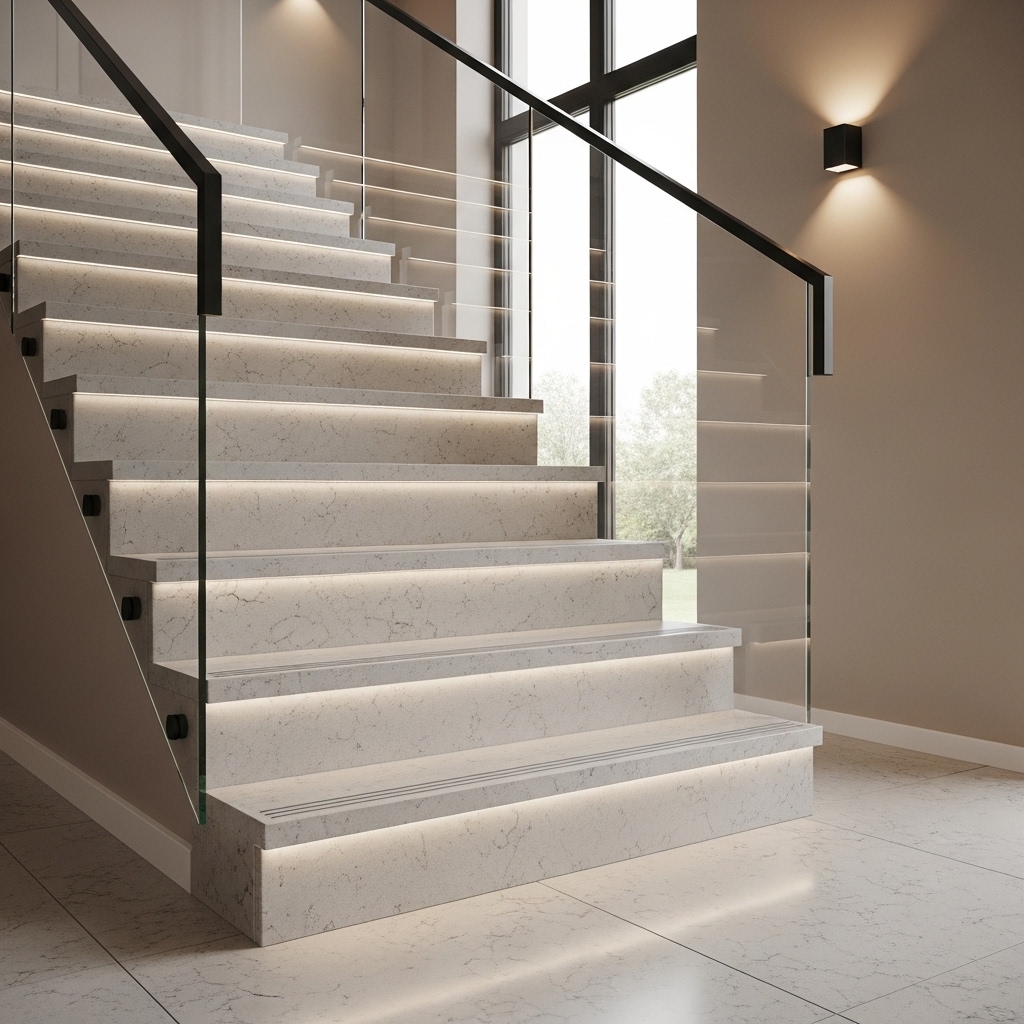
For example, a staircase can use the same quartz design as a kitchen island, with tread pieces cut in a consistent orientation and a landing panel cut from a visually balanced slab area for a cohesive look.
Edge strategy is key: an eased or chamfered step nose improves durability, and laminated noses can create a thicker visual profile without needing an excessively heavy full-thickness piece throughout.
Since stairs are high-contact, many projects prefer a matte or honed finish on tread surfaces, helping the staircase remain practical while still looking premium and architectural.
Quartz countertops slab size selection in the UAE plays a major role in seam placement, waste reduction, and overall visual flow, with standard slabs at about 3040 × 1440 mm and jumbo slabs preferred for larger kitchens. Thickness choices of 20 mm or 30 mm further influence edge detailing and appearance. To finalize layouts accurately, fabricators align these dimensions carefully with the kitchen slab standard size used for counters and islands.
Quartz Countertops Slab Size Guide for Travertine Slab Applications
A quartz countertops slab size guide for travertine slab applications typically recommends standard slabs at about 3040 × 1440 mm for most kitchens and jumbo slabs up to 3200 × 1600 mm for expansive islands. These sizes allow quartz counters to visually balance the texture and warmth of natural stone. Using quartz slabs sized appropriately alongside a travertine slab results in clean transitions and a well-coordinated overall design.
Quartz Countertops Slab Size Coordination with Raised Floors
Quartz countertops slab size coordination is a critical step when surfaces are installed alongside a raised floor. Countertops fabricated from slabs measuring 3040 × 1440 mm or larger allow consistent heights and smooth transitions across different zones. Proper coordination ensures both the countertop and raised floor function together without compromising access or aesthetics.