
Quartz Size Slab Guide
Quartz size slab (quartz slab size) usually refers to the standard factory formats used for countertop fabrication: the common standard slab is 56 in × 120 in (142.24 cm × 304.80 cm), and the common jumbo slab is 63 in × 126 in (160.02 cm × 320.04 cm). Many brands also offer extra-large slabs around 65 in × 130 in (165.10 cm × 330.20 cm), and select premium collections reach super-jumbo sizes like 78 in × 138 in (198.12 cm × 350.52 cm) to minimize seams on oversized islands. Quartz thickness is typically offered in 2 cm (0.79 in / 20 mm) and 3 cm (1.18 in / 30 mm), with some collections also available in thinner 12 mm (0.47 in / 1.2 cm) options for specific applications.
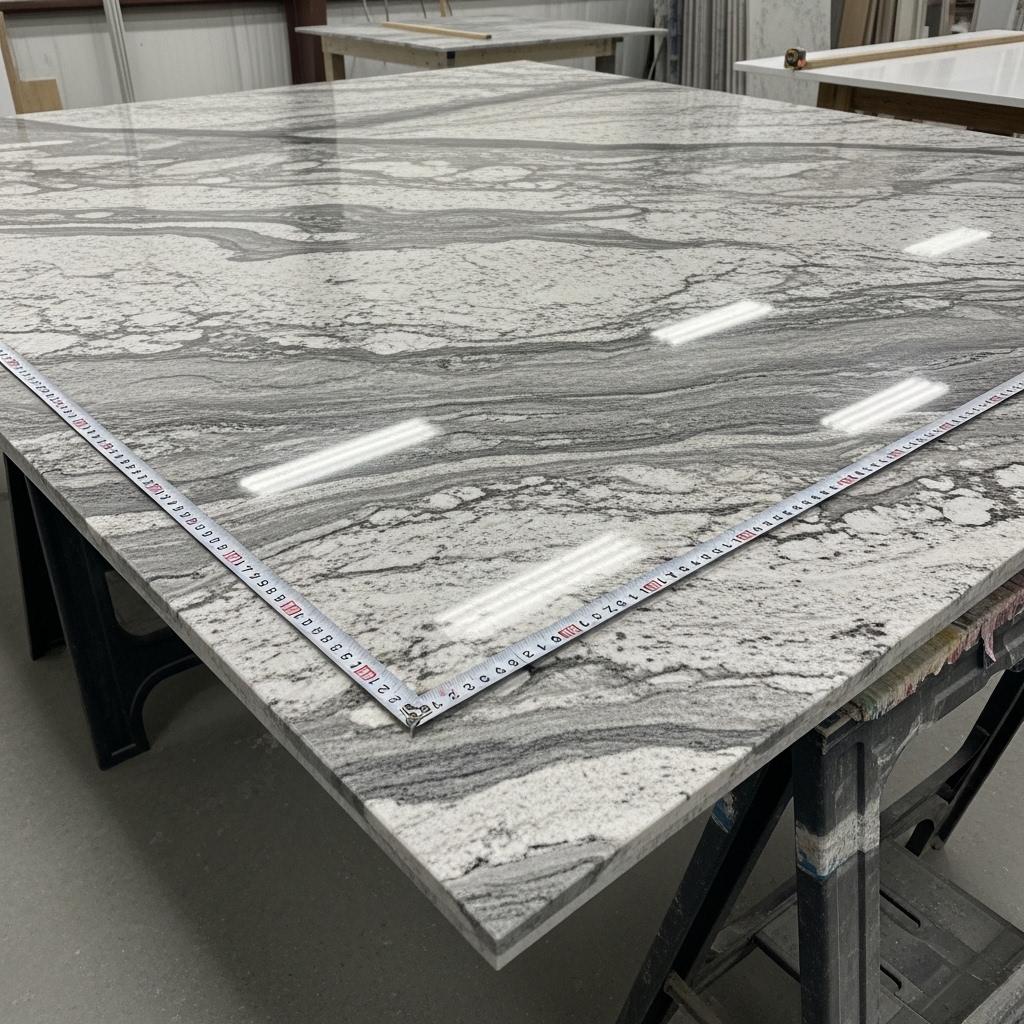
Regular Size
56 in × 120 in (standard) or 63 in × 126 in (jumbo), thickness 0.79 in (2 cm) or 1.18 in (3 cm).
Jumbo Size
63 in × 126 in, thickness 0.79 in (2 cm) or 1.18 in (3 cm).
Super Size
78 in × 138 in, thickness 0.79 in (2 cm) or 1.18 in (3 cm).
Super Jumbo
137.80 in × 78.74 in, thickness 0.79 in (2 cm) or 1.18 in (3 cm).
Mini Slab
48 in × 96 in, thickness 0.79 in (2 cm) or 1.18 in (3 cm).
Quartz Sheet Measurement Guide
When considering a quartz sheet for your project, it is essential to measure accurately based on project dimensions, ensuring that the sheets fit seamlessly into your designated space. Start by measuring the length and width of the area where the quartz will be installed, accounting for any irregularities or obstacles. For instance, if you are working with a countertop that measures 72 inches long and 25 inches wide, you will need to order a quartz sheet that exceeds these dimensions to allow for cuts and overhangs.
The desired aesthetic plays a crucial role in your selection process; whether you prefer a sleek, modern look with a polished finish or a more rustic appearance with a matte texture, the choice of color and pattern will significantly influence the overall ambiance of your space. For example, a white quartz with subtle gray veining can create a sophisticated atmosphere, while a bold, dark hue may lend a dramatic flair.
Budget constraints are another critical factor to consider, as quartz can vary widely in price, typically ranging from $50 to $150 per square foot, depending on the quality and brand. It is vital to balance your aesthetic desires with what you can afford, ensuring that you do not compromise on quality for the sake of cost.
Additionally, the fabricator’s expertise should not be overlooked; working with a skilled fabricator can make a significant difference in the final outcome. They can provide insights into the best practices for installation and maintenance, as well as help you navigate any specific design requirements, such as integrated sinks or custom edge profiles. For example, if you require a waterfall edge for your island, the fabricator must be adept at handling the material to achieve a flawless finish.
Lastly, specific design requirements, such as the need for cutouts for appliances or sinks, should be clearly communicated to ensure that the quartz sheet is fabricated to meet your exact specifications. By considering these factors—project dimensions, desired aesthetic, budget constraints, fabricator’s expertise, and specific design requirements—you can make informed decisions that will lead to a successful and visually appealing installation.
Quartz Sheet Measurements: Jumbo Upsides
Quartz sheet measurement guides offer numerous advantages that enhance both the efficiency and accuracy of projects involving quartz surfaces.
One significant benefit is the precision in measurements, which is crucial for achieving a seamless fit in countertops, backsplashes, and other installations. For instance, using a measurement guide can reduce errors by up to 30%, ensuring that each piece is cut to the exact specifications required.
Additionally, these guides often come with detailed instructions and visual aids, making it easier for both professionals and DIY enthusiasts to understand the measurement process. This clarity can lead to a reduction in material waste, as accurate measurements minimize the likelihood of costly mistakes.
Furthermore, quartz sheet measurement guides can accommodate various sizes, including jumbo sheets that can measure up to 126 inches by 63 inches, allowing for larger projects without the need for multiple seams.
Overall, utilizing a quartz sheet measurement guide not only streamlines the installation process but also enhances the overall quality and aesthetic of the finished product.
Quartz Material: Typical Waste Allowance
Quartz material is widely used in various applications, particularly in countertops, flooring, and other surfaces due to its durability and aesthetic appeal. When working with quartz, it is essential to consider the typical waste allowance, which generally ranges from 10% to 20% of the total material ordered. This allowance accounts for potential defects, cutting errors, and the need for adjustments during installation. For instance, if a project requires 100 square feet of quartz, a waste allowance of 15% would mean ordering an additional 15 square feet, bringing the total to 115 square feet.
It is crucial to accurately calculate the waste allowance to ensure that there is enough material to complete the project without delays or compromises in quality. Additionally, factors such as the complexity of the design, the layout of the installation, and the skill level of the fabricators can influence the amount of waste generated.
By understanding these aspects and planning accordingly, contractors and homeowners can minimize costs and maximize the efficiency of their quartz material usage.
Quartz Material: Maximum Format Options
Quartz material is a popular choice in various applications, particularly in countertops, flooring, and other surfaces due to its durability and aesthetic appeal. One of the key advantages of quartz is its versatility in format options. It can be manufactured in large slabs, tiles, and even custom shapes, allowing for a wide range of design possibilities. For instance, quartz slabs can be produced in sizes up to 120 inches by 55 inches, providing ample surface area for expansive countertops or large-format installations.
Additionally, quartz tiles typically come in sizes such as 12×12 inches, 18×18 inches, and even larger formats like 24×48 inches. This variety enables designers and homeowners to choose the perfect size for their specific project needs. The ability to cut and shape quartz into different formats also means that it can be used in various applications, from kitchen islands to bathroom vanities, enhancing both functionality and style.
Moreover, quartz surfaces are engineered to mimic the appearance of natural stone, offering a wide range of colors and patterns. Manufacturers often provide options that include solid colors, veined patterns, and even textured finishes. This extensive palette allows for creative freedom in interior design, making it easier to match the quartz material with existing decor or to create a bold statement piece.
In terms of maintenance, quartz is non-porous, which means it does not require sealing like natural stone. This characteristic, combined with its resistance to scratches and stains, makes quartz an ideal choice for high-traffic areas. Homeowners can enjoy the beauty of quartz without the extensive upkeep associated with other materials.
Overall, the maximum format options available for quartz material not only enhance its functionality but also contribute to its popularity in modern design. With the ability to customize sizes, colors, and finishes, quartz continues to be a top choice for those seeking both durability and aesthetic appeal in their spaces.
Quartz Material: Floor-Grade Thickness Guide
Quartz is a popular choice for flooring due to its durability, aesthetic appeal, and low maintenance requirements. When considering quartz for flooring applications, understanding the appropriate thickness is crucial for ensuring both performance and longevity. Typically, quartz flooring comes in various thicknesses, with the most common being 1 cm (approximately 0.39 inches) and 2 cm (approximately 0.79 inches).
The 1 cm thickness is often suitable for residential applications where the foot traffic is moderate. This thickness is lightweight and easier to handle, making it ideal for wall cladding or countertops as well. However, for high-traffic areas such as commercial spaces or busy households, a 2 cm thickness is recommended. This thicker option provides enhanced durability and resistance to wear and tear, ensuring that the flooring can withstand the demands of heavy foot traffic.
In addition to thickness, the installation method also plays a significant role in the performance of quartz flooring. For instance, a thicker slab may require a more robust subfloor to support its weight, while thinner slabs can be installed over existing flooring with proper underlayment. It is essential to consult with professionals to determine the best thickness and installation method based on the specific application and expected usage.
Moreover, the aesthetic versatility of quartz allows for a wide range of colors and patterns, making it an attractive option for various design styles. Whether opting for a sleek, modern look or a more traditional appearance, the thickness of the quartz can influence the overall visual impact. Thicker slabs often provide a more substantial and luxurious feel, while thinner options can create a more streamlined and contemporary look.
Ultimately, selecting the right thickness for quartz flooring is a critical decision that affects both functionality and design. By understanding the differences between the available thicknesses and considering the specific needs of the space, homeowners and designers can make informed choices that enhance both the beauty and durability of their flooring.
Quartz slab measurement overview for walls & decorative surfaces
A quartz slab measurement overview for walls covers slab format, thickness, seam placement, and pattern direction, because these factors determine how seamless and premium the finished surface appears.
Common slab examples include 3000 × 1400 mm and 3200 × 1600 mm, while jumbo and extra-large formats can reduce seams further for large feature walls.
For vertical use, thickness often sits around 6–12 mm to manage weight, while 20 mm may be used where exposed edges, returns, or profile matching to countertops is important.
For example, a 3200 × 1600 mm slab provides about 5.12 m² coverage, allowing fewer panel joints and helping veining styles look more continuous across an elevation.
An effective overview plan also includes tolerances for joints, corner sealant lines, and sequencing pieces so tone consistency and pattern alignment stay controlled from panel to panel.
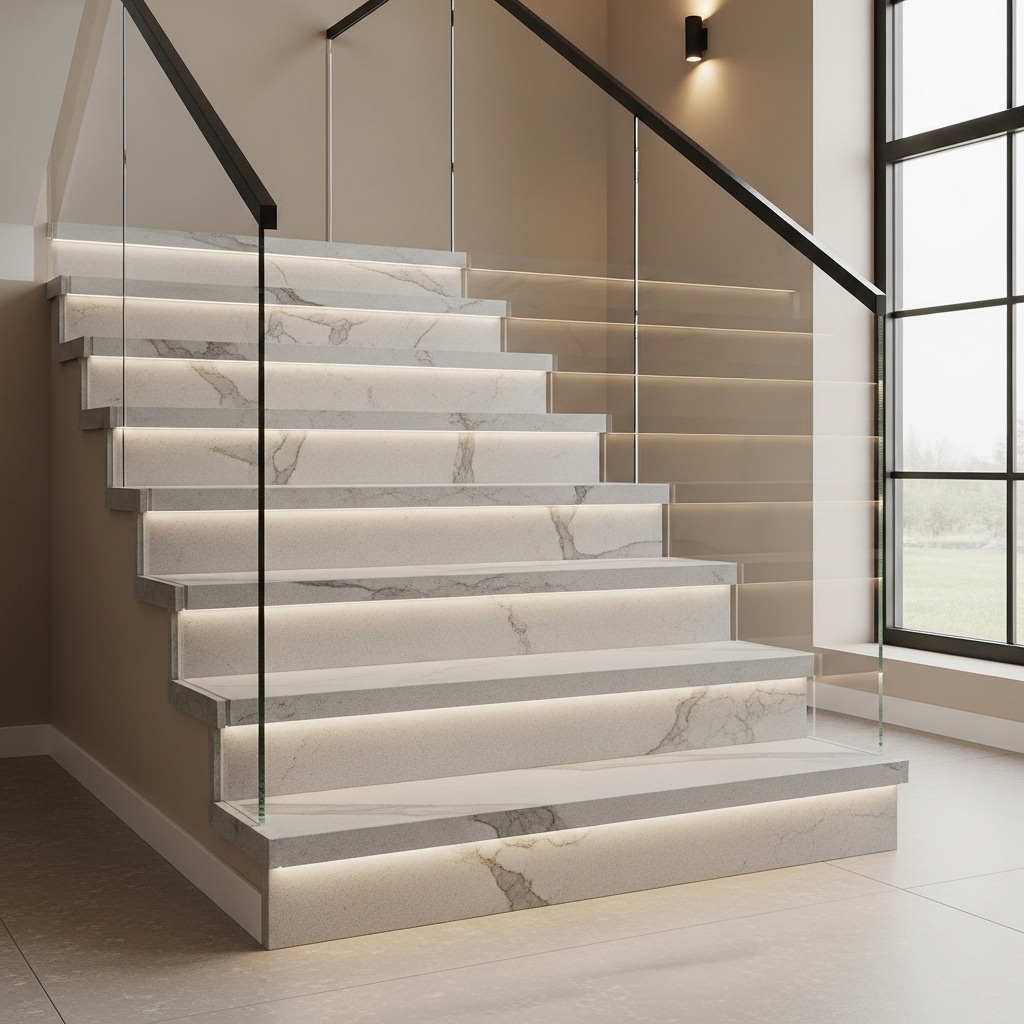
Quartz slab measurement overview for stairs
A quartz slab measurement overview for stairs combines site dimensions, slab format selection, thickness planning, seam placement, and edge detailing into one clear fabrication and installation plan.
Quartz slabs commonly come in large formats like 3000 × 1400 mm or 3200 × 1600 mm, and selecting the right format helps keep landings more continuous and reduces joints across the flight.
For example, a 3200 × 1600 mm slab provides about 5.12 m² of coverage, which can support multiple treads plus a landing section depending on nesting and edge build-up choices.
Treads typically use 20 mm thickness, and finishes like matte or honed are often preferred on steps for a more practical feel, with an eased or chamfered nose to reduce chipping risk.
The overview concludes with tolerances—uniform joint gaps, clean corner returns, and consistent cut orientation—so the staircase reads straight and premium from every angle.
Quartz size slab offerings in the UAE usually include standard formats near 3040 × 1440 mm and jumbo options exceeding 3200 mm in length, providing flexibility for different kitchen layouts. Thicknesses of 20 mm and 30 mm are commonly stocked to suit various edge profiles. Premium collections, such as those defined by cambria slab size, are often reviewed separately due to their specific dimensional ranges.
Quartz Size Slab Guide for Threshold Marble Installations
A quartz size slab guide for threshold marble installations typically recommends standard slabs around 3040 × 1440 mm or jumbo slabs up to 3200 × 1600 mm, providing sufficient material for both main surfaces and transition pieces. Thicknesses of 20 mm or 30 mm are commonly used for durability. Cutting a matching threshold marble from the same slab ensures consistent
Quartz Size Slab Options for Raised Floor Installations
Quartz size slab options provide flexibility for installations over a raised floor. Standard quartz slabs are commonly around 3040 × 1440 mm, while larger formats extend coverage for open spaces. Selecting the right size helps maintain load balance and simplifies alignment with floor access panels.