
Quartzite Slab Size Guide
Quartzite slab size (natural quartzite used for countertops) commonly arrives in large quarry-cut pieces similar to granite, often in ranges around 108–120 in long × 60–78 in wide (274.32–304.80 cm × 152.40–198.12 cm), with some shipments including slightly smaller slabs near 96 in × 60 in (243.84 cm × 152.40 cm) depending on the bundle and the quarry. Because quartzite is popular for big islands, fabricators often look for wider pieces closer to 72–78 in (182.88–198.12 cm) when available to reduce seams. Typical quartzite thicknesses are 2 cm (0.79 in / 20 mm) and 3 cm (1.18 in / 30 mm), with 1.5 cm (0.59 in / 15 mm) sometimes offered for vertical applications or lighter designs.
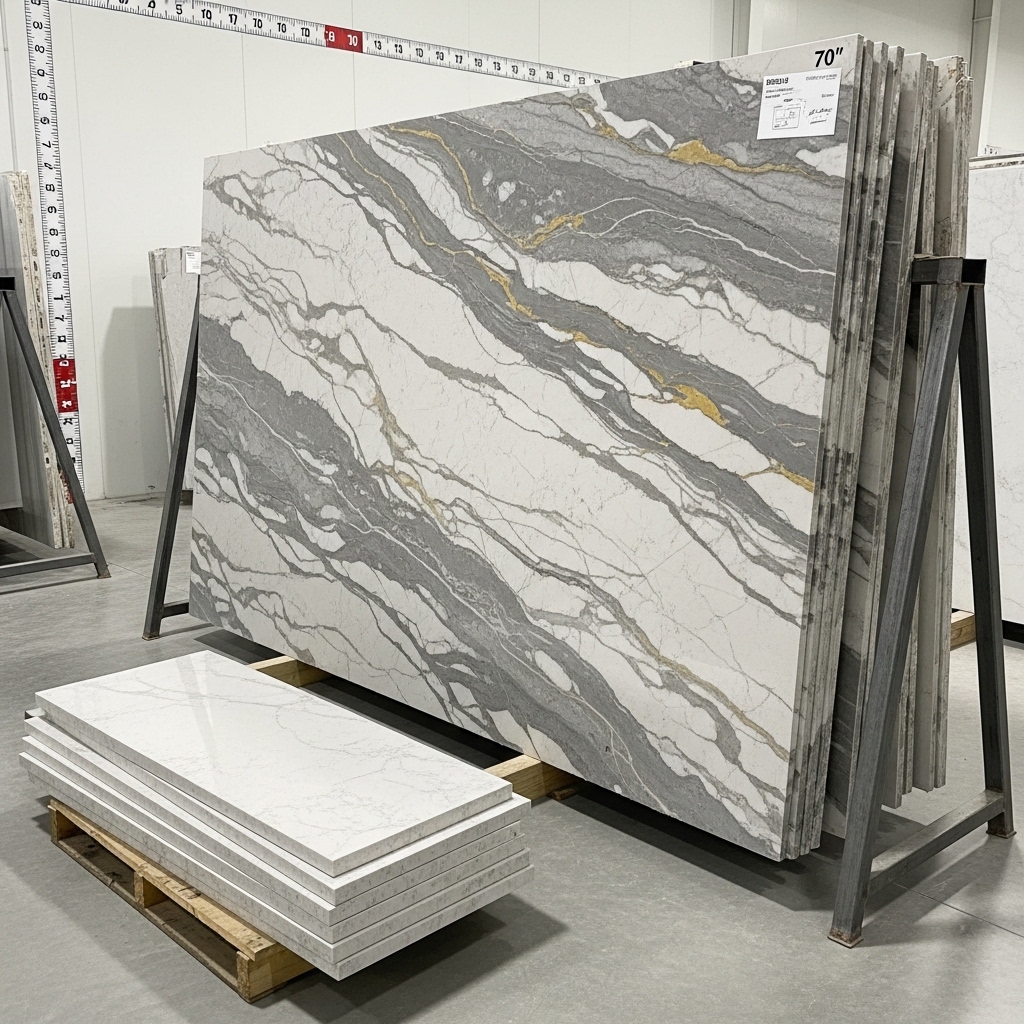
Regular Size
120 in × 72 in (common range), thickness 0.79 in (2 cm) or 1.18 in (3 cm).
Jumbo Size
126 in × 78 in (jumbo range), thickness 0.79 in (2 cm) or 1.18 in (3 cm).
Super Size
138 in × 78 in (super range), thickness 0.79 in (2 cm) or 1.18 in (3 cm).
Super Jumbo
138 in × 78 in (super jumbo range), thickness 0.79 in (2 cm) or 1.18 in (3 cm).
Mini Slab
96 in × 48 in (mini range), thickness 0.79 in (2 cm) or 1.18 in (3 cm).
Finding the Right Quartzite Sheet Dimensions
Finding the right quartzite sheet dimensions for your project involves careful consideration of several factors.
First, assess the project dimensions; measure the area where the quartzite will be installed, ensuring to account for any irregular shapes or cutouts, such as sinks or outlets. For instance, if you have a countertop that measures 72 inches by 36 inches, you may need a sheet that is at least 80 inches by 40 inches to allow for overhangs and cuts.
Next, consider your desired aesthetic. Quartzite comes in various colors and patterns, so choose a slab that complements your overall design vision. If you prefer a more dramatic look, opt for larger slabs that showcase the stone’s natural veining, which can be more visually impactful when the dimensions are generous.
Budget constraints also play a crucial role; larger sheets can be more expensive, and you may need to balance size with cost. For example, if your budget allows for $60 per square foot and you need 30 square feet, your total budget would be $1,800.
Additionally, the fabricator’s expertise is essential; some may have limitations on the size of the slabs they can handle or specific cutting techniques that can affect the final dimensions. Ensure that your fabricator is experienced with quartzite and can accommodate your desired sheet size without compromising quality.
Finally, specific design requirements, such as edge profiles or thickness, should be factored in. Standard quartzite thickness ranges from 2 cm to 3 cm, and your choice may influence the overall look and durability of the installation. By carefully evaluating these aspects, you can select the right quartzite sheet dimensions that align with your project goals.
Quartzite Sheet Dimensions: Jumbo Benefits
Finding the right quartzite sheet dimensions offers numerous advantages that can significantly enhance both aesthetic appeal and functionality in various applications.
One of the primary benefits is the reduction of seams in large installations; for instance, opting for jumbo-sized quartzite sheets, which can measure up to 126 inches by 63 inches, minimizes the number of joints, creating a more seamless and visually appealing surface.
This not only elevates the overall design but also simplifies maintenance, as fewer seams mean fewer areas for dirt and grime to accumulate.
Additionally, larger dimensions can lead to cost savings in terms of labor and installation time, as fewer pieces need to be handled and installed.
Furthermore, the right dimensions can enhance the structural integrity of the installation, providing a more durable surface that withstands wear and tear over time.
Ultimately, selecting the appropriate quartzite sheet dimensions is crucial for achieving a stunning, long-lasting result that meets both aesthetic and practical needs.
Expected Cutting Waste for Quartzite
When considering the expected cutting waste for quartzite, it is essential to understand the factors that influence this metric. Typically, the cutting waste for quartzite can range from 10% to 20%, depending on the complexity of the project and the skill of the fabricator.
The type of machinery used also plays a significant role; advanced waterjet cutting technology can minimize waste compared to traditional methods.
For instance, if a project requires 100 square feet of finished quartzite, one might expect to use between 110 to 120 square feet of raw material to account for the cutting waste.
Additionally, the layout of the slabs during the cutting process can significantly impact waste levels; careful planning can reduce waste by optimizing the arrangement of cuts.
It is also important to consider the natural characteristics of quartzite, as variations in thickness and density can lead to additional waste during the cutting process.
Overall, effective waste management strategies, including precise measurements and advanced cutting techniques, can help reduce the expected cutting waste for quartzite, ultimately leading to cost savings and a more sustainable approach to material usage.
Quartzite Sheets: Largest Format Available
Quartzite sheets are increasingly becoming a popular choice in the world of interior design and architecture due to their stunning aesthetics and remarkable durability. These natural stone slabs are formed from sandstone that has undergone intense heat and pressure, resulting in a dense and resilient material. One of the most appealing aspects of quartzite is its availability in large formats, which allows for seamless installations that can create a visually striking effect in any space.
The largest quartzite sheets can measure up to 126 inches by 63 inches, providing ample coverage for expansive surfaces such as countertops, wall cladding, and flooring. This size not only minimizes the number of seams but also enhances the overall appearance, giving a more cohesive and elegant look to the design. The thickness of these sheets typically ranges from 1.2 cm to 3 cm, offering versatility for various applications, from kitchen islands to bathroom vanities.
In addition to their size, quartzite sheets are known for their unique color variations and patterns, which can mimic the appearance of marble or granite while offering superior durability. The natural veining and rich hues can add depth and character to any room, making it a favored choice among designers and homeowners alike. Furthermore, quartzite is highly resistant to scratching, heat, and staining, making it an ideal material for high-traffic areas.
When considering quartzite sheets for a project, it is essential to note that they require proper sealing to maintain their beauty and longevity. Regular maintenance, including cleaning with pH-balanced solutions, can help preserve the stone’s natural luster. The investment in quartzite sheets is often justified by their long-lasting performance and timeless appeal, making them a worthwhile addition to any residential or commercial space.
Overall, the combination of large format availability, stunning aesthetics, and exceptional durability makes quartzite sheets a top choice for those looking to elevate their interiors. Whether used in modern or traditional settings, these sheets can transform spaces into luxurious environments that stand the test of time.
Quartzite: Thickness for Floors & High Traffic
Quartzite is a highly durable metamorphic rock that is increasingly popular for flooring, especially in high-traffic areas. Its impressive hardness, which is comparable to granite, makes it an ideal choice for spaces that experience significant foot traffic. When considering quartzite for flooring, the thickness of the slabs plays a crucial role in ensuring longevity and performance. Typically, quartzite slabs used for flooring range from 1 cm to 3 cm in thickness.
For residential applications, a thickness of 1.5 cm (approximately 0.59 inches) is often sufficient, providing a balance between weight and durability. However, in commercial settings or areas that are subject to heavy use, such as shopping malls or airports, thicker slabs of 2 cm to 3 cm (about 0.79 to 1.18 inches) are recommended. This added thickness not only enhances the stone’s ability to withstand heavy loads but also reduces the risk of cracking or chipping over time.
Moreover, the installation method can also influence the choice of thickness. Thicker slabs may require a more robust subfloor and can be installed using different techniques, such as thin-set or mud-set methods. In high-traffic environments, ensuring that the flooring is properly installed is essential to prevent issues like uneven wear or shifting.
In addition to thickness, the finish of quartzite can also impact its performance in high-traffic areas. A honed finish, for example, provides a more slip-resistant surface, making it safer for public spaces. On the other hand, a polished finish offers a stunning aesthetic but may require more maintenance to keep it looking pristine.
Ultimately, when selecting quartzite for flooring in high-traffic areas, it is essential to consider both the thickness and the finish to ensure that the material not only meets aesthetic desires but also withstands the demands of everyday use. With the right choice, quartzite can provide a beautiful and resilient flooring solution that lasts for years.
Quartzite slab dimensions for walls & decorative surfaces
Quartzite slab dimensions for walls and decorative surfaces are often supplied in large natural-stone slab ranges, with availability influenced by quarry yield and the specific type of quartzite selected.
Quartzite is commonly used for statement cladding because it delivers natural movement and depth, and larger slab ranges allow designers to reduce seams and better showcase sweeping veining and color transitions on vertical surfaces.
For wall use, thickness is often selected around 10–20 mm depending on the project requirements, and larger panel cuts are typically planned to keep the most dramatic pattern zones in focal areas like fireplace surrounds or feature walls behind seating zones.
As a practical example, a quartzite wall installation can be planned with sequenced panels cut from one slab so the vein flow continues from one piece to the next, creating a continuous “stone landscape” effect across the elevation.
Because quartzite can vary in color and movement, it’s common to review slabs and map the layout before cutting, ensuring the final decorative wall reads cohesive and balanced rather than patchy or mismatched.
Quartzite slab dimensions for stairs
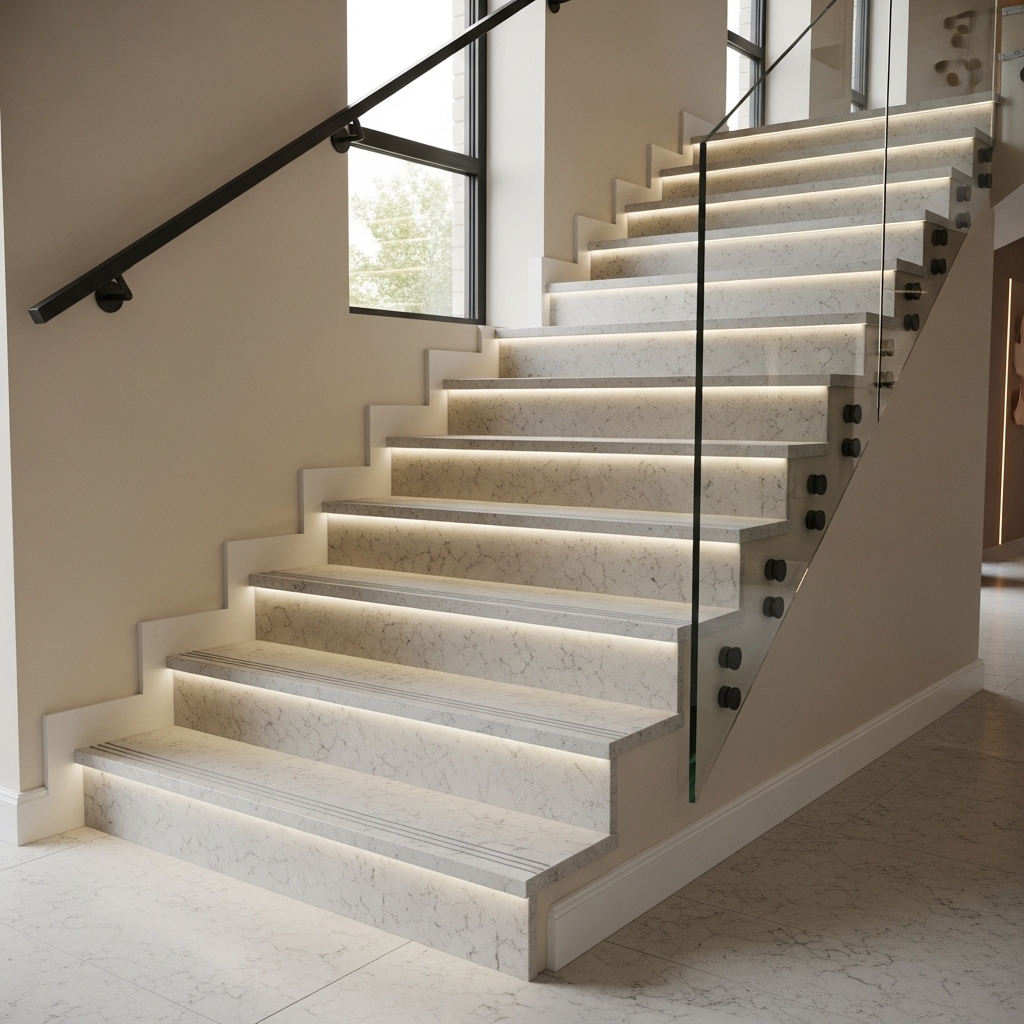
Quartzite slab dimensions for stairs are typically based on natural-stone slab availability, which can vary by quarry and selection, making slab viewing and layout mapping especially valuable for consistent results.
Quartzite is often chosen for its natural movement and high-end look, and larger slabs provide more flexibility to cut multiple treads and a landing piece with coordinated vein direction.
For stair performance, thickness is commonly selected around 20–30 mm depending on design and fixing method, and edge detailing (eased or chamfered) helps protect the step nose in high-traffic use.
For example, a quartzite staircase can be planned so the vein flow runs consistently across all treads, while landings are cut from a visually balanced area of the slab to avoid distracting pattern breaks.
Because quartzite patterns can vary strongly, a good dimension plan prioritizes sequencing pieces from the same slab or bundle to keep tone and movement coherent throughout the stair flight.
For projects in the UAE, quartzite slab size typically ranges from about 2800–3200 mm in length and 1500–1800 mm in width, though exact dimensions vary by quarry and shipment. This natural variation means slabs should always be checked individually before templating, especially for islands or long runs. To set expectations, fabricators often contrast these measurements with the typical quartz slab size, which is more standardized and predictable across brands.
Quartzite Slab Size Options for Travertine Marble Projects
Quartzite slab size options for travertine marble projects typically range from 2800–3200 mm in length and 1500–1800 mm in width, depending on quarry availability. These large-format slabs are suitable for countertops, wall cladding, and flooring where natural texture and durability are required. Pairing quartzite slabs of this size with travertine marble elements allows designers to balance strength with classic stone aesthetics.
Quartzite Slab Size Guidelines for Raised Floor Installations
Quartzite slab size guidelines for use with a raised floor usually involve slabs around 3000 × 1500 mm, suitable for both horizontal and vertical applications. These dimensions allow clean detailing at floor edges and service zones while maintaining the natural strength of quartzite. Thicknesses of 20 mm are commonly chosen to balance weight and durability above access floor systems.