
Size of a Quartz Slab
The size of a quartz slab is usually one of a few standard industry formats that suppliers keep in stock: 56 in × 120 in (142.24 cm × 304.80 cm) is the common standard slab, while 63 in × 126 in (160.02 cm × 320.04 cm) is the common jumbo slab used for larger countertops and islands. Some manufacturers also list extra-large slabs around 65 in × 130 in (165.10 cm × 330.20 cm), and premium super-jumbo slabs may reach about 78 in × 138 in (198.12 cm × 350.52 cm) for very large, seam-minimizing designs. Typical thicknesses are 2 cm (0.79 in / 20 mm) and 3 cm (1.18 in / 30 mm, often marketed as “1¼ in” nominal), with some collections also offered in thinner 12 mm (0.47 in / 1.2 cm).
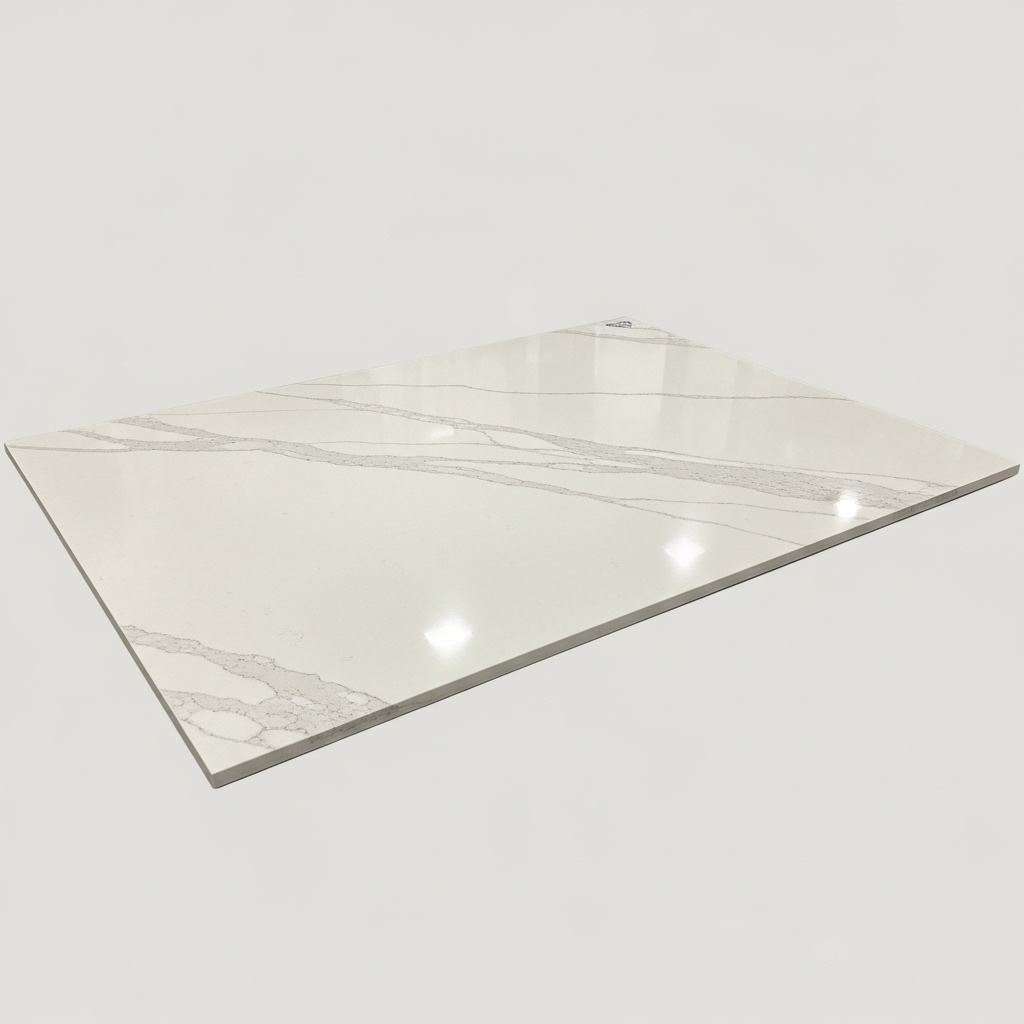
Regular Size
56 in × 120 in, thickness 0.79 in (2 cm) or 1.18 in (3 cm).
Jumbo Size
63 in × 126 in, thickness 0.79 in (2 cm) or 1.18 in (3 cm).
Super Size
78 in × 138 in, thickness 0.79 in (2 cm) or 1.18 in (3 cm).
Super Jumbo
137.80 in × 78.74 in, thickness 0.79 in (2 cm) or 1.18 in (3 cm).
Mini Slab
48 in × 96 in, thickness 0.79 in (2 cm) or 1.18 in (3 cm).
Quartz Slab Measurements: What to Pick
When selecting quartz slab measurements for your project, it is essential to consider the project dimensions, desired aesthetic, budget constraints, fabricator’s expertise, and specific design requirements.
First, accurately measure the area where the quartz will be installed, ensuring to account for any cuts or seams; for instance, a standard countertop might require slabs measuring 120 inches by 55 inches, while a larger island could necessitate multiple slabs.
Next, think about the aesthetic you wish to achieve; lighter colors can create an airy feel, while darker hues may add drama and sophistication.
Budget constraints play a crucial role as well; quartz slabs can range from $50 to $150 per square foot, so it’s vital to balance quality with affordability.
Additionally, the fabricator’s expertise should not be overlooked; some may specialize in intricate designs or large-scale projects, which can influence the choice of slab size and thickness—typically, slabs are available in 2 cm or 3 cm thicknesses.
Lastly, consider any specific design requirements, such as edge profiles or integrated sinks, which may dictate the dimensions and layout of the slabs. By carefully evaluating these factors, you can make informed decisions that align with your vision and practical needs.
Quartz Slab Measurements: Go Jumbo for Less Seaming
When considering quartz slab measurements, opting for larger slabs, often referred to as “jumbo” slabs, can significantly reduce the need for seams in your project.
Larger slabs typically measure around 126 inches by 63 inches, compared to standard sizes of 96 inches by 54 inches. This increase in size allows for a more seamless appearance, which is particularly advantageous in expansive surfaces like kitchen countertops or large islands.
Fewer seams not only enhance the aesthetic appeal but also improve the durability of the installation, as seams can be potential weak points where damage or staining may occur. Additionally, larger slabs can lead to cost savings in labor and materials, as fewer seams mean less adhesive and fewer hours spent on installation.
By choosing jumbo quartz slabs, homeowners and designers can achieve a more cohesive look while maximizing the efficiency of their projects, making it a smart choice for both functionality and style.
Practical Waste Estimate for Quartz Material
When estimating practical waste for quartz material, it is essential to consider various factors that contribute to the overall yield and efficiency of the material usage. Typically, the waste percentage for quartz can range from 10% to 20%, depending on the complexity of the project and the cutting techniques employed. For instance, if a project requires 100 square feet of quartz, and the estimated waste is 15%, the total amount of quartz needed would be approximately 115 square feet.
To minimize waste, it is crucial to plan the layout of the quartz slabs carefully, ensuring that cuts are optimized to reduce off-cuts. Additionally, using advanced cutting technology, such as waterjet or CNC machines, can significantly decrease the amount of waste generated during the fabrication process.
It is also advisable to account for potential defects in the material, which can further increase waste. By conducting a thorough inspection of the quartz slabs before cutting, one can identify any imperfections that may lead to additional waste.
Ultimately, a detailed waste estimate not only aids in budgeting and material procurement but also promotes sustainability by encouraging efficient use of resources.
Quartz Sheet Material: Biggest Option
Quartz sheet material has emerged as one of the most popular choices for countertops, surfaces, and various applications in both residential and commercial settings. One of the biggest advantages of quartz sheets is their durability. Composed of approximately 90-95% crushed natural quartz crystals combined with resins and pigments, these sheets are engineered to withstand daily wear and tear. This makes them highly resistant to scratches, stains, and heat, which is a significant benefit for kitchen and bathroom surfaces where spills and high temperatures are common.
In terms of aesthetics, quartz sheets offer a wide range of colors and patterns, allowing homeowners and designers to achieve the desired look without compromising on functionality. For instance, manufacturers produce quartz sheets in various finishes, including polished, honed, and textured. This versatility enables them to mimic the appearance of natural stone, such as granite or marble, while providing a more uniform and consistent look.
Moreover, quartz sheets are non-porous, which means they do not require sealing like natural stone surfaces. This characteristic not only simplifies maintenance but also enhances hygiene, as it prevents the growth of bacteria and mold. According to industry standards, quartz surfaces can be cleaned easily with mild soap and water, making them an ideal choice for busy households.
When it comes to size, quartz sheets are available in large formats, often measuring up to 120 inches by 55 inches, which minimizes seams and creates a more seamless appearance in installations. This is particularly advantageous for expansive countertops or wall applications, where fewer seams can lead to a more cohesive design. Additionally, the thickness of quartz sheets typically ranges from 1 cm to 3 cm, providing options for various design preferences and structural requirements.
In conclusion, quartz sheet material stands out as a top choice for those seeking a combination of beauty, durability, and low maintenance. With its wide array of design options, impressive performance characteristics, and ease of care, it continues to be a favored material in modern architecture and interior design. As the demand for high-quality surfaces grows, quartz sheets are likely to remain a leading option for years to come.
Quartz Sheet Material: High-Traffic Thickness Guide
Quartz sheet material is increasingly becoming a popular choice for high-traffic areas due to its durability and aesthetic appeal. When considering quartz for such applications, the thickness of the material plays a crucial role in its performance and longevity. Typically, quartz sheets come in various thicknesses, with 1 cm (approximately 0.39 inches) and 2 cm (approximately 0.79 inches) being the most common options. For high-traffic environments, such as commercial spaces, restaurants, and busy households, a thickness of 2 cm is often recommended. This added thickness provides enhanced resistance to chipping, cracking, and scratching, ensuring that the surface remains intact even under significant wear and tear.
Moreover, the weight of thicker quartz sheets contributes to their stability, making them less prone to movement or shifting over time. For instance, a 2 cm thick quartz sheet can weigh around 20-25 kg per square meter, providing a solid and robust surface that can withstand heavy usage. In contrast, a 1 cm thick sheet, while still durable, may not offer the same level of protection in high-traffic areas, as it is more susceptible to damage from heavy objects or frequent impacts.
In addition to thickness, the choice of finish can also impact the performance of quartz in high-traffic settings. Polished finishes, while visually appealing, may show scratches more readily than honed or textured finishes. Therefore, for areas that experience a lot of foot traffic, opting for a honed finish can be beneficial, as it tends to be more forgiving in terms of wear.
Furthermore, maintenance is a key consideration when selecting quartz for high-traffic areas. Quartz is non-porous, which means it is resistant to staining and easy to clean, making it an ideal choice for environments where hygiene is a priority. Regular cleaning with mild soap and water is usually sufficient to maintain its appearance, but it is essential to avoid harsh chemicals that could damage the surface over time.
In conclusion, when selecting quartz sheet material for high-traffic areas, opting for a thickness of 2 cm is advisable to ensure durability and longevity. Coupled with the right finish and proper maintenance, quartz can provide a beautiful and resilient surface that stands up to the demands of busy environments.
Quartz slab dimension guide for walls & decorative surfaces
A quartz slab dimension guide for decorative walls emphasizes using the slab’s length and width to reduce visible joints while keeping panel sizes practical for delivery and installation.
Common quartz formats such as 3000 × 1400 mm and 3200 × 1600 mm offer large coverage that can create a near-monolithic look in living areas, lobbies, and feature niches.
Thickness options often include 6 mm or 12 mm for wall panels, and thicker options like 20 mm where returns, framed edges, or robust reveals are part of the design.
For example, a tall backsplash can be planned as one main panel plus small returns, keeping the primary viewing surface free of seams.
Good dimension planning also includes edge finishing and consistent joint gaps so adjacent panels align cleanly without visual stepping.
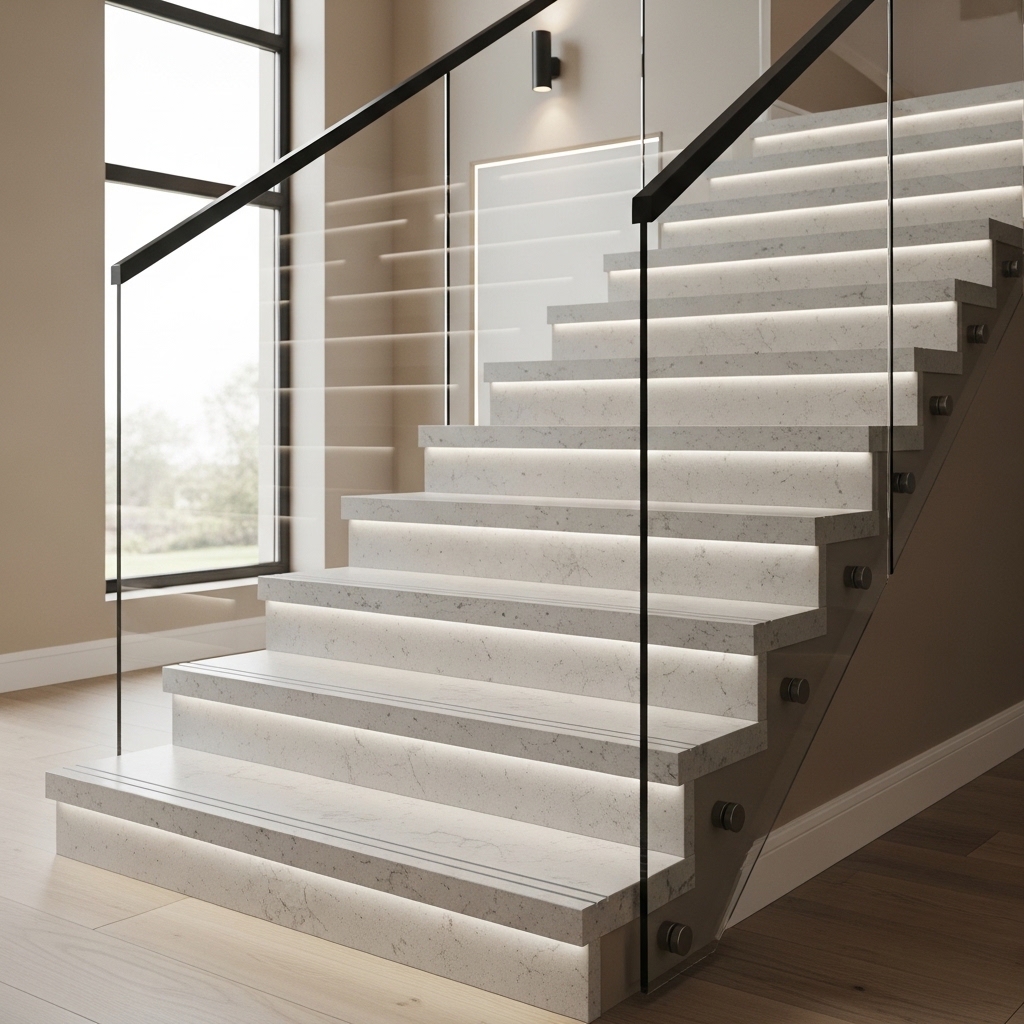
Quartz slab dimension guide for stairs
A dimension-focused guide for quartz stairs starts by defining the finished sizes of each component: tread pieces, risers, landing panels, and any side cladding that will be visible from the approach.
Once component sizes are fixed, select a slab format that allows the most important pieces (often landings and turning steps) to be cut with minimal joints and consistent pattern direction.
Typical slab examples like 3000 × 1400 mm and 3200 × 1600 mm work well for repeated tread cuts, while larger options help keep landings more continuous.
For example, if a landing is a focal zone, planning it as one dominant panel improves visual flow and avoids a seam line at the turning point.
Complete the guide by locking thickness (often 20 mm) and nose detailing, then allowing uniform installation gaps so all steps align cleanly and safely.
For most UAE kitchens, the size of a quartz slab determines whether long counters and islands can be fabricated in one piece or need discreet joints, with common options ranging from 3040 × 1440 mm to 3200 × 1600 mm. Thickness is typically 20 mm, while 30 mm is chosen for a heavier visual effect. Larger layouts may require a jumbo slab quartz size to maintain clean, uninterrupted lines.
Size of a Quartz Slab Planning for Marble Threshold Details
Size of a quartz slab planning for marble threshold details involves accounting for both the main surface area and smaller cut pieces used at doorways, usually maintaining a thickness of 20 mm or 30 mm for uniformity. Standard and jumbo slabs provide enough material to achieve this without color variation. Careful planning ensures the marble threshold aligns perfectly with adjacent flooring and countertop levels.
Size of a Quartz Slab Requirements for Raised Floor Work
The size of a quartz slab required for raised floor work depends on span length, joint placement, and access requirements. Most projects rely on slabs measuring around 3040 × 1440 mm, with thicknesses of 20 mm or more to ensure strength. Selecting the correct size helps maintain level consistency and prevents interference with underfloor services.