
Size of Jumbo Quartz Slabs
Size of jumbo quartz slabs is designed to minimize seams on big islands and long runs, and the most widely used jumbo format is 63 in × 126 in (160.02 cm × 320.04 cm). Many suppliers also classify 65 in × 130 in (165.10 cm × 330.20 cm) as a jumbo/extra-large slab for wide islands and waterfall panels, and some premium lines reach super-jumbo sizes like 78 in × 138 in (198.12 cm × 350.52 cm). Jumbo quartz slabs are typically produced in 2 cm (0.79 in / 20 mm) and 3 cm (1.18 in / 30 mm) thicknesses, with occasional 12 mm (0.47 in / 1.2 cm) options depending on the manufacturer and collection.
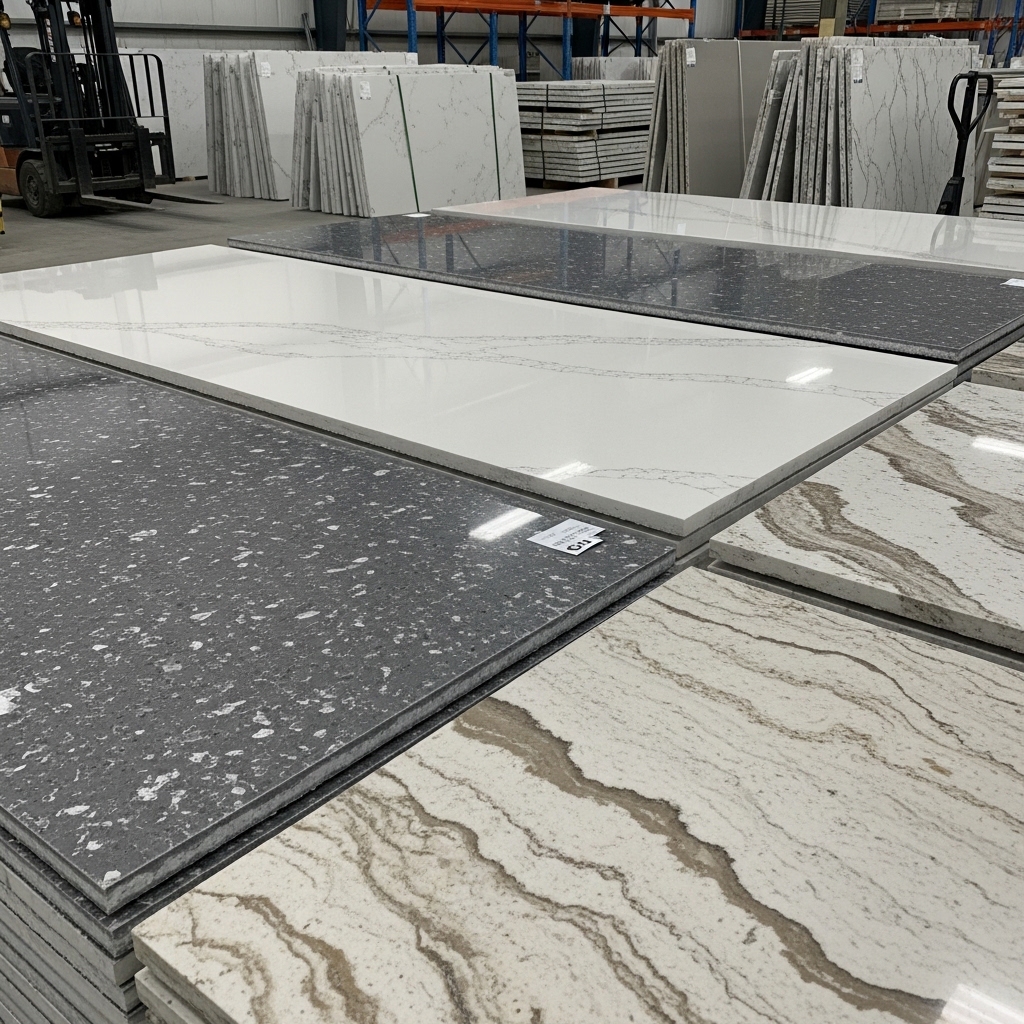
Regular Size
63 in × 126 in, thickness 0.79 in (2 cm) or 1.18 in (3 cm).
Jumbo Size
63 in × 126 in, thickness 0.79 in (2 cm) or 1.18 in (3 cm).
Super Size
78 in × 138 in, thickness 0.79 in (2 cm) or 1.18 in (3 cm).
Super Jumbo
137.80 in × 78.74 in, thickness 0.79 in (2 cm) or 1.18 in (3 cm).
Mini Slab
48 in × 96 in (mini reference), thickness 0.79 in (2 cm) or 1.18 in (3 cm).
Jumbo Quartz Sheet Dimensions Guide
When selecting Jumbo Quartz Sheets for your project, understanding the dimensions is crucial for achieving the desired aesthetic while adhering to budget constraints.
Jumbo Quartz Sheets typically come in sizes around 126” x 63”, providing ample surface area for large installations. For projects requiring specific dimensions, such as countertops or wall cladding, it’s essential to consider the layout and how the sheets will fit into the overall design.
A desired aesthetic may dictate the choice of color and pattern, which can influence the thickness of the sheets, commonly available in 1 cm, 2 cm, or 3 cm. Budget constraints also play a significant role; while high-end quartz can range from $50 to $100 per square foot, opting for a more economical option may limit the choices in terms of color and finish.
Additionally, the fabricator’s expertise is vital; experienced fabricators can provide insights into the best practices for cutting and installing Jumbo Quartz Sheets, ensuring that the final product meets both functional and aesthetic requirements.
Lastly, specific design requirements, such as integrated sinks or unique edge profiles, may necessitate custom cuts or additional materials, which can further impact the overall cost and timeline of the project. By carefully considering these factors, you can make informed decisions that align with your vision and practical needs.
Jumbo Quartz Formats: Biggest Benefits
Jumbo quartz sheets offer significant advantages for both residential and commercial applications, primarily due to their larger dimensions, which typically measure 126 inches by 63 inches or even larger.
One of the most notable benefits is the reduction in seams, as fewer pieces are required to cover expansive surfaces, resulting in a more seamless and aesthetically pleasing finish.
This is particularly advantageous in large countertops or wall installations, where continuity of design is essential. Additionally, the larger format allows for greater design flexibility, enabling homeowners and designers to create bold, uninterrupted patterns that enhance the overall visual appeal of a space.
The efficiency of installation is another key advantage; with fewer pieces to handle, the installation process can be quicker and less labor-intensive, potentially reducing labor costs by up to 30%.
Furthermore, jumbo quartz sheets are engineered for durability and resistance to scratches, stains, and heat, making them an ideal choice for high-traffic areas.
Overall, the use of jumbo quartz formats not only elevates the design aesthetic but also contributes to cost savings and long-term performance, making them a smart investment for any project.
Jumbo Quartz Material: Expected Waste Range
Jumbo Quartz material, known for its durability and aesthetic appeal, is increasingly popular in various applications, particularly in countertops and surfaces. When working with Jumbo Quartz slabs, which typically measure around 126 inches by 63 inches, it is essential to consider the expected waste range during fabrication and installation. Generally, the waste percentage can vary between 10% to 20%, depending on the complexity of the design and the layout of the cuts. For instance, intricate patterns or custom shapes may lead to higher waste, while straightforward designs can minimize it.
To optimize material usage, careful planning and precise measurements are crucial. Fabricators often recommend using advanced software to visualize the layout and maximize the yield from each slab. Additionally, it is advisable to account for potential defects in the material, which can further influence the waste percentage. By understanding these factors and planning accordingly, one can effectively manage the costs associated with Jumbo Quartz while ensuring a high-quality finished product.
Jumbo Quartz Material: Largest Format Available
Jumbo quartz material has revolutionized the world of interior design and architecture, offering an expansive canvas for creativity and functionality. With sizes reaching up to 126 inches by 63 inches, this material is the largest format available in the quartz category, allowing for fewer seams and a more cohesive look in various applications. The seamless appearance not only enhances the aesthetic appeal but also simplifies maintenance, as there are fewer joints where dirt and grime can accumulate.
The durability of jumbo quartz is another significant advantage. Composed of approximately 90-95% crushed natural quartz, combined with resins and pigments, this engineered stone is highly resistant to scratches, stains, and heat. It can withstand temperatures up to 150 degrees Celsius, making it an ideal choice for kitchen countertops and other high-traffic areas. This resilience ensures that the material maintains its beauty and functionality over time, even in the most demanding environments.
In addition to its practical benefits, jumbo quartz offers a wide range of design possibilities. Available in various colors, patterns, and finishes, it can mimic the look of natural stone while providing a more uniform appearance. Some manufacturers offer over 100 different designs, allowing homeowners and designers to find the perfect match for their vision. Whether one prefers a sleek, modern look or a more traditional aesthetic, jumbo quartz can cater to diverse tastes and styles.
Moreover, the sustainability aspect of jumbo quartz cannot be overlooked. Many brands are committed to using eco-friendly practices in their production processes, often incorporating recycled materials. This commitment to sustainability not only reduces the environmental impact but also appeals to the growing number of consumers who prioritize eco-conscious choices in their home renovations.
In summary, jumbo quartz material stands out as a premier choice for those seeking large-format surfaces that combine beauty, durability, and sustainability. With its impressive dimensions, resistance to wear and tear, and extensive design options, it is no wonder that this material has become a favorite among homeowners, designers, and architects alike. The ability to create stunning, seamless spaces while enjoying the practical benefits of quartz makes it a top contender in the world of modern materials.
Jumbo Quartz Material: High-Traffic Thickness Options
Jumbo quartz material has gained significant popularity in recent years, particularly for high-traffic areas due to its durability and aesthetic appeal. One of the standout features of jumbo quartz is its thickness options, which can range from 1 cm to 3 cm. This variety allows designers and homeowners to select the ideal thickness based on the specific demands of their space. For instance, a thickness of 2 cm is often preferred for countertops in kitchens and bathrooms, where both functionality and style are paramount.
In high-traffic environments, such as commercial spaces or busy households, the thicker options provide enhanced resistance to chipping and cracking. For example, a 3 cm thick slab can withstand more weight and impact than its thinner counterparts, making it an excellent choice for surfaces that experience heavy use. Additionally, the increased thickness contributes to a more substantial appearance, which can elevate the overall design of the space.
Moreover, jumbo quartz is engineered to be non-porous, which means it does not absorb liquids or stains, making it particularly suitable for areas that require frequent cleaning and maintenance. This characteristic is especially beneficial in high-traffic kitchens, where spills are common. The ease of maintenance combined with the material’s resilience ensures that surfaces remain visually appealing and functional over time.
In summary, the high-traffic thickness options of jumbo quartz material make it an ideal choice for both residential and commercial applications. With its range of thicknesses, durability, and low maintenance requirements, it meets the needs of spaces that demand both beauty and practicality.
Jumbo quartz slab measurement guide for walls & decorative surfaces
A jumbo quartz slab measurement guide focuses on maximizing coverage while keeping panels safe to transport and install, since larger formats reduce seams but increase handling demands.
Many jumbo quartz offerings are supplied around 3300 × 1650 mm (about 130 × 65 in), which can reduce mid-wall seams and enhance continuous veining on statement elevations.
For vertical use, jumbo panels are often specified in 6–12 mm thickness to manage weight, while thicker options may be selected where exposed returns, boxed edges, or strong reveals are part of the design.
For example, a wide feature wall can be composed from two jumbo panels with a seam aligned to a shadow gap or shelving line so the join blends into architectural elements.
Measurement planning typically includes access checks (door widths, elevator size), lifting strategy, and precise substrate evaluation so the final wall remains straight and joints stay consistent.
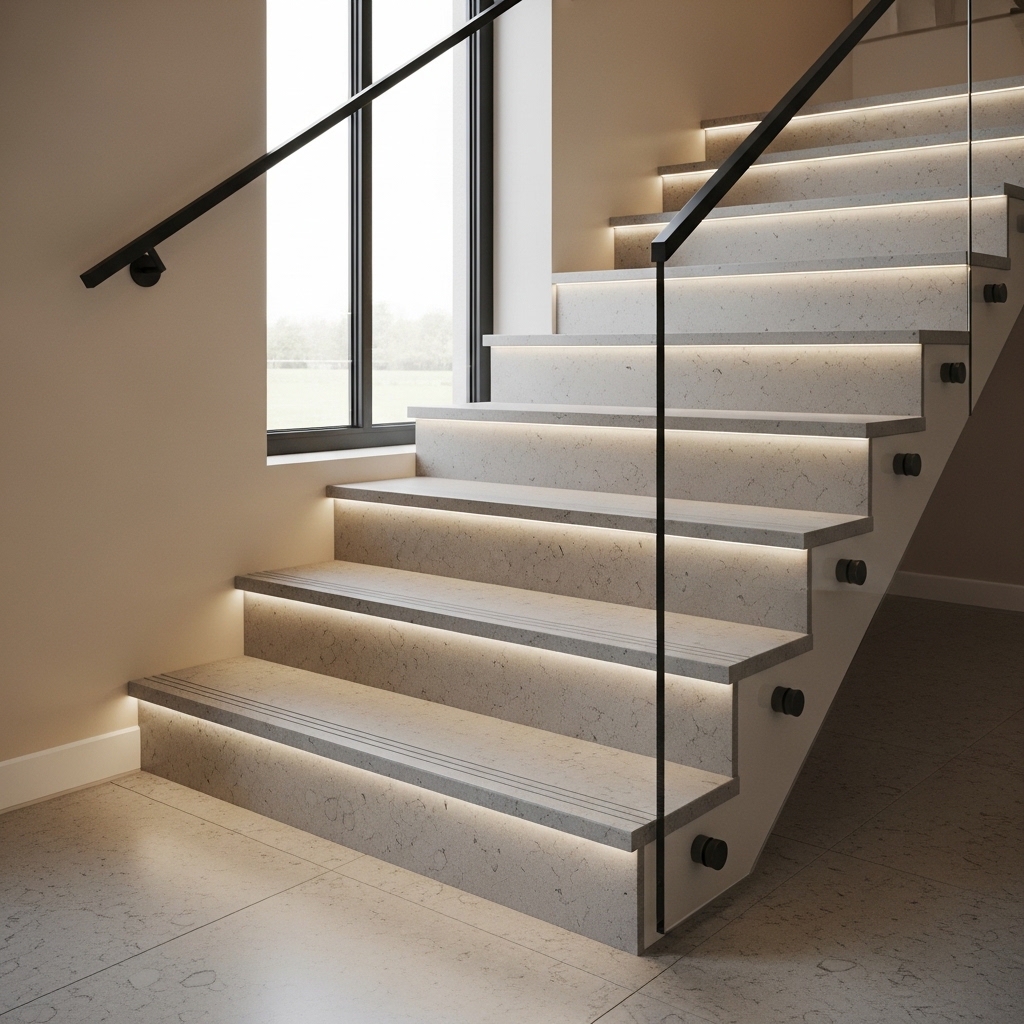
Jumbo quartz slab measurement guide for stairs
A jumbo quartz slab measurement guide for stairs prioritizes continuity on wide landings and long tread runs, using oversized slabs to reduce seam lines in the most visible zones.
Many jumbo quartz formats are supplied around 3300 × 1650 mm (about 130 × 65 in), providing extra width that can make a landing more likely to be cut as one dominant piece.
For example, a turning landing can often look much cleaner when cut from one jumbo panel, with seams moved to outer edges or aligned to side returns rather than crossing the center.
Treads typically use 20 mm thickness for durability, with an eased edge or small chamfer at the step nose to reduce chipping and maintain a crisp line.
Because jumbo pieces are heavier to handle, measurement planning also includes access route checks (doors, turns) and a safe lifting plan so large components can be installed without stress or breakage.
Size of jumbo quartz slabs available in the UAE usually ranges from about 3200 × 1600 mm up to roughly 3340 × 1640 mm in select premium collections, allowing expansive islands and waterfall edges to be fabricated with fewer seams. These slabs are favored in luxury villas and open-plan kitchens. Popular premium colors are often checked by their specific calacatta quartz slab size before finalizing layouts.
Size of Jumbo Quartz Slabs for Calacatta Viola Inspired Installations
Size of jumbo quartz slabs for Calacatta Viola inspired installations typically reaches around 3200 × 1600 mm, allowing dramatic veining to extend across wide islands and long countertops with minimal joints. These oversized slabs enhance visual continuity and luxury appeal. Designing with calacatta viola inspiration benefits greatly from jumbo slab formats that preserve symmetry and flow.
Size of Jumbo Quartz Slabs for Raised Floor Coverage
Understanding the size of jumbo quartz slabs is essential for achieving efficient coverage over a raised floor. Jumbo slabs often measure between 3200 and 3300 mm in length and up to 1650 mm in width, reducing joint lines and improving structural continuity. These dimensions are ideal for large, open-plan raised floor zones.