
Size of Quartz Countertop Slabs
Size of quartz countertop slabs is usually one of a few standard factory formats that shops keep in stock to plan cuts and seams: the common standard slab is 56 in × 120 in (142.24 cm × 304.80 cm) and the common jumbo slab is 63 in × 126 in (160.02 cm × 320.04 cm), with some brands offering extra-large slabs around 65 in × 130 in (165.10 cm × 330.20 cm) for wide islands and waterfall panels. For very large, seam-minimizing layouts, select premium lines can reach super-jumbo sizes like 78 in × 138 in (198.12 cm × 350.52 cm). Quartz countertop slab thickness is typically 2 cm (0.79 in / 20 mm) or 3 cm (1.18 in / 30 mm), and some collections also come in 12 mm (0.47 in / 1.2 cm) thickness for specific applications.
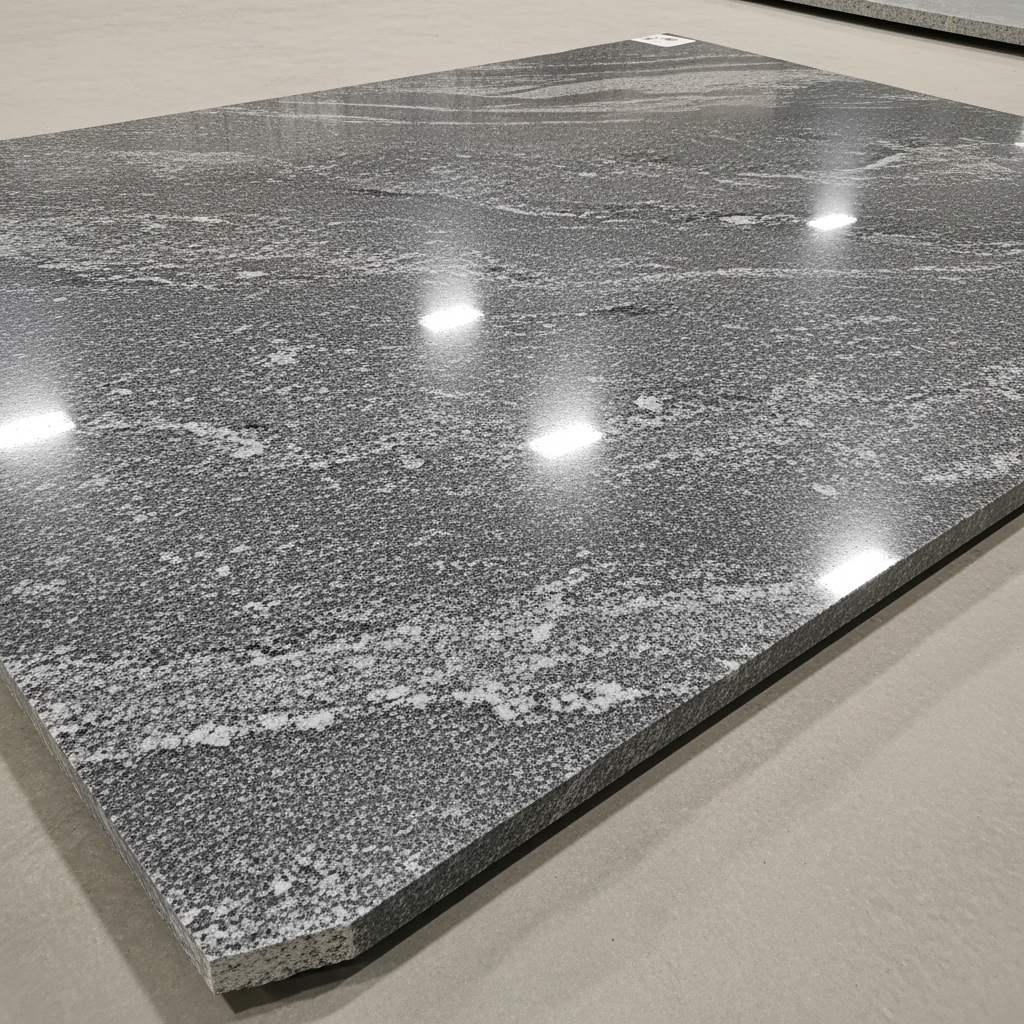
Regular Size
56 in × 120 in (standard) or 63 in × 126 in (jumbo), thickness 0.79 in (2 cm) or 1.18 in (3 cm).
Jumbo Size
63 in × 126 in, thickness 0.79 in (2 cm) or 1.18 in (3 cm).
Super Size
78 in × 138 in, thickness 0.79 in (2 cm) or 1.18 in (3 cm).
Super Jumbo
137.80 in × 78.74 in, thickness 0.79 in (2 cm) or 1.18 in (3 cm).
Mini Slab
25–25.5 in deep (finished), cut from 48 in × 96 in slabs, thickness 0.79 in (2 cm) or 1.18 in (3 cm).
Sizing Guide for Quartz Countertop Panels
When selecting quartz countertop panels, it is essential to consider the sizing guide based on various project dimensions.
First, accurately measure the area where the countertop will be installed, taking into account any overhangs or cutouts for sinks and appliances. For instance, a standard kitchen island might require a panel size of 72 inches by 36 inches, while a larger L-shaped kitchen could need up to 120 inches by 60 inches.
The desired aesthetic also plays a crucial role; whether you prefer a sleek, modern look or a more traditional style, the thickness and finish of the quartz can significantly impact the overall appearance. Typically, quartz panels come in thicknesses of 1 cm, 2 cm, or 3 cm, with 2 cm being the most common for residential applications.
Budget constraints are another vital factor; high-quality quartz can range from $50 to $150 per square foot, so it’s important to balance your aesthetic desires with what you can afford.
Additionally, the fabricator’s expertise should not be overlooked, as experienced professionals can provide valuable insights into the best sizes and cuts for your specific project, ensuring a seamless installation.
Lastly, specific design requirements, such as edge profiles or integrated backsplashes, may necessitate custom sizing, which can affect both the cost and the timeline of your project. By carefully considering these elements, you can make informed decisions that align with your vision and practical needs.
Quartz Countertop Panels: Jumbo Advantages
A sizing guide for quartz countertop panels offers numerous advantages that can significantly enhance the selection and installation process.
Firstly, it ensures precise measurements, which is crucial since quartz panels typically come in standard sizes, such as 120 inches by 55 inches for jumbo slabs. This precision minimizes waste and reduces costs, as homeowners can avoid purchasing excess material.
Additionally, a sizing guide helps in visualizing the layout, allowing for better planning of seams and patterns, which is particularly important for larger installations. For instance, using a jumbo quartz panel can cover more area with fewer seams, creating a more seamless and aesthetically pleasing appearance.
Furthermore, understanding the dimensions and weight of these panels—often around 10-15 pounds per square foot—can aid in selecting the right support structures and installation methods, ensuring durability and longevity.
Overall, a comprehensive sizing guide not only streamlines the decision-making process but also enhances the overall quality and efficiency of quartz countertop installations.
Quartz Countertop Panels: Waste Allowance Guide
When planning for quartz countertop panels, understanding the waste allowance is crucial for ensuring a successful installation. Typically, a waste allowance of 10% to 15% is recommended to account for cuts, seams, and potential defects in the material. For instance, if you require 50 square feet of quartz, you should order between 55 to 57.5 square feet to accommodate these factors.
It’s important to consider the layout of your countertops, as complex designs with multiple angles or curves may increase the waste percentage. Additionally, if you are working with larger slabs, the waste may be minimized, but it’s essential to factor in the possibility of breakage during transport or installation.
Always consult with your fabricator to determine the most accurate waste allowance based on your specific project needs and the characteristics of the quartz material you are using. By planning for waste effectively, you can ensure that your project stays on budget and that you have enough material to achieve a flawless finish.
Quartz Countertop Panels: Largest Format Options
Quartz countertop panels have gained immense popularity in recent years, particularly due to their versatility and aesthetic appeal. One of the most significant advancements in this area is the availability of large format options, which allow for fewer seams and a more cohesive look in kitchen and bathroom designs. These large panels can measure up to 126 inches in length and 63 inches in width, providing ample surface area for various applications. This size not only enhances the visual impact of the space but also simplifies installation, as fewer pieces mean less labor and a more streamlined appearance.
The manufacturing process of quartz countertops involves combining natural quartz crystals with resins and pigments, resulting in a durable and non-porous surface. This durability is particularly beneficial for large format panels, as they are less prone to cracking or chipping compared to smaller pieces. Additionally, the non-porous nature of quartz makes it resistant to stains and bacteria, making it an ideal choice for high-traffic areas. The large format options also allow for a wider variety of designs and colors, enabling homeowners and designers to achieve a unique look that complements their overall aesthetic.
When considering large format quartz panels, it is essential to factor in the weight and handling requirements. These panels can weigh significantly more than traditional countertop materials, often exceeding 100 pounds per panel. Proper support and installation techniques are crucial to ensure the longevity and stability of the countertops. Many manufacturers provide specific guidelines for installation, emphasizing the importance of using professional installers who are experienced with large format materials.
In terms of cost, large format quartz panels can be more expensive than their smaller counterparts due to the advanced technology and materials used in their production. However, the investment can be worthwhile, as the seamless look and durability can enhance the overall value of a home. Homeowners can expect to pay anywhere from $50 to $150 per square foot for high-quality quartz countertops, depending on the brand, design, and complexity of the installation.
In conclusion, quartz countertop panels in large formats offer a modern solution for those looking to elevate their interior spaces. With their impressive size, durability, and aesthetic versatility, these panels are an excellent choice for anyone seeking a high-end look without compromising on functionality. As the trend continues to grow, more options will likely become available, making it easier for consumers to find the perfect fit for their homes.
Quartz Countertop Panels: Thickness for Heavy-Use Zones
Quartz countertop panels are increasingly popular in both residential and commercial settings due to their durability and aesthetic appeal. When considering quartz for heavy-use zones, such as kitchens and bathrooms, the thickness of the panels becomes a critical factor. Typically, quartz countertops are available in thicknesses of 1 cm (approximately 0.39 inches), 2 cm (about 0.79 inches), and 3 cm (around 1.18 inches). For areas that experience significant wear and tear, such as around sinks, stovetops, and high-traffic areas, opting for a thicker panel, like 3 cm, is advisable. Thicker quartz panels not only provide enhanced durability but also offer better resistance to chipping and cracking. In heavy-use zones, where heavy pots, pans, and kitchen appliances are frequently placed, a 3 cm thickness can withstand the impact and pressure without compromising the integrity of the surface. Additionally, thicker panels can support heavier loads without the need for additional support structures, making them ideal for expansive countertops or islands. Another advantage of using thicker quartz is the aesthetic appeal it brings to the space. A 3 cm thick countertop has a more substantial presence, creating a luxurious feel that can elevate the overall design of the kitchen or bathroom. Furthermore, the edges of thicker quartz can be finished in various styles, such as beveled or bullnose, enhancing the visual appeal while maintaining functionality. In terms of maintenance, quartz countertops are non-porous, which means they resist staining and are easy to clean, regardless of thickness. However, in heavy-use areas, the thicker material can provide an added layer of protection against scratches and everyday wear. This durability is particularly important in busy kitchens where food preparation and cooking occur regularly. Ultimately, when selecting quartz countertop panels for heavy-use zones, it is essential to consider the thickness carefully. A 3 cm thickness is often the best choice for those looking to combine durability with aesthetic appeal, ensuring that the countertops can withstand the rigors of daily use while maintaining their beauty over time. Investing in thicker quartz not only enhances the functionality of the space but also contributes to the long-term value of the home.
Quartz countertop slab measurements for walls & decorative surfaces
Quartz countertop slab measurements are often leveraged for decorative walls to maintain a consistent material story between horizontal worktops and vertical surfaces like full-height backsplashes and feature panels.
Countertop slabs commonly come in large formats such as 3000 × 1400 mm or 3200 × 1600 mm (typical examples), and frequently include thicknesses like 20 mm or 30 mm for horizontal use.
For vertical applications, the same design can often be specified in thinner variants (such as 6–12 mm) to reduce wall load while keeping the look identical.
As a practical example, a backsplash panel cut from the same slab batch as the countertop can align veining so it appears to “rise” from the counter onto the wall.
Seams are usually placed away from high-visibility zones and aligned with cabinet edges or corners for a cleaner, easier-to-maintain finish.
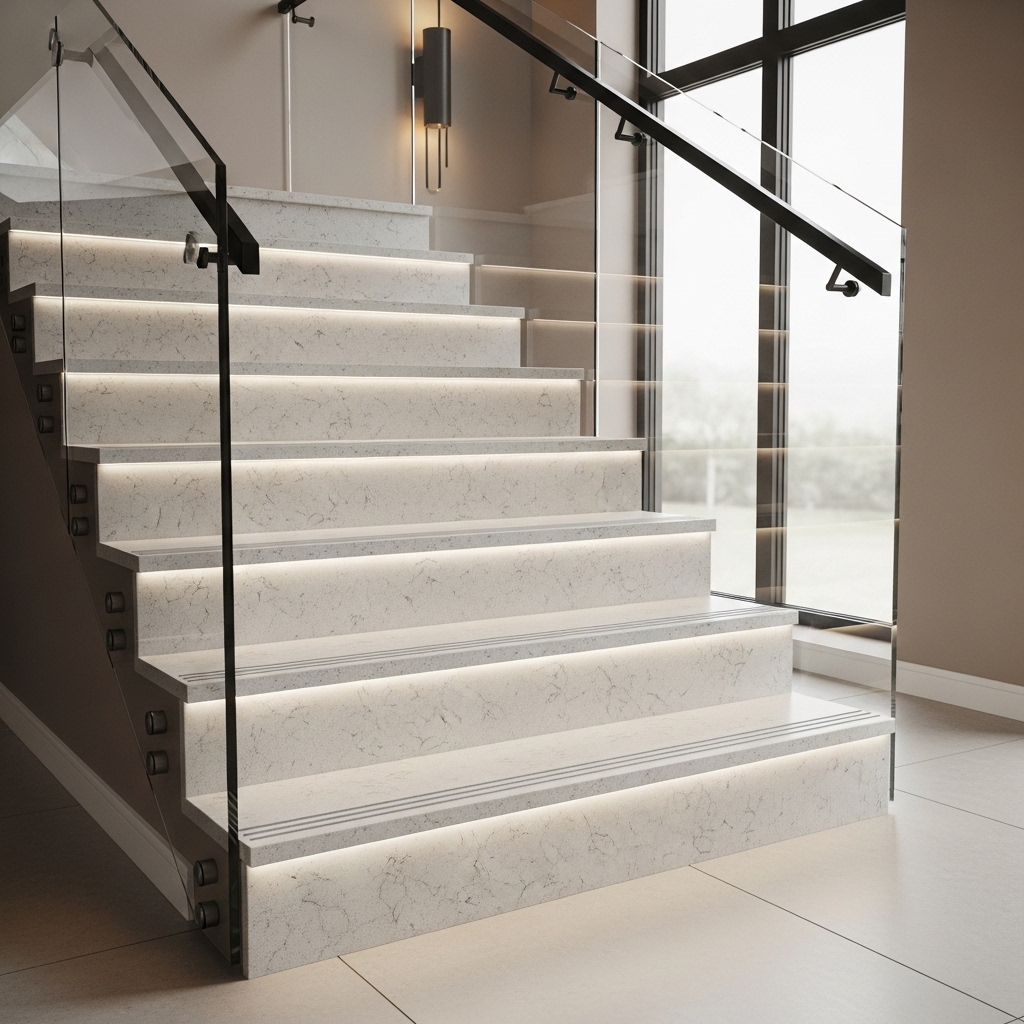
Quartz countertop slab measurements for stairs
Countertop-grade quartz slabs can be adapted for stairs when you want the same material theme across open-plan areas, such as matching a kitchen island to stair treads and landings.
These slabs are often supplied in large formats like 3000 × 1400 mm or 3200 × 1600 mm (typical examples), and a robust thickness like 20 mm is commonly used for tread performance and a premium feel.
For example, the landing can be cut from the same slab batch as the counter to keep tone consistent, while tread pieces are cut in a repeated orientation for a uniform step-to-step appearance.
Edge strategy is critical: an eased or chamfered nose protects the front edge, and laminated build-ups can create a thicker-looking profile without using full heavy thickness throughout.
Because stairs see heavy traffic, many designs also prefer matte or honed finishes on treads for a more practical feel compared to high polish.
The size of quartz countertop slabs available in the UAE usually starts at standard formats near 3040 × 1440 mm and extends to jumbo options around 3200 × 1600 mm, with 20 mm thickness being the most common choice. These dimensions are well suited for perimeter counters and medium to large islands. For natural stone comparisons, fabricators may also review granite sheet size to assess differences in yield and seam placement.
Size of Quartz Countertop Slabs for Silver Travertine Marble Projects
The size of quartz countertop slabs for Silver Travertine marble projects typically includes standard slabs around 3040 × 1440 mm and jumbo slabs up to 3200 × 1600 mm for wider installations. These dimensions allow quartz surfaces to complement natural stone floors or walls without excessive joints. Pairing quartz slabs of this size with silver travertine marble helps maintain proportional harmony and a refined, cohesive interior look.
Size of Quartz Countertop Slabs for Raised Floor Fit-Outs
The size of quartz countertop slabs selected for a raised floor fit-out directly affects joint placement and load distribution. Common slab sizes such as 3040 × 1440 mm or jumbo formats at 3200 × 1600 mm are preferred for flexibility and coverage. These dimensions support clean detailing while maintaining compatibility with access flooring systems.