
Size of Quartz Slabs
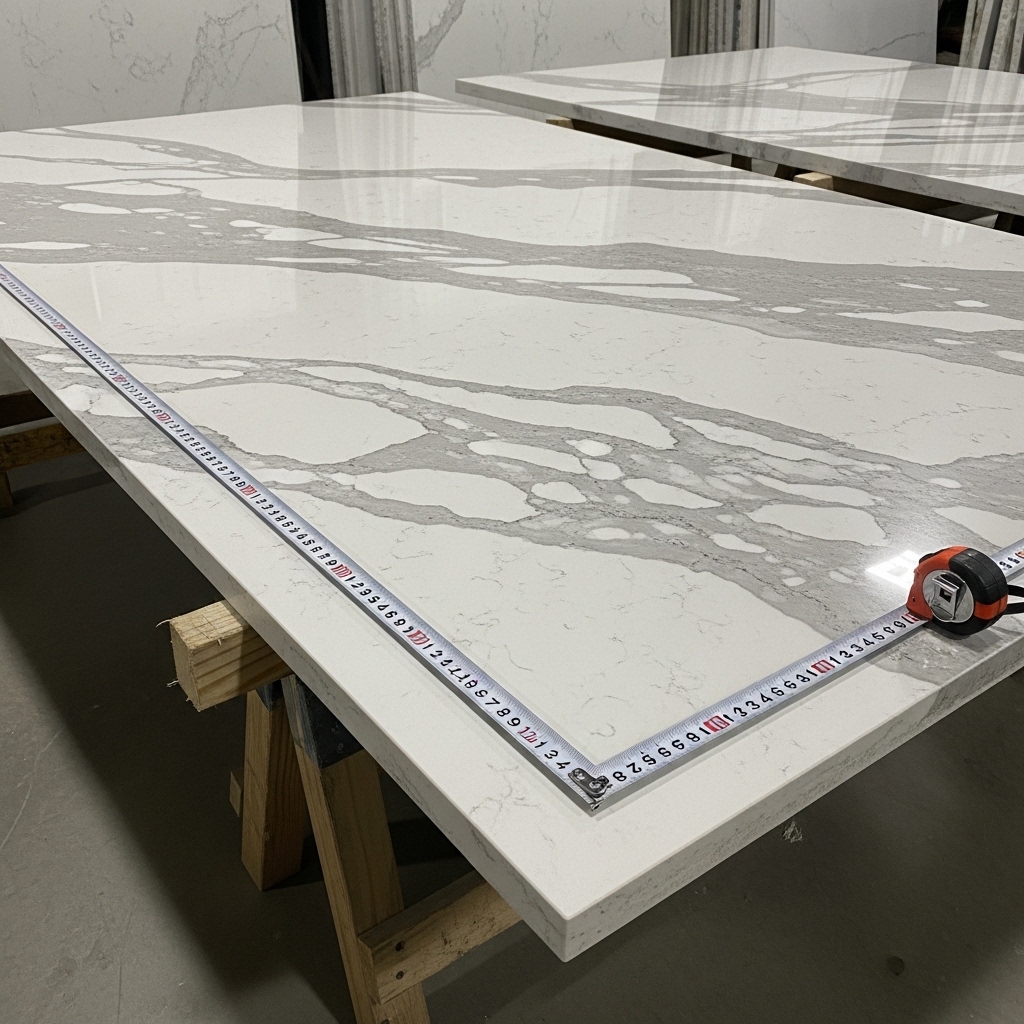
The size of quartz slabs generally comes in a few consistent industry formats that fabricators plan around: standard slabs are commonly 56 in × 120 in (142.24 cm × 304.80 cm), jumbo slabs are commonly 63 in × 126 in (160.02 cm × 320.04 cm), and some brands offer extra-large options around 65 in × 130 in (165.10 cm × 330.20 cm) or even super-jumbo sizes like 78 in × 138 in (198.12 cm × 350.52 cm) for very large islands. Across these sizes, the most typical thicknesses are 2 cm (0.79 in / 20 mm) and 3 cm (1.18 in / 30 mm), with occasional 12 mm (0.47 in / 1.2 cm) options in certain collections.
Regular Size
56 in × 120 in (standard) or 63 in × 126 in (jumbo), thickness 0.79 in (2 cm) or 1.18 in (3 cm).
Jumbo Size
63 in × 126 in (jumbo) or up to 78 in × 138 in (super-jumbo), thickness 0.79 in (2 cm) or 1.18 in (3 cm).
Super Size
78 in × 138 in (super) or up to 137.80 in × 78.74 in (max), thickness 0.79 in (2 cm) or 1.18 in (3 cm).
Super Jumbo
137.80 in × 78.74 in (super jumbo) with common oversized option 78 in × 138 in, thickness 0.79 in (2 cm) or 1.18 in (3 cm).
Mini Slab
48 in × 96 in (mini) or 56 in × 120 in (standard), thickness 0.79 in (2 cm) or 1.18 in (3 cm).
Picking the Best Quartz Sheet Dimensions
When selecting the best quartz sheet dimensions for your project, it is essential to consider various factors that align with your specific needs.
First, evaluate the project dimensions; for instance, if you are working on a large kitchen countertop, you may require sheets that are at least 120 inches long to minimize seams and ensure a seamless look.
Next, think about your desired aesthetic; if you prefer a modern, sleek appearance, larger sheets with fewer seams can enhance the visual appeal, while smaller dimensions might suit intricate designs better.
Budget constraints also play a crucial role; larger quartz sheets can be more expensive, so it’s important to balance size with cost—typically, a standard 2 cm thick quartz slab can range from $50 to $100 per square foot.
Additionally, consider the fabricator’s expertise; some may specialize in larger installations, while others might excel in custom cuts and intricate designs, which can influence the dimensions you choose.
Finally, specific design requirements, such as the need for cutouts for sinks or appliances, can dictate the dimensions of the quartz sheets you select, ensuring that they fit perfectly within your overall design plan.
Bigger Quartz Sheet Formats, Fewer Seams
Choosing the best quartz sheet dimensions or opting for larger quartz sheet formats offers numerous advantages, particularly in terms of aesthetics and functionality.
One of the primary benefits is the reduction in seams, which not only enhances the visual appeal of the surface but also minimizes the potential for dirt and bacteria accumulation in those joints. For instance, a larger sheet measuring 120 inches by 55 inches can significantly reduce the number of seams compared to smaller sheets, which may require multiple pieces to cover the same area.
This seamless appearance creates a more cohesive and elegant look, making it ideal for high-end applications such as kitchen countertops and bathroom vanities. Additionally, fewer seams mean less maintenance and easier cleaning, as there are fewer crevices where grime can build up.
Furthermore, larger quartz sheets can provide greater design flexibility, allowing for more expansive and uninterrupted designs that can enhance the overall aesthetic of a space. In commercial settings, using larger formats can also lead to quicker installation times, reducing labor costs and minimizing disruption. Overall, selecting the right dimensions or larger formats for quartz sheets not only elevates the design but also contributes to long-term durability and ease of maintenance.
Waste Margin Guide for Quartz Surfacing
The Waste Margin Guide for quartz surfacing is an essential tool for fabricators and installers to optimize material usage and minimize waste during the fabrication process. Typically, a waste margin of 10% to 15% is recommended, depending on the complexity of the project and the design features involved. For instance, intricate cuts and patterns may necessitate a higher waste margin, potentially reaching up to 20%.
When planning a project, it is crucial to consider the layout of the slabs, as improper planning can lead to significant material loss. A well-thought-out layout can reduce waste by ensuring that larger pieces are utilized for expansive surfaces while smaller remnants are reserved for cutouts or less visible areas.
Additionally, factors such as the size of the quartz slabs, which commonly measure 120 inches by 55 inches, should be taken into account when calculating the waste margin. By adhering to the Waste Margin Guide, fabricators can not only save costs but also contribute to sustainability efforts by reducing the overall environmental impact associated with quartz surfacing projects.
Largest Quartz Sheet Format Options
When considering the largest quartz sheet format options, it is essential to recognize the versatility and aesthetic appeal that quartz surfaces offer. Quartz sheets are engineered stone products made from a blend of natural quartz crystals and resins, resulting in a durable and non-porous surface. The largest standard size available in the market typically measures around 126 inches by 63 inches (approximately 10.5 feet by 5.25 feet), although some manufacturers may offer custom sizes that can reach up to 144 inches by 78 inches (about 12 feet by 6.5 feet). This expansive format allows for fewer seams in installations, creating a more seamless and visually appealing surface for countertops, backsplashes, and other applications.
The thickness of quartz sheets can also vary, with common options ranging from 1 cm to 3 cm (approximately 0.39 inches to 1.18 inches). Thicker sheets provide enhanced durability and are often preferred for high-traffic areas or commercial applications. Additionally, the larger format reduces the number of joints required, which not only enhances the aesthetic but also minimizes potential weak points where bacteria and dirt can accumulate.
In terms of color and design, the largest quartz sheets come in a wide array of options, from solid colors to intricate patterns that mimic natural stone. This variety allows homeowners and designers to achieve the desired look while benefiting from the practical advantages of quartz. For instance, some manufacturers offer quartz sheets that replicate the appearance of marble or granite, providing the elegance of natural stone without the maintenance concerns.
Moreover, the availability of large quartz sheets has revolutionized the design possibilities in both residential and commercial spaces. With fewer seams, the risk of chipping and cracking is significantly reduced, making it an ideal choice for busy kitchens and bathrooms. The ease of installation associated with larger sheets also contributes to a more efficient renovation process, as fewer pieces mean less time spent on fitting and finishing.
In conclusion, the largest quartz sheet format options provide a blend of beauty, durability, and practicality, making them an excellent choice for various applications. With sizes reaching up to 12 feet and thicknesses that enhance strength, these surfaces cater to the needs of modern design while ensuring longevity and ease of maintenance. As the demand for larger formats continues to grow, manufacturers are likely to innovate further, expanding the possibilities for quartz surfaces in the future.
Quartz Surfacing: Best Thickness for Busy Areas
Quartz surfacing is a popular choice for countertops in busy areas due to its durability and aesthetic appeal. When selecting the best thickness for quartz surfaces in high-traffic environments, it is essential to consider both functionality and design. Typically, quartz slabs come in thicknesses of 1 cm (approximately 0.39 inches), 2 cm (approximately 0.79 inches), and 3 cm (approximately 1.18 inches). For busy areas such as kitchens and commercial spaces, a thickness of 3 cm is often recommended. This thickness provides enhanced strength and resistance to chipping and cracking, making it ideal for surfaces that will endure heavy use.
In addition to durability, the thickness of quartz surfacing can also impact the overall aesthetic of the space. Thicker slabs can create a more substantial and luxurious appearance, which can be particularly appealing in high-end residential or commercial settings. A 3 cm thick countertop can support a wider range of edge profiles, allowing for more design flexibility. Furthermore, the weight of the thicker material can contribute to a sense of permanence and stability in the design.
It is also important to consider the installation process when choosing the thickness of quartz surfacing. Thicker slabs may require additional support and reinforcement, especially in larger spans or overhangs. For instance, a 3 cm thick countertop can typically extend further without the need for additional brackets or support compared to a 2 cm slab. This can be particularly advantageous in busy areas where maximizing usable space is crucial.
Ultimately, while 2 cm slabs can be suitable for less demanding applications, opting for 3 cm quartz surfacing in busy areas ensures that the material can withstand the rigors of daily use while maintaining its beauty and functionality over time. The investment in thicker quartz not only enhances the durability of the surface but also elevates the overall design of the space, making it a worthwhile consideration for any busy environment.
Quartz slab dimension options for walls & decorative surfaces
Quartz slab dimension options for walls and decorative surfaces generally include multiple lengths, widths, and thickness choices so designers can match the material to the scale of the wall and the desired visual effect.
Common large-format options include slabs around 3000 × 1400 mm and 3200 × 1600 mm, while expanded options can reach formats like 3300 × 1650 mm or similar large sizes (examples), giving more freedom for taller or wider feature zones.
Thickness is often the most important “dimension option” for walls: many decorative installations prefer 6 mm or 12 mm to reduce load and simplify handling, while 20 mm may be chosen for bolder edges, exposed returns, or when coordinating with thick countertop profiles in the same space.
For instance, a thin quartz wall panel can deliver the same surface design as a countertop slab but with a lighter build-up, making it easier to clad tall elevations without sacrificing the premium look.
Choosing the right dimension option is also about joint strategy—larger slabs mean fewer seams, but smaller panel cuts can be smarter for tight site access or when you want a consistent grid layout across the decorative wall.
Quartz slab dimension options for stairs
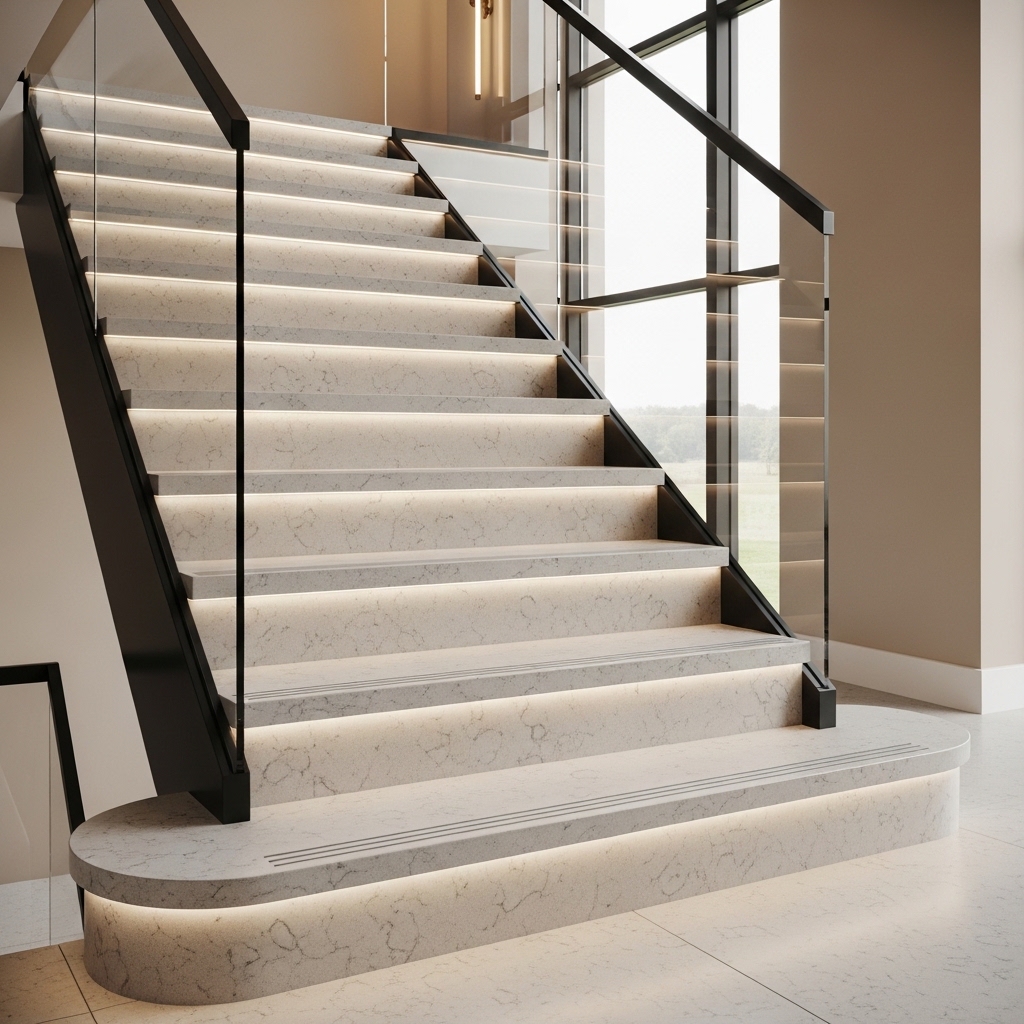
Quartz slab dimension options for stairs generally refer to the range of slab lengths, widths, and thicknesses available, plus how those options affect tread layout, riser coverage, and landing continuity.
Common length-and-width options often include large formats such as 3000 × 1400 mm and 3200 × 1600 mm, with expanded ranges reaching jumbo formats like 3300 × 1650 mm depending on the collection.
Thickness options are especially important on stairs: many stair treads are specified at 20 mm for strength and a solid feel, while a thicker visual nose can be created with laminated build-ups if a more substantial profile is desired.
For example, a staircase may use 20 mm tread pieces with a built-up edge to look like 40 mm at the step nose, giving a bold architectural feel without using full-thickness heavy slabs throughout.
Choosing the right dimension option also helps minimize waste—larger slabs can yield more step components per sheet and keep color matching tighter across the flight.
In the UAE, the size of quartz slabs available in showrooms usually ranges from standard 3040 × 1440 mm to jumbo formats around 3200 × 1600 mm, giving designers flexibility for both compact kitchens and expansive island layouts. Thickness is most often 20 mm, with 30 mm selected for projects that require a heavier visual profile or edge buildup. Customers often ask what size do quartz slabs come in so they can better understand how many seams will be needed and whether a single slab can cover their full countertop run.
Size of Quartz Slabs for Crema Ivory Marble Design Matching
Size of quartz slabs selected for crema ivory marble design matching typically includes standard slabs at about 3040 × 1440 mm and jumbo slabs around 3200 × 1600 mm for larger layouts. These dimensions allow designers to coordinate countertop colors with wall cladding or flooring while minimizing visible seams. Pairing quartz slabs in these sizes with crema ivory marble creates a soft, cohesive palette suitable for both classic and contemporary interiors.
Size of Quartz Slabs Selection for Raised Floor Installations
Selecting the right size of quartz slabs is essential when finishes are installed over a raised floor. Available slab sizes typically range from 3000–3200 mm in length and 1400–1600 mm in width, offering flexibility for different layouts. Proper selection ensures slab joints align cleanly with floor panel lines while maintaining structural balance and long-term performance.