
Standard Countertop Slab Size
Standard countertop slab size (the raw slab before cutting) depends on material category, but the most common engineered-quartz “standard” slab is 56 in × 120 in (142.24 cm × 304.80 cm), while the common engineered-stone jumbo slab is 63 in × 126 in (160.02 cm × 320.04 cm) for fewer seams on big kitchens. For natural-stone countertops (granite, marble, quartzite), standard slab ranges are often about 108–120 in long × 60–72 in wide (274.32–304.80 cm × 152.40–182.88 cm), with some suppliers offering larger widths up to about 78 in (198.12 cm). Typical countertop slab thicknesses are 2 cm (0.79 in / 20 mm) and 3 cm (1.18 in / 30 mm), with 1.5 cm (0.59 in / 15 mm) also used in some designs, especially for wall cladding and lighter applications.
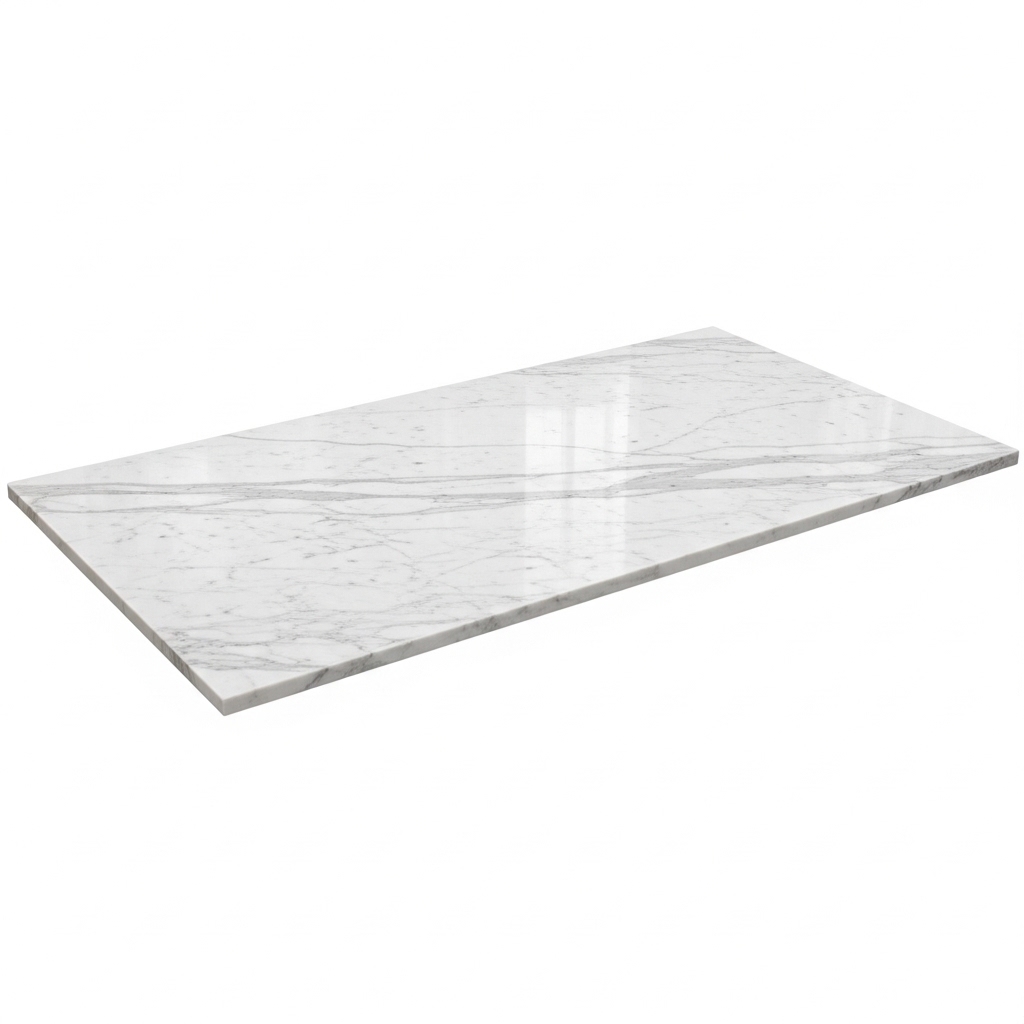
Regular Size
56 in × 120 in (standard quartz) or 63 in × 126 in (jumbo), thickness 0.79 in (2 cm) or 1.18 in (3 cm).
Jumbo Size
63 in × 126 in, thickness 0.79 in (2 cm) or 1.18 in (3 cm).
Super Size
78 in × 138 in, thickness 0.79 in (2 cm) or 1.18 in (3 cm).
Super Jumbo
137.80 in × 78.74 in, thickness 0.79 in (2 cm) or 1.18 in (3 cm).
Mini Slab
48 in × 96 in, thickness 0.79 in (2 cm) or 1.18 in (3 cm).
Standard Countertop Sheet Dimensions
Standard countertop sheet dimensions typically range from 96 inches by 25.5 inches to 120 inches by 30 inches, but these can vary based on material and manufacturer.
When considering project dimensions, it’s essential to measure the space accurately to ensure a perfect fit, taking into account any overhangs or cutouts for sinks and appliances.
The desired aesthetic plays a crucial role in selecting the right material and finish; for instance, a sleek quartz surface may suit a modern kitchen, while a rustic butcher block could enhance a farmhouse style.
Budget constraints are also significant; laminate options can start as low as $10 per square foot, while high-end granite or marble can exceed $100 per square foot, influencing the overall project cost.
The fabricator’s expertise should not be overlooked, as their skill level can affect the quality of the installation and the final appearance of the countertop.
Lastly, specific design requirements, such as integrated sinks or unique edge profiles, may necessitate custom fabrication, which can further impact both the timeline and budget of the project.
Standard Countertop Sheet Dimensions: Jumbo Upsides
Standard countertop sheet dimensions offer numerous advantages that enhance both functionality and aesthetics in kitchen and bathroom design.
One of the primary benefits is the ease of installation; with standard sizes typically ranging from 4 feet by 8 feet to 5 feet by 10 feet, these dimensions simplify the cutting and fitting process, reducing labor time and costs.
Additionally, using standard dimensions allows for better material optimization, minimizing waste and ensuring that resources are used efficiently.
This is particularly important in large-scale projects where multiple sheets are required, as it can lead to significant savings.
Furthermore, standard dimensions facilitate easier replacement and repairs, as finding matching materials becomes less of a challenge.
Aesthetic consistency is another advantage, as standard sizes ensure a uniform look across various surfaces, contributing to a cohesive design.
Overall, the use of standard countertop sheet dimensions streamlines the renovation process, enhances visual appeal, and promotes sustainability through reduced waste.
Standard Countertop Materials: Expected Waste
When selecting standard countertop materials, it is essential to consider the expected waste generated during the installation process. Typically, the waste percentage can range from 5% to 15%, depending on the material and the complexity of the design. For instance, natural stones like granite may yield around 10% waste due to the need for precise cuts and the potential for cracks or imperfections in the slabs. In contrast, engineered materials such as quartz often have a lower waste percentage, around 5%, as they are manufactured to be more uniform and easier to work with.
To minimize waste, it is advisable to plan the layout meticulously, taking into account the dimensions of the countertop and the specific cuts required. Utilizing remnants from previous projects can also help reduce waste and costs.
Additionally, some manufacturers offer pre-fabricated options that can further decrease waste by providing standardized sizes that fit common kitchen layouts. Understanding these factors not only aids in budgeting for the project but also contributes to more sustainable practices by reducing excess material that would otherwise end up in landfills.
Standard Countertop Materials: Biggest Format
Standard countertop materials have evolved significantly over the years, with the biggest format options gaining popularity due to their aesthetic appeal and practicality. Quartz is one of the most sought-after materials, known for its durability and low maintenance. It is engineered from about 90-95% crushed natural stone, combined with resins and pigments, allowing for a wide range of colors and patterns. The largest slabs of quartz can reach dimensions of 120 inches by 55 inches, minimizing seams and creating a sleek, continuous surface that enhances the visual impact of any kitchen or bathroom.
Another popular choice is granite, a natural stone that offers unique patterns and colors, making each slab one-of-a-kind. Granite countertops can be fabricated in large formats, with some slabs measuring up to 126 inches by 78 inches. This size not only provides a stunning visual but also reduces the number of seams, which can be a focal point in the design. The durability of granite, combined with its resistance to heat and scratches, makes it an ideal choice for high-traffic areas.
Porcelain has also emerged as a strong contender in the realm of large-format countertops. With the ability to be manufactured in sizes up to 126 inches by 63 inches, porcelain offers a sleek, modern look that is both versatile and highly resistant to stains and scratches. Its non-porous surface makes it an excellent choice for kitchens, as it does not harbor bacteria and is easy to clean. Additionally, porcelain can mimic the appearance of natural stone, wood, or even concrete, providing endless design possibilities.
Lastly, solid surface materials, such as Corian, are gaining traction for their seamless appearance and ease of maintenance. These materials can be fabricated in large sheets, often exceeding 100 inches in length, allowing for expansive countertops without visible seams. Solid surfaces are non-porous, making them resistant to stains and easy to repair, which adds to their appeal in both residential and commercial settings.
In conclusion, the trend towards larger format countertops is driven by the desire for fewer seams, enhanced aesthetics, and practical benefits. Whether opting for quartz, granite, porcelain, or solid surfaces, homeowners and designers alike are embracing these materials to create stunning, functional spaces that stand the test of time.
Standard Countertop Materials: High-Traffic Thickness
When selecting countertop materials for high-traffic areas, durability and resilience are paramount. Granite is a popular choice due to its natural strength and resistance to scratches and heat. Typically, granite countertops are available in thicknesses ranging from 2 cm to 3 cm, with the latter providing enhanced durability for busy kitchens. The average cost of granite can range from $40 to $100 per square foot, depending on the quality and origin of the stone.
Another excellent option is quartz, an engineered stone that combines natural quartz crystals with resins. This material is non-porous, making it resistant to stains and bacteria, which is crucial in high-traffic environments. Quartz countertops usually come in a standard thickness of 3 cm, providing a robust surface that can withstand daily wear and tear. Prices for quartz can vary widely, typically ranging from $50 to $150 per square foot, influenced by the brand and design.
For those seeking a more budget-friendly yet durable option, laminate countertops have evolved significantly. Modern laminates can mimic the appearance of natural stone while offering a thickness of around 1.5 cm to 2 cm. They are resistant to scratches and easy to clean, making them suitable for high-traffic areas. The cost of laminate countertops is generally much lower, averaging between $10 and $40 per square foot, making them an attractive option for homeowners looking to balance aesthetics and functionality.
Lastly, concrete countertops are gaining popularity for their unique aesthetic and durability. They can be customized in thickness, typically ranging from 2 cm to 5 cm, allowing for a robust surface that can handle heavy use. Concrete is highly resistant to heat and can be sealed to prevent staining, making it ideal for busy kitchens. However, the cost can be higher, often ranging from $65 to $135 per square foot, depending on the finish and customization options.
In conclusion, when choosing countertop materials for high-traffic areas, it is essential to consider factors such as durability, maintenance, and cost. Options like granite, quartz, laminate, and concrete each offer unique benefits, allowing homeowners to select the best fit for their lifestyle and design preferences.
Standard countertop slab measurement guide for walls & decorative surfaces
A standard countertop slab measurement guide for walls emphasizes using common slab formats and practical panel cuts that are easy to fabricate and install while still achieving a premium, low-joint finish.
Large slab examples like 3000 × 1400 mm and 3200 × 1600 mm allow designers to keep seams minimal on backsplashes and decorative panels compared to smaller cladding systems.
For vertical installations, thickness often targets 6–12 mm where available to reduce load, while 20 mm is used where exposed edges, waterfall ends, or matching countertop thickness is a priority.
As a practical example, seams can be aligned to cabinet boundaries or placed within shadow gaps so they visually disappear into the kitchen layout.
Standard measurement planning also includes allowances for joint gaps, silicone lines at corners, and precision cut-outs so the wall looks straight and stays easy to clean.
Standard countertop slab measurement guide for stairs
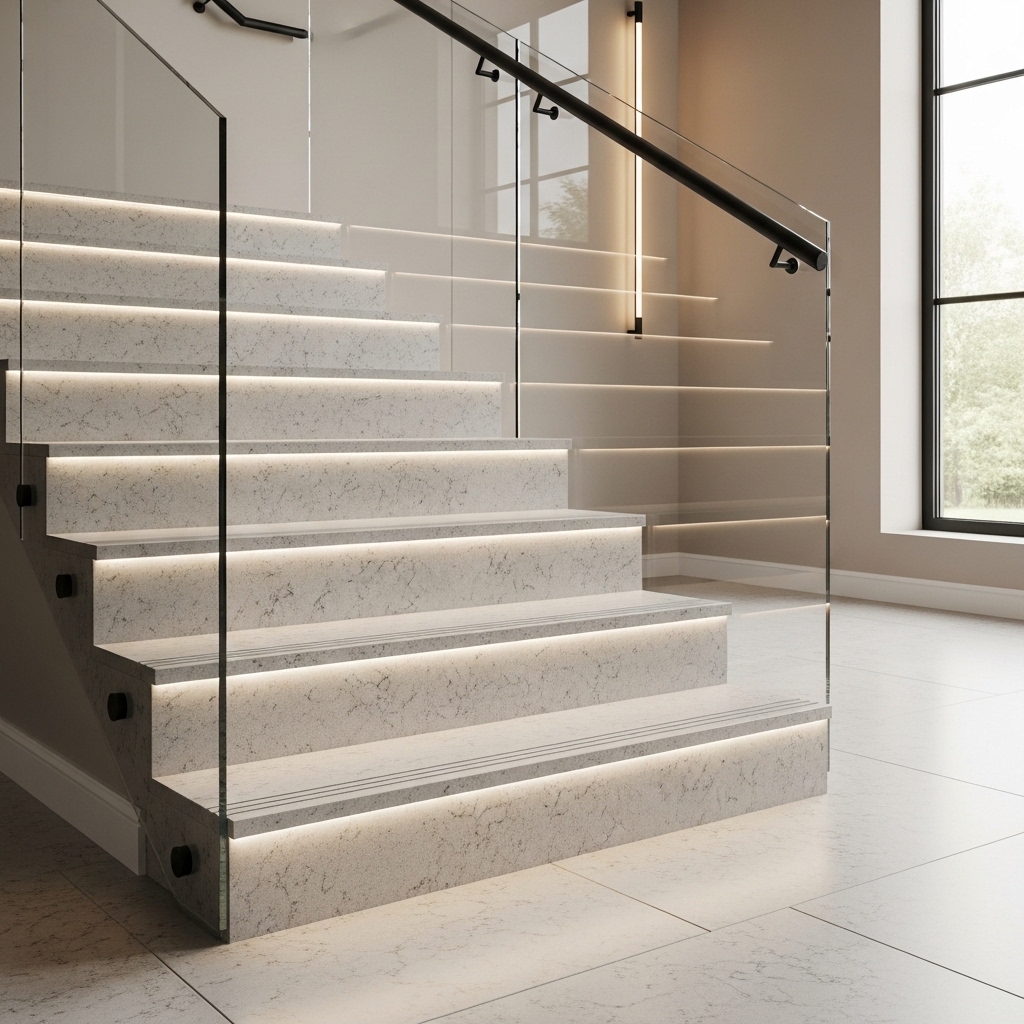
A standard countertop slab measurement guide for stairs focuses on predictable slab formats and a repeatable stair cut plan that reduces visible joints and improves fabrication efficiency.
Standard slab examples such as 3000 × 1400 mm and 3200 × 1600 mm allow multiple treads and risers to be cut from one batch, improving shade consistency across the staircase.
For example, a 3200 × 1600 mm slab (~5.12 m²) can be mapped to prioritize a seam-free landing area while still yielding repeated tread cuts around it.
Stair treads typically need robust thickness (often 20 mm) and a durable nose detail (eased or chamfered) to protect the front edge over time.
Keeping joint gaps uniform and placing seams along side returns rather than through the center of landings helps the staircase look cleaner and more premium.
Across UAE fabrication yards, the standard countertop slab size generally refers to slabs around 3000–3200 mm in length and 1400–1600 mm in width, offering a balance between coverage and ease of handling. These dimensions suit the majority of residential kitchens and many commercial installations. When working with natural stone, this benchmark is often compared against the standard granite slab size to assess yield and seam placement.
Standard Countertop Slab Size for Travertine Stone Installations
Standard countertop slab size for travertine stone installations generally includes slabs measuring around 2800–3000 mm in length and 1400–1600 mm in width, depending on quarry availability. These dimensions are suitable for counters, vanities, and feature surfaces while maintaining natural texture and strength. Using properly sized slabs with travertine stone ensures controlled seam placement and a balanced, timeless look.
Standard Countertop Slab Size for Raised Floor Installations
Standard countertop slab size for projects involving a raised floor usually falls within 3000–3200 mm in length and 1400–1600 mm in width. These sizes provide flexibility for fabrication while supporting precise joint placement. Maintaining standard dimensions ensures compatibility with access flooring systems and consistent load distribution.