
Standard Size of Quartz Slab
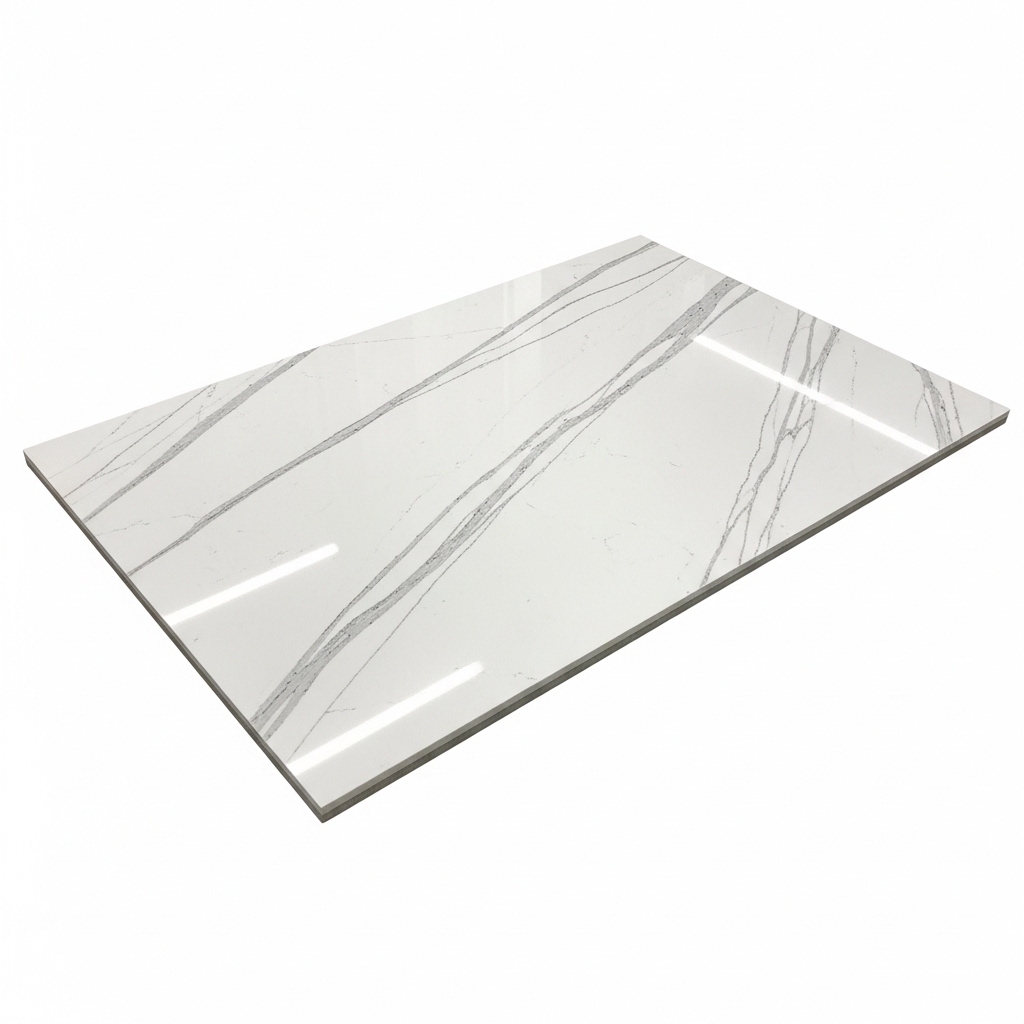
The standard size of a quartz slab is most commonly the widely stocked “standard” format of 56 in × 120 in (142.24 cm × 304.80 cm), which many fabricators treat as the baseline slab for planning cuts and seams. For larger kitchens and islands, suppliers often step up to jumbo formats, but the 56 in × 120 in size remains the most referenced standard. Standard quartz thicknesses are typically 2 cm (0.79 in / 20 mm) and 3 cm (1.18 in / 30 mm, often sold as “1¼ in” nominal), and some manufacturers also offer 12 mm (0.47 in / 1.2 cm) slabs in select collections for specific design uses.
Regular Size
56 in × 120 in, thickness 0.79 in (2 cm) or 1.18 in (3 cm).
Jumbo Size
63 in × 126 in, thickness 0.79 in (2 cm) or 1.18 in (3 cm).
Super Size
78 in × 138 in, thickness 0.79 in (2 cm) or 1.18 in (3 cm).
Super Jumbo
137.80 in × 78.74 in, thickness 0.79 in (2 cm) or 1.18 in (3 cm).
Mini Slab
48 in × 96 in, thickness 0.79 in (2 cm) or 1.18 in (3 cm).
A Guide to Standard Quartz Sheet Dimensions
When selecting standard quartz sheet dimensions for a project, it is essential to consider various factors that influence the final outcome.
Project dimensions play a crucial role; for instance, standard quartz sheets typically come in sizes such as 120” x 55” or 126” x 63”, which can affect how well they fit into your designated space.
The desired aesthetic is another significant consideration; larger sheets can create a seamless look, ideal for modern designs, while smaller pieces may be better suited for intricate patterns or traditional styles.
Budget constraints must also be taken into account, as larger sheets may reduce waste and labor costs, but they can also be more expensive upfront.
Additionally, the fabricator’s expertise can influence the choice of dimensions; some may specialize in larger formats, while others excel in custom cuts, which can affect both the quality and the cost of the installation.
Finally, specific design requirements, such as the need for cutouts for sinks or appliances, should guide the selection of dimensions to ensure functionality without compromising the overall aesthetic. By carefully evaluating these factors, you can make informed decisions that align with your vision and practical needs.
Standard Quartz Sheet Dimensions: Jumbo Advantages
A Guide to Standard Quartz Sheet Dimensions offers numerous advantages for both manufacturers and consumers in the stone industry.
One significant benefit is the consistency in size, which simplifies the fabrication process. Standard dimensions, such as 120 inches by 55 inches for jumbo sheets, allow for easier planning and reduced waste during cutting.
Additionally, using standard quartz sheet dimensions ensures compatibility with various countertops and surfaces, making it easier for designers and contractors to source materials that fit seamlessly into their projects.
The availability of jumbo sheets also means fewer seams in large installations, enhancing the aesthetic appeal and structural integrity of the final product.
Furthermore, standardization can lead to cost savings, as manufacturers can optimize their production processes and reduce inventory complexity, ultimately passing on these savings to consumers.
Overall, a comprehensive guide to these dimensions not only streamlines the selection and installation process but also promotes efficiency and quality in quartz surface applications.
Standard Waste Margin for Quartz Sheet Material
Standard waste margin for quartz sheet material is an essential consideration in the fabrication and installation process. Typically, a waste margin of around 10% to 15% is recommended to account for cutting errors, design complexities, and unforeseen damages during handling. This margin ensures that there is enough material to complete the project without delays. For instance, if a project requires 100 square feet of quartz, it would be prudent to order between 110 to 115 square feet to cover potential waste.
Additionally, the waste margin can vary based on the specific design and layout of the installation; intricate patterns or large cutouts may necessitate a higher waste margin.
It is also important to consider the type of quartz being used, as some colors and patterns may have limited availability, making it crucial to order extra material to avoid mismatches. Proper planning and understanding of the standard waste margin can lead to a more efficient installation process and ultimately save costs in the long run.
Standard Quartz Sheet Material: Biggest Option
Standard quartz sheet material is increasingly recognized as one of the most versatile and durable options available in the market today. Composed primarily of natural quartz crystals, resins, and pigments, this engineered stone offers a unique combination of beauty and functionality. With a typical composition of about 90-95% crushed natural quartz, the remaining percentage consists of polymer resins and color additives, which contribute to its aesthetic appeal and structural integrity.
One of the most significant advantages of standard quartz sheets is their exceptional durability. They are non-porous, making them resistant to stains, scratches, and heat, which is a crucial factor for high-traffic areas such as kitchens and bathrooms. Unlike natural stones like granite or marble, quartz does not require sealing, which simplifies maintenance and enhances its longevity. For instance, a standard quartz countertop can last for decades with minimal care, making it a cost-effective choice in the long run.
In terms of design flexibility, standard quartz sheets come in a wide array of colors, patterns, and finishes. Manufacturers offer options that mimic the look of natural stones while providing a more uniform appearance, which can be appealing for modern interior designs. With thicknesses typically ranging from 1 cm to 3 cm, these sheets can be customized to fit various applications, from countertops to wall cladding.
Moreover, the environmental impact of standard quartz sheets is another aspect worth noting. Many manufacturers are now focusing on sustainable practices, using recycled materials in their production processes. This not only reduces waste but also appeals to environmentally conscious consumers. Some brands even offer certifications that guarantee their products meet specific environmental standards, further enhancing their marketability.
In conclusion, standard quartz sheet material stands out as a premier choice for both residential and commercial applications. Its blend of durability, aesthetic versatility, and low maintenance requirements makes it a top contender in the realm of surface materials. As the demand for high-quality, sustainable options continues to grow, quartz sheets are likely to remain a popular choice among homeowners and designers alike.
Standard Quartz Sheet Material: Floor-Grade Thickness
Standard quartz sheet material, particularly in floor-grade thickness, is increasingly recognized for its durability and aesthetic appeal in various applications. Typically, these sheets are available in thicknesses ranging from 12mm to 30mm, with 20mm being a common choice for flooring. This thickness provides a robust surface that can withstand heavy foot traffic, making it ideal for both residential and commercial spaces.
One of the key advantages of using quartz sheets is their resistance to scratches, stains, and heat. With a Mohs hardness rating of around 7, quartz surfaces are significantly more durable than many natural stones, ensuring that they maintain their appearance over time. This durability is particularly important in high-traffic areas where wear and tear can quickly diminish the look of lesser materials.
In addition to their physical properties, quartz sheets are also available in a wide range of colors and patterns, allowing for versatile design options. Manufacturers often offer custom finishes, enabling designers and homeowners to achieve the desired aesthetic without compromising on performance. For instance, a polished finish can enhance the reflective quality of the surface, while a honed finish provides a more matte appearance that can be less slippery.
Moreover, the installation of floor-grade quartz sheets is relatively straightforward, often requiring minimal maintenance once in place. Regular cleaning with mild soap and water is usually sufficient to keep the surface looking pristine, making it a practical choice for busy environments.
Overall, standard quartz sheet material in floor-grade thickness combines functionality with style, making it a preferred option for those seeking a long-lasting and visually appealing flooring solution. Its resilience, coupled with a variety of design choices, ensures that it meets the diverse needs of modern architecture and interior design.
Standard quartz slab measurements for walls & decorative surfaces
Standard quartz slab measurements are popular for walls because they are widely available, easy to plan around, and large enough to deliver a premium low-joint appearance.
Common standard formats include slabs around 3000 × 1400 mm and 3200 × 1600 mm, which cover large wall sections with fewer breaks than tiled surfaces.
A useful coverage example is that 3000 × 1400 mm covers about 4.2 m² (around 45 ft²), while 3200 × 1600 mm covers about 5.12 m² (around 55 ft²).
For walls, many projects choose 6–12 mm thickness to reduce weight while keeping the surface visually substantial.
With standard formats, seam placement can be aligned to corners, cabinet edges, or niche borders so joints look planned rather than accidental.
Standard quartz slab measurements for stairs
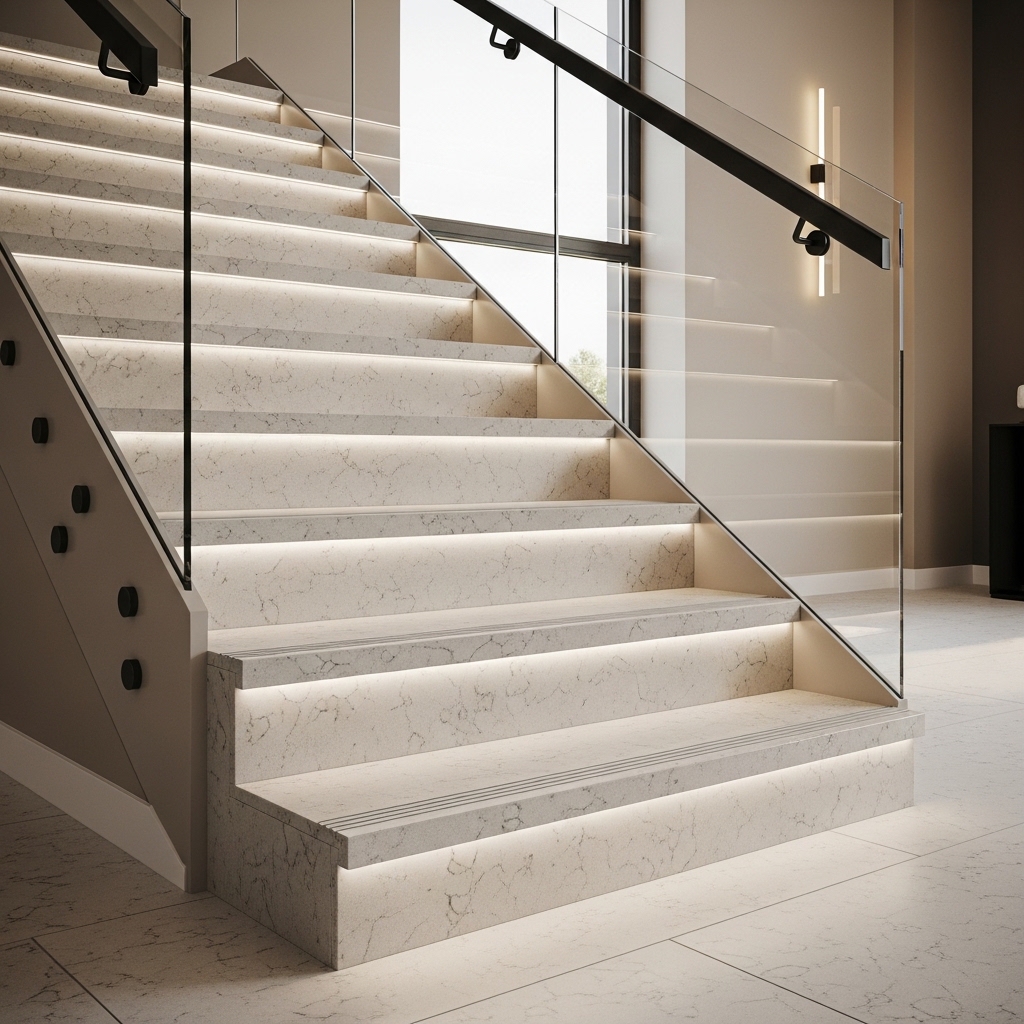
Standard quartz slab measurements are commonly used for stairs because they are widely available and provide predictable cutting yield for repeated tread-and-riser sets.
Typical standard formats often include 3000 × 1400 mm and 3200 × 1600 mm, which can be planned to produce multiple treads with consistent tone and pattern direction.
For example, a 3000 × 1400 mm slab covers about 4.2 m² (~45 ft²), while 3200 × 1600 mm covers about 5.12 m² (~55 ft²), giving flexibility for treads, risers, and smaller landing pieces.
Stair treads often use 20 mm thickness for durability, and the step nose is usually finished with a small chamfer or eased edge to reduce chipping risk.
A good standard-slab plan keeps treads cut in one direction and places joints away from the center of landings for the cleanest visual result.
From a practical standpoint, the standard size of quartz slab used across the UAE is approximately 3040 × 1440 mm, offering predictable cutting layouts and efficient material use. This dimension fits most residential kitchens and many commercial counters without requiring special orders. It also aligns closely with the standard size of slab concept used for estimating seams and yields across different stone types.
Standard Size of Quartz Slab for Volakas Marble Style Designs
The standard size of quartz slab for Volakas marble style designs typically measures about 3040 × 1440 mm, allowing elegant veining patterns to flow naturally across counters and backsplashes. Jumbo slabs up to 3200 × 1600 mm are often selected for larger kitchens to maintain visual continuity. Replicating the refined look of volakas marble is most effective when slab size and seam placement are carefully planned.
Standard Size of Quartz Slab for Raised Floor Applications
The standard size of quartz slab most often specified for use alongside a raised floor is approximately 3040 × 1440 mm. This size integrates well with access floor systems by supporting consistent floor-to-counter heights and modular planning. It also provides enough material to fabricate long runs with minimal joints while keeping installation manageable.