
Standard Slab Size Quartz: Dimensions and Specifications
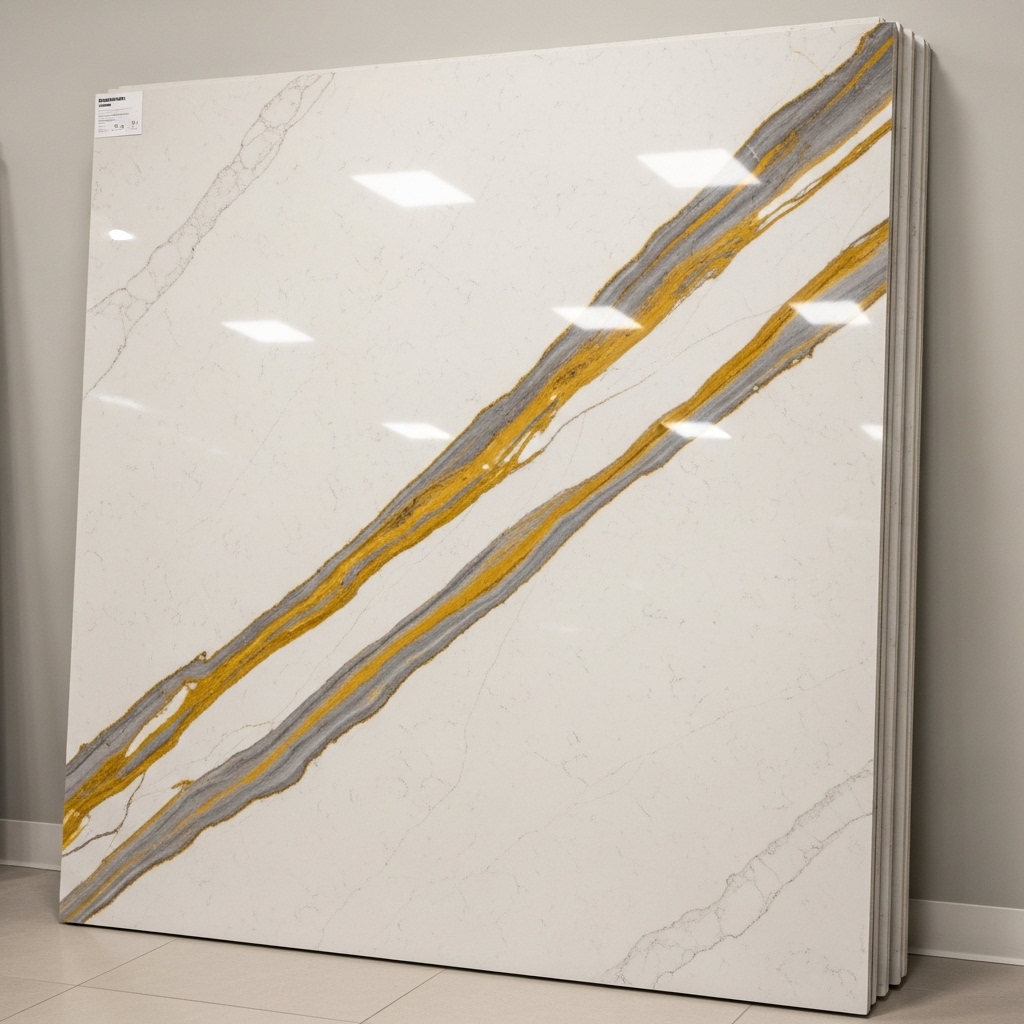
Standard slab size quartz is generally the most common factory slab format used across many quartz brands: 56 in × 120 in (142.24 cm × 304.80 cm). This size is frequently considered the “standard” because it suits many kitchen runs and vanity tops while keeping handling and transport practical; when longer spans are required, fabricators move up to jumbo formats. Standard quartz slab thickness is most commonly 2 cm (0.79 in / 20 mm) or 3 cm (1.18 in / 30 mm, often marketed as “1¼ in” nominal), and some product lines also offer thinner 12 mm (0.47 in / 1.2 cm) options for select design applications.
Regular Size
56 in × 120 in, thickness 0.79 in (2 cm) or 1.18 in (3 cm).
Jumbo Size
63 in × 126 in, thickness 0.79 in (2 cm) or 1.18 in (3 cm).
Super Size
78 in × 138 in, thickness 0.79 in (2 cm) or 1.18 in (3 cm).
Super Jumbo
137.80 in × 78.74 in, thickness 0.79 in (2 cm) or 1.18 in (3 cm).
Mini Slab
48 in × 96 in, thickness 0.79 in (2 cm) or 1.18 in (3 cm).
Standard Quartz Sheet Format Guide
The Standard Quartz Sheet Format Guide is essential for ensuring that projects meet both aesthetic and functional requirements.
When considering project dimensions, it is crucial to accurately measure the space where the quartz will be installed, as standard sheets typically come in sizes like 120” x 55” or 126” x 63”.
Desired aesthetics play a significant role in the selection process; for instance, a polished finish may be preferred for a modern kitchen, while a honed finish could suit a rustic design.
Budget constraints are another critical factor; quartz can range from $50 to $100 per square foot, so it is important to balance quality with cost.
The fabricator’s expertise should not be overlooked, as experienced professionals can provide insights into the best practices for cutting and installing quartz, ensuring a seamless finish.
Lastly, specific design requirements, such as edge profiles or custom cutouts for sinks, must be communicated clearly to the fabricator to achieve the desired outcome. By considering these factors, one can effectively navigate the complexities of selecting and installing quartz surfaces.
Standard Quartz Formats: Jumbo Advantages
Standard Quartz Sheet Format Guide offers numerous advantages that enhance both efficiency and consistency in various applications.
One of the primary benefits is the uniformity it provides, allowing for seamless integration across different platforms and systems. This standardization reduces the likelihood of errors, as users can rely on a consistent format for data entry and processing.
Additionally, the use of Jumbo formats, which can accommodate larger datasets, enables organizations to handle extensive information without compromising performance. For instance, a Jumbo sheet can support up to 10,000 rows and 1,000 columns, making it ideal for complex data analysis.
Furthermore, the guide promotes better collaboration among teams, as everyone adheres to the same formatting rules, facilitating clearer communication and understanding of data.
Overall, the Standard Quartz Sheet Format Guide not only streamlines workflows but also enhances data integrity, ultimately leading to improved decision-making and operational efficiency.
Standard Waste Margin for Quartz Slab Material
Standard waste margin for quartz slab material is an essential consideration in the fabrication and installation process, as it directly impacts both cost and efficiency. Typically, the waste margin is calculated based on the layout of the slabs and the complexity of the design. A common practice is to allocate a waste margin of about 10% to 15% of the total material required. This percentage accounts for cuts, defects, and any unforeseen issues that may arise during installation. For instance, if a project requires 100 square feet of quartz slab, a waste margin of 10% would mean ordering an additional 10 square feet, bringing the total to 110 square feet.
It is crucial to assess the specific project requirements, as intricate designs or unusual shapes may necessitate a higher waste margin. Additionally, factors such as the size of the slabs, the skill level of the fabricators, and the cutting techniques employed can influence the amount of waste generated. By carefully calculating the standard waste margin, contractors can ensure they have sufficient material to complete the project while minimizing excess costs and reducing environmental impact.
Standard Quartz Slabs: Biggest Format Options
Standard quartz slabs have gained immense popularity in the realm of interior design and construction due to their durability, aesthetic appeal, and versatility. One of the most significant advantages of quartz slabs is their availability in large formats. These bigger format options can range from 120 inches by 55 inches to even larger dimensions, allowing for fewer seams and a more cohesive look in spaces such as kitchens and bathrooms.
The larger the slab, the more design possibilities it offers. For instance, a 126-inch by 63-inch slab can cover a substantial area, making it ideal for expansive countertops or large islands. This not only enhances the visual appeal but also simplifies the installation process, as fewer pieces mean less labor and fewer joints to manage. Additionally, the seamless appearance of larger slabs can create a more luxurious and modern aesthetic, which is highly sought after in contemporary design.
Moreover, the thickness of standard quartz slabs typically ranges from 1 cm to 3 cm, providing options for various applications. Thicker slabs are often preferred for countertops due to their sturdiness and ability to withstand heavy use. For example, a 3 cm thick slab can support significant weight, making it suitable for both residential and commercial environments.
In terms of color and pattern, standard quartz slabs come in a wide array of options, mimicking the look of natural stone while offering enhanced durability and ease of maintenance. With advancements in technology, manufacturers can produce slabs that feature intricate designs and vibrant colors, catering to diverse aesthetic preferences.
In conclusion, the biggest format options of standard quartz slabs not only provide practical benefits such as reduced seams and easier installation but also elevate the overall design of a space. As homeowners and designers continue to seek out materials that combine beauty with functionality, quartz slabs remain a top choice in the market.
Standard Quartz Material: Floor Thickness Guide
Standard quartz material is a popular choice for flooring due to its durability, aesthetic appeal, and low maintenance requirements. When considering the thickness of quartz flooring, it is essential to understand that the standard thickness typically ranges from 1 cm (approximately 0.39 inches) to 3 cm (approximately 1.18 inches).
The choice of thickness can significantly impact the performance and longevity of the flooring. For residential applications, a thickness of 1 cm is often sufficient, especially in areas with lower foot traffic. However, for commercial spaces or high-traffic areas, a thickness of 2 cm or more is recommended to ensure enhanced durability and resistance to wear and tear.
In addition to durability, the thickness of quartz flooring can also influence its aesthetic qualities. Thicker slabs can provide a more substantial appearance, which may be desirable in certain design contexts. For instance, a 3 cm thick quartz slab can create a more luxurious look, making it an excellent choice for upscale residential projects or high-end commercial spaces.
Furthermore, the installation process can vary based on the thickness of the material. Thicker slabs may require additional support and a more robust subfloor to accommodate their weight. It is crucial to consult with a professional installer to ensure that the flooring is appropriately supported and installed, regardless of the chosen thickness.
Ultimately, the decision on the thickness of standard quartz flooring should be based on the specific needs of the space, including foot traffic levels, design preferences, and installation requirements. By carefully considering these factors, homeowners and designers can select the ideal thickness that balances both functionality and aesthetics, ensuring a beautiful and long-lasting flooring solution.
Standard quartz slab format guide for walls & decorative surfaces
A standard quartz slab format guide for walls and decorative surfaces explains the most commonly available slab formats and how they are typically used to create clean, minimal-joint cladding and feature panels in residential and commercial interiors.
Standard quartz formats frequently include large slab examples such as 3000 × 1400 mm and 3200 × 1600 mm, which provide wide coverage for feature walls, full-height backsplashes, and decorative elevations without excessive seam lines.
For vertical installations, these standard formats are often paired with 6–12 mm thickness choices to reduce load and simplify handling, while thicker options can be specified when matching adjacent countertop edges or when the design includes exposed returns and wrapped corners.
As a practical example, a feature wall may use two large standard panels with the seam aligned to a niche border or cabinet line, keeping the center area visually uninterrupted and making the layout feel intentional.
To maximize the premium effect, fabricators typically sequence panels for continuity, align pattern direction consistently, and keep joint widths uniform so the wall reads like a single, composed decorative surface rather than separate pieces.
Standard quartz slab format guide for stairs
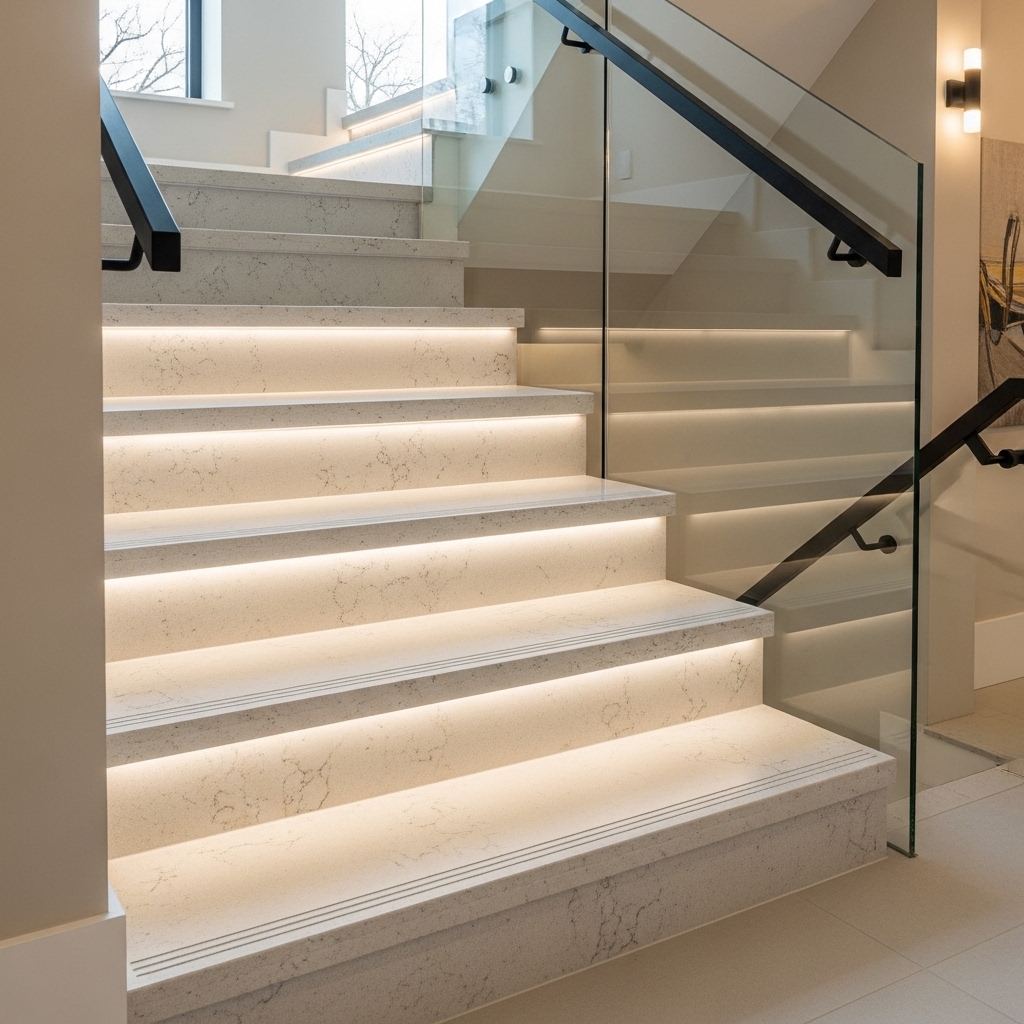
A standard quartz slab format guide for stairs explains how commonly available slab formats are used to fabricate repeated tread and riser components with consistent color and controlled seam placement.
Standard slab examples such as 3000 × 1400 mm and 3200 × 1600 mm provide enough area to nest multiple treads and risers from one batch, improving tone consistency across the staircase.
For example, a cut plan can keep tread pieces oriented in one direction for a uniform look, while risers are cut from calmer areas so the vertical faces remain visually neat.
Most stair treads use 20 mm thickness for strength, and the step nose is typically detailed with an eased edge or small chamfer to reduce chipping and improve comfort at the edge.
The guide also includes practical planning for landings and turning steps—placing seams away from the center of the landing and aligning joints to edges or returns for a cleaner, more premium finish.
In UAE fabrication yards, the standard slab size quartz most frequently stocked measures about 3040 × 1440 mm, offering a reliable base for estimating material quantities and seam locations. This size supports most residential kitchens and many commercial counters without requiring special-order slabs. For accurate cut planning and budgeting, designers still verify the size of slab of quartz for the exact color and brand selected, as slight variations can occur between collections.
Standard Slab Size Quartz for Black Marquina Marble Look Surfaces
Standard slab size quartz for black Marquina marble look surfaces usually measures around 3040 × 1440 mm, providing enough coverage to replicate bold white veining on a deep black background with minimal seams. Jumbo slabs are sometimes selected for larger counters or islands to enhance continuity. Using quartz in these slab sizes is an effective way to achieve the dramatic appearance of black marquina marble while benefiting from the consistency and durability of engineered stone.
Standard Slab Size Quartz for Raised Floor Coverage
Standard slab size quartz options are widely used to achieve consistent coverage over a raised floor. Slabs measuring around 3040 × 1440 mm provide sufficient surface area while aligning well with access floor modules. This standardization simplifies fabrication, reduces joint visibility, and ensures reliable coordination between quartz surfaces and raised floor systems.