
Threshold Size Considerations
Threshold size (door thresholds/sills used at doorways, showers, and transitions) varies by application, but common interior doorway thresholds are often about 36 in long × 2–6 in wide (91.44 cm × 5.08–15.24 cm) or 48 in long × 2–6 in wide (121.92 cm × 5.08–15.24 cm) for wider openings. For bathrooms and showers, marble/granite thresholds are frequently supplied in widths like 4 in, 5 in, or 6 in (10.16 cm, 12.70 cm, or 15.24 cm) with common lengths such as 24 in, 30 in, 36 in, or 48 in (60.96 cm, 76.20 cm, 91.44 cm, or 121.92 cm). Typical stone threshold thickness is around 3/4 in (1.905 cm) or 1 in (2.54 cm), and heavier-duty thresholds may be about 1-1/4 in thick (3.175 cm) depending on the product and installation requirement.

Regular Size
36–48 in long × 4–6 in wide, thickness 0.75–1.25 in.
Jumbo Size
48 in long × 6 in wide, thickness 1–1.25 in.
Super Size
60 in long × 6 in wide, thickness 1–1.25 in.
Super Jumbo
72 in long × 6 in wide, thickness 1–1.25 in.
Mini Slab
36 in long × 4–6 in wide, thickness 0.75–1.0 in.
Choosing the Right Door Threshold Measurements
Choosing the right door threshold measurements is crucial for ensuring a seamless transition between spaces while also enhancing the overall aesthetic of your project.
First, consider the project dimensions; accurate measurements of the door frame are essential, as thresholds typically range from 3 to 6 inches in width and 1 to 2 inches in height.
Next, the desired aesthetic plays a significant role; whether you prefer a modern, sleek look or a more traditional style, the material and finish of the threshold should complement the surrounding decor.
Budget constraints are another important factor; thresholds can vary widely in price, from $20 for basic models to over $200 for custom designs, so it’s vital to balance quality with affordability.
Additionally, the fabricator’s expertise should not be overlooked; working with a skilled professional can ensure that the threshold is not only functional but also tailored to your specific design requirements, such as accommodating uneven floors or integrating with existing architectural features.
Lastly, consider any specific design requirements, such as accessibility needs or weather resistance, which may dictate the choice of materials and dimensions, ensuring that the final product meets both practical and aesthetic goals.
Door Threshold Measurements: When Bigger Helps
Choosing the right door threshold measurements is crucial for ensuring both functionality and aesthetics in your home. A well-measured threshold can prevent drafts, water intrusion, and pest entry, significantly enhancing energy efficiency and comfort. For instance, a standard door threshold typically measures around 36 inches in width, accommodating most door sizes, but opting for a slightly larger threshold, such as 38 inches, can provide additional coverage and protection against the elements.
Moreover, a properly sized threshold can improve accessibility; for example, a threshold height of no more than 1 inch is recommended for wheelchair users, ensuring smooth transitions between spaces.
Additionally, selecting the right material—whether wood, aluminum, or vinyl—based on the threshold measurements can enhance durability and maintenance. A wider threshold can also serve as a decorative element, allowing for more intricate designs that complement your home’s style. Ultimately, investing time in accurate measurements and thoughtful selection can lead to long-term benefits, including reduced energy costs and improved home value.
Door Threshold Material: Typical Waste Margin
When selecting door threshold materials, it is essential to consider the typical waste margin associated with each type. Generally, the waste margin can range from 5% to 15%, depending on the material and the complexity of the installation. For instance, if you are working with hardwood thresholds, a waste margin of around 10% is advisable to account for cuts and imperfections. In contrast, materials like aluminum or vinyl may require a lower waste margin of about 5% due to their easier handling and installation processes.
Additionally, it is crucial to measure the door opening accurately, as this will influence the amount of material needed. For a standard door width of 36 inches, you might need a threshold piece that is at least 38 inches long to ensure proper coverage and fit.
Furthermore, when planning for waste, consider the specific cutting techniques and tools you will use, as these can also impact the final amount of material required. By factoring in these elements, you can ensure a more efficient and cost-effective installation process while minimizing excess waste.
Door Threshold Materials: Largest Format Options
When considering door threshold materials, the largest format options available can significantly impact both aesthetics and functionality. Aluminum is one of the most popular choices due to its durability and resistance to corrosion. It can be manufactured in large sheets, allowing for seamless transitions between different flooring types. For instance, a standard aluminum threshold can measure up to 96 inches in length, providing a clean, modern look that complements various architectural styles.
Another excellent option is composite materials, which combine wood fibers and plastic to create a robust and weather-resistant threshold. These materials can be produced in large formats, often exceeding 8 feet in length, making them ideal for wide doorways. Composite thresholds are particularly advantageous in exterior applications, as they resist moisture and do not warp or crack over time.
Vinyl thresholds also offer large format options, with some products available in lengths of up to 120 inches. Vinyl is lightweight and easy to install, making it a favorite for DIY projects. It is available in various colors and finishes, allowing homeowners to match their thresholds to their interior decor seamlessly. Additionally, vinyl thresholds are often designed with built-in drainage systems, which help prevent water accumulation and damage.
For those seeking a more traditional look, wood thresholds can be crafted from hardwoods like oak or maple and can be produced in lengths of up to 96 inches. While wood offers a classic aesthetic, it requires regular maintenance to prevent warping and deterioration, especially in high-moisture environments. However, when properly cared for, wood thresholds can add warmth and character to any entryway.
In summary, the choice of door threshold materials in large formats can greatly influence the overall design and functionality of a space. Whether opting for aluminum, composite, vinyl, or wood, each material presents unique benefits that cater to different needs and preferences. The availability of larger sizes allows for more versatile applications, ensuring that homeowners can achieve both style and practicality in their threshold selections.
Door Threshold Materials: Thickness for High Traffic
When selecting door threshold materials for high traffic areas, thickness plays a crucial role in ensuring durability and longevity. Typically, thresholds designed for high traffic environments range from 1 inch to 1.5 inches in thickness. This added thickness provides the necessary strength to withstand the constant wear and tear that comes from frequent foot traffic.
For instance, a threshold made from solid wood or metal with a thickness of 1.25 inches can effectively resist bending and warping, which is essential in maintaining a secure seal against the elements.
Moreover, the choice of material also influences the overall performance of the threshold. Aluminum thresholds, often used in commercial settings, are typically around 1 inch thick and are favored for their resistance to corrosion and ease of maintenance. These materials can endure heavy loads and are less likely to show signs of wear compared to thinner alternatives.
In contrast, rubber thresholds, while softer and more flexible, usually have a thickness of about 0.5 to 1 inch. They are ideal for providing a non-slip surface but may not hold up as well under extreme conditions or heavy foot traffic.
In high traffic areas, it is also essential to consider the installation method and the surrounding flooring. Thresholds that are properly anchored and installed can significantly enhance their lifespan. For example, a threshold that is set into a concrete floor may require a thickness of at least 1.5 inches to ensure stability and prevent cracking.
Additionally, the transition between different flooring types should be smooth, and a thicker threshold can help achieve this, reducing the risk of tripping hazards.
Ultimately, when choosing door threshold materials for high traffic areas, it is vital to balance thickness with material properties to ensure optimal performance. Investing in a thicker, high-quality threshold can lead to long-term savings by reducing the need for replacements and repairs. By considering these factors, property owners can ensure that their thresholds not only withstand the demands of high traffic but also contribute to the overall safety and aesthetics of the space.
Threshold profile guide for walls & decorative surfaces
A threshold profile guide for walls and decorative surfaces focuses on how transition trims and finishing profiles create clean terminations at edges, openings, and junctions with other materials.
Profiles help protect vulnerable edges, hide small tolerances, and provide a neat visual line where a slab surface meets paint, tile, flooring, or metal trims.
Common choices include L-profiles for simple edge protection, U-channels for panel capture, and shadow-gap trims that create a modern recessed line for a floating-wall effect.
For example, a slim profile can frame a slab feature wall around a doorway, keeping edges crisp and reducing chipping risk on corners and returns.
Good detailing also considers moisture zones and movement, using compatible sealants and allowing controlled gaps so the finish remains stable and visually consistent over time.
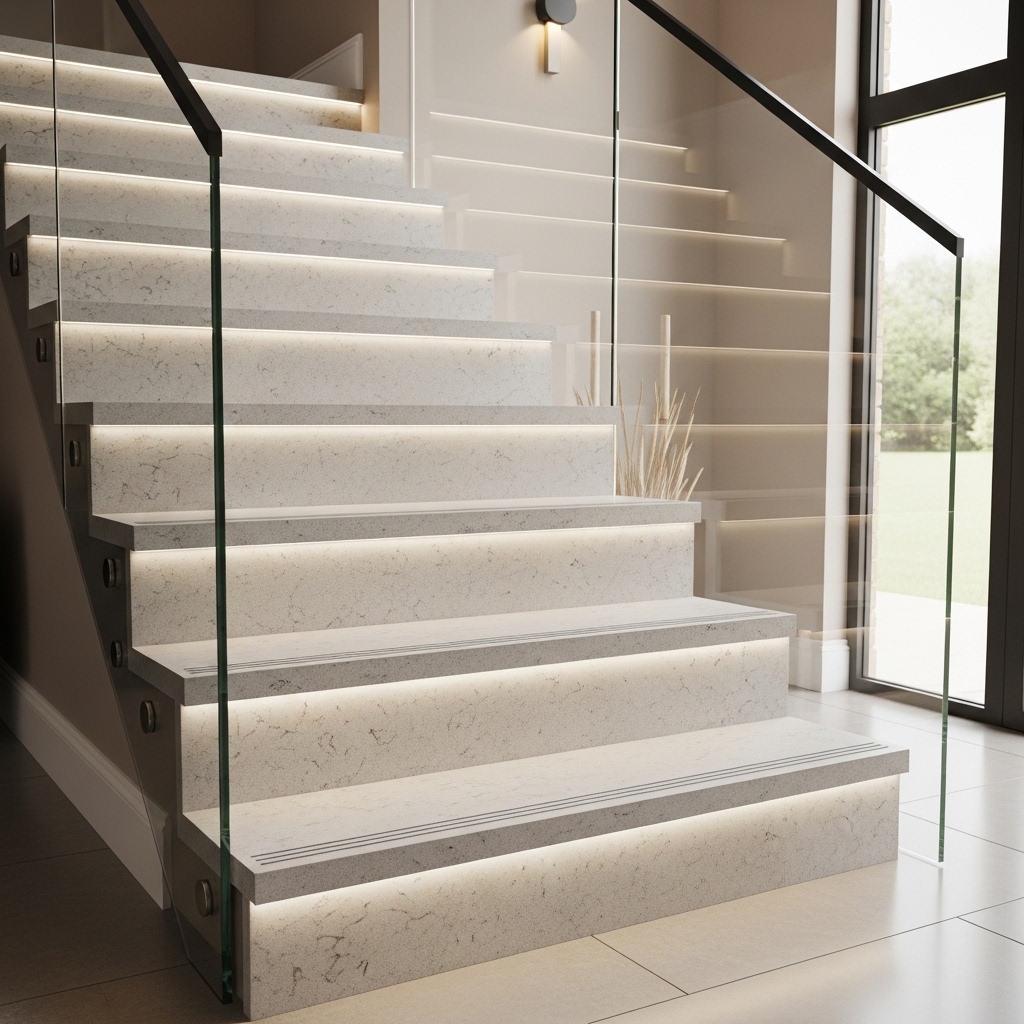
Threshold profile guide for stairs
A threshold profile guide for stairs focuses on transition detailing where stair materials meet other finishes—flooring, doorways, landings, or adjacent wall cladding—so edges remain protected and visually clean.
Profiles can be used to hide small tolerances, protect exposed edges from chipping, and create a crisp termination line at the top and bottom of the stair run.
For example, a slim L-profile can protect an exposed tread edge, while a shadow-gap trim can create a modern recessed line that visually separates stone treads from painted walls.
In practical stair design, profiles also help manage movement and wear at high-traffic transitions, especially at the top landing where rolling loads and foot traffic concentrate.
A good profile plan includes consistent reveal widths, compatible sealants, and neat corner detailing so transitions look intentional rather than like afterthoughts.
In UAE interiors, threshold size typically refers to narrow stone pieces used at door transitions, often cut in widths of 80–120 mm and lengths matched to the doorway opening. Thickness usually matches the adjacent flooring or countertop material for a seamless look. These pieces are planned alongside the main slabs, making it important to understand the overall size of slab available for the project.
Threshold Size Guide and Is Granite Cookware Safe for Daily Use
A threshold size guide and is granite cookware safe for daily use discussion often connects durability at doorways with overall material performance in kitchens. Threshold pieces are commonly cut at widths of 80–120 mm and thicknesses of 20–30 mm to withstand foot traffic. Homeowners asking is granite cookware safe are usually concerned about heat resistance and longevity, which aligns with granite’s proven strength in both thresholds and everyday kitchen use.
Threshold Size Coordination with Raised Floor Transitions
Threshold size coordination becomes essential when detailing transitions between fixed finishes and a raised floor. Threshold elements are typically designed with widths of 80–120 mm and thicknesses matching adjacent surfaces. Correct sizing ensures safe movement, visual continuity, and clean integration at floor level changes.