
What Size Is a Quartz Slab?
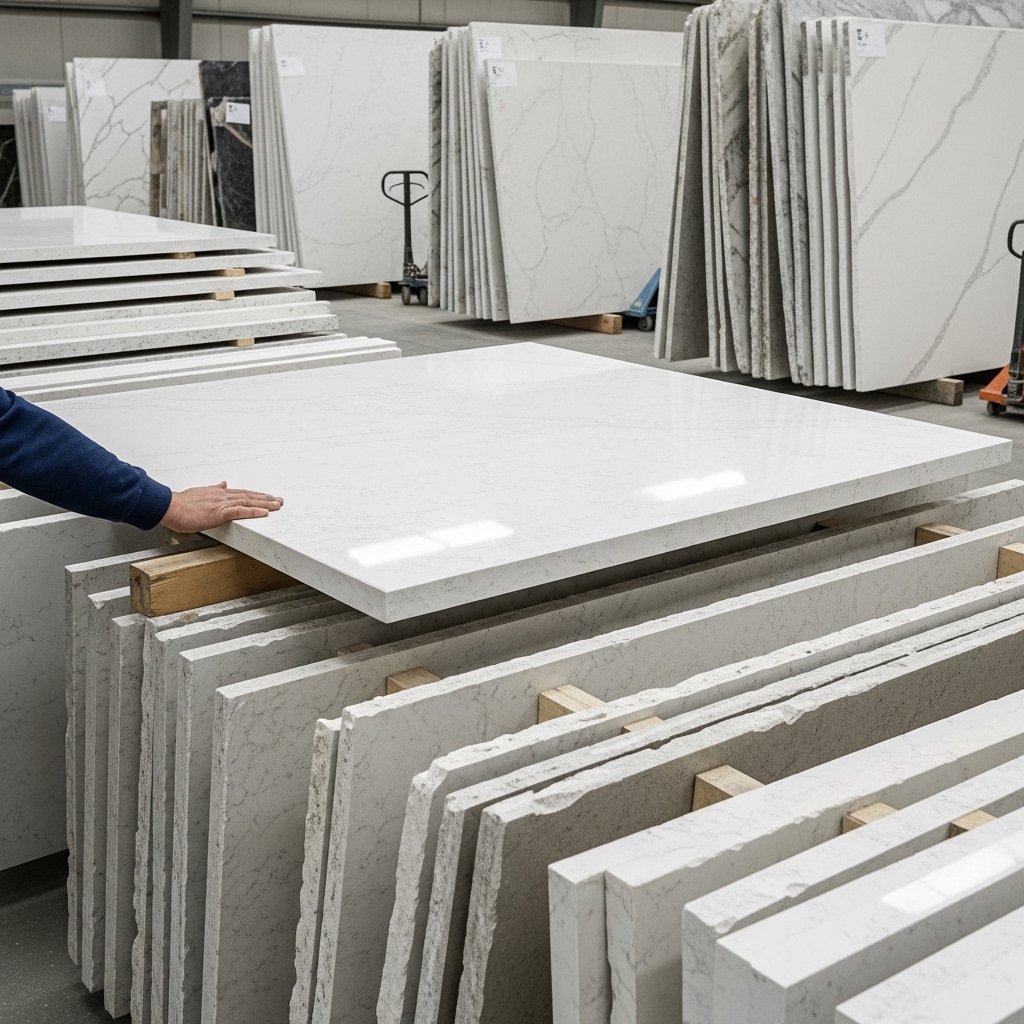
What size is a quartz slab is usually answered with the standard manufacturing formats used by countertop fabricators: the common standard quartz slab is 56 in × 120 in (142.24 cm × 304.80 cm), and the common jumbo slab is 63 in × 126 in (160.02 cm × 320.04 cm). Depending on the brand, you may also see extra-large slabs around 65 in × 130 in (165.10 cm × 330.20 cm), and some premium collections offer super-jumbo sizes like 78 in × 138 in (198.12 cm × 350.52 cm) to reduce seams on very large islands. Typical quartz thicknesses are 2 cm (0.79 in / 20 mm) and 3 cm (1.18 in / 30 mm), with occasional 12 mm (0.47 in / 1.2 cm) options in select product lines.
Regular Size
56 in × 120 in, thickness 0.79 in (2 cm) or 1.18 in (3 cm).
Jumbo Size
63 in × 126 in, thickness 0.79 in (2 cm) or 1.18 in (3 cm).
Super Size
78 in × 138 in, thickness 0.79 in (2 cm) or 1.18 in (3 cm).
Super Jumbo
137.80 in × 78.74 in, thickness 0.79 in (2 cm) or 1.18 in (3 cm).
Mini Slab
48 in × 96 in, thickness 0.79 in (2 cm) or 1.18 in (3 cm).
Understanding Quartz Slab Measurements
When embarking on a project that involves quartz slabs, understanding the measurements is crucial for achieving the desired outcome.
First, consider the project dimensions; accurate measurements of the space where the quartz will be installed are essential. For instance, if you’re working with a kitchen countertop, you might need a slab that measures 96 inches by 26 inches to fit standard cabinetry.
Next, the desired aesthetic plays a significant role in selecting the right quartz slab. Whether you prefer a sleek, modern look with a polished finish or a more rustic appearance with veining, the choice of color and pattern can influence the overall design.
Budget constraints are another critical factor; quartz slabs can range from $50 to $150 per square foot, so it’s important to establish a budget early on to avoid overspending.
Additionally, the fabricator’s expertise should not be overlooked. A skilled fabricator can provide valuable insights into the best practices for cutting and installing quartz, ensuring that the final product meets your expectations.
Lastly, specific design requirements, such as the need for cutouts for sinks or appliances, must be communicated clearly to the fabricator. For example, if you require a sink cutout that measures 30 inches by 22 inches, this should be factored into the overall slab measurements to avoid any last-minute adjustments. By carefully considering these elements, you can ensure a successful quartz slab installation that aligns with your vision and practical needs.
Quartz Slab Measurements: Why Oversize Helps
Understanding quartz slab measurements is crucial for both homeowners and professionals in the construction and design industries. One of the primary advantages of knowing these measurements is the ability to maximize the use of space effectively. For instance, a standard quartz slab typically measures 120 inches by 55 inches, but oversized slabs can reach dimensions of 126 inches by 63 inches or more. This additional size allows for fewer seams in countertops, resulting in a more seamless and aesthetically pleasing appearance.
Furthermore, larger slabs can accommodate expansive designs, such as waterfall edges or large islands, which are increasingly popular in modern kitchens. This not only enhances the visual appeal but also increases the functionality of the space.
Additionally, understanding the measurements helps in accurate budgeting and material estimation, reducing waste and ensuring that the project stays within financial constraints. For example, if a project requires 50 square feet of countertop, knowing the exact dimensions of the slabs can help determine how many slabs are needed, potentially saving hundreds of dollars in material costs. Overall, a thorough grasp of quartz slab measurements empowers individuals to make informed decisions that enhance both the beauty and efficiency of their spaces.
Quartz Material: Average Offcut Allowance
Quartz material is increasingly popular in various applications, particularly in countertops and surfaces due to its durability and aesthetic appeal. When working with quartz, it is essential to consider the average offcut allowance, which refers to the amount of material that may be wasted during the fabrication process. Typically, the average offcut allowance for quartz can range from 10% to 20%, depending on the complexity of the design and the layout of the slabs.
For instance, if a project requires 100 square feet of quartz, one should account for an additional 10 to 20 square feet to cover potential offcuts. This allowance is crucial for ensuring that there is enough material to complete the project without running short, especially when dealing with intricate cuts or patterns that may lead to more waste.
Additionally, proper planning and layout optimization can significantly reduce offcut waste, allowing for more efficient use of the material. By carefully measuring and designing the layout, fabricators can minimize the offcut allowance, ultimately saving costs and reducing environmental impact.
Quartz Material: Biggest Format Explained
Quartz material has gained significant popularity in the construction and design industries, particularly due to its versatility and aesthetic appeal. One of the most notable advancements in quartz technology is the introduction of large-format quartz slabs. These slabs can measure up to 126 inches by 63 inches, providing a seamless and expansive surface that is ideal for various applications, including countertops, wall cladding, and flooring. The larger format not only enhances the visual impact of a space but also reduces the number of seams required, which can be a critical factor in maintaining a clean and modern look.
The manufacturing process of large-format quartz involves combining natural quartz crystals with resins and pigments, resulting in a durable and non-porous surface. This durability is a significant advantage, as it makes the material resistant to scratches, stains, and heat, making it suitable for high-traffic areas and kitchen environments. Additionally, the non-porous nature of quartz means that it does not harbor bacteria or mold, contributing to a healthier living space.
In terms of design, large-format quartz slabs offer a wide range of colors and patterns, allowing designers and homeowners to achieve their desired aesthetic. From sleek, minimalist designs to bold, dramatic patterns that mimic natural stone, the options are virtually limitless. This flexibility in design makes large-format quartz an attractive choice for both residential and commercial projects.
Moreover, the installation of large-format quartz slabs can be more efficient compared to traditional smaller tiles. Fewer pieces mean less time spent on installation, which can lead to cost savings in labor. However, it is essential to note that the handling and installation of these large slabs require specialized skills and equipment to ensure proper alignment and support.
Overall, the evolution of quartz material into larger formats has revolutionized the way designers and builders approach surface applications. With its combination of beauty, durability, and ease of maintenance, large-format quartz is poised to remain a leading choice in the industry for years to come. As more innovations emerge in quartz technology, the possibilities for design and functionality will continue to expand, making it an exciting material to watch in the future.
Quartz Material: Thickness for High-Traffic Areas
Quartz material is increasingly favored for high-traffic areas due to its durability and aesthetic appeal. Thickness plays a crucial role in determining the performance of quartz surfaces in such environments. Typically, quartz countertops and surfaces are available in various thicknesses, with 1.2 cm (approximately 0.5 inches) and 3 cm (approximately 1.25 inches) being the most common options. For high-traffic areas, such as commercial kitchens, retail spaces, or busy bathrooms, a thickness of 3 cm is often recommended. This increased thickness not only enhances the material’s strength but also provides better resistance to chipping and cracking, which are common issues in areas subjected to heavy use.
Moreover, the weight of thicker quartz surfaces contributes to their stability, reducing the likelihood of movement or shifting over time. In high-traffic settings, where surfaces may experience frequent impacts from dropped items or heavy equipment, the added thickness serves as a protective barrier. Additionally, thicker quartz can accommodate more extensive edge profiles, allowing for a more polished and sophisticated look that can elevate the overall design of the space.
Another consideration is the ease of maintenance associated with thicker quartz. The non-porous nature of quartz means that it is resistant to staining and bacterial growth, making it an ideal choice for areas that require high hygiene standards. Thicker slabs can also be easier to clean, as they provide a seamless surface that minimizes the number of joints and seams where dirt and grime can accumulate.
In summary, when selecting quartz material for high-traffic areas, opting for a thickness of 3 cm is advisable. This choice not only enhances durability and stability but also contributes to the overall aesthetic and maintenance ease of the surface. By investing in thicker quartz, property owners can ensure that their surfaces withstand the rigors of daily use while maintaining their beauty and functionality over time.
Quartz slab sizing guide for walls & decorative surfaces
A quartz slab sizing guide for walls helps match slab format to the elevation’s proportions while ensuring panel sizes remain practical for transport, handling, and precise installation.
Designers often start by identifying the “hero” viewing zone of the wall and then choose slab sizes that keep seams out of that area, shifting joints to corners, returns, or cabinetry edges.
Typical slab formats like 3000 × 1400 mm and 3200 × 1600 mm cover large surfaces efficiently, and larger formats can reduce seams even further on expansive feature walls.
As a planning example, a 3200 × 1600 mm slab covers about 5.12 m² (around 55 ft²), which can significantly reduce seam count compared to smaller panels.
Thickness selection (often 6–12 mm for walls) is part of sizing too, because lighter panels are easier to install and place less stress on the substrate.
Quartz slab sizing guide for stairs
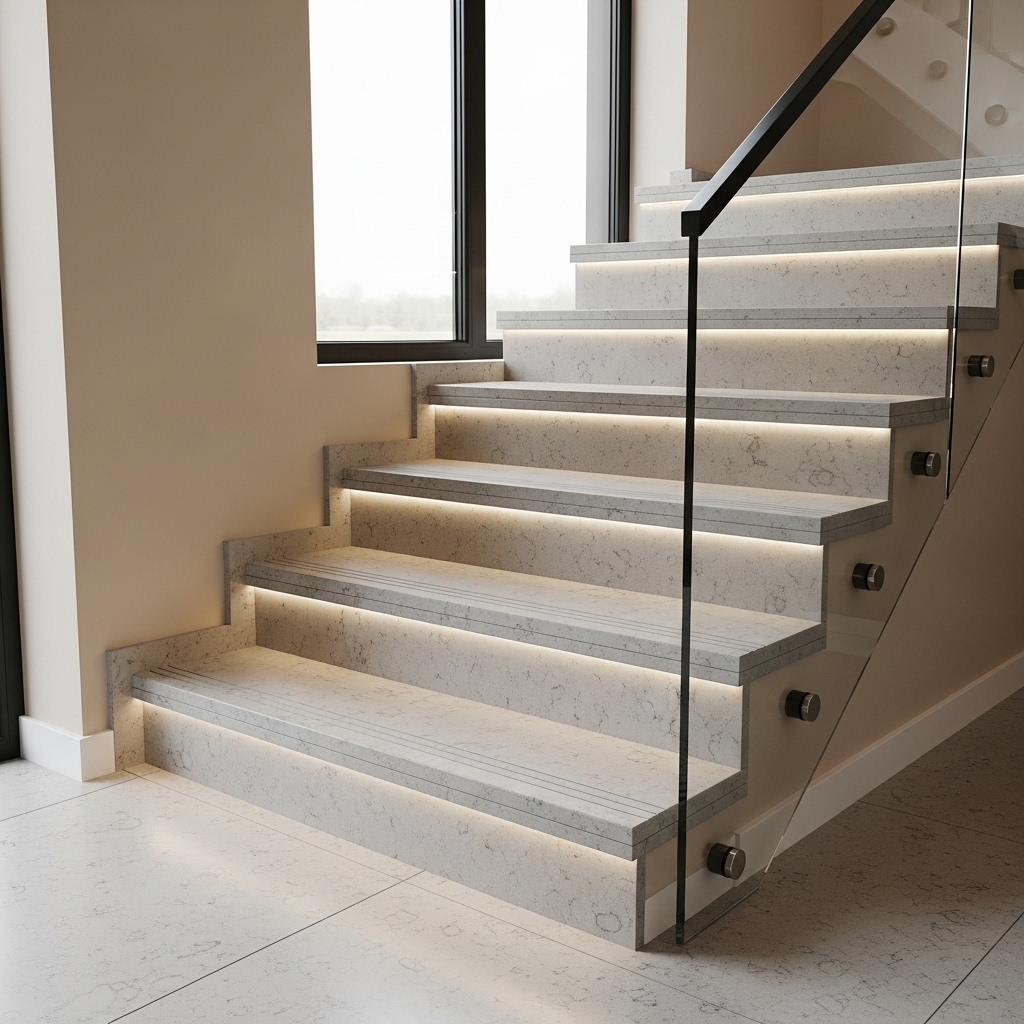
A quartz slab sizing guide for stairs is about matching slab format to the stair geometry so the most visible areas—especially landings and turning steps—stay as continuous as possible.
Start by identifying the key focal points (entry view, landing, open sides), then choose a slab format that reduces seams in those zones and allows treads to be cut in a consistent orientation.
Common slab examples like 3000 × 1400 mm and 3200 × 1600 mm suit many stair projects, while jumbo formats can help when landings are large or flights are wide.
For example, planning the landing as one dominant panel and nesting tread cuts around it can improve yield and keep the most noticeable surface seam-free.
Finish the sizing plan by confirming tread thickness (often 20 mm) and edge profile, then keeping joint gaps uniform so the staircase reads straight and premium from every angle.
Understanding what size is a quartz slab in the UAE usually means choosing between standard slabs at approximately 3040 × 1440 mm and jumbo slabs that extend beyond 3200 mm in length. Thickness options of 20 mm and 30 mm further affect edge profiles and appearance. During comparisons with natural stone, fabricators often review slab of granite size to assess which material offers better coverage for the design.
What Size Is a Quartz Slab for Travertine Marble Style Kitchens
When evaluating what size is a quartz slab for travertine marble style kitchens, standard slabs around 3040 × 1440 mm are commonly used, while jumbo slabs up to 3200 × 1600 mm are selected for larger layouts. These dimensions help balance the textured appearance of natural stone with smooth engineered surfaces. Pairing quartz slabs of these sizes with travertine marble creates a harmonious blend of warmth and modern simplicity.
What Size Is a Quartz Slab for Raised Floor Installations
When considering what size is a quartz slab for raised floor installations, most projects rely on slabs between 3040 × 1440 mm and 3200 × 1600 mm. These dimensions allow flexible fabrication while maintaining alignment with the raised floor module system and service access points.