
What Size Is a Slab of Quartz?
If you’re asking what size is a slab of quartz, the typical answer is that it comes in standard and jumbo sheets used for countertop fabrication: a common standard slab is 56 in × 120 in (142.24 cm × 304.80 cm) and a common jumbo slab is 63 in × 126 in (160.02 cm × 320.04 cm). Some manufacturers also supply larger slabs around 65 in × 130 in (165.10 cm × 330.20 cm), and a few offer super-jumbo sizes like 78 in × 138 in (198.12 cm × 350.52 cm) for very large, seam-minimizing designs. Thickness choices are usually 2 cm (0.79 in / 20 mm) and 3 cm (1.18 in / 30 mm), and select collections may also be offered at 12 mm (0.47 in / 1.2 cm).
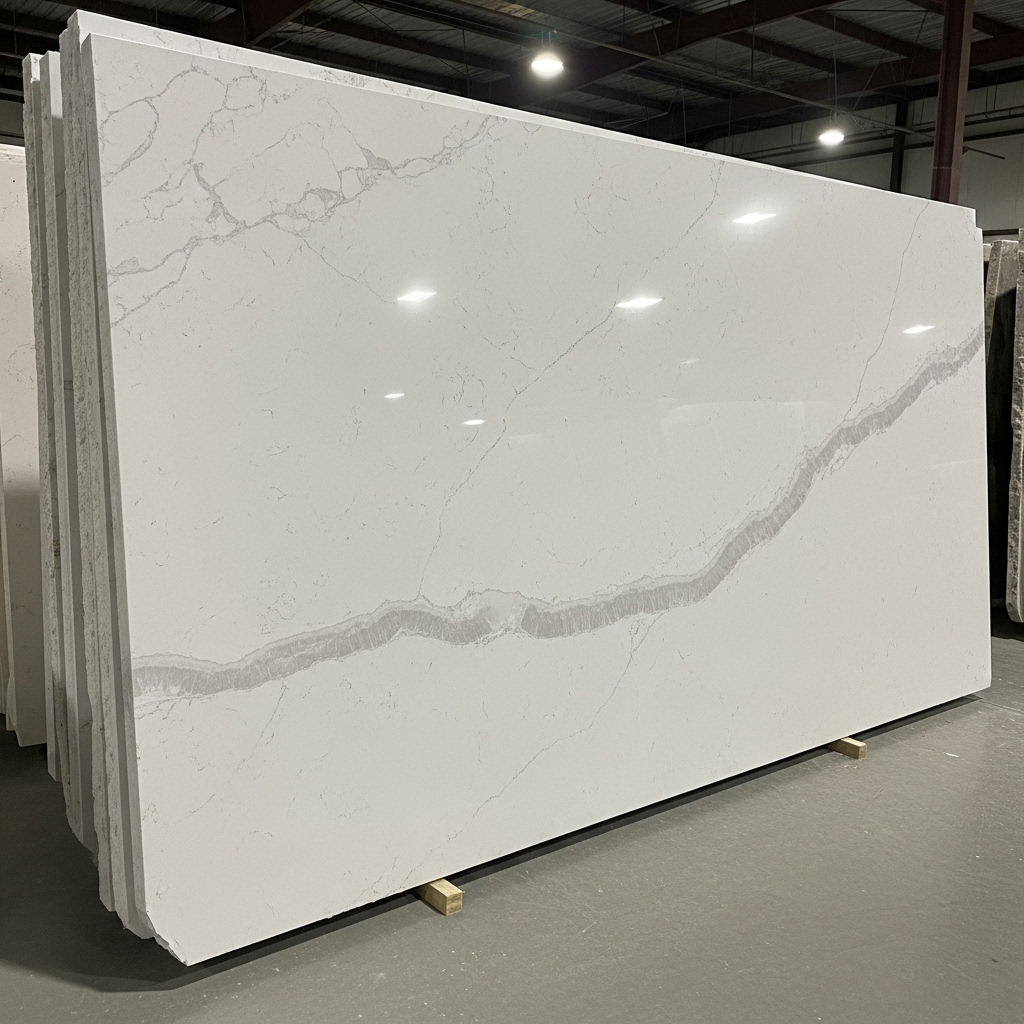
Regular Size
56 in × 120 in, thickness 0.79 in (2 cm) or 1.18 in (3 cm).
Jumbo Size
63 in × 126 in, thickness 0.79 in (2 cm) or 1.18 in (3 cm).
Super Size
78 in × 138 in, thickness 0.79 in (2 cm) or 1.18 in (3 cm).
Super Jumbo
137.80 in × 78.74 in, thickness 0.79 in (2 cm) or 1.18 in (3 cm).
Mini Slab
48 in × 96 in, thickness 0.79 in (2 cm) or 1.18 in (3 cm).
Understanding Quartz Sheet Measurements
Understanding quartz sheet measurements is crucial for achieving the desired outcome in any project.
When considering project dimensions, it is essential to accurately measure the space where the quartz will be installed, as standard quartz sheets typically come in sizes of 120 inches by 55 inches, with a thickness of 1.5 cm or 2 cm.
The desired aesthetic plays a significant role in selecting the right quartz; for instance, if a sleek, modern look is preferred, lighter colors with minimal veining may be ideal, while a more traditional style might benefit from darker hues with pronounced patterns.
Budget constraints are another critical factor, as quartz can range from $50 to $100 per square foot, depending on the quality and brand.
It is also important to consider the fabricator’s expertise, as skilled fabricators can provide better precision in cutting and finishing, which is vital for intricate designs or large installations.
Lastly, specific design requirements, such as edge profiles or custom cutouts for sinks, must be communicated clearly to ensure that the final product meets expectations. By carefully evaluating these aspects, one can make informed decisions that align with both functional needs and aesthetic desires.
Quartz Sheet Format: Why Jumbo Matters
Understanding quartz sheet measurements and formats is crucial for both manufacturers and consumers in the stone industry. One significant advantage is the efficiency it brings to the fabrication process; for instance, jumbo quartz sheets, typically measuring 126 inches by 63 inches, allow for larger cuts with minimal seams, which enhances the aesthetic appeal of countertops and surfaces. This size reduces waste, as fewer sheets are needed to cover large areas, leading to cost savings. Additionally, the uniformity in quartz sheet measurements ensures compatibility with various installation methods, making it easier for fabricators to work with the material. The consistency in thickness, usually around 1.2 cm to 3 cm, also simplifies the design process, allowing for precise calculations and reducing the likelihood of errors during cutting and installation. Furthermore, understanding these measurements helps in selecting the right quartz for specific applications, whether for residential or commercial use, ensuring that the final product meets both functional and aesthetic requirements. In summary, grasping the significance of quartz sheet measurements, particularly the jumbo format, not only streamlines production but also enhances the overall quality and durability of the finished surfaces.
General Waste Allowance for Quartz Material
General Waste Allowance for quartz material is an essential consideration in the construction and manufacturing industries, particularly when dealing with countertops, tiles, and other quartz-based products. Typically, a waste allowance of around 10% to 15% is recommended to account for imperfections, cuts, and breakages during the fabrication and installation processes. This percentage can vary based on the complexity of the project and the specific characteristics of the quartz being used. For instance, when working with large slabs, the waste allowance might be closer to 10%, while intricate designs or smaller pieces may necessitate a higher allowance of up to 15%.
It is crucial to accurately calculate the required amount of quartz material, factoring in the waste allowance, to avoid project delays and additional costs. Proper planning can lead to significant savings, as over-ordering can result in excess material that may not be usable, while under-ordering can lead to rushed orders and potential mismatches in color or pattern.
Additionally, understanding the waste allowance helps in sustainable practices, as it encourages efficient use of resources and minimizes environmental impact. By being mindful of the waste generated, companies can improve their overall efficiency and contribute to a more sustainable industry.
Quartz Material: Maximum Format Explained
Quartz material is a highly versatile and durable option widely used in various applications, particularly in countertops, flooring, and other surfaces. Composed primarily of natural quartz crystals, this engineered stone combines approximately 90-95% crushed quartz with resins and pigments, resulting in a non-porous, low-maintenance surface that is resistant to stains and scratches.
One of the key advantages of quartz is its aesthetic appeal; it comes in a vast array of colors and patterns, allowing homeowners and designers to achieve the desired look for their spaces. For instance, quartz can mimic the appearance of natural stones like marble or granite, providing the elegance of these materials without the associated upkeep.
In terms of durability, quartz is known for its strength and resilience. It can withstand high levels of heat and pressure, making it an ideal choice for kitchen countertops where hot pots and pans are frequently placed. Additionally, its non-porous nature means that it does not harbor bacteria or mold, contributing to a healthier environment in homes and commercial spaces.
The manufacturing process of quartz involves mixing the crushed stone with resins and pigments, which are then molded and cured to create slabs. This process allows for precise control over the final product’s appearance and performance characteristics. Typically, quartz slabs are available in sizes up to 120 inches by 55 inches, with thicknesses ranging from 1 cm to 3 cm, providing ample options for various design needs.
Moreover, the sustainability aspect of quartz cannot be overlooked. Many manufacturers are now focusing on eco-friendly practices, utilizing recycled materials in their production processes. This commitment to sustainability not only reduces waste but also appeals to environmentally conscious consumers.
Overall, quartz material stands out as a premium choice for those seeking a combination of beauty, durability, and low maintenance. Its ability to adapt to different styles and settings, along with its robust performance characteristics, makes it a favored option in both residential and commercial applications.
Quartz Material: Best Thickness for Heavy Footfall
Quartz material is renowned for its durability and aesthetic appeal, making it a popular choice for flooring in high-traffic areas. When considering the best thickness for quartz flooring, especially in environments with heavy footfall, it is essential to strike a balance between strength and design. Typically, quartz slabs used for flooring range from 1 cm to 3 cm in thickness. For areas subjected to significant wear and tear, such as commercial spaces, a thickness of 2 cm to 3 cm is recommended. This thickness provides the necessary structural integrity to withstand the pressure and impact of heavy foot traffic, ensuring longevity and reducing the risk of cracking or chipping.
Moreover, the choice of thickness can also influence the overall aesthetic of the space. Thicker slabs can create a more substantial and luxurious appearance, while thinner options may be more suitable for a sleek, modern look. It is important to consider the subfloor and the installation method as well; thicker quartz may require additional support or a specific type of underlayment to ensure stability.
In addition to thickness, the quality of the quartz material plays a crucial role in its performance under heavy footfall. High-quality quartz surfaces are engineered to be non-porous, resistant to stains, and easy to maintain, making them ideal for busy environments. When properly installed, quartz flooring can last for decades, maintaining its beauty and functionality even in the face of constant use.
Ultimately, selecting the right thickness for quartz flooring in high-traffic areas is vital for achieving both durability and aesthetic appeal. A thickness of 2 cm to 3 cm is generally the best choice for heavy footfall, ensuring that the flooring can withstand the demands of daily use while enhancing the overall design of the space.
Quartz slab sizing guide for walls & decorative surfaces
A quartz slab sizing guide for wall and decorative use focuses on matching slab format to the wall’s proportions while planning seams around architectural break lines.
Designers often start by dividing the elevation into logical zones—main face, returns, niches—and then choose slab sizes that minimize seams in the most visible areas.
Typical quartz formats like 3000 × 1400 mm and 3200 × 1600 mm cover large surfaces efficiently, while larger options can reduce joints even further on statement walls.
For example, if a feature wall is visually centered in a living room, the layout can keep seams outside the focal zone and align them with side trims or shelving edges.
Thickness choices (often 6–12 mm for walls) are also part of sizing, since lighter panels improve handling and reduce load on the substrate.
Quartz slab sizing guide for stairs
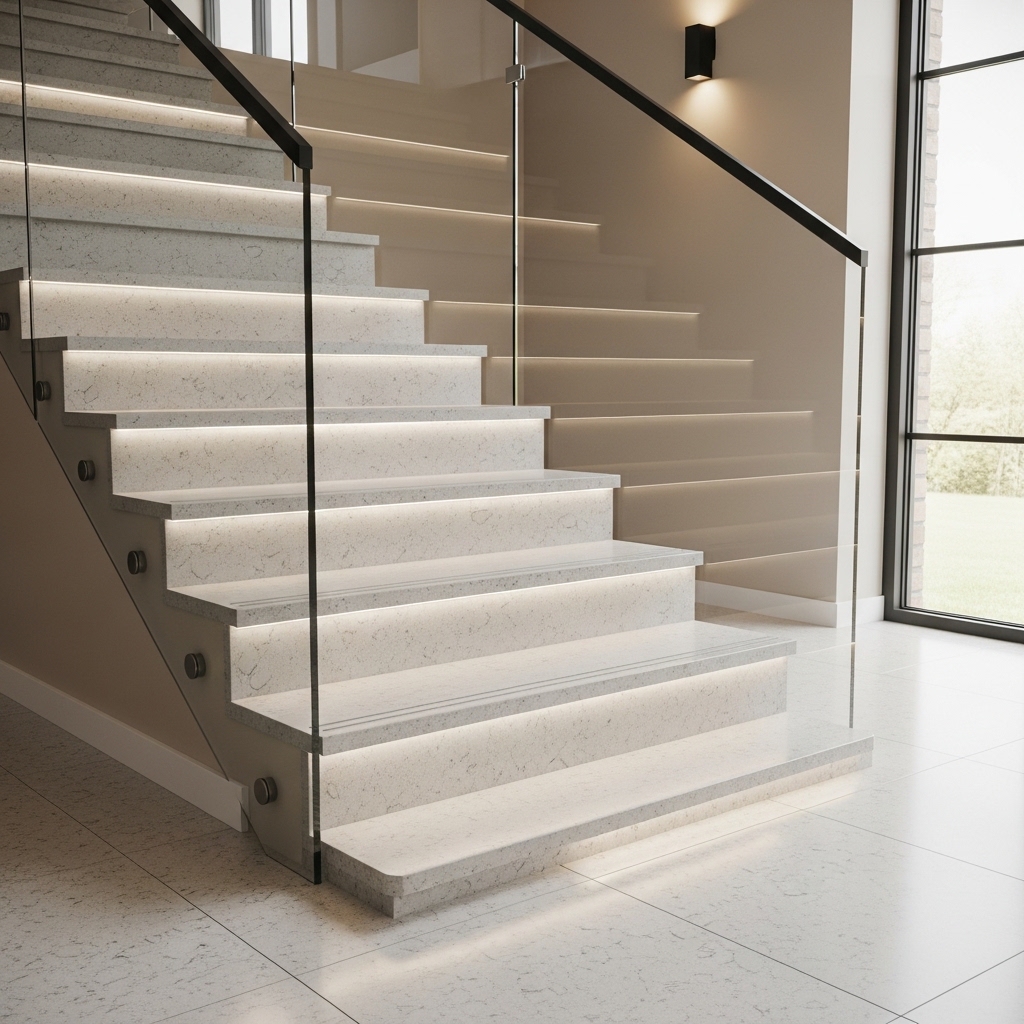
Sizing quartz for stairs is mainly about selecting a slab format that reduces joins, then arranging tread and riser cuts to minimize waste and keep the design consistent across every step.
Start by identifying the most visible zones—typically the landing and the center of the flight—and plan to keep seams out of those areas by shifting joints to edges, returns, or skirting lines.
Large slab examples like 3000 × 1400 mm or 3200 × 1600 mm often provide enough area to cut repeated treads with the same orientation for a uniform look.
For example, if a landing is a focal point, choosing a larger slab format can allow it to be cut as a single piece, while treads are nested around it for better yield.
Complete the sizing plan by confirming tread thickness (often 20 mm) and nose profile, then ensuring consistent joint gaps so the staircase reads straight and precise.
When discussing what size is a slab of quartz in the UAE, suppliers usually explain that standard slabs measure about 3040 × 1440 mm, while jumbo slabs increase width and length for larger applications. Thickness options of 20 mm and 30 mm are commonly stocked to suit different design preferences. This naturally leads to follow-up questions like what size are quartz slabs when comparing brands and collections.
What Size Is a Slab of Quartz for Seamless Countertop Layouts
When considering what size is a slab of quartz for seamless countertop layouts, most projects rely on standard slabs measuring approximately 3040 × 1440 mm, while larger kitchens benefit from jumbo slabs up to 3200 × 1600 mm. These sizes allow long runs, islands, and waterfall edges to be fabricated with minimal joints. Choosing the right slab size ensures a cleaner finish for any countertop while improving durability and aesthetics.
What Size Is a Slab of Quartz for Raised Floor Projects
When evaluating what size is a slab of quartz for raised floor projects, the most widely used sizes range from 3040 × 1440 mm to jumbo formats of 3200 × 1600 mm. These sizes offer flexibility for fabricating multiple elements from a single slab while maintaining alignment with raised floor modules and ensuring precise height coordination.