
Granite Size in Feet
Granite size in feet varies by quarry and distributor, but full granite slabs are often described in “about 9–10 ft long by 5–6 ft wide” ranges: for example, a common slab might be 9 ft × 5 ft (108 in × 60 in = 274.32 cm × 152.40 cm), while a larger slab could be 10 ft × 6 ft (120 in × 72 in = 304.80 cm × 182.88 cm). Some suppliers also stock slightly larger pieces around 10.5 ft × 6.5 ft (126 in × 78 in = 320.04 cm × 198.12 cm), depending on stone origin. Typical thicknesses are 2 cm (0.79 in / 20 mm) and 3 cm (1.18 in / 30 mm), with occasional 1.5 cm (0.59 in / 15 mm) granite used more in vertical or lighter-duty installations.
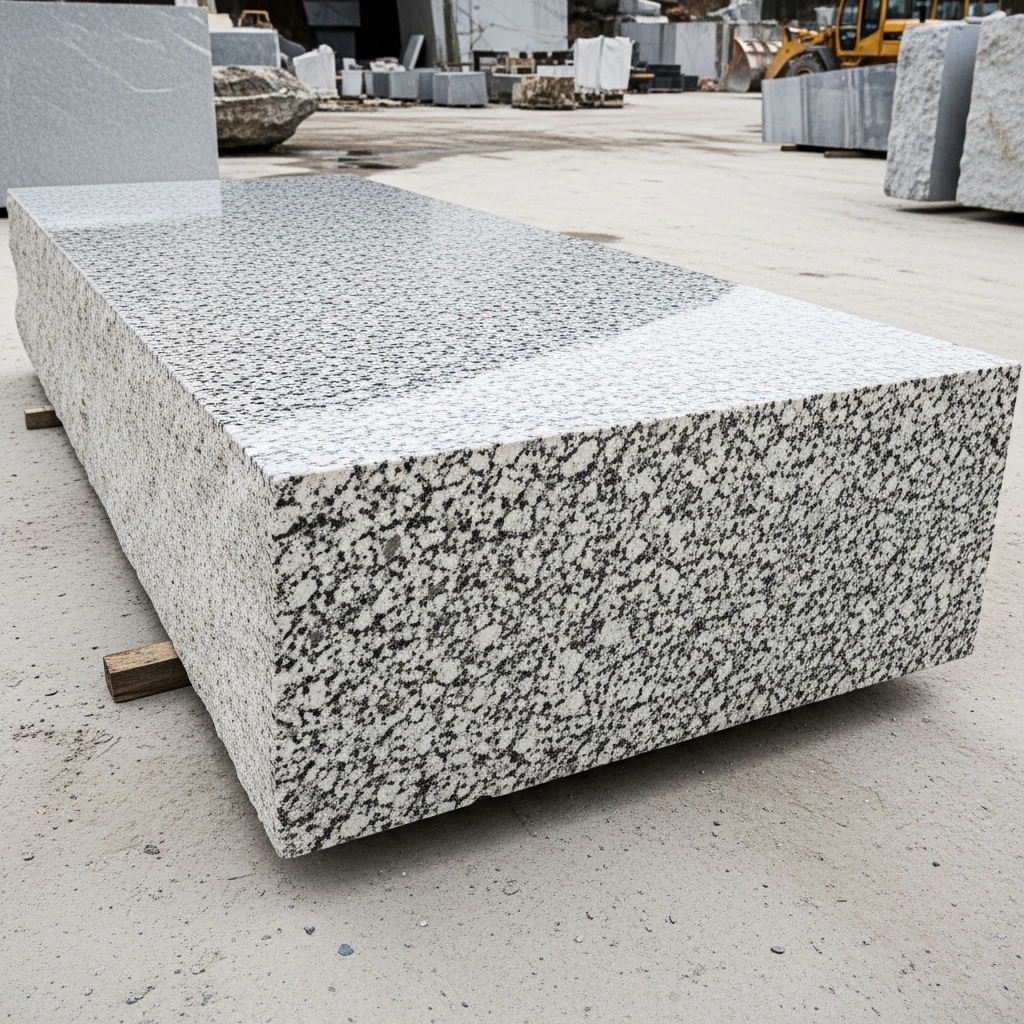
Regular Size
9 ft × 5 ft (108 in × 60 in), thickness 0.79 in (2 cm) or 1.18 in (3 cm).
Jumbo Size
10 ft × 6 ft (120 in × 72 in), thickness 0.79 in (2 cm) or 1.18 in (3 cm).
Super Size
11.5 ft × 6.5 ft (138 in × 78 in), thickness 0.79 in (2 cm) or 1.18 in (3 cm).
Super Jumbo
12 ft × 6.5 ft (144 in × 78 in), thickness 0.79 in (2 cm) or 1.18 in (3 cm).
Mini Slab
8 ft × 4 ft (96 in × 48 in), thickness 0.79 in (2 cm) or 1.18 in (3 cm).
Choosing Granite Measurements in Feet
When choosing granite measurements in feet for your project, it is essential to consider various factors that influence the final outcome.
First, assess the project dimensions; for instance, if you’re working on a kitchen countertop, standard sizes typically range from 2 to 3 inches in thickness and can extend from 6 to 10 feet in length, depending on your layout.
Next, think about the desired aesthetic; if you envision a seamless look, larger slabs measuring 10 feet or more may be necessary, while smaller spaces might benefit from 3 to 5-foot sections that can be easily integrated.
Budget constraints also play a crucial role; granite prices can vary significantly, with costs ranging from $40 to $200 per square foot, so understanding your budget will help narrow down your options.
Additionally, consider the fabricator’s expertise; some may specialize in intricate designs or custom cuts, which could influence the measurements you choose.
Lastly, specific design requirements, such as the need for cutouts for sinks or appliances, will dictate the final dimensions; for example, a standard sink cutout typically requires an additional 3 to 4 feet of granite to accommodate the installation. By carefully evaluating these factors, you can make informed decisions that align with your vision and practical needs.
Jumbo Granite in Feet: Why Bigger Helps
Choosing granite measurements in feet or opting for jumbo granite slabs can significantly enhance the overall aesthetic and functionality of a space. One of the primary advantages of larger granite slabs, typically measuring 10 feet by 5 feet or more, is the reduction of seams in countertops and surfaces. Fewer seams not only create a more seamless and visually appealing look but also minimize the potential for dirt and bacteria accumulation in those joints. Additionally, larger slabs provide greater design flexibility, allowing for expansive surfaces that can accommodate larger kitchen islands or expansive bathroom vanities without the need for multiple pieces. This can be particularly beneficial in open-concept spaces where continuity in design is key. Furthermore, jumbo granite slabs often come with a more consistent pattern and color, which can enhance the overall aesthetic appeal of the installation. For instance, a single slab can showcase a stunning natural pattern that might be lost when using smaller pieces. In terms of cost-effectiveness, while the initial investment for larger slabs may be higher, the reduction in labor costs associated with fewer seams and cuts can lead to overall savings. Ultimately, choosing granite in larger measurements not only elevates the visual impact of a space but also offers practical benefits that enhance durability and ease of maintenance.
Estimated Cutting Loss for Granite (Imperial Units)
When estimating cutting loss for granite, it is essential to consider various factors that can significantly impact the final yield of usable stone. Typically, the cutting loss can range from 10% to 30%, depending on the type of granite, the thickness of the slabs, and the cutting method employed. For instance, when cutting a standard 3 cm thick granite slab, if the initial block weighs 1,000 pounds, one might expect to lose between 100 to 300 pounds due to imperfections, cracks, or the kerf created by the saw blade.
Additionally, the layout of the cuts plays a crucial role; optimizing the arrangement can minimize waste. Using advanced software for layout planning can help reduce cutting loss by as much as 15%.
Furthermore, the choice of equipment also influences the cutting loss; high-quality diamond blades tend to produce cleaner cuts with less waste compared to standard blades. Therefore, careful planning and consideration of these factors are vital for accurately estimating cutting loss and maximizing the yield from granite blocks.
Biggest Granite Format in Feet
The biggest granite format available in the market typically measures around 10 feet by 5 feet, although some manufacturers may offer even larger slabs.
These expansive dimensions allow for a seamless installation, making them ideal for large countertops, flooring, and wall applications.
The thickness of these slabs usually ranges from 2 cm to 3 cm, providing both durability and aesthetic appeal.
When considering the weight of these large granite slabs, it’s important to note that they can weigh upwards of 1,000 pounds, depending on the specific type of granite and its thickness.
This significant weight necessitates careful handling and installation, often requiring professional assistance to ensure safety and proper placement.
In addition to their size, the color and pattern variations in granite can be quite striking.
Some of the largest formats feature unique veining and speckling that can enhance the overall design of a space.
For instance, a slab with a rich black base and white veining can serve as a stunning centerpiece in a modern kitchen.
Overall, the biggest granite formats not only provide functional benefits but also contribute to the visual impact of any interior or exterior design project.
Their impressive dimensions and natural beauty make them a popular choice among homeowners and designers alike.
Heavy-Use Floor Thickness for Granite (Imperial Units)
When considering heavy-use floor thickness for granite, it is essential to understand the specific requirements that come with high-traffic areas. Granite, known for its durability and aesthetic appeal, is often chosen for commercial spaces, lobbies, and other environments where foot traffic is significant. Typically, a thickness of 3/4 inch to 1 inch is recommended for heavy-use applications. This thickness provides the necessary strength to withstand the weight and impact of constant movement without cracking or chipping. In addition to thickness, the installation method plays a crucial role in the performance of granite flooring. Using a proper substrate is vital; a concrete slab or a well-prepared underlayment can enhance the stability of the granite tiles. For instance, when installed over a concrete base, a 3/4 inch thick granite tile can effectively handle loads of up to 1,000 pounds per square foot, making it suitable for areas like shopping malls or airports where heavy equipment and large crowds are common. Moreover, the choice of granite itself can influence the overall performance of the flooring. Granite tiles with a higher density and lower porosity are preferable for heavy-use environments, as they are less likely to absorb stains and moisture, which can lead to deterioration over time. It is also advisable to consider the finish of the granite; a honed or polished surface can provide different levels of slip resistance, which is crucial in preventing accidents in busy areas. Finally, maintenance should not be overlooked. Regular sealing of granite floors can help maintain their integrity and appearance, especially in high-traffic zones. In summary, selecting the appropriate thickness, ensuring a solid installation, choosing the right type of granite, and committing to regular maintenance are all critical factors in achieving a durable and long-lasting granite floor in heavy-use settings.
Granite measurements guide for walls & decorative surfaces
A granite measurements guide for walls and decorative surfaces focuses on choosing slab formats and thickness that suit vertical installation while respecting granite’s natural variability from quarry to quarry and even slab to slab.
Granite slabs are commonly produced in broad workable ranges—often around 2400–3300 mm in length and 1400–2000 mm in width (typical examples)—which gives flexibility for statement walls, fireplace cladding, and large decorative elevations.
For vertical use, many projects select thickness around 10–20 mm to balance strength and weight, while heavier 30 mm granite is typically chosen when the design demands a bold massing effect or when edges and returns will be highly visible.
As a practical example, if you want a bookmatched granite focal wall, selecting a larger slab range can help you cut mirrored panels from the same area so the pattern aligns cleanly and seams don’t interrupt the visual flow.
Because granite has natural movement and mineral variation, measurement planning often includes slab selection and layout mapping—placing the most attractive pattern zones at eye level and aligning joints with architectural break lines to keep the wall looking refined.
Granite measurement guide for stairs
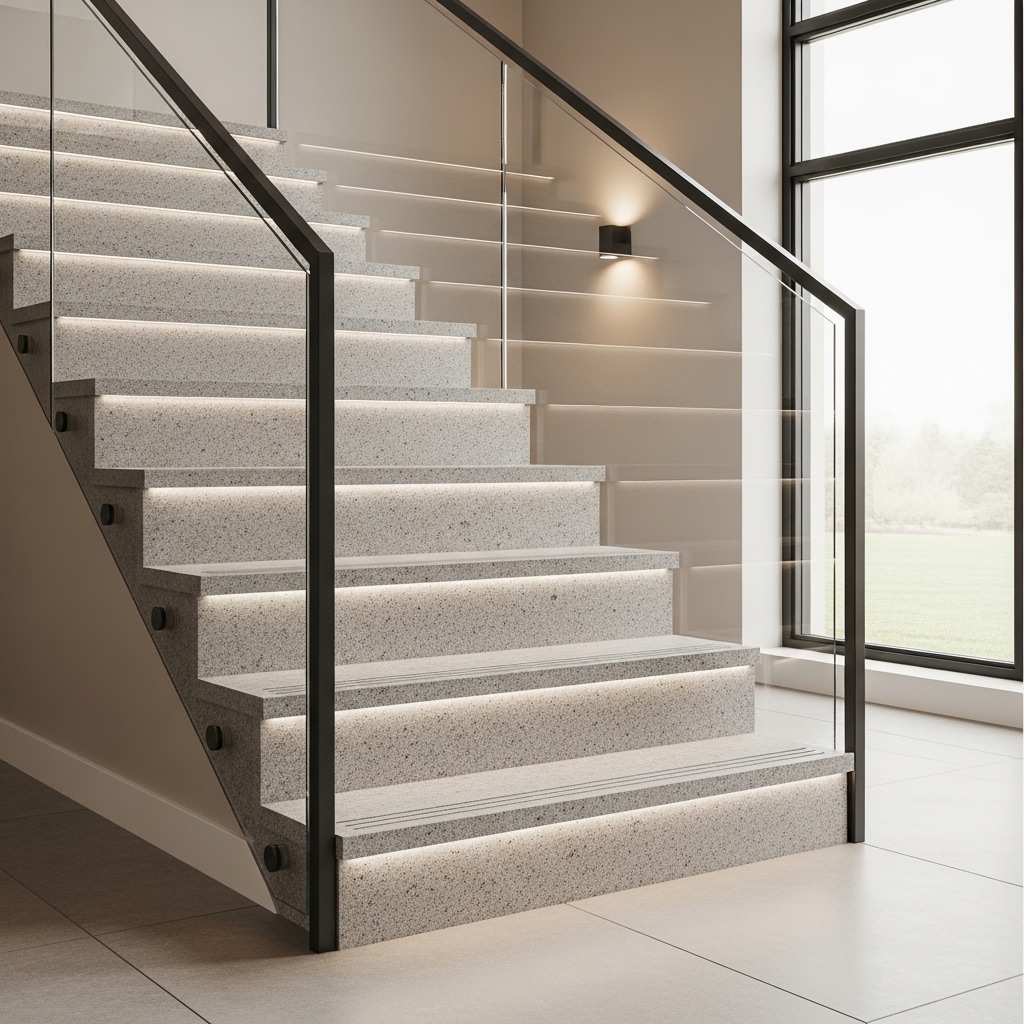
A granite measurement guide for stairs starts with the staircase geometry—flight width, number of risers, tread depth, and landing dimensions—then converts those site measurements into a cutting plan that maintains consistent tone and grain direction.
Granite is typically available in broad slab ranges rather than one fixed size, and projects often work within supply ranges such as 2400–3300 mm long and 1400–2000 mm wide (typical examples), which can yield multiple tread pieces plus risers from a single slab batch.
For durability, granite stair treads commonly use 20–30 mm thickness depending on span and design, and the edge profile (eased, chamfered, bullnose) is chosen to suit both style and traffic level.
As an example, the layout may reserve the most visually consistent areas of the slab for the most visible treads, while risers are cut from calmer sections to keep the vertical faces neat.
A complete guide also includes allowances for step-nose overhang, skirting returns at walls, and tight tolerances so joints remain uniform and the staircase looks crisp after installation.
In the UAE, granite size in feet is commonly discussed because granite slabs are often measured and sold using imperial references alongside metric units, with typical sizes ranging from about 8–10.5 ft in length and 4–6 ft in width depending on the quarry. These dimensions influence seam placement for large counters and islands, especially in open kitchens where visual continuity matters. During material selection, designers frequently compare these options with quartz jumbo slab size offerings, which can sometimes provide longer and wider single-piece solutions for modern kitchen layouts.
Granite Size in Feet for Residential Staircase Granite Design and Cladding
Granite size in feet is commonly referenced for residential work in the UAE, especially when planning long stair runs, landings, and vertical cladding panels. Typical granite slabs measure roughly 8–10.5 feet in length and 4–5.5 feet in width, depending on quarry and color selection. These dimensions are ideal for residential staircase granite design, as they allow treads, risers, and side cladding to be cut with fewer joints and better grain alignment.
Granite Size in Feet for Raised Floor Layouts
Granite size in feet is often preferred during early layout discussions for projects that incorporate a raised floor. Typical granite slabs measure roughly 9 to 10.5 feet in length and 5 to 6 feet in width, making them suitable for cutting into panels or surface elements that match raised floor grids. Converting sizes into feet helps contractors quickly coordinate slab usage with access flooring layouts and service zones.