
Quartz Jumbo Slab Size: A Guide to Dimensions and Applications
Quartz jumbo slab size is commonly produced to reduce seams on big kitchen islands and long countertop runs, with one of the most widely used jumbo formats being 63 in × 126 in (160.02 cm × 320.04 cm). Some manufacturers also call 65 in × 130 in (165.10 cm × 330.20 cm) a jumbo/extra-large option, and both sizes are chosen specifically to allow longer spans before a seam is needed. Jumbo quartz slabs are typically offered in 2 cm (0.79 in / 20 mm) and 3 cm (1.18 in / 30 mm) thicknesses, and select product lines may also be available in thinner 12 mm (0.47 in / 1.2 cm) panels depending on the application.
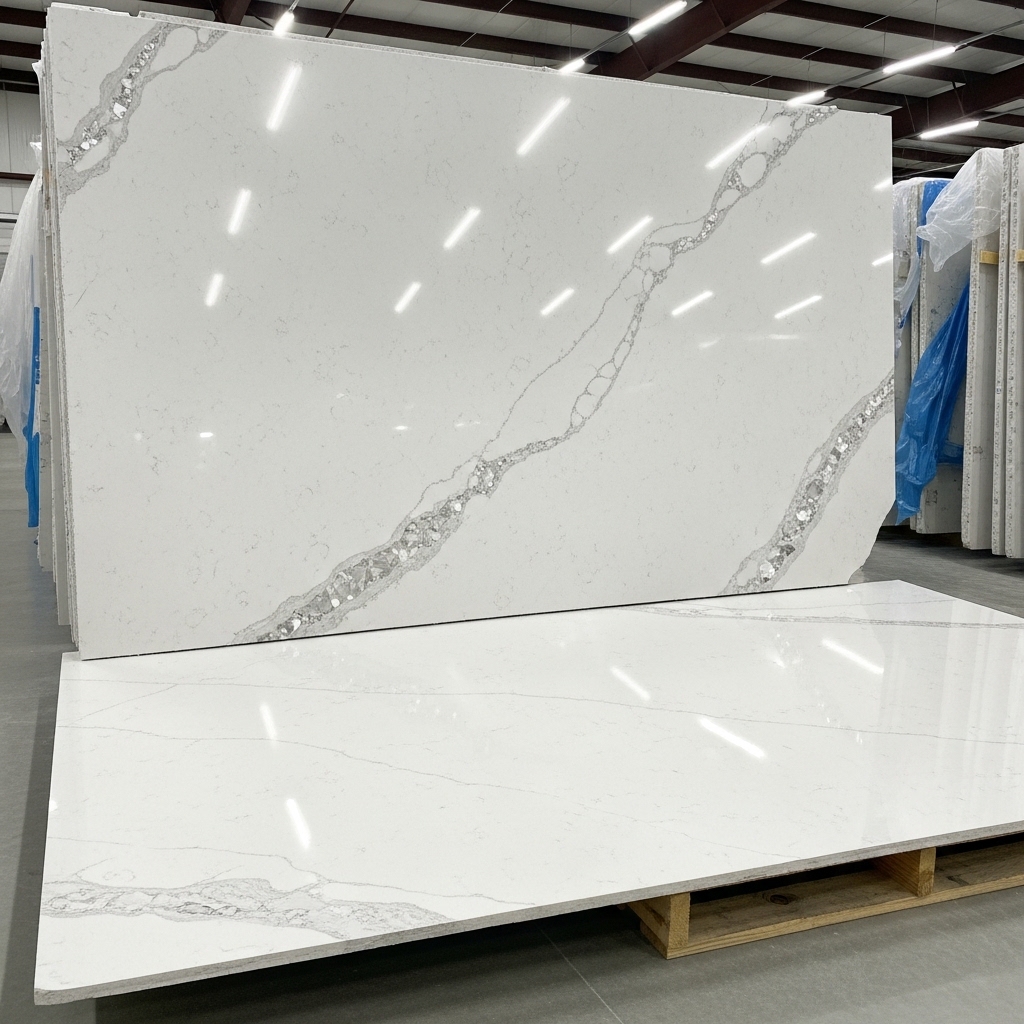
Regular Size
63 in × 126 in, thickness 0.79 in (2 cm) or 1.18 in (3 cm).
Jumbo Size
63 in × 126 in, thickness 0.79 in (2 cm) or 1.18 in (3 cm).
Super Size
78 in × 138 in, thickness 0.79 in (2 cm) or 1.18 in (3 cm).
Super Jumbo
137.80 in × 78.74 in, thickness 0.79 in (2 cm) or 1.18 in (3 cm).
Mini Slab
48 in × 96 in (mini reference), thickness 0.79 in (2 cm) or 1.18 in (3 cm).
Sizing Guide for Jumbo Quartz Sheets
When selecting jumbo quartz sheets for your project, it’s essential to consider various factors to ensure the best outcome.
First, assess the project dimensions; jumbo quartz sheets typically come in sizes around 126″ x 63″, allowing for fewer seams and a more cohesive look in larger spaces.
Next, think about your desired aesthetic; whether you prefer a sleek, modern finish or a more textured, natural appearance, the color and pattern of the quartz can significantly impact the overall design.
Budget constraints are also crucial; while jumbo sheets can be more cost-effective due to reduced waste and installation time, prices can range from $50 to $100 per square foot, depending on the quality and brand.
Additionally, consider the fabricator’s expertise; working with a skilled fabricator who has experience with large-format materials can ensure precise cuts and a flawless installation.
Lastly, specific design requirements, such as custom edges or integrated sinks, should be discussed early in the planning process to ensure that the chosen quartz sheets can accommodate these features without compromising the design integrity.
Jumbo Quartz Sheets: Key Benefits
A sizing guide for jumbo quartz sheets offers numerous advantages that can significantly enhance the selection and installation process.
Firstly, it ensures precise measurements, which is crucial since jumbo quartz sheets typically measure 126 inches by 63 inches, allowing for larger surface areas with fewer seams.
This not only improves the aesthetic appeal but also enhances durability, as fewer seams reduce the risk of water infiltration and damage.
Additionally, a sizing guide helps in optimizing material usage, minimizing waste, and potentially saving costs; for instance, using a guide can help avoid purchasing excess material, which can account for up to 15% of project costs.
Furthermore, it aids in planning for specific applications, whether for countertops, backsplashes, or flooring, ensuring that the right thickness and finish are chosen to meet both functional and design requirements.
Overall, utilizing a sizing guide for jumbo quartz sheets streamlines the decision-making process, leading to more efficient installations and ultimately a more satisfying outcome for homeowners and contractors alike.
Common Offcut Range for Jumbo Quartz Sheets
Jumbo quartz sheets are increasingly popular in the design and construction industries due to their durability and aesthetic appeal. The common offcut range for these sheets typically varies based on the size of the original slab, which usually measures around 126 inches by 63 inches. When fabricators cut these large slabs, they often generate offcuts that can range from small remnants of a few inches to larger pieces measuring up to 48 inches by 24 inches.
These offcuts can be utilized in various applications, such as countertops, backsplashes, or even smaller furniture pieces, making them a valuable resource rather than waste. For instance, a 12-inch by 12-inch offcut can be repurposed for a small side table or a decorative shelf, while larger pieces can serve as cutting boards or vanity tops.
By effectively managing the offcut range, fabricators can minimize waste and maximize the use of each slab, contributing to more sustainable practices in the industry. This not only helps in reducing costs but also allows for creative design solutions that make the most of every inch of material.
Jumbo Quartz Sheets: Maximum Format Options
Jumbo quartz sheets have revolutionized the way designers and homeowners approach interior surfaces, offering a blend of aesthetics and functionality. One of the most significant advantages of jumbo quartz sheets is their size. Typically available in dimensions up to 126 inches by 63 inches, these large-format slabs minimize the number of seams required in installations, creating a more seamless and visually appealing surface. This is particularly beneficial for expansive countertops, kitchen islands, and wall cladding, where continuity is essential for achieving a modern look.
Moreover, the larger format allows for greater design flexibility, enabling fabricators to create stunning, uninterrupted patterns that enhance the overall aesthetic of a space. With the ability to choose from a wide range of colors and textures, homeowners can find the perfect match for their design vision. For instance, a striking white quartz with subtle gray veining can serve as a stunning centerpiece in a contemporary kitchen, while a deep, rich color can add warmth and sophistication to a bathroom.
In addition to their visual appeal, jumbo quartz sheets are engineered for durability and ease of maintenance. These surfaces are non-porous, making them resistant to stains, scratches, and bacteria, which is crucial for high-traffic areas. The large size also means fewer joints, which not only enhances the aesthetic but also reduces the potential for dirt and grime to accumulate in seams. This practical aspect makes them an ideal choice for both residential and commercial applications.
Furthermore, the installation of jumbo quartz sheets can be more efficient compared to traditional-sized slabs. With fewer pieces to handle, the installation process can be quicker, reducing labor costs and minimizing disruption in the home or business. This efficiency is particularly advantageous in large-scale projects where time is of the essence.
Overall, the maximum format options offered by jumbo quartz sheets provide a unique combination of beauty, durability, and practicality, making them a preferred choice for modern interior design. Whether for a sleek kitchen, a luxurious bathroom, or a stylish commercial space, these large-format slabs are poised to meet the diverse needs of today’s discerning consumers.
Jumbo Quartz Sheets: Thickness for High-Traffic Floors
Jumbo quartz sheets have become increasingly popular in both residential and commercial applications, particularly for high-traffic floors. These engineered stone surfaces are composed of approximately 90-95% crushed natural quartz crystals, combined with resins and pigments, resulting in a durable and aesthetically pleasing product.
One of the key advantages of jumbo quartz sheets is their thickness, which typically ranges from 1.2 cm to 3 cm. This thickness not only enhances the visual appeal but also significantly contributes to the material’s strength and resilience. For high-traffic areas, such as retail spaces, airports, and busy households, opting for a thicker slab, around 2 cm to 3 cm, is advisable. This thickness provides better resistance to wear and tear, ensuring that the surface maintains its integrity and appearance over time.
In addition to durability, the non-porous nature of quartz makes it an excellent choice for high-traffic floors, as it resists staining and is easy to clean. Unlike natural stones, which may require sealing, quartz surfaces can be wiped down with mild detergents, making maintenance straightforward and efficient.
Furthermore, the large size of jumbo quartz sheets, often measuring up to 320 cm by 160 cm, minimizes the number of seams in a flooring installation. Fewer seams not only enhance the aesthetic appeal but also reduce the potential for dirt accumulation and damage at the joints.
Overall, when considering flooring options for high-traffic areas, the thickness and durability of jumbo quartz sheets make them a superior choice, combining functionality with style to meet the demands of busy environments.
Quartz jumbo slab formats for walls & decorative surfaces
Quartz jumbo slab formats are popular for walls and decorative surfaces because they help achieve a cleaner, more continuous look across large elevations while reducing the number of visible seams.
Jumbo formats are often offered in sizes around 3300 × 1650 mm (about 130 × 65 in) and can extend to other large-format options depending on the brand and collection, making them ideal for feature walls, high backsplashes, and lobby-style statement panels.
For example, a jumbo slab can cover a wider section of wall in one piece compared to standard formats, which is especially helpful for vein-pattern designs where fewer joints make the movement look more natural and uninterrupted.
Many projects choose thinner thicknesses like 6–12 mm for jumbo wall panels to manage weight, while thicker options may be selected if the design includes wrapped edges, returns, or a stronger architectural edge detail.
To get the best result from jumbo slabs, fabricators typically pre-plan panel sequencing so the pattern continues from one panel to the next, and seams are positioned along corners, niches, or cabinetry edges where they are less noticeable.
Quartz jumbo slab formats for stairs
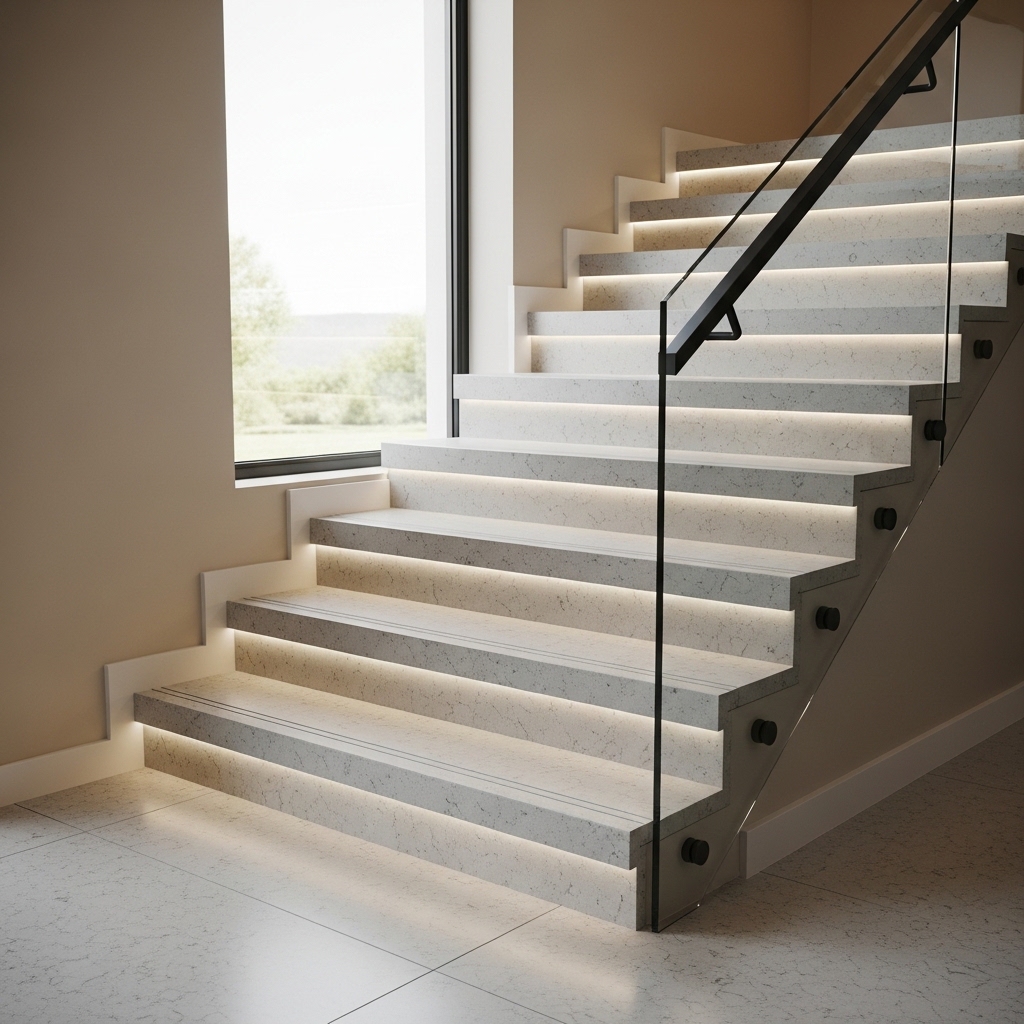
Quartz jumbo slab formats for stairs are chosen when you want larger continuous tread runs, fewer joins on wide landings, and better pattern continuity across highly visible step surfaces.
Many jumbo options are supplied in formats around 3300 × 1650 mm (about 130 × 65 in), providing extra cutting flexibility compared to standard slabs and helping reduce seam lines in landing areas.
For stair use, thickness is often selected around 20 mm for tread strength, while build-ups or laminated noses can be used to create a thicker-looking front edge without using an overly heavy piece.
For example, a wider landing can sometimes be cut as one dominant panel from a jumbo slab, avoiding mid-landing seams and making the stair zone feel more premium and continuous.
Because jumbo slabs are larger to handle, planning typically includes access checks (door widths, turning space) and safe lifting strategy so the biggest components can be installed without stress or damage.
In the UAE, quartz jumbo slab size options are increasingly popular for premium kitchens, with common jumbo dimensions around 3200 × 1600 mm and select collections reaching up to about 3340 × 1640 mm, both typically available in 20 mm and 30 mm thicknesses. These larger slabs are ideal for wide islands, waterfall edges, and long straight runs where minimizing seams is a priority. When finalizing layouts, fabricators carefully study the size of quartz slabs available in the chosen brand to ensure the design can be achieved efficiently without excessive joins or material waste.
Quartz Jumbo Slab Size Guide for Door Marble Threshold Installations
A quartz jumbo slab size guide for door marble threshold installations usually focuses on slabs measuring around 3200 × 1600 mm, with premium ranges extending even larger. These oversized slabs are advantageous because they provide enough material to fabricate both long countertops and smaller transition elements from the same batch. Using a matching door marble threshold cut from jumbo slabs ensures uniform color, thickness (20 mm or 30 mm), and finish across connected spaces.
Quartz Jumbo Slab Size for Raised Floor Coverage
Quartz jumbo slab size is especially effective for wide surface coverage above a raised floor system. Jumbo slabs generally measure up to 3200 × 1600 mm, reducing the number of seams required across large spans. This results in better visual continuity and simplifies coordination with raised floor panels, particularly in open-plan offices and premium commercial interiors.