
Granite Stone Size Guide
Granite stone size (as sold for construction and interiors) can mean full slabs, tiles, or prefabricated pieces: full slabs are commonly around 108–120 in long × 60–72 in wide (274.32–304.80 cm × 152.40–182.88 cm), while granite tiles are often 12 in × 12 in (30.48 cm × 30.48 cm), 18 in × 18 in (45.72 cm × 45.72 cm), or 24 in × 24 in (60.96 cm × 60.96 cm). Prefabricated countertop blanks are also common, such as 96 in × 26 in (243.84 cm × 66.04 cm) for straight runs, before final trimming and edging. Granite thickness is typically 2 cm (0.79 in / 20 mm) or 3 cm (1.18 in / 30 mm), with 1.5 cm (0.59 in / 15 mm) sometimes used for lighter or vertical applications.
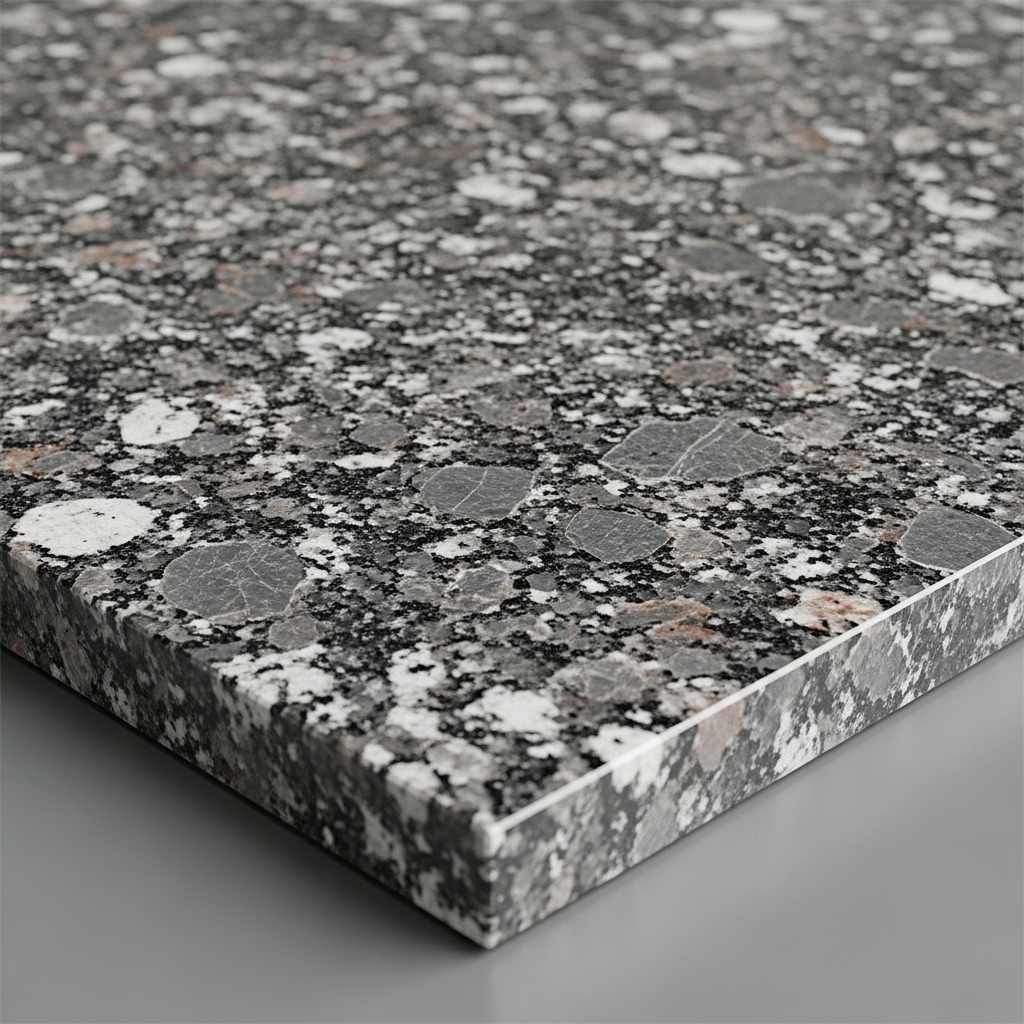
Regular Size
120 in × 72 in (slab) or 24 in × 24 in (tile), thickness 0.79 in (2 cm) or 1.18 in (3 cm).
Jumbo Size
126 in × 78 in (slab), thickness 0.79 in (2 cm) or 1.18 in (3 cm).
Super Size
138 in × 78 in (slab), thickness 0.79 in (2 cm) or 1.18 in (3 cm).
Super Jumbo
138 in × 78 in (slab), thickness 0.79 in (2 cm) or 1.18 in (3 cm).
Mini Slab
96 in × 48 in (slab), thickness 0.79 in (2 cm) or 1.18 in (3 cm).
Selecting Proper Granite Stone Dimensions
Selecting the proper granite stone dimensions for a project involves careful consideration of various factors to ensure both functionality and aesthetic appeal.
First, project dimensions play a crucial role; for instance, a kitchen countertop typically requires slabs that are at least 1.25 inches thick to withstand daily use, while a fireplace surround may need larger dimensions to create a striking focal point.
Desired aesthetic is another key factor; if a sleek, modern look is preferred, opting for larger, continuous slabs (like 3 cm thick) can minimize seams and enhance visual flow.
Budget constraints must also be taken into account, as larger slabs or custom cuts can significantly increase costs; for example, while standard sizes may range from $40 to $100 per square foot, custom dimensions can escalate to $150 or more.
Additionally, the fabricator’s expertise should not be overlooked; some fabricators may specialize in intricate designs or large-scale projects, which can influence the choice of dimensions.
Lastly, specific design requirements, such as the need for cutouts for sinks or appliances, will dictate the dimensions needed; for instance, a standard sink cutout typically requires an additional 3 to 4 inches around the sink’s perimeter. By carefully weighing these factors, one can select the most suitable granite stone dimensions that align with the overall vision of the project.
Granite Stone Dimensions: Benefits of Going Big
Selecting the proper granite stone dimensions is crucial for both aesthetic appeal and functional performance in various applications, such as countertops, flooring, and wall cladding. One of the primary advantages of choosing larger granite slabs, typically measuring around 120 inches by 75 inches, is the seamless appearance they provide, minimizing the number of joints and creating a more cohesive look. This is particularly beneficial in kitchen countertops, where a continuous surface can enhance both beauty and hygiene by reducing crevices where dirt and bacteria can accumulate. Additionally, larger dimensions can lead to less waste during installation, as fewer cuts are needed, ultimately saving both time and material costs. On the other hand, smaller pieces, often around 30 inches by 30 inches, may be more manageable for DIY projects but can result in more seams and a less polished finish. Furthermore, opting for thicker granite, such as 3 cm instead of 2 cm, not only adds to the durability and longevity of the installation but also provides a more substantial and luxurious feel. In commercial settings, larger dimensions can also facilitate quicker installation times, allowing businesses to minimize downtime during renovations. Overall, selecting the right granite stone dimensions can significantly enhance the visual impact, durability, and practicality of the finished product, making it a wise investment for both residential and commercial spaces.
Practical Waste Estimate for Granite Stone
When estimating practical waste for granite stone, it is essential to consider various factors that contribute to material loss during the extraction, processing, and installation phases. Typically, the waste percentage for granite can range from 10% to 30%, depending on the complexity of the project and the quality of the stone. For instance, if a project requires 100 square feet of granite, and the estimated waste is 15%, the total amount of granite needed would be 115 square feet.
The extraction process often results in waste due to the natural fissures and imperfections in the stone, which can lead to unusable pieces. Additionally, during cutting and shaping, further waste is generated, particularly if intricate designs are involved.
It is also crucial to account for installation waste, which can occur from cutting pieces to fit specific dimensions or from mistakes made during the installation process. To minimize waste, careful planning and precise measurements are vital. Utilizing advanced cutting technology can also help reduce waste by maximizing the yield from each slab. Ultimately, a thorough understanding of these factors will lead to a more accurate waste estimate, ensuring that the project remains within budget and resources are used efficiently.
Granite Stone: Biggest Format Available
Granite stone is renowned for its durability and aesthetic appeal, making it a popular choice for various applications, including countertops, flooring, and monuments. One of the most significant advantages of granite is its availability in large formats, which can dramatically enhance the visual impact of any space.
The biggest format available for granite slabs typically measures around 126 inches by 78 inches, although some suppliers may offer even larger dimensions. This expansive size allows for fewer seams in installations, creating a more seamless and elegant appearance. For instance, a single slab can cover a large kitchen island or an expansive countertop without interruption, providing a continuous flow that is both visually appealing and functional.
In addition to its size, granite is also available in various thicknesses, commonly ranging from 2 cm to 3 cm. The thicker slabs not only provide a more substantial look but also enhance durability, making them suitable for high-traffic areas. The weight of these large slabs can be considerable, often exceeding 800 pounds for a single piece, necessitating careful handling and installation by professionals.
The aesthetic versatility of granite is another reason for its popularity. With a wide range of colors and patterns, from classic whites and blacks to vibrant blues and greens, homeowners and designers can find the perfect match for their design vision. The natural veining and speckling found in granite add unique character to each slab, ensuring that no two pieces are exactly alike.
Furthermore, the maintenance of large-format granite is relatively straightforward. Its non-porous surface resists staining and is easy to clean, making it an ideal choice for kitchens and bathrooms. Regular sealing can enhance its longevity, ensuring that the stone retains its beauty for years to come.
Overall, the availability of granite in large formats not only elevates the aesthetic quality of spaces but also offers practical benefits in terms of durability and maintenance. With its impressive size, variety of colors, and ease of care, granite stone remains a top choice for those looking to make a lasting impression in their homes or commercial spaces.
Granite Stone: Floor Thickness for High-Traffic Zones
Granite stone is a popular choice for flooring, especially in high-traffic zones, due to its durability and aesthetic appeal. When considering the appropriate thickness for granite flooring in these areas, it is essential to understand the demands placed on the material. Typically, granite tiles range from 1 cm to 3 cm in thickness, with 2 cm being the most common choice for residential and commercial applications.
In high-traffic zones, such as entryways, hallways, and commercial spaces, a thicker granite tile is often recommended to withstand the constant wear and tear. A thickness of 2 cm provides a good balance between durability and weight, making it suitable for both residential and commercial settings. For even more demanding environments, such as shopping malls or airports, a thickness of 3 cm may be advisable. This added thickness not only enhances the stone’s ability to resist cracking and chipping but also contributes to its overall stability under heavy loads.
Moreover, the installation method plays a crucial role in the performance of granite flooring in high-traffic areas. Proper subfloor preparation and the use of high-quality adhesives can significantly impact the longevity of the flooring. It is also important to consider the finish of the granite; a honed finish may provide better slip resistance, which is vital in areas prone to moisture.
In conclusion, selecting the right thickness of granite stone for high-traffic zones is critical for ensuring durability and longevity. A thickness of 2 cm is generally sufficient for most applications, while 3 cm may be necessary for extremely high-traffic environments. By taking into account the specific requirements of the space and ensuring proper installation, granite flooring can provide a beautiful and resilient surface that stands the test of time.
Granite stone format guide for walls & decorative surfaces
A granite stone format guide for walls and decorative surfaces focuses on how granite is supplied (full slabs vs. cut-to-size panels), how the natural pattern should be oriented, and how thickness and finishes influence both appearance and installation performance.
Granite is often available as large slabs in broad ranges—commonly around 2400–3300 mm long and 1400–2000 mm wide (typical examples)—and those slabs can be transformed into large decorative panels or a structured cladding grid depending on the design intent.
For vertical use, thickness is commonly chosen around 10–20 mm, while heavier thickness may be used when creating bold edges, framing returns, or more sculptural wall details that benefit from added mass.
As a practical example, a fireplace cladding might be planned as two or three large granite panels with seams hidden at corners or aligned with shelf lines, so the stone appears monolithic while still being installable and maintainable.
Since granite has natural variation, format planning typically includes slab selection and layout mapping—choosing where mineral clusters or flowing grain will appear, and ensuring adjacent panels share a consistent visual direction.
Granite stone format guide for stairs
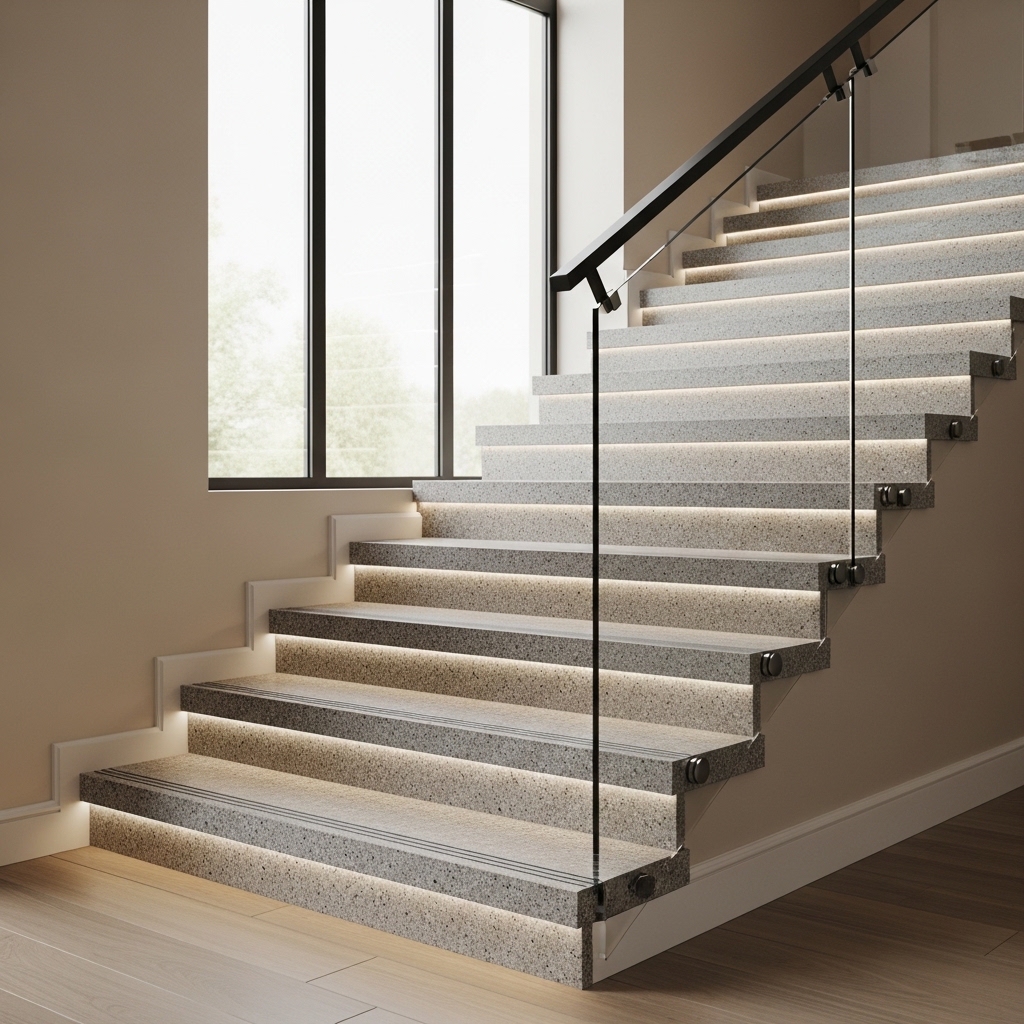
A granite stone format guide for stairs focuses on how granite is supplied and processed into step components—treads, risers, landings, and side skirting—while keeping the natural grain direction cohesive.
Granite can be fabricated as solid treads, tread-and-riser sets, or cladding panels over a concrete stair base, and the chosen format depends on structural design, budget, and the desired visual mass of the steps.
For example, a staircase may use solid granite treads with a bold nosing profile for a heavy, premium feel, or use granite cladding panels to achieve the same look with a different construction approach.
Format planning also includes surface finish selection: honed or leathered finishes offer a softer feel and can be more practical for slip perception, while polished granite provides a striking, reflective look in indoor settings.
A good guide includes consistent edge detailing, alignment of joints at landings, and careful slab selection so color and grain movement remain harmonious from the first step to the final landing.
In the UAE, granite stone size varies widely based on origin and quarry, but most slabs fall within the 2800–3200 mm length range and 1500–1800 mm width range, giving enough material for standard kitchens and larger island tops. Because granite is a natural material, slight size variations are common and should be confirmed at the yard before templating. To benchmark expectations, suppliers often compare these dimensions with the standard size quartz slab, which is more uniform and predictable across different brands and batches.
Granite Stone Size Guide for Corian Countertop Comparisons
A granite stone size guide for Corian countertop comparisons usually begins with standard granite slabs ranging from 2800–3200 mm in length and 1500–1800 mm in width. These sizes offer natural variation and strength, while Corian provides uniform sheets with thermoforming flexibility. When choosing between granite and a corian countertop, understanding stone slab dimensions helps homeowners evaluate seam placement, edge detailing, and overall installation complexity.
Granite Stone Size Guidance for Raised Floor Systems
Granite stone size guidance becomes especially relevant when granite finishes are installed alongside a raised floor system. Typical granite slabs measure around 3000 × 1600 mm, allowing them to be cut into modular sections that align with raised floor grids. Choosing the right stone size supports accurate detailing, smooth transitions, and dependable performance in commercial interiors.