
Standard Size Quartz Slab
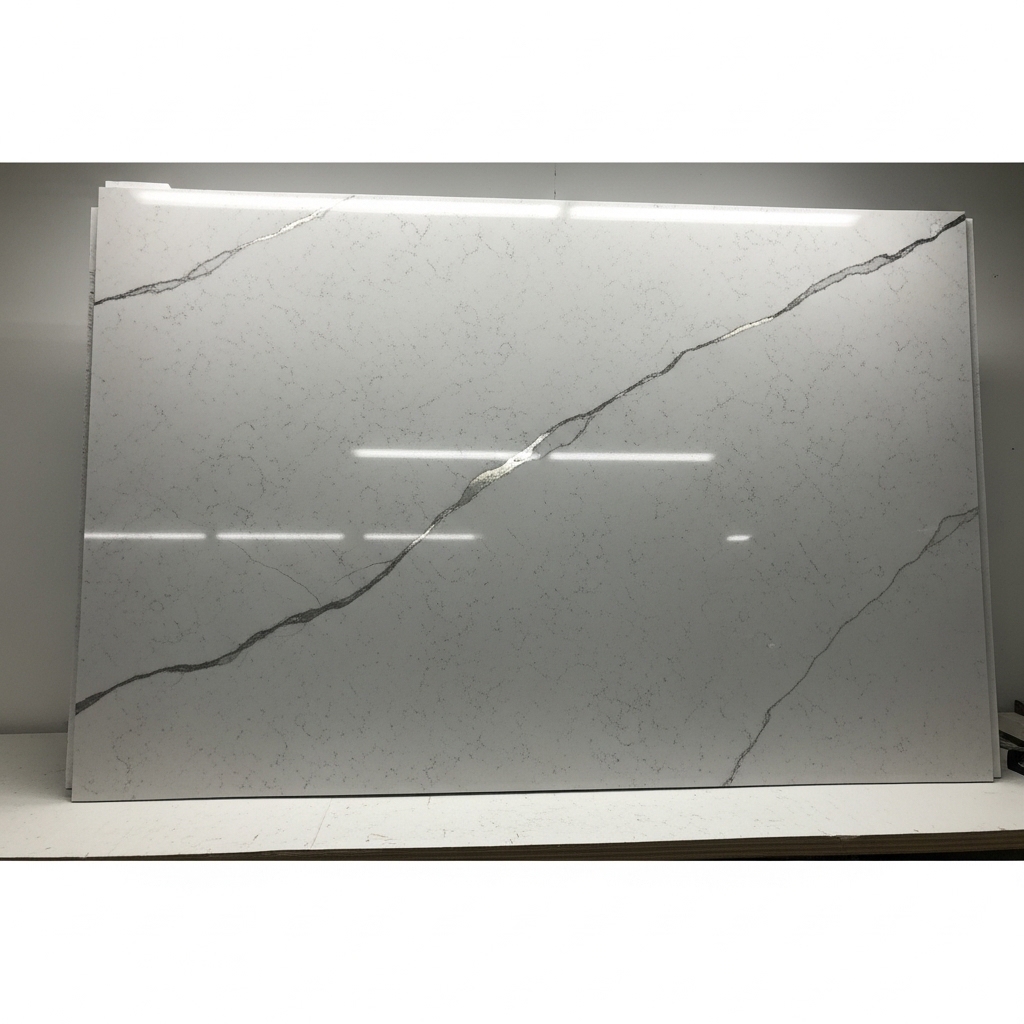
Standard size quartz slab is most commonly sold in a “standard” format of 56 in × 120 in (142.24 cm × 304.80 cm), which is the baseline size many fabricators use for seam and layout planning. In many markets, the next step up is a jumbo size, but the standard slab remains the most referenced “standard-size quartz” for everyday kitchens and vanities. Standard quartz thicknesses are typically 2 cm (0.79 in / 20 mm) and 3 cm (1.18 in / 30 mm, often marketed as “1¼ in” nominal), and some collections also offer thinner 12 mm (0.47 in / 1.2 cm) slabs for lighter-duty or specialty applications.
Regular Size
56 in × 120 in, thickness 0.79 in (2 cm) or 1.18 in (3 cm).
Jumbo Size
63 in × 126 in, thickness 0.79 in (2 cm) or 1.18 in (3 cm).
Super Size
78 in × 138 in, thickness 0.79 in (2 cm) or 1.18 in (3 cm).
Super Jumbo
137.80 in × 78.74 in, thickness 0.79 in (2 cm) or 1.18 in (3 cm).
Mini Slab
48 in × 96 in, thickness 0.79 in (2 cm) or 1.18 in (3 cm).
A Guide to Standard Quartz Sheet Measurements
When selecting standard quartz sheet measurements for a project, it is essential to consider various factors that influence the final outcome.
First, project dimensions play a crucial role; for instance, standard quartz sheets typically come in sizes such as 120” x 55” or 126” x 63”, which can affect how many sheets are needed and how they fit into the overall design.
Desired aesthetic is another key consideration; whether aiming for a sleek modern look or a more rustic feel, the color and pattern of the quartz can significantly impact the visual appeal.
Budget constraints must also be taken into account, as quartz can range from $50 to $150 per square foot, depending on the quality and brand.
Additionally, the fabricator’s expertise is vital; working with a skilled fabricator can ensure that the quartz is cut and installed correctly, which is particularly important for complex designs or large surfaces.
Lastly, specific design requirements, such as edge profiles or integrated sinks, should be clearly communicated to ensure that the final product meets all functional and aesthetic needs. By carefully considering these elements, one can achieve a successful and satisfying quartz installation.
Standard Quartz Sheets: When Jumbo Is Better
A Guide to Standard Quartz Sheet Measurements offers numerous advantages for both consumers and manufacturers in the stone industry.
By providing clear specifications and standardized measurements, it simplifies the selection process for designers and contractors, ensuring that they can easily find the right size for their projects.
For instance, standard quartz sheets typically come in sizes like 120” x 55” or 126” x 63”, which allows for efficient planning and minimizes waste during installation.
Additionally, the guide helps in understanding the benefits of jumbo sheets, which can be as large as 126” x 78”, reducing the number of seams required in large applications, thus enhancing the aesthetic appeal and structural integrity of countertops and surfaces.
Furthermore, having a standardized measurement system facilitates better communication between suppliers and clients, leading to fewer errors and delays in project timelines.
Overall, this guide not only streamlines the purchasing process but also promotes a higher quality of finished products in the competitive market of quartz surfaces.
Standard Waste Margin for Quartz Sheet Material
Standard waste margin for quartz sheet material is an essential consideration in the fabrication and installation process. Typically, a waste margin of around 10% to 15% is recommended to account for cutting errors, design complexities, and unforeseen damages during handling. This margin ensures that there is enough material to complete the project without delays. For instance, if a project requires 100 square feet of quartz, it would be prudent to order between 110 to 115 square feet to cover potential waste.
Additionally, the waste margin can vary based on the specific design and layout of the installation; intricate patterns or large cutouts may necessitate a higher waste margin.
It is also important to consider the type of quartz being used, as some colors and patterns may have limited availability, making it crucial to order extra material to avoid mismatches. Proper planning and understanding of the standard waste margin can lead to a more efficient installation process and ultimately save costs in the long run.
Standard Quartz Sheets: Largest Available Option
Standard quartz sheets are increasingly becoming a popular choice in various industries due to their durability, aesthetic appeal, and versatility. These engineered stone surfaces are composed of approximately 90-95% crushed natural quartz crystals, combined with resins and pigments, resulting in a non-porous material that is resistant to stains, scratches, and heat.
One of the most significant advantages of standard quartz sheets is their availability in large sizes, which can reach dimensions of up to 126 inches by 63 inches. This expansive size minimizes the need for seams in countertops and other applications, providing a seamless and visually appealing finish.
The thickness of these sheets typically ranges from 1 cm to 3 cm, allowing for various applications, from countertops to wall cladding. The larger dimensions not only enhance the aesthetic quality of installations but also reduce installation time and labor costs, making them a cost-effective solution for both residential and commercial projects.
Furthermore, standard quartz sheets come in a wide array of colors and patterns, mimicking the look of natural stone while offering greater consistency and uniformity. This variety allows designers and homeowners to choose surfaces that complement their interior design themes, whether it be a modern kitchen or a luxurious bathroom.
In terms of maintenance, quartz sheets require minimal upkeep compared to natural stones, as they do not need sealing and can be easily cleaned with mild soap and water. This ease of maintenance, combined with their durability, makes them an ideal choice for high-traffic areas.
Overall, standard quartz sheets represent one of the largest available options in the market, providing a blend of functionality, beauty, and practicality that meets the needs of diverse applications.
Standard Quartz Sheets: Thickness for Heavy-Use Areas
Standard quartz sheets are increasingly popular in various applications, particularly in heavy-use areas such as kitchens, bathrooms, and commercial spaces. These surfaces are engineered to withstand significant wear and tear, making them ideal for environments where durability is paramount.
The thickness of quartz sheets plays a crucial role in their performance and longevity. Typically, standard quartz sheets come in thicknesses of 1 cm (approximately 0.39 inches), 2 cm (about 0.79 inches), and 3 cm (around 1.18 inches). For heavy-use areas, a thickness of 2 cm or 3 cm is often recommended. The 2 cm thickness provides a balance between aesthetics and strength, making it suitable for countertops that experience regular use. However, for areas that demand even greater resilience, such as commercial kitchens or high-traffic surfaces, the 3 cm thickness is ideal. This added thickness not only enhances durability but also offers a more substantial appearance, contributing to the overall design of the space.
In addition to thickness, the composition of quartz sheets also contributes to their suitability for heavy-use areas. Made from approximately 90-95% crushed natural quartz crystals combined with resins and pigments, these surfaces are non-porous, resistant to stains, and easy to clean. This makes them particularly advantageous in environments where hygiene is critical, such as food preparation areas. The non-porous nature of quartz prevents the absorption of liquids and bacteria, ensuring a safe and sanitary surface.
Furthermore, the aesthetic versatility of quartz sheets allows them to be tailored to fit various design themes, from modern to traditional. With a wide range of colors and patterns available, designers and homeowners can select options that complement their overall decor while still benefiting from the durability required in heavy-use areas.
Ultimately, when selecting standard quartz sheets for heavy-use areas, considering the thickness is essential. Opting for 2 cm or 3 cm thickness not only enhances the surface’s durability but also ensures that it can withstand the rigors of daily use while maintaining its visual appeal. The combination of strength, hygiene, and aesthetic flexibility makes quartz sheets a top choice for those looking to invest in long-lasting surfaces.
Standard quartz slab dimensions for walls & decorative surfaces
Standard quartz slab dimensions for walls and decorative surfaces are widely used because they offer a reliable balance between coverage area, availability, and manageable handling during fabrication and installation.
Many standard supply formats commonly appear around 3000 × 1400 mm and 3200 × 1600 mm (typical examples), providing large surface coverage that helps reduce seams compared to smaller tile or panel systems.
A useful coverage example is that a 3000 × 1400 mm slab covers about 4.2 m² (around 45 ft²), while 3200 × 1600 mm covers about 5.12 m² (around 55 ft²), allowing designers to clad feature areas with fewer joints and a cleaner visual flow.
For wall installations, standard formats are often paired with 6–12 mm thickness to reduce load, while thicker options can be selected where the design includes exposed edges, returns, or where matching adjacent thick countertop elements matters.
Standard slab dimensions also make planning easier: seams can be aligned with corners and cabinetry lines, and pattern direction can be controlled panel-to-panel for a more consistent, intentional decorative finish.
Standard quartz slab measurements for stairs
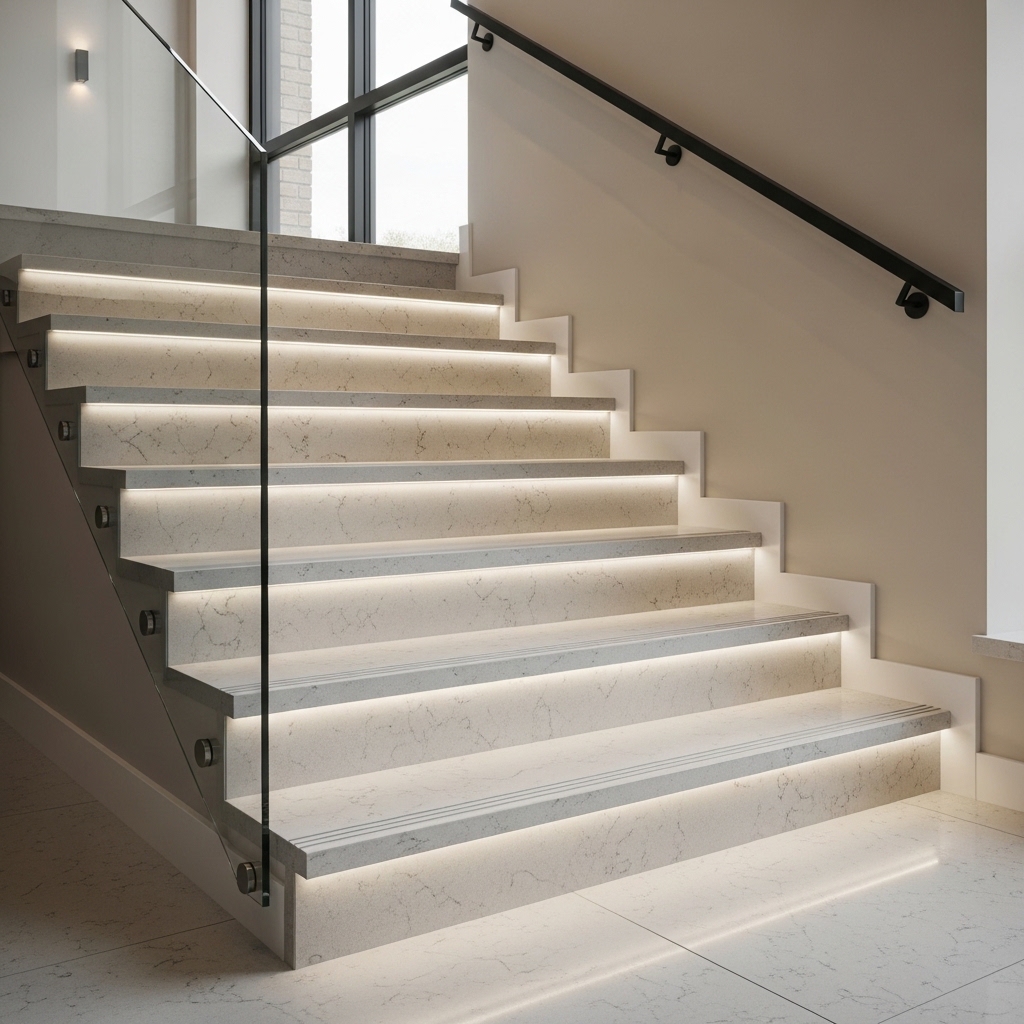
Standard quartz slab measurements for stairs are commonly based on widely available slab formats that balance coverage area with practical handling, allowing multiple step components to be cut from one consistent batch.
Typical standard formats often include 3000 × 1400 mm and 3200 × 1600 mm, which can yield multiple treads and risers while keeping tone consistent across a flight.
For example, a 3200 × 1600 mm slab covers about 5.12 m² (around 55 ft²), which provides good cutting flexibility for stair treads, risers, and small landing sections depending on the design.
Stair treads commonly use 20 mm thickness for strength and a solid feel underfoot, while the step nose can be detailed with an eased edge or small chamfer to reduce chipping over time.
With standard slabs, careful cut mapping keeps pattern direction consistent and helps place any joins away from the most visible parts of landings and turning steps.
Across UAE showrooms, the standard size quartz slab is widely supplied at about 3040 × 1440 mm (roughly 10 ft × 4.7 ft), a format that works well for straight kitchen runs and compact islands with minimal waste. This dimension comfortably supports common counter depths of 600–650 mm and allows fabricators to plan seams discreetly. When comparing layouts, confirming the exact slab size available in the selected brand helps optimize cuts for backsplashes, sink cutouts, and edge build-ups.
Standard Size Quartz Slab Guide for Statuario Marble Style Installations
A standard size quartz slab guide for Statuario marble style installations usually focuses on slabs measuring around 3040 × 1440 mm, with jumbo options reaching approximately 3200 × 1600 mm for larger layouts. These dimensions are ideal for achieving long, elegant veining patterns and minimizing seams on kitchen islands and countertops. When replicating the luxurious look of statuario marble, selecting quartz slabs in these sizes ensures balanced proportions, clean joint lines, and a refined high-end finish.
Standard Size Quartz Slab for Raised Floor Applications
A standard size quartz slab used for interior finishes over a raised floor typically measures around 3040 × 1440 mm, offering a practical balance between coverage and handling. This slab size works well for worktops, counters, and wall cladding where access flooring is installed below. With common thicknesses of 20 mm and 30 mm, the slab maintains strength while allowing accurate level coordination with raised floor panels and service voids.