
Slab Size Quartz: A Guide to Choosing the Perfect Surface
Slab size quartz most commonly refers to the mainstream slab formats stocked by suppliers: a standard quartz slab is typically 56 in × 120 in (142.24 cm × 304.80 cm), while a jumbo quartz slab is typically 63 in × 126 in (160.02 cm × 320.04 cm) to reduce seams on large countertops. Many manufacturers also offer an in-between or “extra-large” option around 65 in × 130 in (165.10 cm × 330.20 cm), and a few offer even bigger super-jumbo sizes such as 78 in × 138 in (198.12 cm × 350.52 cm) depending on the collection. Across these sizes, the most common quartz thicknesses are 2 cm (0.79 in / 20 mm) and 3 cm (1.18 in / 30 mm), with some specialty lines also sold in 12 mm (0.47 in / 1.2 cm).
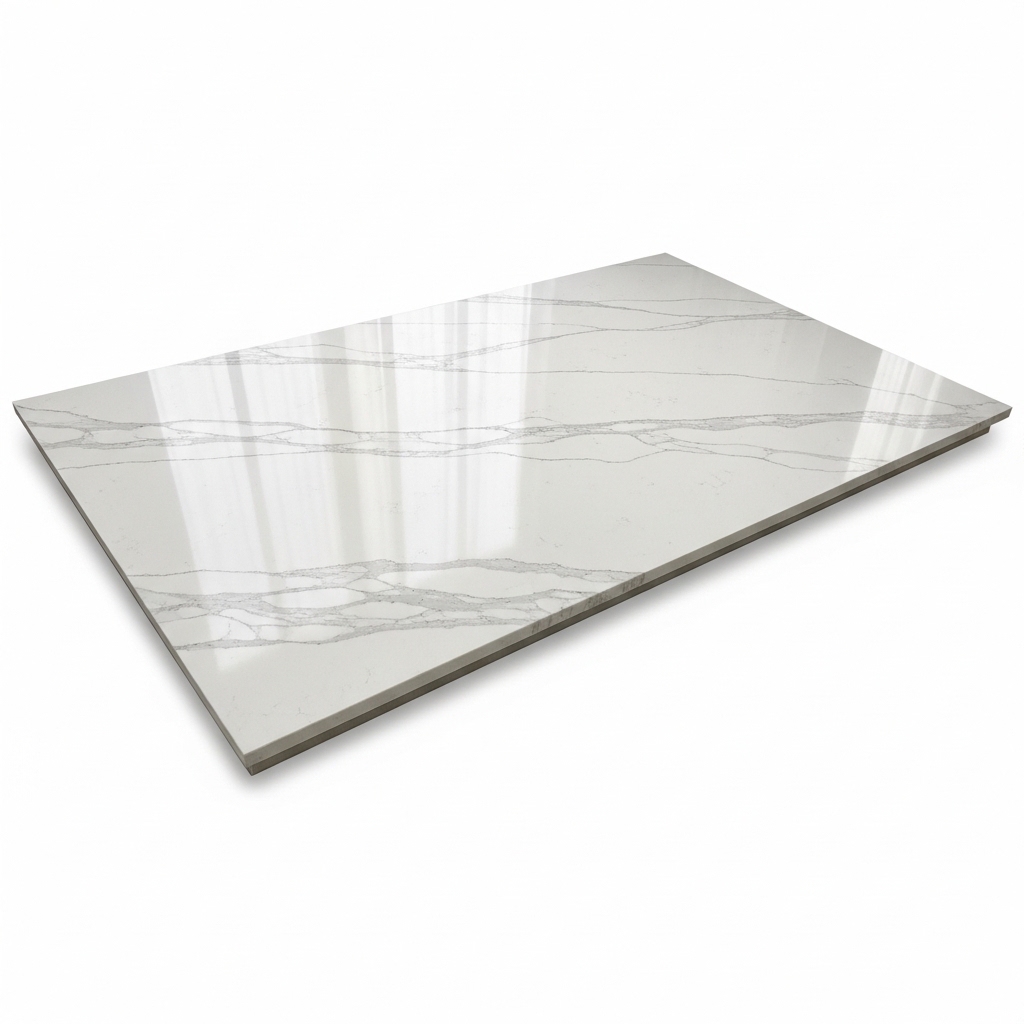
Regular Size
56 in × 120 in, thickness 0.79 in (2 cm) or 1.18 in (3 cm).
Jumbo Size
63 in × 126 in, thickness 0.79 in (2 cm) or 1.18 in (3 cm).
Super Size
78 in × 138 in, thickness 0.79 in (2 cm) or 1.18 in (3 cm).
Super Jumbo
137.80 in × 78.74 in, thickness 0.79 in (2 cm) or 1.18 in (3 cm).
Mini Slab
48 in × 96 in, thickness 0.79 in (2 cm) or 1.18 in (3 cm).
Picking the Best Quartz Slab Measurements
When selecting the best quartz slab measurements for your project, it is essential to consider various factors that will influence the final outcome.
First, assess the project dimensions; measure the area where the quartz will be installed, ensuring to account for any cutouts or irregular shapes. For instance, if you are covering a kitchen countertop that measures 10 feet by 2.5 feet, you will need a slab that can accommodate these dimensions, typically requiring a minimum of 2 slabs, depending on the size of the quartz slabs available.
Next, think about your desired aesthetic. Quartz comes in a variety of colors and patterns, so choose a slab that complements your overall design vision. If you prefer a modern look, consider a sleek, solid color, while a more traditional space may benefit from a veined pattern.
Budget constraints are another critical factor; quartz slabs can range from $50 to $150 per square foot, depending on the quality and brand. Establish a budget early on to narrow down your options and avoid overspending.
Additionally, the fabricator’s expertise plays a significant role in the selection process. Consult with your fabricator to understand their capabilities and recommendations, as they can provide insights on the best slab sizes and thicknesses for your specific project.
Lastly, consider any specific design requirements, such as edge profiles or finishes, which may dictate the slab measurements needed. For example, a thicker edge may require a larger slab to maintain proportions. By carefully evaluating these factors, you can ensure that you select the best quartz slab measurements that align with your project goals.
Quartz Sheet Measurements: Jumbo Benefits
Choosing the best quartz slab measurements or quartz sheet measurements offers numerous advantages that can significantly enhance both aesthetic appeal and functionality in various applications.
One of the primary benefits is the ability to minimize seams in countertops and surfaces; for instance, a jumbo quartz slab measuring 126 inches by 63 inches can cover larger areas without the need for multiple pieces, creating a seamless look that is both elegant and easy to maintain.
Additionally, larger slabs can reduce waste, as they allow for more efficient use of material, which is particularly beneficial in large-scale projects.
The durability of quartz, combined with the right measurements, ensures that surfaces can withstand daily wear and tear, withstanding impacts and scratches better than many other materials.
Furthermore, selecting the appropriate thickness—typically ranging from 1 cm to 3 cm—can enhance the structural integrity of the installation, providing a robust surface that is less prone to chipping.
Overall, investing in the best quartz slab measurements not only elevates the design of a space but also contributes to long-term satisfaction and value.
Typical Waste Margin for Quartz Sheet Material
Typical waste margin for quartz sheet material is an important consideration in the fabrication process, as it directly impacts both cost and efficiency. Generally, the waste margin can range from 10% to 20%, depending on the complexity of the design and the size of the slabs being used. For instance, when working with a standard 120-inch by 55-inch quartz slab, a fabricator may anticipate a waste margin of around 15%, which translates to approximately 18 inches of material that may not be utilized in the final product.
This waste can arise from various factors, including the need to cut around imperfections in the slab, the layout of the design, and the specific cuts required for sinks or edges.
To minimize waste, it is crucial for fabricators to plan their layouts meticulously, utilizing software that can optimize the arrangement of cuts to maximize the use of each slab. Additionally, understanding the specific characteristics of the quartz material, such as its thickness and durability, can help in making informed decisions that reduce waste and enhance overall productivity.
Quartz Surfacing: Biggest Format You Can Get
Quartz surfacing has emerged as a popular choice in the realm of countertops and surfaces, particularly due to its versatility and aesthetic appeal. One of the most significant advantages of quartz surfacing is the availability of large format slabs. These slabs can reach dimensions of up to 120 inches by 55 inches, allowing for expansive surfaces with minimal seams. This feature not only enhances the visual continuity of the design but also simplifies installation, making it a preferred option for both residential and commercial applications. The manufacturing process of quartz surfacing involves combining approximately 90-95% crushed natural quartz crystals with resins and pigments. This results in a durable and non-porous surface that is resistant to stains, scratches, and heat. In terms of thickness, quartz slabs typically range from 1 cm to 3 cm, providing options for various design preferences and functional requirements. The larger format slabs also mean fewer joints, which can be a significant advantage in maintaining a clean and seamless look in kitchens and bathrooms. Moreover, the aesthetic versatility of quartz surfacing is remarkable. With a wide array of colors, patterns, and finishes available, homeowners and designers can achieve a look that complements any style, from modern to traditional. Some manufacturers even offer custom designs, allowing for unique creations that can incorporate personal touches or specific themes. This adaptability, combined with the large format options, makes quartz surfacing an ideal choice for expansive countertops, islands, and even wall applications. In terms of maintenance, quartz surfacing is relatively easy to care for. Unlike natural stone, which may require sealing, quartz surfaces are non-porous and do not harbor bacteria or mold. A simple wipe down with soap and water is often sufficient to keep the surface looking pristine. This low-maintenance aspect is particularly appealing for busy households and commercial spaces, where cleanliness and durability are paramount. Overall, the combination of large format availability, durability, aesthetic versatility, and low maintenance makes quartz surfacing a standout choice in the market. As trends continue to evolve, the demand for such surfaces is likely to grow, solidifying quartz surfacing’s position as a leading option for those seeking both functionality and style in their spaces.
Quartz Sheet Material: Thickness for Busy Floors
Quartz sheet material is increasingly becoming a popular choice for busy floors due to its durability and aesthetic appeal. Thickness plays a crucial role in determining the performance and longevity of quartz surfaces in high-traffic areas. Typically, quartz sheets are available in various thicknesses, with the most common being 12mm, 20mm, and 30mm. For busy floors, a thickness of 20mm is often recommended as it strikes a balance between strength and weight, providing adequate resistance to wear and tear while remaining manageable for installation.
In environments such as commercial spaces, retail stores, and busy households, the flooring must withstand significant foot traffic and potential impacts. A thicker quartz sheet, such as the 30mm option, offers enhanced durability and can better absorb shocks, making it ideal for areas where heavy equipment or furniture may be moved frequently.
Additionally, thicker materials can help reduce the risk of cracking or chipping, which is essential in maintaining the aesthetic integrity of the flooring over time.
Moreover, the thickness of quartz sheets can also influence the overall design and feel of a space. Thicker sheets can provide a more substantial appearance, contributing to a luxurious ambiance, while thinner options may be more suitable for sleek, modern designs. Installation considerations are also important; thicker sheets may require additional support and careful handling during installation to ensure a flawless finish.
Ultimately, selecting the right thickness of quartz sheet material for busy floors is essential for achieving a balance between functionality and style, ensuring that the flooring not only looks great but also stands up to the demands of everyday use.
Quartz slab dimensions for walls & decorative surfaces
Quartz slabs are widely used on walls and decorative surfaces because they deliver a clean, modern look with fewer visible joints and consistent color control across large areas.
Common slab formats like 3000 × 1400 mm and 3200 × 1600 mm make it easier to clad tall backsplashes, TV walls, and fireplace surrounds with a more “monolithic” finish.
For walls, thinner builds such as 6 mm or 12 mm are often preferred to reduce load, while thicker options like 20 mm may be used when edges, returns, or reveal details will be exposed.
For example, using a larger slab can push seams toward less noticeable areas (like side returns), keeping the center of the wall visually uninterrupted.
Careful planning of pattern direction (vertical vs. horizontal) helps veining styles look intentional rather than random across multiple panels.
Quartz slab dimensions for stairs
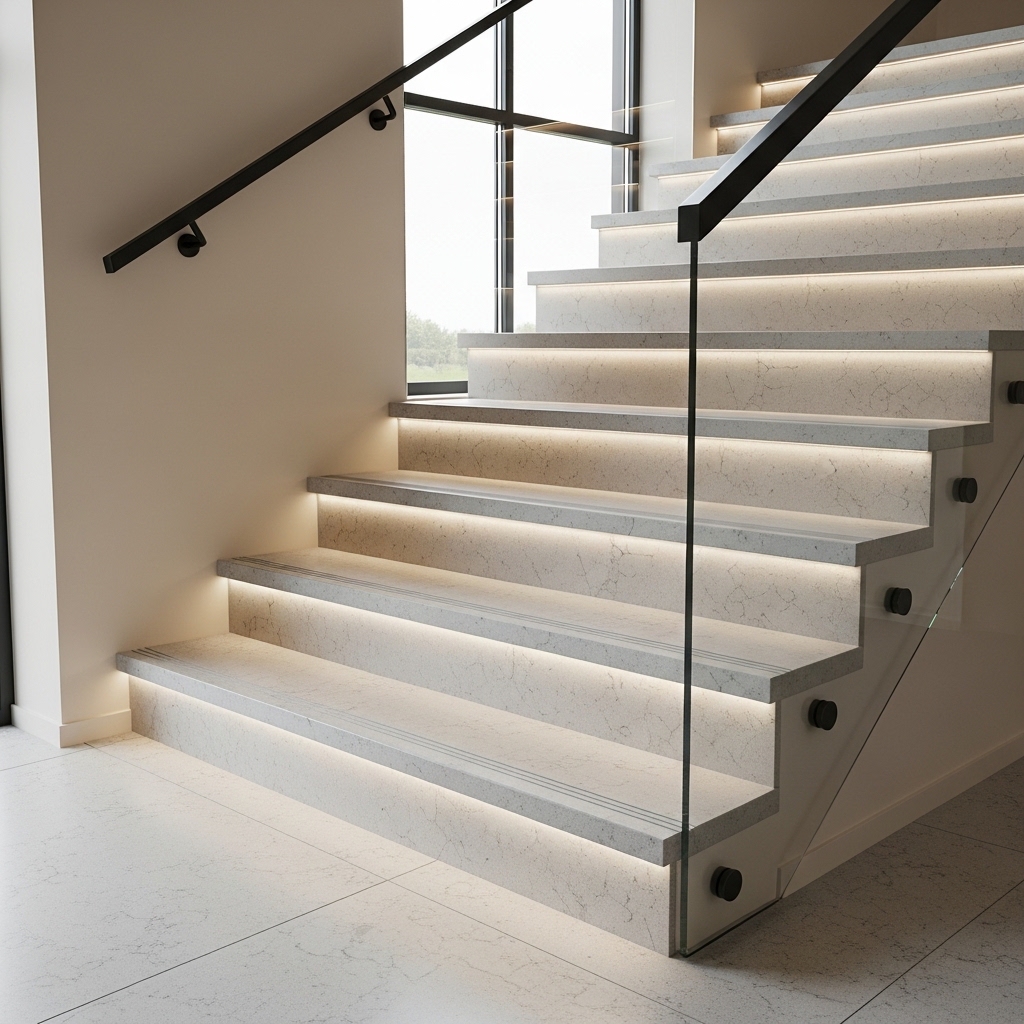
Quartz slabs work well on stairs because large pieces can be cut into repeated treads and risers with a consistent tone that looks clean and modern in high-visibility areas.
Typical slab examples include 3000 × 1400 mm and 3200 × 1600 mm, giving enough surface area to cut multiple tread pieces while keeping pattern direction uniform across the flight.
Tread thickness is often specified around 20 mm for strength and a solid feel underfoot, while thicker-looking noses can be created with a laminated edge build-up for a bolder profile.
For example, keeping all treads cut in the same orientation helps veining look intentional rather than changing direction step to step.
A practical stair layout also considers slip feel—many choose a matte or honed finish on treads and a crisp, slightly eased edge to reduce chipping at the step nose.
Within the UAE stone market, slab size quartz generally refers to both standard and jumbo formats, with standard slabs near 3040 × 1440 mm and larger options extending beyond that for premium projects. These dimensions are chosen to suit modern kitchens and wide islands where fewer joints are preferred. For expansive layouts, many designers opt for jumbo quartz slab size to achieve cleaner, more continuous surfaces.
Slab Size Quartz Guide for Projects with Sultan Marble LLC
A slab size quartz guide for projects with Sultan Marble LLC typically focuses on selecting slabs that balance coverage, handling, and visual consistency, most commonly in sizes like 3040 × 1440 mm or larger jumbo formats for premium installations. These dimensions allow long counter runs and feature surfaces to be fabricated with fewer seams. Working with sultan marble llc ensures access to reliable slab sizing, consistent quality, and professional fabrication support for complex projects.
Slab Size Quartz Planning for Raised Floor Systems
Slab size quartz planning is a key design step when working with a raised floor system in commercial or technical interiors. Designers usually plan around slab lengths of 3000–3200 mm to align with modular floor panels and minimize awkward seams. Proper slab planning ensures that joints fall away from access panels, helping maintain clean lines and easy underfloor access.