
Jumbo Quartz Slab Size: Exploring Dimensions and Benefits
Jumbo quartz slab size is designed for long runs and large islands so fewer seams are needed, and one of the most widely used jumbo formats is 63 in × 126 in (160.02 cm × 320.04 cm). Some brands classify 65 in × 130 in (165.10 cm × 330.20 cm) as jumbo/extra-large as well, adding a bit more length and width for wider islands and waterfall ends; in select premium lines, “super-jumbo” can reach roughly 78 in × 138 in (198.12 cm × 350.52 cm). Jumbo quartz slabs are usually made in 2 cm (0.79 in / 20 mm) and 3 cm (1.18 in / 30 mm, often sold as “1¼ in” nominal) thicknesses, with occasional thinner 12 mm (0.47 in / 1.2 cm) availability depending on the product line.
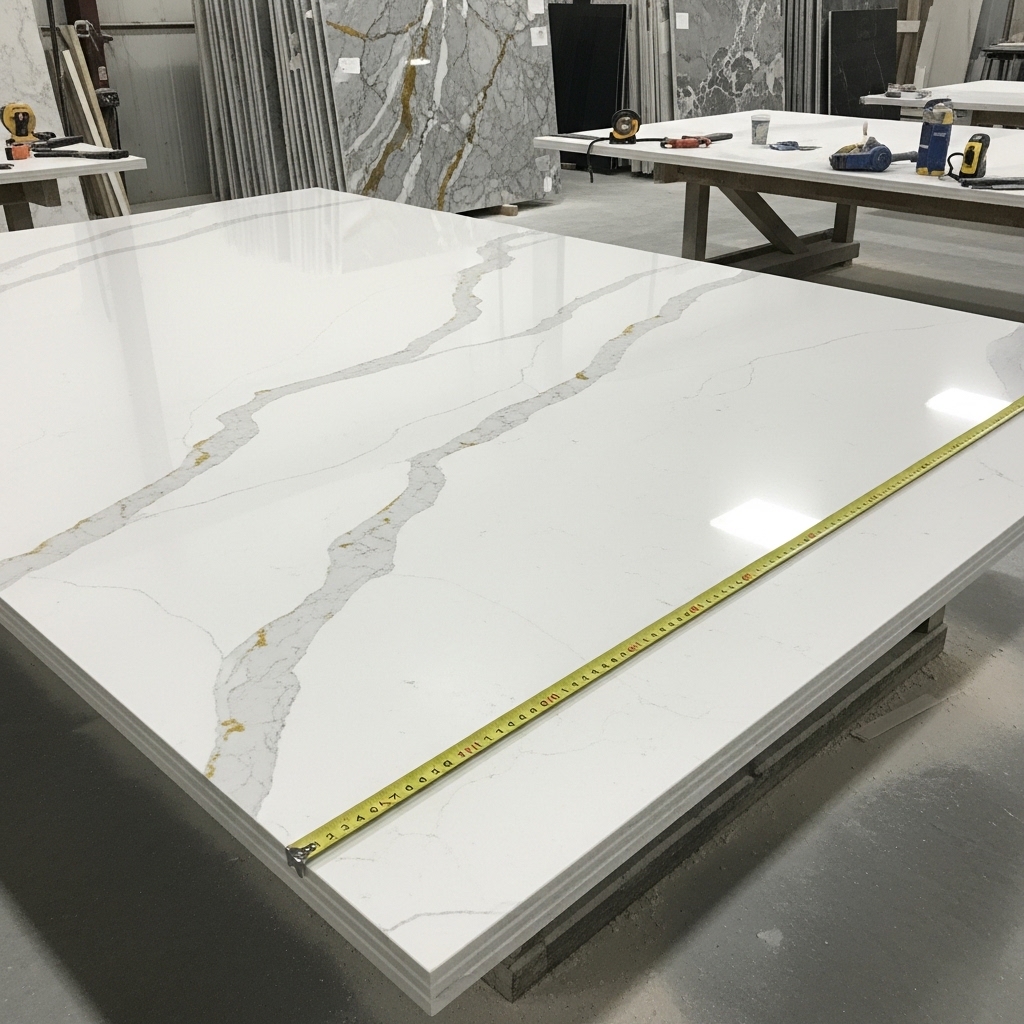
Regular Size
63 in × 126 in, thickness 0.79 in (2 cm) or 1.18 in (3 cm).
Jumbo Size
63 in × 126 in, thickness 0.79 in (2 cm) or 1.18 in (3 cm).
Super Size
78 in × 138 in, thickness 0.79 in (2 cm) or 1.18 in (3 cm).
Super Jumbo
137.80 in × 78.74 in, thickness 0.79 in (2 cm) or 1.18 in (3 cm).
Mini Slab
48 in × 96 in (mini reference), thickness 0.79 in (2 cm) or 1.18 in (3 cm).
Sizing Tips for Jumbo Quartz Sheets
When selecting jumbo quartz sheets for your project, it’s essential to consider the project dimensions, as these sheets typically come in sizes around 126” x 63” or larger, allowing for fewer seams and a more cohesive look.
The desired aesthetic plays a crucial role; for instance, if you aim for a sleek, modern kitchen, opting for a continuous slab with minimal patterns can enhance the visual appeal.
Budget constraints are also significant; jumbo sheets can range from $60 to $100 per square foot, so calculating the total area needed—say, a countertop of 50 square feet—will help you estimate costs effectively.
Additionally, the fabricator’s expertise is vital; ensure they have experience working with large slabs, as handling and installation require specialized skills to avoid cracks or misalignments.
Lastly, specific design requirements, such as cutouts for sinks or intricate edge profiles, should be communicated early in the process, as these can affect both the material usage and the overall cost. By carefully considering these factors, you can make informed decisions that align with your vision and practical needs.
Jumbo Quartz Sheets: Fewer Joints, Cleaner Look
Jumbo quartz sheets offer several advantages, particularly when it comes to sizing tips that enhance their aesthetic and functional qualities.
One of the primary benefits is the reduction in the number of joints, which not only minimizes the visual interruptions in the surface but also contributes to a cleaner, more seamless look. For instance, using a single jumbo sheet can cover an area of up to 120 square feet, compared to standard sheets that typically cover around 30 square feet.
This significant increase in size means fewer seams, resulting in a more uniform appearance that is highly desirable in modern design. Additionally, fewer joints lead to easier maintenance, as there are fewer crevices for dirt and grime to accumulate, making cleaning simpler and more efficient.
The larger dimensions of jumbo quartz sheets also allow for more creative design possibilities, enabling homeowners and designers to achieve expansive countertops, islands, and backsplashes without the interruption of seams. Overall, the advantages of sizing tips for jumbo quartz sheets not only enhance the visual appeal but also improve the practicality and longevity of the surfaces in various applications.
Common Fabrication Waste for Jumbo Quartz Sheets
Jumbo quartz sheets, widely used in countertops and other surfaces, often generate significant fabrication waste during the cutting and shaping processes. Common types of waste include off-cuts, which are the leftover pieces after the desired shapes are extracted, and dust created from the cutting and polishing operations. It is estimated that around 20-30% of the raw material can be lost as waste, depending on the complexity of the design and the efficiency of the cutting techniques employed.
Additionally, the use of water during the cutting process can lead to further waste if not properly managed, as excess water can carry away small particles of quartz.
To mitigate these issues, fabricators can implement strategies such as optimizing layout designs to minimize off-cuts, recycling the waste material for use in other products, and employing advanced cutting technologies that reduce dust generation. By adopting these practices, the industry can significantly reduce the environmental impact of quartz fabrication while also improving cost efficiency.
Jumbo Quartz Sheets: How Big Can They Be?
Jumbo quartz sheets have gained significant popularity in the construction and design industries due to their versatility and aesthetic appeal. These sheets are engineered stone products made from a blend of natural quartz crystals, resins, and pigments, resulting in a durable and non-porous surface that is ideal for countertops, backsplashes, and various other applications. One of the most remarkable features of jumbo quartz sheets is their size. Typically, these sheets can measure up to 126 inches by 63 inches (approximately 10.5 feet by 5.25 feet), allowing for expansive installations with fewer seams. This large format not only enhances the visual continuity of the surface but also simplifies the installation process, making it a preferred choice for both residential and commercial projects. The dimensions of jumbo quartz sheets can vary by manufacturer, but many brands offer sheets that are around 2 centimeters to 3 centimeters thick. This thickness provides a robust surface that can withstand daily wear and tear, making it suitable for high-traffic areas such as kitchens and bathrooms. Additionally, the large size of these sheets minimizes the need for multiple pieces, which can often lead to visible seams that detract from the overall aesthetic. With fewer seams, the risk of dirt and bacteria accumulation is also reduced, contributing to a more hygienic surface. In terms of design options, jumbo quartz sheets come in a wide array of colors and patterns, mimicking the look of natural stone while offering enhanced durability and ease of maintenance. Homeowners and designers can choose from options that resemble marble, granite, or even unique abstract designs, providing endless possibilities for customization. The ability to create large, uninterrupted surfaces with these sheets allows for a seamless integration into various design styles, from modern to traditional. As the demand for larger surfaces continues to grow, manufacturers are innovating to produce even larger sheets, pushing the boundaries of what is possible in quartz surface design. Overall, the size and versatility of jumbo quartz sheets make them an excellent choice for a wide range of applications, offering both aesthetic appeal and practical benefits. With dimensions that can reach up to 126 inches by 63 inches, these sheets not only provide a stunning visual impact but also enhance the functionality of spaces where they are installed. As technology advances, the potential for even larger sheets may soon become a reality, further revolutionizing the way we think about surface materials in design and construction.
Jumbo Quartz Material: Recommended Floor Thickness
Jumbo quartz material has gained popularity in recent years due to its durability, aesthetic appeal, and versatility. When considering the installation of jumbo quartz surfaces, one crucial aspect to take into account is the recommended floor thickness. Typically, the standard thickness for quartz slabs ranges from 2 cm (approximately 0.79 inches) to 3 cm (about 1.18 inches).
For residential applications, a thickness of 2 cm is often sufficient for countertops and backsplashes, providing a balance between weight and strength. However, for flooring, especially in high-traffic areas, a thicker slab of 3 cm is generally recommended. This added thickness not only enhances the material’s durability but also contributes to its ability to withstand heavy loads and resist cracking.
Moreover, the choice of thickness can also influence the overall aesthetic of the space. Thicker slabs tend to offer a more substantial appearance, which can be particularly appealing in larger areas. For instance, when using jumbo quartz in expansive living rooms or open-concept designs, opting for 3 cm thickness can create a more cohesive and luxurious look.
In addition to aesthetic considerations, the installation process may also vary based on the thickness of the material. Thicker slabs may require additional support and a more robust subfloor to ensure stability. It is essential to consult with professionals to determine the best approach for your specific project, taking into account factors such as the type of subfloor, the intended use of the space, and the overall design vision.
Ultimately, selecting the appropriate thickness for jumbo quartz material is a critical decision that impacts both functionality and style. By understanding the recommended thicknesses and their implications, homeowners and designers can make informed choices that enhance the beauty and longevity of their spaces.
Jumbo quartz slab formats for walls & decorative surfaces
Jumbo quartz slab formats are selected when you want the fewest seams possible and a more dramatic continuous look across wide or tall decorative walls.
Many jumbo collections offer formats around 3300 × 1650 mm (about 130 × 65 in), which can span larger elevations than standard slabs and reduce mid-wall seam breaks.
For vertical installations, jumbo slabs are commonly used in 6–12 mm thickness to manage weight, while thicker options can be chosen when wrapping corners or forming strong edge returns.
As an example, a wide feature wall can be designed using two jumbo panels with the joint aligned to a cabinet edge or shadow-gap detail so it reads clean and intentional.
Because jumbo pieces are physically larger, planning typically includes access routes, lifting method, and safe handling to avoid stress during transport and installation.
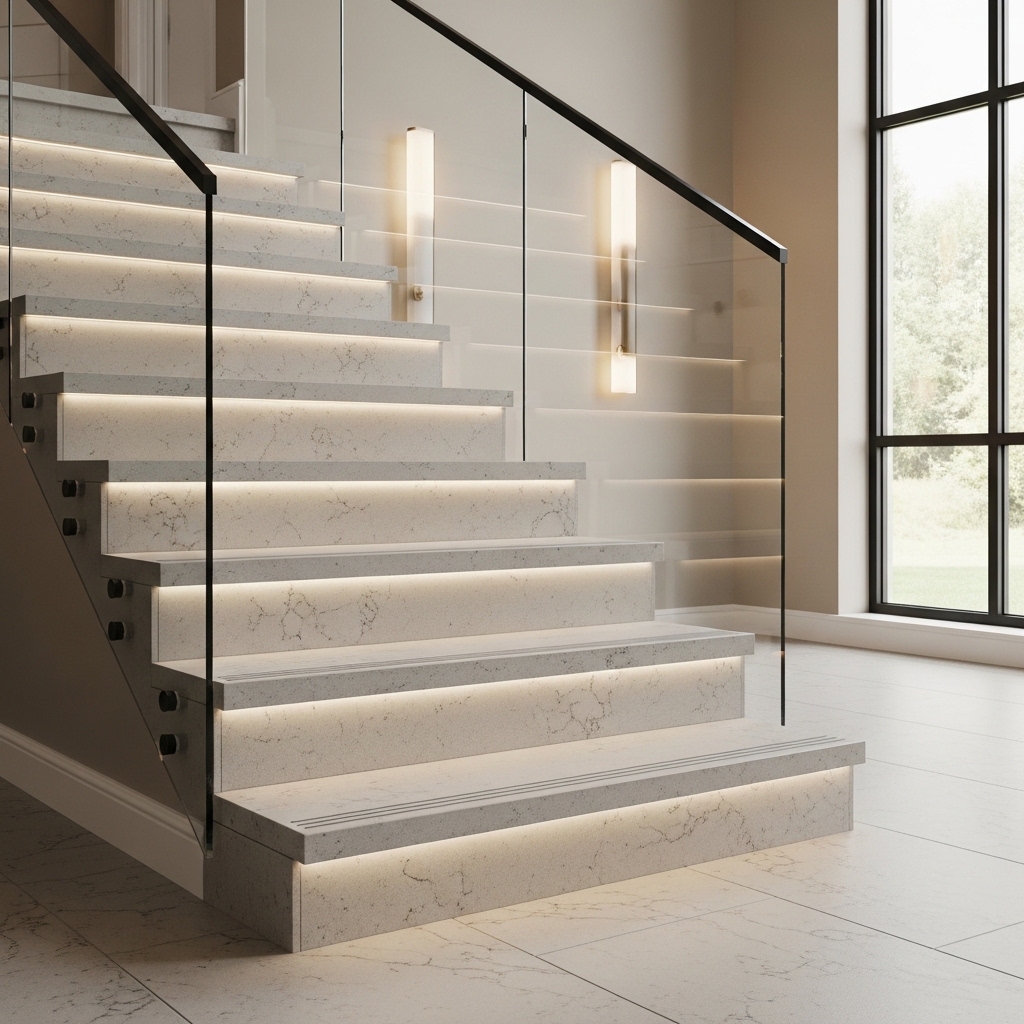
Jumbo quartz slab formats for stairs
Jumbo quartz slabs are preferred for stairs when you want fewer seams on wide landings, longer continuous tread pieces, and stronger pattern continuity across a statement staircase.
Many jumbo offerings are supplied around 3300 × 1650 mm (about 130 × 65 in), providing extra cutting flexibility compared with standard slabs.
For example, a prominent landing can sometimes be cut as one dominant panel from a jumbo slab, avoiding a central seam that would break the look at the turn of the stairs.
Stair treads commonly use 20 mm thickness for durability, with edge detailing (eased or chamfered) chosen to protect the nose in high-traffic use.
Because jumbo pieces are heavier to handle, planning should include access checks (doors, turns) and safe lifting so large landing components can be installed without stress or damage.
Premium residential and commercial projects in the UAE increasingly specify jumbo quartz slab size, typically around 3200 × 1600 mm, with select collections reaching approximately 3340 × 1640 mm. These oversized slabs are ideal for large islands, waterfall edges, and long counters where visual continuity matters most. During consultations, clients often ask what size is a slab of quartz to understand whether a single piece can cover their full design.
Jumbo Quartz Slab Size Options for Travertine Tiles Applications
Jumbo quartz slab size options for travertine tiles applications are especially useful when coordinating engineered stone with natural flooring materials, as slabs around 3200 × 1600 mm allow expansive counters and islands to visually align with large stone layouts. These oversized slabs help maintain continuity between horizontal and vertical surfaces. Pairing quartz slabs of this size with travertine tiles creates a balanced contrast between smooth engineered finishes and textured natural stone.
Jumbo Quartz Slab Size for Raised Floor Coverage
Jumbo quartz slab size is often chosen to achieve wide surface coverage over a raised floor. Jumbo slabs commonly reach dimensions of about 3200 × 1600 mm, significantly reducing the number of joints across large areas. This not only improves visual continuity but also simplifies coordination with raised floor panel layouts in open-plan offices and premium commercial spaces.