
What Size Are Quartz Slabs?
Quartz slabs are commonly available in a small set of standard manufacturing sizes, so when someone asks what size are quartz slabs, the most typical formats are 56 in × 120 in (142.24 cm × 304.80 cm) for a standard slab and 63 in × 126 in (160.02 cm × 320.04 cm) for a jumbo slab. Depending on the brand and region, you may also find extra-large slabs around 65 in × 130 in (165.10 cm × 330.20 cm) and occasional super-jumbo slabs around 78 in × 138 in (198.12 cm × 350.52 cm) to help cover oversized islands with fewer seams. Quartz is most often stocked in 2 cm (0.79 in / 20 mm) and 3 cm (1.18 in / 30 mm, often marketed as “1¼ in” nominal) thicknesses, with some lines also available in thinner 12 mm (0.47 in / 1.2 cm) panels.
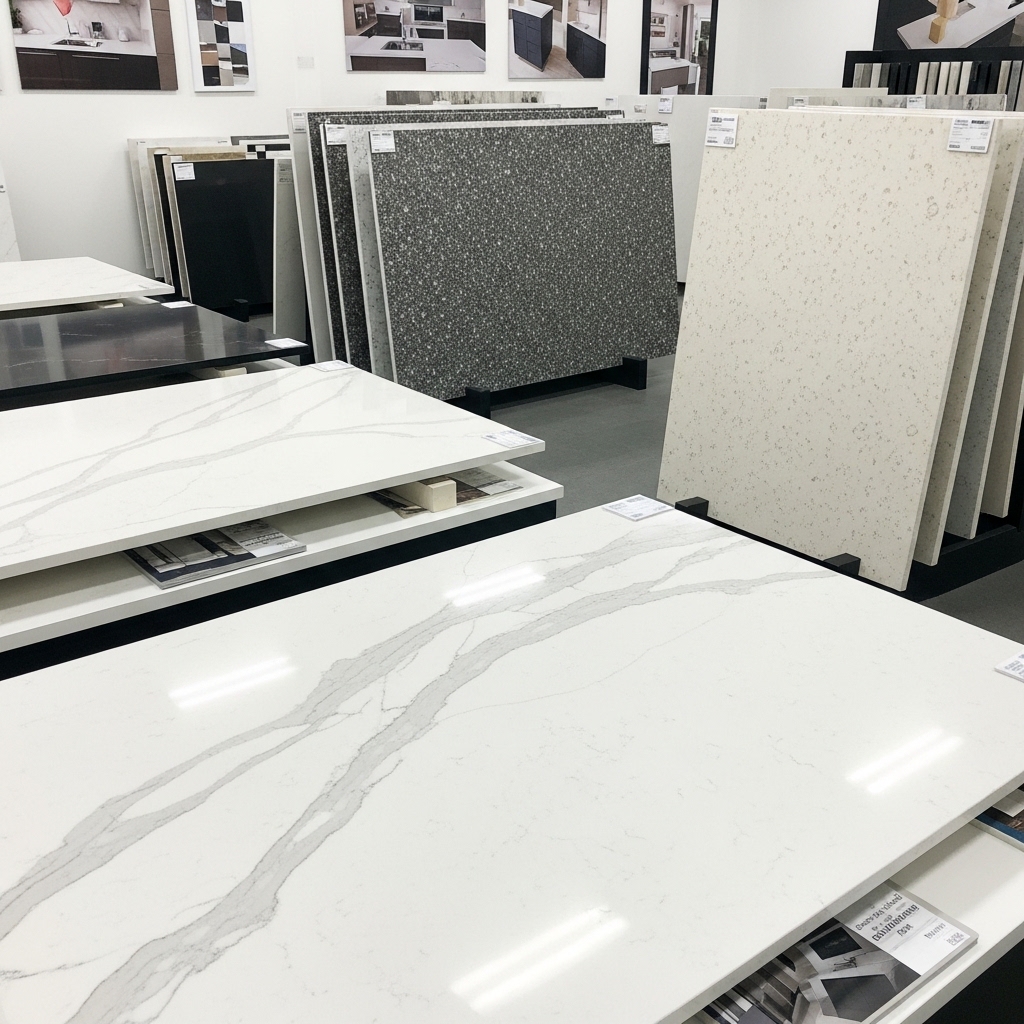
Regular Size
56 in × 120 in (standard) or 63 in × 126 in (jumbo), thickness 0.79 in (2 cm) or 1.18 in (3 cm).
Jumbo Size
63 in × 126 in, thickness 0.79 in (2 cm) or 1.18 in (3 cm).
Super Size
78 in × 138 in, thickness 0.79 in (2 cm) or 1.18 in (3 cm).
Super Jumbo
137.80 in × 78.74 in, thickness 0.79 in (2 cm) or 1.18 in (3 cm).
Mini Slab
48 in × 96 in, thickness 0.79 in (2 cm) or 1.18 in (3 cm).
Quartz Sheet Options: Choosing the Best Fit
When selecting quartz sheet options for your project, it is essential to consider several factors to ensure the best fit.
First, project dimensions play a crucial role; for instance, larger surfaces such as kitchen countertops may require slabs that are at least 120 inches long to minimize seams, while smaller applications like bathroom vanities can utilize smaller pieces.
Desired aesthetic is another critical aspect; quartz comes in a variety of colors and patterns, ranging from solid hues to intricate veining, allowing you to achieve a modern or classic look depending on your preference.
Budget constraints must also be taken into account, as quartz can range from $50 to $150 per square foot, depending on the quality and design complexity.
Additionally, the fabricator’s expertise is vital; choosing a skilled fabricator can ensure precise cuts and seamless installations, which is particularly important for intricate designs or large installations.
Lastly, specific design requirements, such as edge profiles or custom shapes, should be discussed with your fabricator to ensure that the chosen quartz sheet can accommodate these needs without compromising the overall aesthetic or functionality of the space.
Bigger Quartz Formats, Better Seam Control
Quartz sheet options offer numerous advantages that make them an ideal choice for various applications in both residential and commercial settings.
One significant benefit is the availability of larger quartz formats, which can reduce the number of seams required in a project. For instance, opting for a 120-inch by 55-inch slab instead of smaller pieces can minimize visible joints, creating a more seamless and aesthetically pleasing surface.
This not only enhances the overall appearance but also simplifies maintenance, as fewer seams mean fewer areas for dirt and grime to accumulate.
Additionally, better seam control is achieved with larger formats, as skilled fabricators can create tighter, more precise seams that are less noticeable.
This precision is crucial in high-traffic areas where durability and visual appeal are paramount.
Furthermore, quartz is non-porous, making it resistant to stains and bacteria, which is particularly advantageous in kitchens and bathrooms.
Overall, choosing the right quartz sheet options can lead to a more elegant finish, improved hygiene, and long-lasting performance, making it a smart investment for any project.
Quartz Surface Waste Guide for Common Formats
Quartz surfaces, widely used in countertops and other applications, require careful disposal to minimize environmental impact. When disposing of quartz surface waste, it is essential to follow local regulations and guidelines, as improper disposal can lead to environmental hazards. Strongly consider recycling options, as many facilities accept quartz waste for repurposing into new products. For instance, approximately 70% of quartz surface waste can be recycled, significantly reducing landfill contributions.
In terms of common formats, quartz surfaces typically come in slabs, tiles, and remnants. Each format may have specific disposal requirements; for example, larger slabs may need to be broken down into smaller pieces to fit into recycling bins.
Additionally, it is crucial to separate quartz waste from other materials, such as wood or plastics, to ensure proper processing. Some manufacturers offer take-back programs, allowing consumers to return unused or leftover materials for recycling. By adhering to these guidelines, individuals and businesses can contribute to a more sustainable approach to quartz surface waste management.
Largest Quartz Format Options
The largest quartz format options available in the market today cater to a variety of design needs and preferences. Quartz slabs are typically manufactured in sizes that can reach up to 120 inches by 55 inches, although some manufacturers may offer even larger dimensions. This expansive size allows for fewer seams in countertops, providing a more seamless and elegant appearance.
In addition to standard sizes, custom options are also available, enabling homeowners and designers to specify dimensions that fit their unique spaces. For instance, some companies offer oversized slabs that can measure up to 126 inches by 63 inches, which is particularly advantageous for large kitchen islands or expansive countertops.
The thickness of quartz slabs is another important consideration, with common thicknesses ranging from 1 cm (approximately 0.39 inches) to 3 cm (approximately 1.18 inches). Thicker slabs not only provide a more substantial look but also enhance durability and resistance to chipping and cracking.
Moreover, the variety of colors and patterns available in quartz allows for a high degree of customization. Manufacturers often produce quartz in a wide array of hues, from classic whites and grays to vibrant blues and greens, often mimicking the appearance of natural stone. This versatility makes quartz a popular choice for both contemporary and traditional designs.
In terms of installation, the large format of quartz slabs can significantly reduce labor costs and time, as fewer pieces need to be handled and installed. This efficiency is particularly beneficial in commercial settings where time is of the essence.
Overall, the largest quartz format options provide a blend of aesthetic appeal, durability, and practicality, making them an excellent choice for a variety of applications in both residential and commercial spaces.
Quartz Surfaces: Thickness for High-Use Zones
Quartz surfaces have gained immense popularity in both residential and commercial settings due to their durability and aesthetic appeal. When considering quartz surfaces for high-use zones, such as kitchen countertops and bathroom vanities, the thickness of the material becomes a crucial factor. Typically, quartz surfaces are available in thicknesses of 1 cm (approximately 0.39 inches), 2 cm (approximately 0.79 inches), and 3 cm (approximately 1.18 inches).
For high-use areas, a thickness of 3 cm is often recommended. This thickness provides enhanced strength and resistance to chipping and cracking, which is essential in environments where heavy pots, pans, and other kitchen tools are frequently used. Additionally, thicker surfaces can better withstand the weight of appliances and can be installed without the need for additional support, making them a practical choice for expansive countertops.
In contrast, 2 cm thick quartz surfaces can still be suitable for high-use zones, especially when properly supported. However, they may require additional reinforcement, particularly in larger spans or overhangs. The choice of thickness can also influence the overall design aesthetic; thicker surfaces often convey a more substantial and luxurious appearance, while thinner options can create a sleek and modern look.
Moreover, the thickness of quartz surfaces can impact maintenance and repair. Thicker surfaces are generally easier to repair if they do sustain damage, as they can be resurfaced without compromising structural integrity. In high-use zones, where wear and tear are more likely, opting for a thicker surface can ultimately lead to lower maintenance costs and a longer lifespan.
In summary, when selecting quartz surfaces for high-use zones, considering the thickness is vital. A 3 cm thickness is ideal for durability and aesthetic appeal, while 2 cm can be a viable option with proper support. Ultimately, the choice should align with both functional needs and design preferences, ensuring that the surfaces not only withstand daily use but also enhance the overall beauty of the space.
Quartz slab dimension options for walls & decorative surfaces
Quartz slab dimension options typically include variations in length, width, and thickness, giving flexibility for different wall designs and site constraints.
Many brands supply common formats such as 3000 × 1400 mm and 3200 × 1600 mm, while larger options may extend to formats around 3300 × 1650 mm depending on the collection.
For vertical cladding, thickness options often include 6 mm and 12 mm to keep panels lighter, while 20 mm may be preferred when creating bold edges, deep reveals, or matched detailing near countertops.
As a practical example, thinner panels can achieve the same surface design as thicker countertop slabs, but with a lighter system better suited for tall walls.
Selecting the right dimension option also depends on seam strategy—larger formats reduce joints, while smaller cuts may be safer when access is limited.
Quartz slab dimension options for stairs
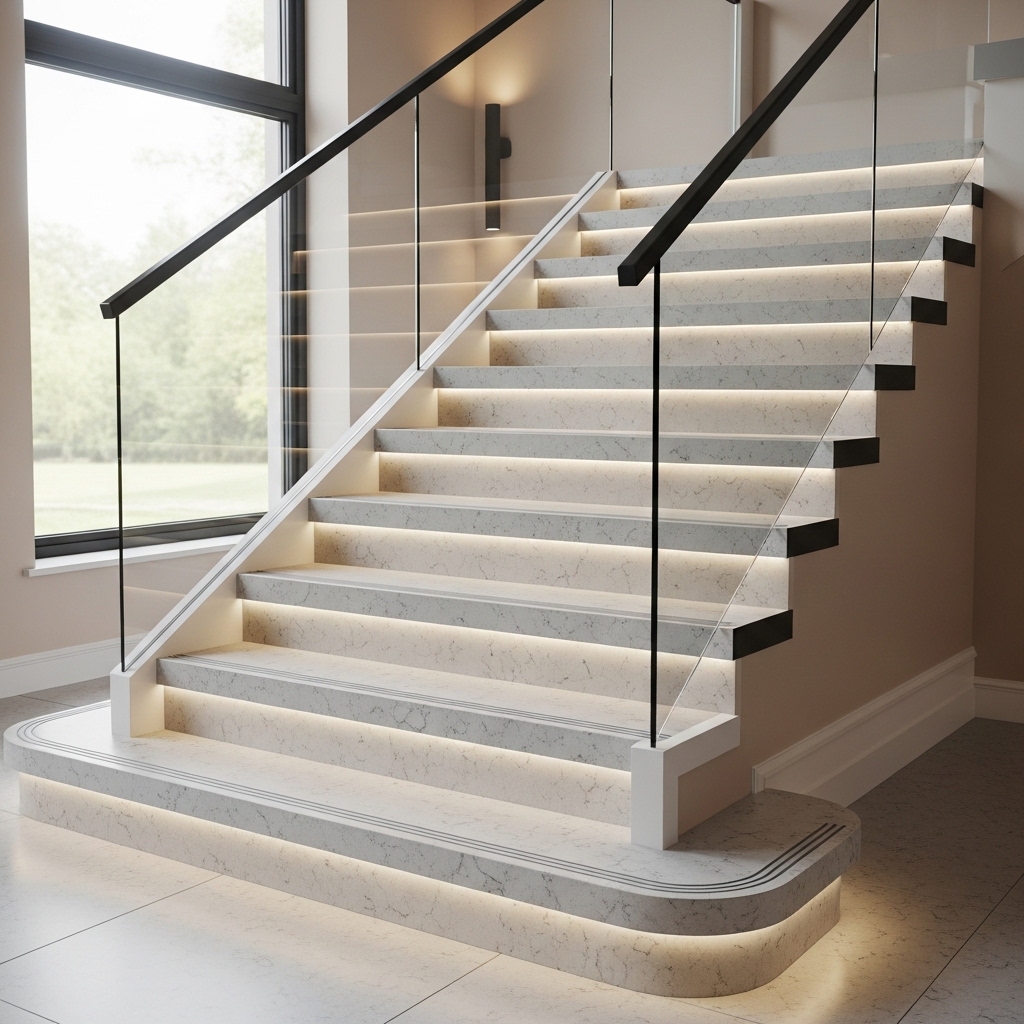
Quartz stair projects typically offer dimension options in three categories: slab length/width, thickness, and edge build-up choices that control the final step profile.
Common slab examples include 3000 × 1400 mm and 3200 × 1600 mm, while larger ranges may extend to jumbo formats such as 3300 × 1650 mm depending on the collection.
Thickness is usually selected around 20 mm for treads, but a thicker visual nose can be created by laminating an edge to achieve a look similar to 40 mm at the front without using a fully thicker slab throughout.
For example, a slim tread with a built-up nose can feel modern and lightweight while still looking substantial from the side view.
Choosing the best option depends on landing size, seam preference, and handling limits, so the largest practical pieces are used where continuity matters most.
Buyers exploring what size are quartz slabs in UAE showrooms will typically see standard formats around 3040 × 1440 mm alongside jumbo versions close to 3200 × 1600 mm. These sizes are selected to match common kitchen depths and island widths while keeping seams to a minimum. For baseline planning, many fabricators reference the standard size of quartz slab before considering upgrades.
What Size Are Quartz Slabs for Black Marble Look Countertops
Understanding what size are quartz slabs for black marble look countertops is important for achieving bold, uninterrupted veining and deep color consistency. Standard slab sizes around 3040 × 1440 mm are suitable for most layouts, while jumbo slabs help reduce seams on large islands. Using quartz slabs in these dimensions is an effective way to replicate the dramatic appearance of black marble while benefiting from engineered stone durability.
What Size Are Quartz Slabs for Raised Floor Fit-Outs
Understanding what size are quartz slabs helps streamline planning for raised floor fit-outs. Standard quartz slabs are generally supplied at around 3040 × 1440 mm, while larger projects may opt for jumbo slabs up to 3200 × 1600 mm. These options allow designers to balance ease of handling with maximum surface coverage depending on project scale.