
Granite Sheet Size Guide
Granite sheet size (granite “sheets” meaning full slabs used for fabrication) varies by quarry and supplier, but common slab ranges are about 108–120 in long × 60–72 in wide (274.32–304.80 cm × 152.40–182.88 cm), and some larger bundles can be around 126 in × 78 in (320.04 cm × 198.12 cm) when the quarry produces wider cuts. In some markets, smaller utility or half-sheets are also stocked near 96 in × 48 in (243.84 cm × 121.92 cm) for projects that don’t require full width. Typical granite thickness is 2 cm (0.79 in / 20 mm) or 3 cm (1.18 in / 30 mm), with 1.5 cm (0.59 in / 15 mm) sometimes supplied for wall cladding or lighter installations.
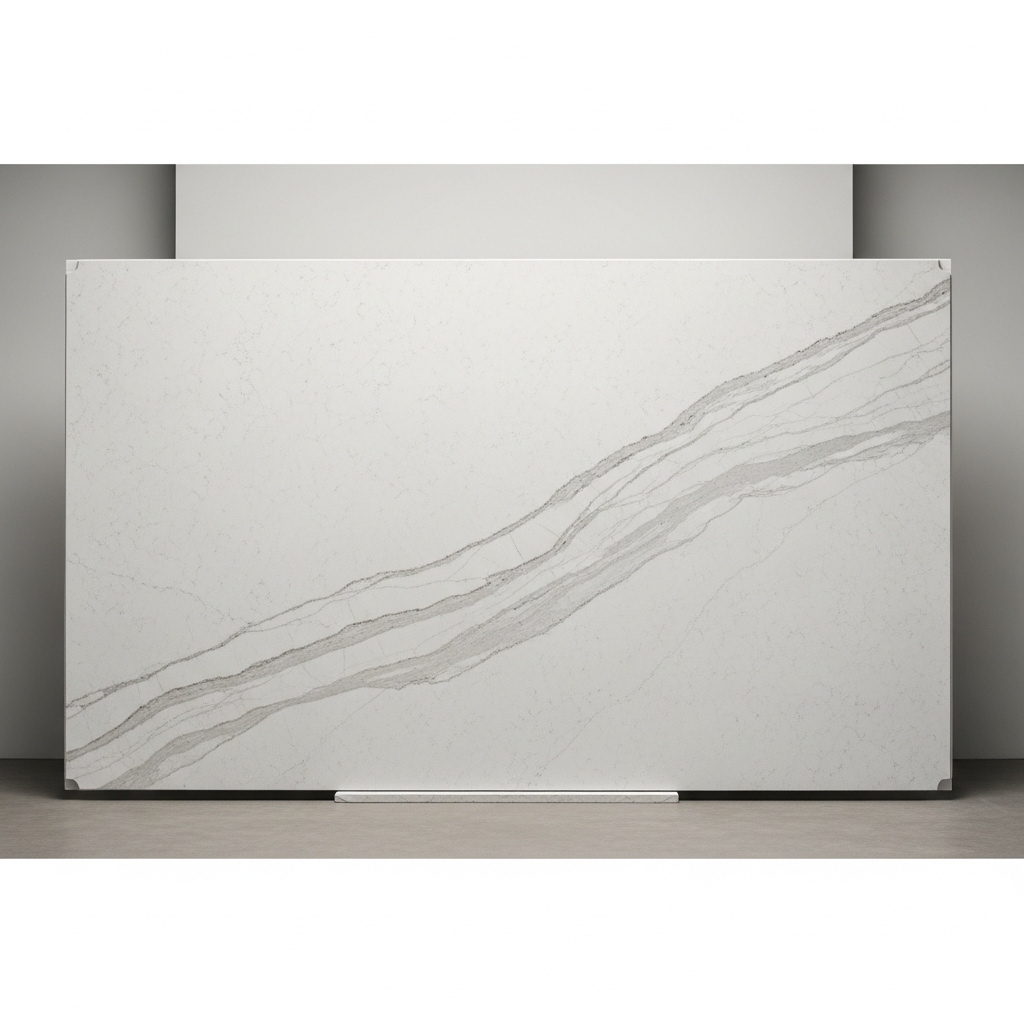
Regular Size
108–120 in × 60–72 in, thickness 0.79 in (2 cm) or 1.18 in (3 cm).
Jumbo Size
126 in × 78 in, thickness 0.79 in (2 cm) or 1.18 in (3 cm).
Super Size
138 in × 78 in, thickness 0.79 in (2 cm) or 1.18 in (3 cm).
Super Jumbo
138 in × 78 in, thickness 0.79 in (2 cm) or 1.18 in (3 cm).
Mini Slab
96 in × 48 in, thickness 0.79 in (2 cm) or 1.18 in (3 cm).
Granite Slab Dimensions Guide
When selecting granite slab dimensions for a project, it is essential to consider various factors that influence the final outcome.
First, project dimensions play a crucial role; for instance, countertops typically require slabs that are at least 2 cm to 3 cm thick, with standard sizes ranging from 96 inches by 26 inches to 120 inches by 72 inches.
Desired aesthetic is another significant factor; larger slabs can create a seamless look, ideal for expansive surfaces, while smaller pieces may be suitable for intricate designs or smaller spaces.
Budget constraints must also be taken into account, as larger slabs often come at a premium price, with costs ranging from $40 to $200 per square foot depending on the quality and rarity of the granite.
The fabricator’s expertise is vital; some may specialize in large-format installations, while others may excel in detailed custom work, influencing the choice of slab dimensions.
Lastly, specific design requirements, such as the need for cutouts for sinks or appliances, can dictate the dimensions of the granite slabs, necessitating careful planning to ensure that the final installation meets both functional and aesthetic needs.
Granite Sheet Dimensions: Jumbo Pros
Granite slab dimensions guide offers numerous advantages for both homeowners and professionals in the construction and design industries.
One of the primary benefits is the availability of jumbo slabs, which typically measure around 126 inches by 76 inches, allowing for larger surface areas with fewer seams. This not only enhances the aesthetic appeal of countertops and flooring but also improves durability, as fewer seams mean fewer potential weak points.
Additionally, the precise dimensions provided in a granite sheet dimensions guide help in accurate planning and measurement, reducing waste and ensuring that projects stay within budget. For instance, using a standard slab size of 3 cm thickness can provide the necessary strength for high-traffic areas, while also allowing for intricate designs and custom cuts.
Furthermore, understanding the dimensions aids in the selection of the right granite for specific applications, whether it be for kitchen countertops, bathroom vanities, or even outdoor spaces. This knowledge empowers designers and contractors to make informed decisions, ultimately leading to higher quality installations and satisfied clients.
Granite Sheet Material: Typical Wastage
Granite sheet material is widely used in construction and design due to its durability and aesthetic appeal. However, typical wastage during the fabrication and installation process can range from 10% to 20%, depending on the complexity of the project and the skill of the workers involved.
Factors contributing to this wastage include cutting errors, breakage during handling, and the need for precise measurements to accommodate for seams and joints. For instance, when working with large slabs, it is common to lose around 5% to 10% of material due to cuts that do not meet specifications or are made to fit around existing structures.
To minimize wastage, it is essential to implement a detailed planning phase that includes accurate measurements and a well-thought-out layout of the granite pieces. Utilizing advanced cutting technology, such as water jet cutting, can also reduce errors and improve yield. Additionally, recycling leftover pieces for smaller applications, such as countertops or decorative elements, can help mitigate waste and maximize the use of the material. By adopting these practices, projects can significantly reduce granite wastage, ultimately leading to cost savings and a more sustainable approach to material use.
Granite Sheet Material: Biggest Format Available
Granite sheet material has gained significant popularity in recent years, particularly due to its aesthetic appeal and durability. One of the most notable features of granite sheets is their availability in large formats. These sheets can be produced in sizes that reach up to 3200 mm x 1600 mm (approximately 10.5 feet by 5.25 feet), allowing for expansive applications in both residential and commercial settings. This large format minimizes the need for seams, creating a more seamless and visually appealing surface, which is particularly advantageous for countertops, wall cladding, and flooring.
The thickness of granite sheets typically ranges from 3 mm to 20 mm, depending on the intended use and structural requirements. Thinner sheets, around 3 mm to 6 mm, are often used for wall applications and decorative elements, while thicker options provide the necessary durability for high-traffic areas such as kitchen countertops. The weight of these sheets can vary significantly; for instance, a 20 mm thick sheet measuring 3200 mm x 1600 mm can weigh over 200 kg (approximately 440 lbs), necessitating careful handling and installation.
In addition to their size and thickness, granite sheets are available in a wide variety of colors and finishes, ranging from polished to honed and leathered textures. This versatility allows designers and homeowners to select the perfect aesthetic to complement their space. Moreover, the natural properties of granite make it resistant to heat, scratches, and stains, ensuring that it remains a practical choice for various applications. The durability of granite sheets also contributes to their longevity, making them a cost-effective investment over time.
Overall, the availability of granite sheet material in large formats offers a unique combination of beauty, functionality, and durability. With the ability to create expansive, seamless surfaces, granite sheets are an excellent choice for those looking to enhance their spaces with a touch of elegance while ensuring practicality and resilience.
Granite Sheet Material: Thickness for High-Traffic Floors
Granite sheet material is increasingly popular for high-traffic floors due to its durability and aesthetic appeal. Thickness plays a crucial role in determining the performance and longevity of granite flooring in areas with heavy foot traffic. Typically, granite sheets used for flooring range from 1 cm to 3 cm in thickness. A thickness of 2 cm is often recommended for residential applications, while commercial spaces may benefit from 3 cm thickness to withstand the rigors of constant use.
The choice of thickness not only affects the strength of the flooring but also its weight and installation requirements. Thicker granite sheets are heavier, which can complicate the installation process and may require additional support structures. For instance, a 3 cm thick granite sheet can weigh approximately 15-20 kg per square meter, making it essential to ensure that the subfloor can support this weight without compromising structural integrity.
Moreover, thicker granite sheets tend to be more resistant to cracking and chipping, which is particularly important in high-traffic areas where impacts and abrasions are common. In environments such as shopping malls, airports, or busy office buildings, the flooring must endure not only foot traffic but also the movement of heavy equipment and furniture. Therefore, opting for a thicker granite sheet can provide peace of mind regarding maintenance and replacement costs over time.
In addition to durability, the thickness of granite sheets also influences the overall aesthetic of the flooring. Thicker slabs can create a more substantial and luxurious appearance, enhancing the visual appeal of the space. This is particularly relevant in high-end commercial settings where first impressions matter.
Ultimately, when selecting granite sheet material for high-traffic floors, it is essential to consider the specific requirements of the space, including expected foot traffic levels, weight-bearing capacity, and design preferences. By choosing the appropriate thickness, property owners can ensure that their granite flooring not only looks stunning but also stands the test of time in demanding environments.
Granite panel measurement guide for walls & decorative surfaces
A granite panel measurement guide for walls focuses on converting full slabs into panel sizes that are safe to handle, visually balanced, and compatible with the chosen fixing method.
Panels are often planned as larger rectangles to minimize joints, but still sized for site access and lifting—many projects use repeatable modules (for example, 800 × 1600 mm as an illustrative option) for consistent alignment.
Thickness commonly ranges around 10–20 mm for wall panels depending on the setting, while heavier options may be chosen where edges, returns, or architectural framing details require more mass.
As an example, a reception wall can be laid out with vertical granite panels sequenced for grain direction, with joints aligned to lighting channels or feature trims so seams visually disappear.
Fixing strategy matters in measurement planning: adhesive systems are common indoors, while heavier or higher-risk installations may use mechanical support to ensure long-term stability.
Granite panel measurement guide for stairs
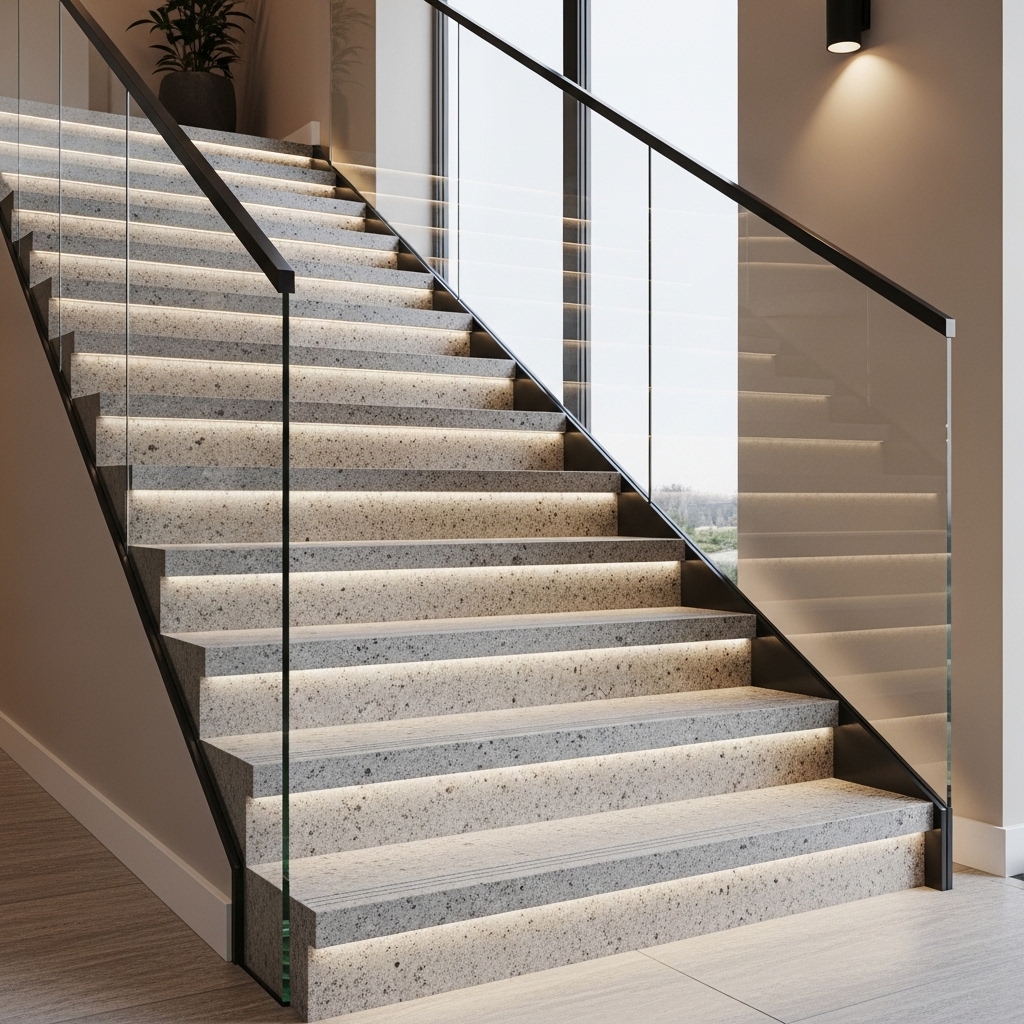
A granite panel measurement guide for stairs is often used when granite is applied as cladding over a concrete base, requiring panel sizes that are safe to handle and easy to align.
Panels are planned for tread faces, risers, landings, and side skirting, with joints positioned on returns or along edges to keep the main walking surface as clean and continuous as possible.
For example, a landing can be treated as one dominant panel while tread faces use repeatable modules, keeping joint lines consistent and visually tidy along the flight.
Typical granite panel thickness for stair cladding is commonly 20–30 mm depending on detailing and support, with edge finishing specified to protect noses and exposed corners.
Accurate panel planning also includes allowances for nosing overhang, wall irregularities, and consistent joint gaps so the finished staircase reads straight and refined.
Granite sheet size in UAE warehouses can vary noticeably depending on quarry origin, but many slabs measure roughly 2800–3200 mm in length and 1500–1800 mm in width, making them suitable for kitchens, staircases, and wall cladding. Because granite is a natural material, slight variations between sheets are normal and should be confirmed before templating. Clients often ask what is the standard quartz slab size when comparing granite with engineered stone alternatives.
Granite Sheet Size for Residential Staircase Granite Design
Granite sheet size for residential staircase granite design commonly falls within the 2800–3200 mm length range and 1500–1800 mm width range, allowing stair treads, risers, and side cladding to be cut with fewer joints. Thicknesses of 20 mm or 30 mm are selected based on structural and aesthetic needs. Using these sheet sizes for residential staircase granite design ensures strong, visually continuous steps with consistent grain alignment.
Granite Sheet Size Considerations for Raised Floor Installations
Granite sheet size considerations are essential when planning stone finishes over a raised floor. Granite sheets are usually supplied around 3000 × 1600 mm, enabling efficient cutting into panels, borders, or counters. Proper sizing ensures alignment with raised floor panels and avoids uneven transitions at floor edges.