
Quartz Sheet Size Guide
Quartz sheet size (often used interchangeably with “quartz slab size”) typically comes in a few standard factory sheet formats: the common standard sheet/slab is 56 in × 120 in (142.24 cm × 304.80 cm), and the common jumbo sheet/slab is 63 in × 126 in (160.02 cm × 320.04 cm) for larger countertops and islands. Some manufacturers also offer extra-large sheets around 65 in × 130 in (165.10 cm × 330.20 cm), and select premium lines can reach super-jumbo sizes like 78 in × 138 in (198.12 cm × 350.52 cm) to reduce seams on oversized surfaces. Typical quartz sheet thicknesses are 2 cm (0.79 in / 20 mm) and 3 cm (1.18 in / 30 mm), with occasional 12 mm (0.47 in / 1.2 cm) options depending on the product line.
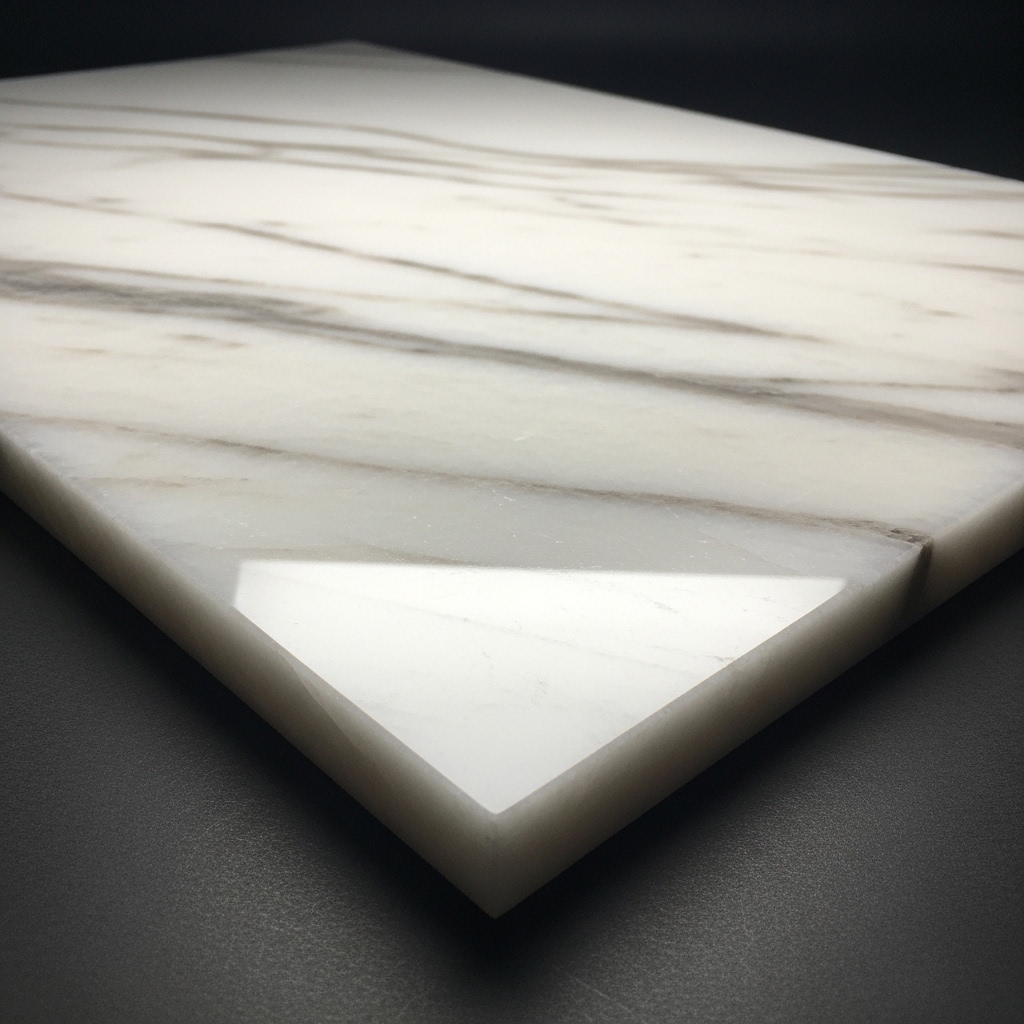
Regular Size
56 in × 120 in (standard) or 63 in × 126 in (jumbo), thickness 0.79 in (2 cm) or 1.18 in (3 cm).
Jumbo Size
63 in × 126 in, thickness 0.79 in (2 cm) or 1.18 in (3 cm).
Super Size
78 in × 138 in, thickness 0.79 in (2 cm) or 1.18 in (3 cm).
Super Jumbo
137.80 in × 78.74 in, thickness 0.79 in (2 cm) or 1.18 in (3 cm).
Mini Slab
48 in × 96 in, thickness 0.79 in (2 cm) or 1.18 in (3 cm).
Selecting the Best Quartz Sheet Dimensions
When selecting the best quartz sheet dimensions for your project, it is essential to consider various factors that align with your specific needs.
First, assess the project dimensions; for instance, if you are working on a large kitchen countertop, you may require larger sheets, typically around 120 inches by 55 inches, to minimize seams and create a seamless look.
Next, think about the desired aesthetic; if you prefer a modern, sleek appearance, opting for larger slabs can enhance the visual impact, while smaller pieces might be suitable for intricate designs or smaller spaces.
Budget constraints also play a crucial role; larger sheets may be more cost-effective in the long run, as they reduce waste and installation time, but ensure that the chosen dimensions fit within your overall budget.
Additionally, consider the fabricator’s expertise; some fabricators may have limitations on the size they can handle, so it’s vital to consult with them to ensure they can work with your selected dimensions effectively.
Lastly, specific design requirements, such as cutouts for sinks or appliances, should influence your choice of dimensions; for example, if you need a cutout for a sink, ensure that the sheet size accommodates this without compromising the overall design. By carefully evaluating these factors, you can select the ideal quartz sheet dimensions that meet both functional and aesthetic needs.
Quartz Sheet Dimensions: Upsides of Jumbo
Selecting the best quartz sheet dimensions is crucial for maximizing both aesthetic appeal and functional efficiency in various applications. One significant advantage of opting for jumbo quartz sheets, typically measuring 126 inches by 63 inches, is the reduction in seams, which enhances the overall visual continuity of surfaces. Fewer seams not only create a more seamless look but also minimize potential weak points where moisture and dirt can accumulate, thereby improving hygiene and maintenance. Additionally, larger sheets can lead to cost savings, as they often require less labor for installation and fewer materials overall. For instance, using a single jumbo sheet can cover a larger area compared to standard sheets, which usually measure around 55 inches by 120 inches, thus reducing waste. Furthermore, the versatility of quartz allows it to be tailored to various dimensions, making it suitable for a wide range of applications, from countertops to wall cladding. The durability and resistance to scratches and stains inherent in quartz also mean that selecting the right dimensions can enhance the longevity of the installation, providing both aesthetic and practical benefits for years to come. Ultimately, choosing the appropriate quartz sheet dimensions, particularly jumbo sizes, can significantly elevate the quality and functionality of any project.
Quartz Sheet Material: Common Waste Margin
Quartz sheet material is increasingly popular in various applications, particularly in countertops and surfaces due to its durability and aesthetic appeal. One critical aspect of working with quartz sheets is understanding the common waste margin, which refers to the amount of material that is typically lost during the fabrication and installation process. This waste margin can vary based on the complexity of the design and the cutting methods used. Generally, a waste margin of about 10% to 20% is considered standard, depending on the intricacies of the project. For instance, if a project requires 100 square feet of quartz, one should account for an additional 10 to 20 square feet to cover potential waste.
To minimize waste, it is essential to plan the layout carefully, optimizing the use of each sheet and considering the dimensions of the final product. Additionally, using advanced cutting techniques and tools can help reduce the amount of material lost. Proper training for fabricators and installers is also crucial, as skilled professionals can significantly decrease waste through precise measurements and cuts. By understanding and managing the common waste margin effectively, one can not only save costs but also contribute to more sustainable practices in the use of quartz sheet materials.
Quartz Sheet Material: Biggest Format Available
Quartz sheet material has gained significant popularity in the construction and design industries due to its durability, aesthetic appeal, and versatility. One of the most notable features of quartz sheets is their availability in large formats, which can greatly enhance the visual impact of any space. Typically, these sheets can be found in sizes up to 3.2 meters by 1.6 meters (approximately 10.5 feet by 5.25 feet), allowing for fewer seams and a more cohesive look in applications such as countertops, wall cladding, and flooring. This large format not only minimizes the number of joints but also reduces the potential for dirt accumulation and maintenance issues, making it an ideal choice for both residential and commercial projects.
The manufacturing process of quartz sheets involves combining approximately 90% crushed natural quartz crystals with resins and pigments, resulting in a non-porous surface that is resistant to stains, scratches, and heat. This durability is particularly advantageous in high-traffic areas or environments where hygiene is paramount, such as kitchens and bathrooms. Moreover, quartz sheets are available in a wide range of colors and finishes, from sleek, modern designs to more traditional looks that mimic natural stone. This variety allows designers and homeowners to find the perfect match for their aesthetic preferences while benefiting from the practical advantages of quartz.
In addition to their functional benefits, the large format of quartz sheets also opens up new possibilities for creative design. Architects and interior designers can create expansive surfaces that flow seamlessly, enhancing the overall ambiance of a space. For instance, a single quartz sheet can be used to create a stunning waterfall edge on a kitchen island, providing a striking focal point that draws the eye. Furthermore, the ability to source quartz sheets in larger dimensions can lead to cost savings in terms of both material and labor, as fewer pieces are required to cover a given area. As the demand for innovative and high-quality materials continues to grow, quartz sheet material stands out as a leading choice for those seeking both beauty and functionality in their projects.
Quartz Sheet Material: High-Traffic Thickness Options
Quartz sheet material has gained significant popularity in various applications, particularly in high-traffic areas due to its durability and aesthetic appeal. One of the key advantages of quartz is its ability to withstand heavy use without showing signs of wear. This makes it an ideal choice for countertops, flooring, and wall cladding in commercial spaces such as restaurants, hotels, and retail stores.
When considering quartz sheet thickness options for high-traffic environments, it is essential to choose the right thickness to ensure longevity and performance. Typically, quartz sheets are available in thicknesses ranging from 12mm to 30mm. For high-traffic areas, a thickness of 20mm or more is often recommended. This thickness provides enhanced resistance to impact and scratching, which is crucial in settings where heavy objects may be placed on surfaces or where foot traffic is constant.
Moreover, the weight of thicker quartz sheets can also contribute to their stability, reducing the likelihood of cracking or chipping over time. For instance, a 20mm thick quartz sheet can weigh approximately 50-60 pounds per square foot, providing a robust surface that can handle the demands of busy environments.
In addition to durability, quartz sheets come in a wide variety of colors and patterns, allowing designers and architects to create visually appealing spaces that do not compromise on functionality. The non-porous nature of quartz also means that it is resistant to staining and easy to clean, making it a practical choice for areas that require high hygiene standards, such as kitchens and bathrooms.
Overall, selecting the appropriate thickness of quartz sheet material is crucial for ensuring that it meets the demands of high-traffic applications. With options available that cater to both aesthetic preferences and practical requirements, quartz continues to be a favored choice for those seeking a balance of beauty and resilience in their designs.
Quartz panel measurement guide for walls & decorative surfaces
A quartz panel measurement guide for walls starts by translating a full slab into panel sizes that suit access routes, lifting limits, and the desired seam pattern on the elevation.
Many wall projects use large panels to minimize joints, but still “panelize” cuts so each piece can be safely transported and installed, especially in high-rise buildings with elevators and narrow corridors.
Illustrative panel planning might use large rectangles (for example 800 × 1600 mm or similar) when a grid layout is preferred, or fewer oversized panels when the goal is a more monolithic appearance.
Thickness for quartz wall panels is commonly 6–12 mm, which provides the slab look with reduced load, while thicker options can be chosen for areas with exposed edges or deeper returns.
Accurate measurement also includes allowances for joint gaps, edge finishing, and cut-outs (switch plates, niches), so panels align cleanly and the finished wall reads straight and consistent.
Quartz panel measurement guide for stairs
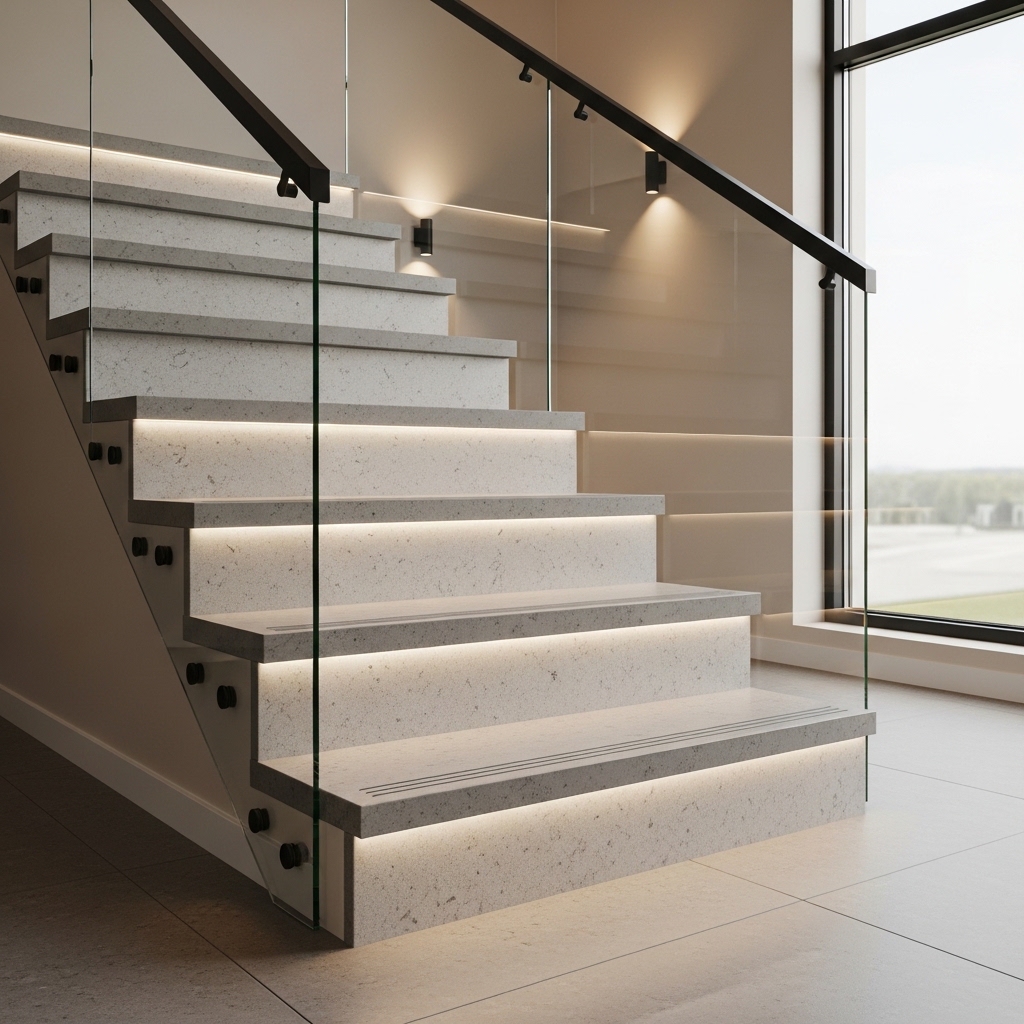
A quartz panel measurement guide for stairs is used when quartz is applied as cladding panels over a structural stair base, requiring panel sizes that are safe to handle while keeping joints discreet.
Start by measuring the flight width, tread depth, and riser height, then decide panel breaks for treads, risers, landings, and any side skirting so joint lines align cleanly and repeat consistently.
For vertical and side cladding panels, many systems use thinner quartz like 6–12 mm where available to reduce load, while tread faces are often planned at more robust thickness such as 20 mm depending on the design approach.
For example, riser panels can be laid out as repeatable modules and aligned to the centerline of the flight, while tread seams (if any) are pushed to side returns where they are less visible.
A good panel plan also includes allowances for joint gaps, silicone lines at corners, and consistent pattern orientation so the stair cladding looks straight and intentional from every angle.
When discussing quartz sheet size in the UAE, suppliers usually refer to engineered stone panels supplied in standard formats like 3040 × 1440 mm or larger jumbo variations for premium ranges. These sheets are designed for consistent thickness, typically 20 mm or 30 mm, ensuring predictable fabrication results. In contrast, outdoor paving materials such as cobble stone size are specified very differently, highlighting how application influences dimensional standards.
Quartz Sheet Size Options for Marwa Marble Inspired Interiors
Quartz sheet size options for Marwa marble inspired interiors usually include standard slabs around 3040 × 1440 mm and jumbo formats extending to approximately 3200 × 1600 mm. These sizes are suitable for countertops, islands, and feature surfaces where clean lines and continuity are important. Coordinating quartz sheets in these dimensions with marwa marble elements ensures a cohesive design language across floors, walls, and worktops.
Quartz Sheet Size Options for Raised Floor Systems
Quartz sheet size options are frequently considered in projects that rely on a raised floor system. Standard quartz sheets generally range from 3000–3200 mm in length and 1400–1600 mm in width, providing flexibility for cutting and detailing. These sizes help designers match surface finishes precisely with modular raised floor layouts.