
Kitchen Slab Size in Feet
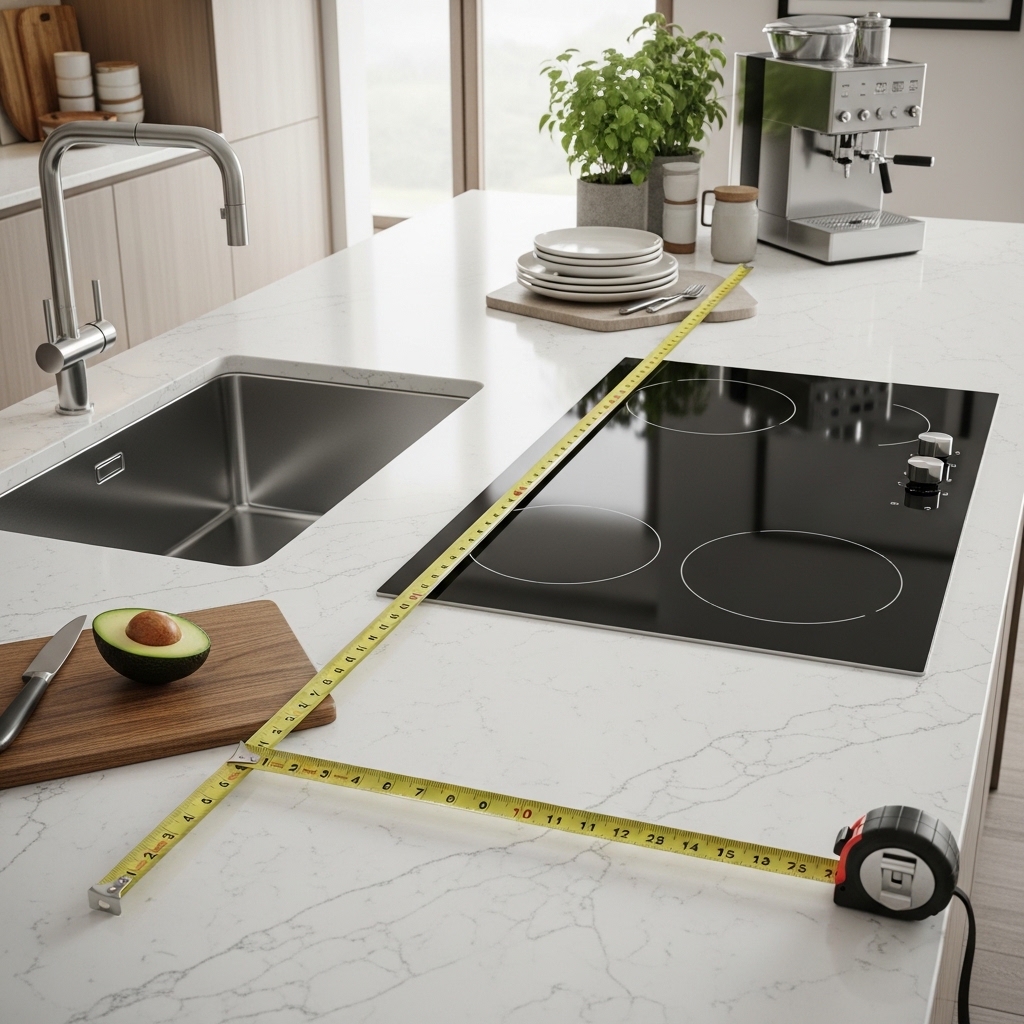
Kitchen slab size in feet (kitchen countertop pieces) is typically described by depth and the length of each section: the standard depth is about 2.1 ft (25–25.5 in = 63.50–64.77 cm), while straight-run countertop sections are often cut in lengths around 6–10 ft (72–120 in = 182.88–304.80 cm) per piece before seams, depending on handling and layout. Kitchen islands frequently land around 3–5 ft wide (36–60 in = 91.44–152.40 cm) and 6–10 ft long (72–120 in = 182.88–304.80 cm). For stone and quartz counters, thickness is usually 2 cm (0.79 in / 20 mm) or 3 cm (1.18 in / 30 mm), and built-up edges can make the front look about 0.125 ft thick (1.5 in = 3.81 cm) without using a full 1.5 in slab.
Regular Size
2.1 ft deep (25–25.5 in) and commonly 6–10 ft long (72–120 in) per section, thickness 0.79 in (2 cm) or 1.18 in (3 cm).
Jumbo Size
2.1 ft deep (25–25.5 in) and commonly 10–12 ft long (120–144 in) per section, thickness 0.79 in (2 cm) or 1.18 in (3 cm).
Super Size
2.1 ft deep (25–25.5 in) and commonly 12–14 ft long (144–168 in) per section, thickness 0.79 in (2 cm) or 1.18 in (3 cm).
Super Jumbo
14–15 ft long (168–180 in) × 2.1 ft deep (25–25.5 in), thickness 0.79 in (2 cm) or 1.18 in (3 cm).
Mini Slab
5–6 ft long (60–72 in) × 2.1 ft deep (25–25.5 in), thickness 0.79 in (2 cm) or 1.18 in (3 cm).
Kitchen Worktop Sizing in Feet
When planning kitchen worktop sizing, it is essential to consider project dimensions, desired aesthetic, budget constraints, fabricator’s expertise, and specific design requirements.
The dimensions of the kitchen play a crucial role; for instance, a standard kitchen worktop height is typically around 36 inches, while the depth usually ranges from 24 to 30 inches. For a more spacious feel, a larger island with a worktop size of 6 to 8 feet can be ideal.
Aesthetic preferences can dictate the choice of materials and finishes, with options like quartz, granite, or laminate, each offering different visual impacts and textures. For example, a sleek, minimalist design may favor a solid surface in a neutral tone, while a rustic kitchen might benefit from a butcher block or textured stone.
Budget constraints are also a significant factor; high-end materials can range from $50 to $200 per square foot, while more economical choices may start at $10 per square foot. It’s crucial to balance quality and cost to achieve the desired look without overspending.
The fabricator’s expertise can influence the final outcome, as some materials require specialized skills for installation. For instance, intricate edge profiles or seamless joints may necessitate a fabricator experienced in high-end stone work.
Lastly, specific design requirements, such as integrated sinks or cooktops, can affect the overall sizing and layout of the worktop. Custom cutouts may require additional planning, ensuring that the worktop not only fits the space but also meets functional needs. By carefully considering these factors, homeowners can achieve a worktop that is both aesthetically pleasing and practical.
Kitchen Worktops in Feet: Why Go Larger
Choosing kitchen worktops sized in feet offers several advantages that can significantly enhance both functionality and aesthetics in your cooking space.
Firstly, larger worktops provide ample space for food preparation, allowing you to chop, mix, and assemble dishes without feeling cramped. For instance, a 10-foot worktop can accommodate multiple cooking tasks simultaneously, making it ideal for families or those who enjoy entertaining guests.
Additionally, larger surfaces can serve as a gathering spot, transforming the kitchen into a social hub where family and friends can congregate while meals are being prepared. This is particularly beneficial in open-plan living spaces, where a 12-foot island can seamlessly connect the kitchen to dining and living areas.
Furthermore, larger worktops can enhance the overall design of the kitchen, creating a more cohesive and luxurious look. A continuous 8-foot slab of granite or quartz not only adds elegance but also minimizes seams, making maintenance easier and reducing the risk of bacteria buildup.
In terms of resale value, homes with spacious, well-designed kitchens often attract higher offers, as prospective buyers appreciate the practicality and style of larger worktops. Overall, opting for kitchen worktops in feet allows for greater versatility, improved workflow, and a more inviting atmosphere, making it a wise investment for any homeowner.
Kitchen Worktops (Feet): Typical Waste Allowance
When planning for kitchen worktops, it is essential to consider the typical waste allowance, which generally ranges from 5% to 10% of the total material required. This allowance accounts for any mistakes made during cutting, fitting, or unforeseen damage that may occur during installation. For instance, if you are installing a worktop that measures 3 meters in length and 60 centimeters in width, you would calculate the total area as 1.8 square meters. Adding a 10% waste allowance would mean you should order an additional 0.18 square meters, bringing the total to approximately 1.98 square meters.
It is also important to note that different materials may have varying waste allowances; for example, natural stone like granite may require a higher allowance due to its unique patterns and the need for careful selection of pieces.
Additionally, when working with laminate or solid surface materials, the waste can be minimized by planning cuts strategically to utilize the material efficiently. Overall, understanding and incorporating a proper waste allowance into your kitchen worktop project can save time, reduce costs, and ensure a smoother installation process.
Kitchen Worktops in Feet: Largest Option
When considering kitchen worktops, the size and material play a crucial role in both functionality and aesthetics. The largest option available for kitchen worktops typically measures around 12 feet in length, providing ample space for food preparation, cooking, and even dining.
This expansive surface area is particularly beneficial in larger kitchens where multiple users may be working simultaneously. A 12-foot worktop can accommodate various activities, from chopping vegetables to rolling out dough, making it an ideal choice for avid cooks and families who enjoy spending time in the kitchen.
In terms of materials, the largest worktops can be crafted from a variety of substances, including granite, quartz, and solid wood. Granite, for instance, is a popular choice due to its durability and resistance to heat and scratches. A 12-foot granite worktop can weigh over 1,000 pounds, necessitating proper support and installation.
Quartz, on the other hand, offers a non-porous surface that is easy to clean and maintain, making it a practical option for busy kitchens. Solid wood worktops provide a warm, rustic feel and can be refinished over time, although they may require more maintenance to prevent damage from moisture and heat.
Choosing a 12-foot worktop also allows for creative design possibilities. Homeowners can incorporate features such as integrated sinks, cooktops, or even breakfast bars, enhancing the functionality of the kitchen.
Additionally, the expansive surface can serve as a focal point in the kitchen, allowing for unique design elements such as contrasting colors or textures.
Ultimately, investing in a large kitchen worktop not only improves the efficiency of the cooking space but also elevates the overall aesthetic, making it a worthwhile consideration for any kitchen renovation or new build.
Kitchen Worktops (Feet): Floor-Grade Thickness
Kitchen worktops are a crucial element in any kitchen design, serving both functional and aesthetic purposes. When considering the thickness of worktops, particularly those that are floor-grade, it is essential to understand the implications of thickness on durability, usability, and overall kitchen design.
Floor-grade thickness typically refers to worktops that are at least 30mm thick, although some materials may offer options as thick as 40mm or more. This thickness not only provides a robust surface for food preparation and cooking but also contributes to the visual weight of the kitchen. Thicker worktops can create a more substantial and luxurious feel, which is often desired in modern kitchen designs.
The choice of material plays a significant role in determining the appropriate thickness for kitchen worktops. For instance, natural stones like granite and quartz are often available in various thicknesses, with 30mm being a standard choice for many homeowners. On the other hand, laminate worktops may come in thinner profiles, typically around 20mm, but can still provide a durable surface when properly supported.
In addition to aesthetics, the thickness of kitchen worktops can also impact their performance. Thicker surfaces are generally more resistant to chipping and cracking, making them ideal for high-traffic kitchens where heavy pots and pans are frequently used. Furthermore, thicker worktops can better withstand heat, which is particularly important for those who often place hot cookware directly on the surface.
When planning a kitchen renovation or new build, it is crucial to consider the overall design and how the thickness of the worktops will complement other elements in the space. For example, a thicker worktop can create a striking contrast against sleek cabinetry or minimalist appliances, enhancing the overall aesthetic appeal. Additionally, the choice of thickness can influence the installation process, as heavier materials may require additional support or specialized installation techniques.
Ultimately, selecting the right thickness for kitchen worktops involves balancing functionality, style, and practicality. Homeowners should consider their cooking habits, the overall kitchen design, and the specific materials they wish to use to ensure that their worktops not only meet their needs but also enhance the beauty of their kitchen space.
Kitchen slab measurement guide for walls & decorative surfaces
A kitchen slab measurement guide for walls and decorative surfaces focuses on coordinating backsplash heights, wall returns, and feature zones so the slab layout looks continuous and intentional.
Many modern kitchens extend slab material up the wall to reduce grout lines and simplify cleaning, especially behind sinks and cooktops where splashes are frequent.
A common approach is to use one dominant panel behind the hob or sink and place seams at corners or cabinet edges, keeping the center of the wall visually uninterrupted.
For example, a single large panel can handle the main splash zone while narrow returns wrap side walls, creating a finished look and protecting corners from moisture.
Good measurement also includes planning for sockets, lighting channels, shelves, and window trims so cut-outs align neatly and the final surface stays balanced.
Kitchen slab measurement guide for stairs
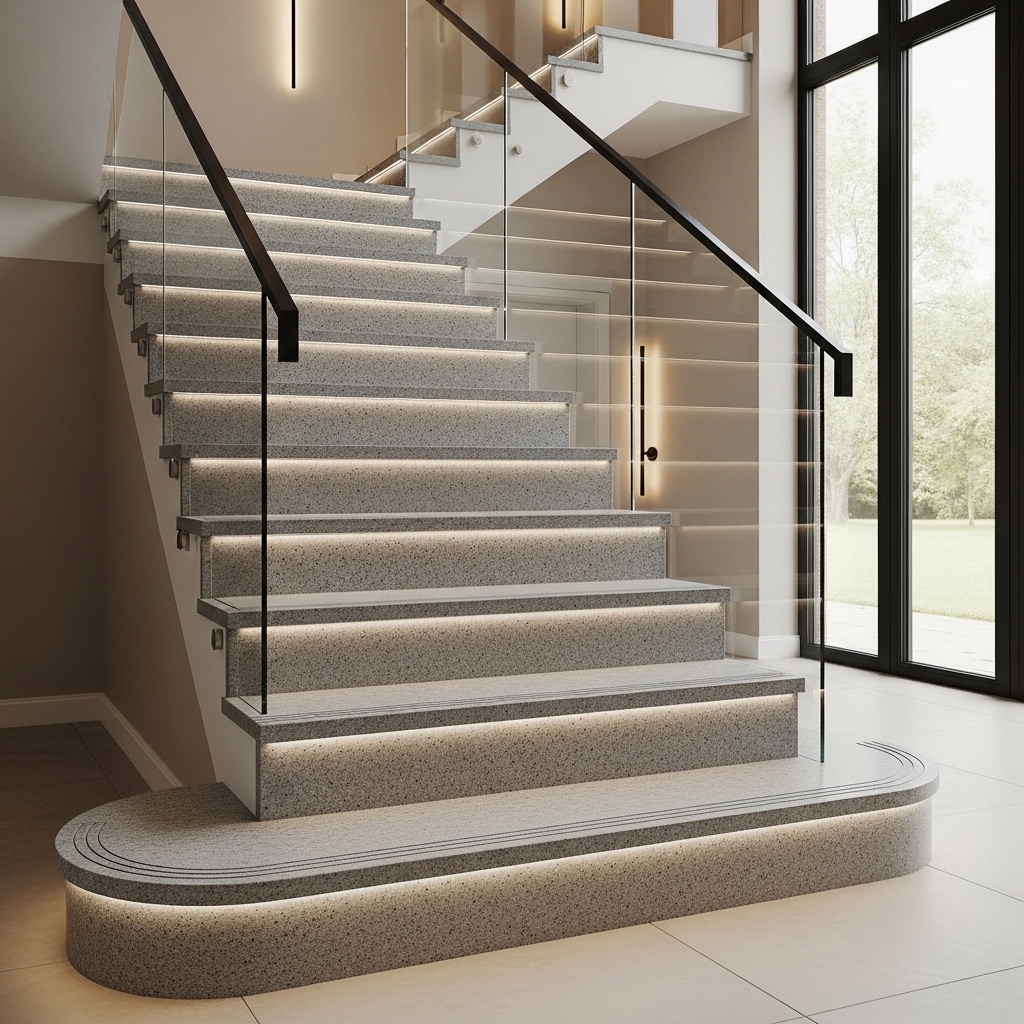
A kitchen slab measurement guide for stairs is used when a kitchen-selected slab material is extended to stair treads, risers, or landings, creating continuity across open-plan interiors.
Measure the stair flight and landing surfaces, then align seam strategy and pattern direction to the kitchen’s most visible reference lines such as island edges, waterfall sides, or feature cladding.
For example, if the kitchen uses a strong vein direction on a focal island, cutting all stair treads in the same direction makes the transition feel deliberate and premium.
Stair treads commonly use 20 mm thickness for durability, and many specify a matte or honed finish on steps for a more practical feel than high polish.
Good measurement also includes skirting edges, wall returns, and consistent joint gaps so the stair finish looks straight and cohesive with the kitchen surfaces nearby.
In the UAE market, kitchen slab size in feet is still widely used alongside metric units, with typical slabs measuring roughly 8–10.5 ft in length and 4–5.5 ft in width depending on material and supplier. These ranges help homeowners visualize coverage for long counters and wide islands. For consistency across projects, fabricators often relate these measurements back to the standard countertop slab size used by most brands.
Kitchen Slab Size in Feet for Seamless Quartz Countertops Layouts
Kitchen slab size in feet is still commonly referenced for planning seamless quartz countertops layouts, with typical slabs measuring approximately 10 × 4.5 feet and jumbo slabs reaching about 10.5 × 5.25 feet. These larger formats help reduce joints on long counter runs and wide islands. Using slabs of this size for quartz countertops improves durability, simplifies installation, and enhances the clean, modern appearance of the kitchen.
Kitchen Slab Size in Feet for Raised Floor Fit-Outs
Kitchen slab size in feet is often referenced during planning for raised floor fit-outs to simplify layout discussions. Typical slab sizes translate to roughly 10 × 4.5 feet, which allows efficient cutting for counters and islands. Using these dimensions alongside a raised floor helps designers visualize proportions and maintain alignment with modular floor panels.