
Kitchen Counter Standard Size
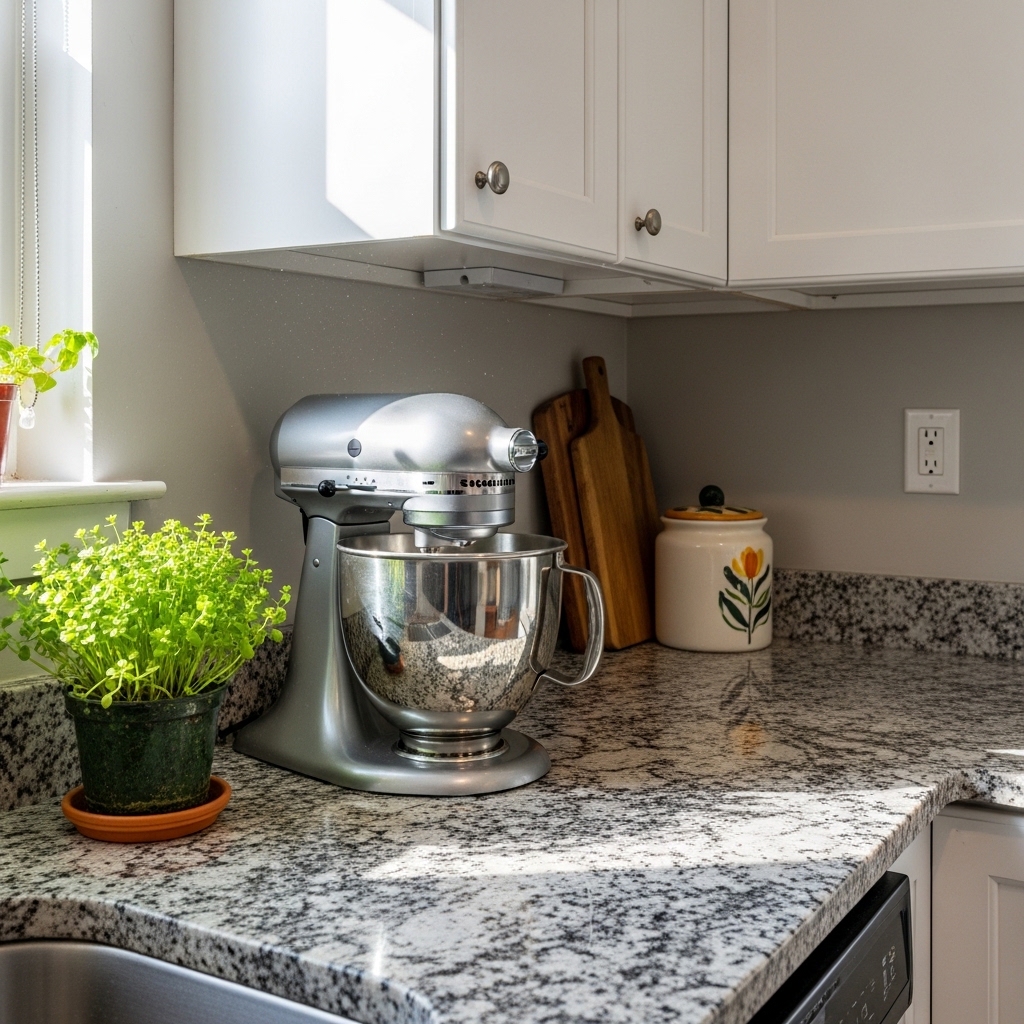
Kitchen counter standard size is generally consistent across many homes because it follows cabinet standards: the most common finished counter height is about 36 in (91.44 cm) from floor to countertop surface, and the standard finished depth is 25–25.5 in (63.50–64.77 cm) over 24 in (60.96 cm) base cabinets with a typical overhang of 1–1.5 in (2.54–3.81 cm). Counter lengths are custom, but common single-piece runs are often 72–120 in long (182.88–304.80 cm) before seams, and islands often fall around 36–60 in wide (91.44–152.40 cm) and 72–120 in long (182.88–304.80 cm). For stone/quartz counters, the most common thicknesses are 2 cm (0.79 in / 20 mm) and 3 cm (1.18 in / 30 mm), with built-up edges often used to create a thicker-looking front profile of about 1.5 in (3.81 cm).
Regular Size
36 in high and 25–25.5 in deep, thickness 0.79 in (2 cm) or 1.18 in (3 cm).
Jumbo Size
36 in high and 25–25.5 in deep, thickness 0.79 in (2 cm) or 1.18 in (3 cm).
Super Size
36 in high and 25–25.5 in deep, thickness 0.79 in (2 cm) or 1.18 in (3 cm).
Super Jumbo
36 in high and 25–25.5 in deep, thickness 0.79 in (2 cm) or 1.18 in (3 cm).
Mini Slab
36 in high and 25–25.5 in deep, thickness 0.79 in (2 cm) or 1.18 in (3 cm).
Kitchen Counter Standard Measurements
When planning kitchen counter standard measurements, it is essential to consider project dimensions, desired aesthetic, budget constraints, fabricator’s expertise, and specific design requirements.
The standard height for kitchen counters is typically 36 inches, which accommodates most users comfortably, while the depth usually ranges from 24 to 25 inches. If the kitchen layout allows, an island can be slightly higher, around 42 inches, for bar seating.
Aesthetic preferences play a crucial role; for instance, a modern kitchen may favor sleek, minimalist designs with clean lines, while a rustic kitchen might incorporate thicker, more textured materials. Budget constraints can significantly influence material choices, with options ranging from laminate at $10 to $50 per square foot to high-end granite or quartz, which can cost $50 to $200 per square foot.
The fabricator’s expertise is vital, as intricate designs or custom cuts require skilled craftsmanship, which may increase costs but ensure quality and durability.
Specific design requirements, such as incorporating integrated sinks or cooktops, may necessitate adjustments in standard measurements, ensuring that the final product not only meets functional needs but also aligns with the overall vision for the kitchen space.
Kitchen Counter Standards: Why Upsize
Standard measurements for kitchen counters offer numerous advantages that enhance both functionality and aesthetics in kitchen design.
Firstly, adhering to standard heights, typically around 36 inches, ensures comfort and efficiency during food preparation and cooking, reducing strain on the back and arms.
Additionally, standard depths of 24 inches provide ample workspace while allowing for easy access to appliances and storage.
Upsizing kitchen counters can further improve usability; for instance, increasing the counter depth to 30 inches can create a more spacious area for meal prep or entertaining, accommodating multiple users simultaneously.
Moreover, standard measurements facilitate easier planning and installation, as most cabinetry and appliances are designed to fit these dimensions, minimizing the risk of costly modifications.
By following these guidelines, homeowners can create a cohesive and functional kitchen space that meets their needs while also enhancing the overall value of their home.
Kitchen Counter Standards: General Waste Allowance
Kitchen counter standards play a crucial role in ensuring efficient waste management and maintaining hygiene in food preparation areas. A general waste allowance typically suggests that around 10-15% of the total volume of kitchen waste should be allocated for general waste, which includes non-recyclable materials such as plastic wrappers and food packaging.
To effectively manage this waste, kitchens should implement a systematic approach that includes designated bins for recycling, composting, and general waste. For instance, a commercial kitchen generating 1,000 pounds of waste per week should aim to keep its general waste to about 100-150 pounds.
Additionally, it is essential to regularly monitor waste levels and adjust practices accordingly to minimize waste generation. Staff training on proper waste segregation can further enhance compliance with these standards, ensuring that recyclable materials are not mistakenly disposed of in general waste.
By adhering to these kitchen counter standards, establishments can not only improve their sustainability efforts but also create a cleaner and more organized workspace, ultimately leading to better food safety and operational efficiency.
Kitchen Counter Standards: Biggest Format
Kitchen counter standards are essential for ensuring functionality, safety, and comfort in both residential and commercial kitchens. The height of kitchen counters is typically standardized at 36 inches (91.5 cm) from the floor, which accommodates the average user for tasks such as food preparation and cooking. However, this height can vary based on individual needs, with some designs offering adjustable heights or lower counters for accessibility.
The depth of kitchen counters generally ranges from 24 to 30 inches (61 to 76 cm), allowing ample space for food preparation and appliance placement. A depth of 25 inches (63.5 cm) is often recommended for standard countertops, providing enough room for a person to work comfortably without feeling cramped. Additionally, the overhang of the countertop, which is typically 1 to 1.5 inches (2.5 to 3.8 cm), is crucial for aesthetics and functionality, especially in areas where seating is provided.
In terms of materials, kitchen counters can be made from various substances, including granite, quartz, laminate, and wood. Each material has its own set of standards regarding durability, maintenance, and heat resistance. For instance, granite countertops are known for their durability and can withstand temperatures up to 1,200 degrees Fahrenheit (649 degrees Celsius), making them ideal for cooking environments. On the other hand, laminate surfaces, while cost-effective, may not offer the same level of heat resistance and can be prone to scratching.
Furthermore, the thickness of countertops can vary, with standard thicknesses ranging from 1.5 to 3 inches (3.8 to 7.6 cm). Thicker countertops not only provide a more robust appearance but also enhance durability and resistance to wear and tear. When considering the layout of kitchen counters, the work triangle concept is often applied, which suggests that the distance between the sink, stove, and refrigerator should ideally be between 12 to 26 feet (3.7 to 7.9 meters) to promote efficiency during meal preparation.
Lastly, the inclusion of features such as backsplashes, integrated sinks, and appliance garages can further enhance the functionality of kitchen counters. Backsplashes, typically 4 to 6 inches (10 to 15 cm) high, protect walls from splashes and spills, while integrated sinks can save space and create a seamless look. Overall, adhering to kitchen counter standards not only improves the aesthetic appeal of the kitchen but also ensures that it meets the practical needs of its users.
Kitchen Counter Standards: Thickness for High-Use Areas
When designing a kitchen, one of the most critical aspects to consider is the thickness of the countertop, especially in high-use areas. Countertops in these zones must be durable and resilient to withstand daily wear and tear. Typically, the standard thickness for kitchen countertops ranges from 1.5 inches to 2 inches. However, for high-use areas, such as around the sink or stove, opting for a thicker countertop can provide added strength and longevity.
For instance, a thickness of 2 inches is often recommended for granite or quartz surfaces in high-traffic zones. This thickness not only enhances the aesthetic appeal but also offers better resistance to chipping and cracking. In commercial kitchens, where the countertop is subjected to even more rigorous use, a thickness of 3 inches may be employed to ensure maximum durability.
Moreover, the choice of material plays a significant role in determining the appropriate thickness. While materials like laminate may suffice at 1.5 inches for low-use areas, high-use sections benefit from the sturdiness of stone or solid surface materials. For example, butcher block countertops, which are popular in home kitchens, typically range from 1.5 to 2.5 inches in thickness, providing a robust surface for food preparation.
In addition to thickness, the edge profile of the countertop can also impact its overall strength. A thicker edge can help distribute weight more evenly, reducing the risk of damage. Choosing a rounded or beveled edge can further enhance durability while also contributing to the visual appeal of the kitchen.
Ultimately, when selecting countertop thickness for high-use areas, it is essential to balance aesthetics with functionality. Investing in a thicker, more durable countertop can lead to long-term satisfaction and reduced maintenance costs, making it a wise choice for any kitchen design.
Typical kitchen counter measurements for walls & decorative surfaces
Typical kitchen counter measurements influence decorative wall planning because backsplashes and feature panels often align with countertop runs, cabinet widths, and key focal zones like the hob wall.
Many designs aim to reduce joints in the most visible areas, so the backsplash is often measured as one main panel with seams aligned to cabinet edges or corners.
Wall panels commonly use 6–12 mm thickness where available for lighter installation, while thicker 20 mm may be chosen for waterfall ends or exposed returns that need a stronger edge presence.
For example, a continuous backsplash panel behind the hob can be combined with narrow returns at side walls, creating a clean finish and helping protect corners from moisture ingress.
Accurate measuring also includes allowances for appliances, sockets, and trims so the decorative wall stays aligned and looks integrated with the kitchen joinery.
Typical kitchen counter measurements for stairs
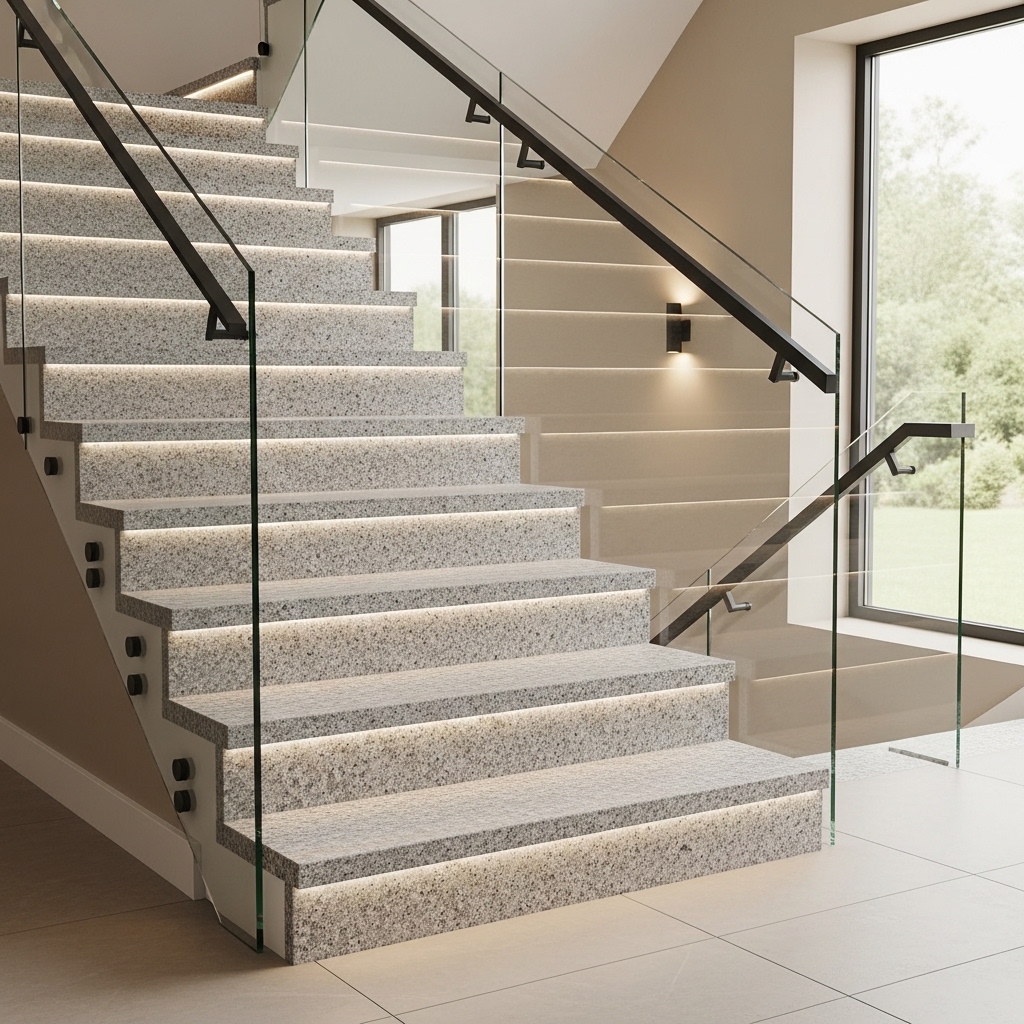
Typical kitchen counter measurements can guide stair design when the same surface material is used across both zones, creating a continuous interior language in open-plan layouts.
Common kitchen benchmarks include a counter height around 900 mm and a depth around 600 mm (typical examples), and those module lines often influence how seams and pattern direction are aligned near the stair entry zone.
For example, matching the edge profile and finish level from the kitchen worktop to the stair tread nose helps the transition feel intentional rather than like two separate installations.
Stair treads generally require robust thickness (often 20 mm) even if vertical kitchen cladding uses thinner panels, because steps receive constant impact and abrasion.
Coordinating joint spacing, edge detailing, and pattern orientation between kitchen and stairs helps maintain a consistent premium look across the whole space.
In UAE homes, kitchen counter standard size usually means a counter depth of 600–650 mm, island widths of 900–1200 mm, and a working height of around 900–950 mm including the stone surface. These standards are designed for ergonomic comfort and efficient workflow. When selecting natural materials, designers often review the size of quartzite slab to confirm it can accommodate these dimensions without excessive seams.
Kitchen Counter Standard Size for Accurate Tiles Installation Layouts
Kitchen counter standard size for accurate tiles installation layouts typically follows depths of 600–650 mm, island widths of 900–1200 mm, and heights near 900–950 mm. These standards help align tile grids, joints, and cut lines cleanly across surfaces. Proper planning ensures smoother tiles installation, reduces wastage, and delivers a visually balanced finished kitchen.
Kitchen Counter Standard Size Alignment with Raised Floors
Kitchen counter standard size alignment becomes more technical when combined with a raised floor system. Counters are generally designed at heights of 900–950 mm and depths of 600–650 mm, adjusted to account for floor build-up below. Proper alignment ensures user comfort while maintaining seamless visual flow across different floor zones.