
Size of Quartzite Slab
Size of a quartzite slab (natural quartzite) is similar to other natural-stone slabs and varies by quarry, but common countertop slab ranges are often around 108–120 in long × 60–78 in wide (274.32–304.80 cm × 152.40–198.12 cm). Some bundles include slightly smaller pieces near 96 in × 60 in (243.84 cm × 152.40 cm), while wider slabs closer to 72–78 in (182.88–198.12 cm) are especially valued for large islands because they can reduce seams. Quartzite thickness is most commonly supplied in 2 cm (0.79 in / 20 mm) and 3 cm (1.18 in / 30 mm), with 1.5 cm (0.59 in / 15 mm) sometimes offered for vertical cladding or lighter-weight applications.
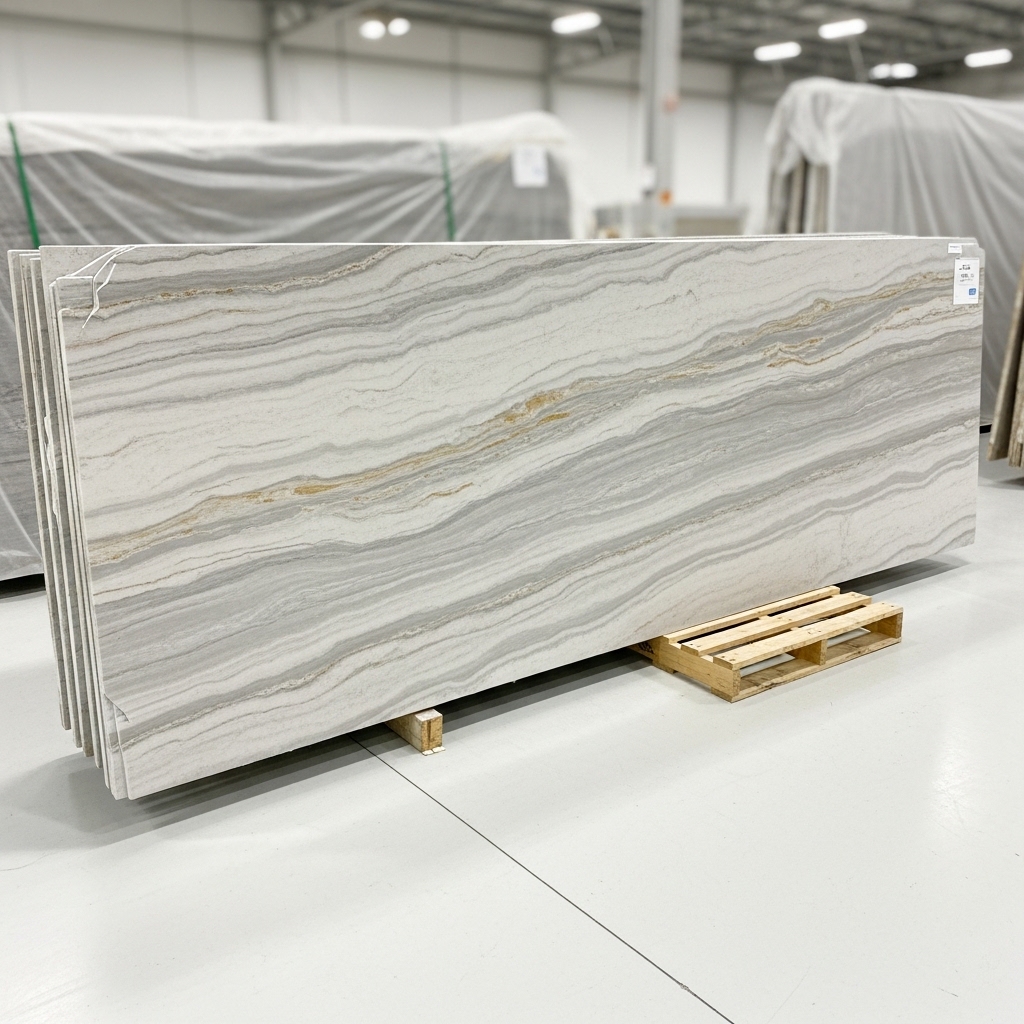
Regular Size
120 in × 72 in (common range), thickness 0.79 in (2 cm) or 1.18 in (3 cm).
Jumbo Size
126 in × 78 in (jumbo range), thickness 0.79 in (2 cm) or 1.18 in (3 cm).
Super Size
138 in × 78 in (super range), thickness 0.79 in (2 cm) or 1.18 in (3 cm).
Super Jumbo
138 in × 78 in (super jumbo range), thickness 0.79 in (2 cm) or 1.18 in (3 cm).
Mini Slab
96 in × 48 in (mini range), thickness 0.79 in (2 cm) or 1.18 in (3 cm).
Selecting Quartzite Slab Dimensions
When selecting quartzite slab dimensions for a project, it is essential to consider various factors that will influence both the functionality and aesthetic appeal of the final installation.
First, assess the project dimensions; for instance, a kitchen countertop typically requires slabs that are at least 2 cm to 3 cm thick, with standard widths of 26 to 30 inches.
Next, define the desired aesthetic; quartzite comes in a range of colors and patterns, so choosing slabs that complement the overall design theme is crucial. For a modern look, consider lighter shades with subtle veining, while rustic designs may benefit from darker, more textured slabs.
Budget constraints also play a significant role in the selection process; quartzite can range from $60 to $100 per square foot, so it’s important to calculate the total area needed and factor in additional costs for fabrication and installation.
Additionally, the fabricator’s expertise should not be overlooked; some fabricators may specialize in specific types of quartzite or have limitations on slab sizes, which can affect the final dimensions.
Finally, consider any specific design requirements, such as the need for custom cuts or unique edge profiles, which may necessitate larger or differently shaped slabs. By carefully evaluating these aspects, you can select the most suitable quartzite slab dimensions that align with your project goals.
Quartzite Sheet Dimensions: Why Jumbo Works
Selecting quartzite slab dimensions or quartzite sheet dimensions, particularly opting for jumbo sizes, offers numerous advantages that can significantly enhance both aesthetic appeal and functionality in various applications.
One of the primary benefits of using jumbo slabs, typically measuring around 126 inches by 63 inches or larger, is the reduction in seams, which creates a more seamless and visually appealing surface. This is especially important in large installations such as kitchen countertops or expansive wall cladding, where fewer seams translate to a more cohesive look.
Additionally, larger slabs allow for greater design flexibility, enabling designers and homeowners to create unique patterns and layouts without the constraints of smaller dimensions. This flexibility can lead to more innovative designs that highlight the natural beauty of the quartzite, showcasing its unique veining and color variations.
Furthermore, using larger slabs can also result in cost savings, as fewer pieces are required for installation, reducing labor costs and installation time. For instance, a kitchen island that might require multiple smaller slabs can be achieved with a single jumbo slab, minimizing waste and ensuring a more efficient use of materials.
In terms of durability, quartzite is known for its hardness and resistance to scratching and heat, making it an ideal choice for high-traffic areas. By selecting larger dimensions, the structural integrity of the installation is enhanced, as there are fewer joints that could potentially weaken the overall surface.
Overall, choosing quartzite slab dimensions or quartzite sheet dimensions in jumbo sizes not only elevates the aesthetic quality of a space but also provides practical benefits that contribute to the longevity and functionality of the installation.
Quartzite Material: Expected Fabrication Waste
Quartzite is a highly durable metamorphic rock formed from sandstone, primarily composed of quartz grains fused together through heat and pressure. When fabricating quartzite for countertops, flooring, or other applications, it is essential to consider the expected fabrication waste, which can significantly impact both cost and environmental sustainability. Typically, the fabrication process can yield waste ranging from 15% to 30%, depending on the complexity of the design and the cutting techniques employed.
To minimize waste, it is advisable to plan the layout meticulously, utilizing advanced software that allows for optimal cutting patterns. Additionally, employing skilled fabricators who understand the nuances of quartzite can help reduce errors that lead to excess waste.
It is also beneficial to recycle any leftover pieces, as smaller remnants can be repurposed for various applications, such as decorative elements or smaller installations. By adopting these practices, fabricators can not only reduce waste but also enhance the overall efficiency of the fabrication process, ultimately leading to a more sustainable approach in the use of quartzite materials.
Quartzite Sheet Material: Largest Format Available
Quartzite sheet material is increasingly becoming a popular choice in the realm of interior and exterior design due to its stunning aesthetics and remarkable durability. One of the most appealing aspects of quartzite is its availability in large format sheets, which can significantly enhance the visual impact of any space. These large slabs can measure up to 126 inches by 63 inches or even larger, allowing for expansive surfaces with minimal seams. This feature is particularly advantageous in applications such as countertops, wall cladding, and flooring, where a seamless look is desired.
The natural beauty of quartzite, with its unique patterns and colors ranging from soft whites and grays to vibrant blues and greens, makes it an ideal choice for both modern and traditional designs. When installed as large format sheets, quartzite can create a striking focal point in kitchens, bathrooms, and living areas. The ability to use fewer joints not only enhances the aesthetic appeal but also simplifies maintenance, as there are fewer grout lines to clean and maintain over time.
In addition to its visual benefits, quartzite is renowned for its durability. It is a metamorphic rock that is formed from sandstone and subjected to high pressure and temperature, resulting in a material that is not only hard but also resistant to scratching and heat. This makes quartzite an excellent choice for high-traffic areas and surfaces that are exposed to heat, such as kitchen countertops. With a Mohs hardness rating of 7, quartzite is tougher than many other natural stones, making it a practical option for homeowners and designers alike.
Furthermore, the large format of quartzite sheets can lead to cost savings in terms of installation. Fewer seams mean less labor and material costs, and the ease of handling larger slabs can expedite the installation process. Overall, the combination of beauty, durability, and practicality makes quartzite sheet material in large formats a highly sought-after option for various applications in both residential and commercial projects. As the demand for unique and high-quality materials continues to grow, quartzite stands out as a premier choice that meets the needs of modern design while offering timeless elegance.
Quartzite Material: Thickness for Heavy Footfall
Quartzite is a highly durable metamorphic rock that is increasingly being used in various applications, particularly in flooring for areas with heavy foot traffic. Its exceptional hardness, which is comparable to granite, makes it an ideal choice for commercial spaces, public buildings, and residential areas that experience significant wear and tear.
The thickness of quartzite slabs is a crucial factor when considering its use in high-traffic areas. Typically, quartzite is available in thicknesses ranging from 1 cm (approximately 0.39 inches) to 3 cm (approximately 1.18 inches). For heavy footfall areas, a thickness of at least 2 cm is recommended to ensure adequate strength and durability. This thickness not only provides a robust surface that can withstand the pressure of constant movement but also minimizes the risk of cracking or chipping over time.
In addition to thickness, the installation method plays a significant role in the performance of quartzite flooring. Properly installed quartzite can last for decades, even in high-traffic environments. It is essential to use a suitable adhesive and ensure that the substrate is adequately prepared to support the weight and stress that the flooring will endure.
Furthermore, quartzite’s natural resistance to scratching and staining makes it an excellent choice for areas such as shopping malls, airports, and office buildings, where spills and heavy use are common. With proper maintenance, including regular cleaning and sealing, quartzite can maintain its aesthetic appeal and structural integrity for many years.
Overall, when selecting quartzite for heavy footfall areas, considering the thickness and installation quality is vital to ensure longevity and performance. With its combination of beauty and strength, quartzite remains a top choice for those looking to invest in durable flooring solutions.
Quartzite slab dimension guide for walls & decorative surfaces
A quartzite slab dimension guide for walls considers natural-stone slab availability, safe thickness for vertical use, and layout mapping to showcase quartzite’s distinctive movement and depth.
Quartzite is often supplied in large natural slab ranges that vary by quarry and selection, and larger pieces help reduce seams and better display sweeping veining across feature walls.
For walls, thickness is commonly chosen around 10–20 mm depending on the fixing method and design detailing, with panel sizing planned to suit access and safe handling.
As an example, designers often sequence adjacent panels cut from the same slab so the vein flow continues across joints, creating a more continuous “stone landscape” effect on the elevation.
Good dimension planning also places seams at corners, recesses, or trim lines so the quartzite’s most dramatic areas remain uninterrupted in the main viewing zone.
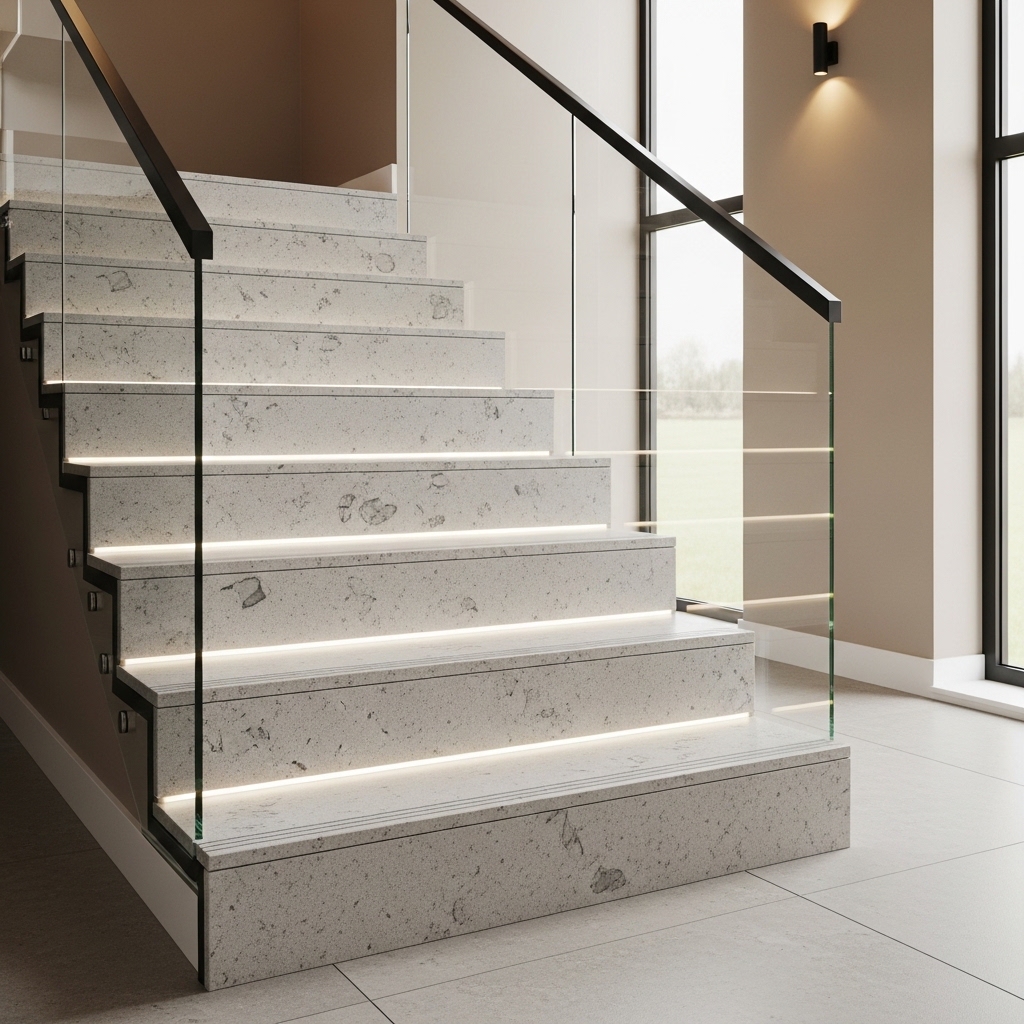
Quartzite slab dimension guide for stairs
A quartzite slab dimension guide for stairs focuses on natural-stone slab variability, thickness selection for durability, and careful layout mapping to keep veining consistent across repeated treads.
Quartzite slabs often vary by quarry and selection, so stair projects benefit from choosing slabs as a bundle and sequencing cuts so tone and movement remain coherent from step to step.
For durability, stair treads commonly use 20–30 mm thickness depending on design and support method, and edge detailing (eased or chamfered) helps protect the step nose in heavy traffic.
For example, the landing can be cut from a visually balanced area while tread pieces are cut in a repeated orientation to keep the staircase looking uniform and intentional.
A strong dimension plan also considers finish choice—honed or textured options can feel more practical on steps—and keeps joint lines consistent so the flight reads straight.
The size of quartzite slab available in the UAE commonly ranges from about 2800–3200 mm in length and 1500–1800 mm in width, though natural variation is expected due to quarrying. These slabs are valued for large islands and statement countertops where vein continuity matters. To set expectations, fabricators frequently compare these options with the standard size of granite slab used as a reference point in the industry.
Size of Quartzite Slab Guide for Choosing a Corian Top Supplier in Sharjah
A size of quartzite slab guide for choosing a Corian top supplier in Sharjah often compares natural stone slab dimensions, typically 2800–3200 mm long and 1500–1800 mm wide, with Corian sheet sizes used for seamless fabrication. Understanding these differences helps in selecting the right material for the design intent. Working with a trusted corian top supplier in sharjah ensures accurate sizing, smooth joints, and professional installation support.
Size of Quartzite Slab Options for Raised Floor Projects
Size of quartzite slab options for raised floor projects typically include slabs around 3000 × 1500 mm, offering strength and visual consistency. Quartzite’s natural durability makes it suitable for areas requiring precision detailing. Coordinating slab size with a raised floor helps maintain accurate levels and clean edge transitions.