
What Size Do Granite Slabs Come In?
What size do granite slabs come in depends on the quarry and how the bundles are cut, so suppliers usually describe granite slabs in common ranges rather than one fixed size: many countertop slabs are around 108–120 in long × 60–72 in wide (274.32–304.80 cm × 152.40–182.88 cm). When the quarry yields bigger cuts, it’s also common to see larger slabs around 126 in × 78 in (320.04 cm × 198.12 cm), while smaller half-slabs for compact projects can be about 96 in × 48 in (243.84 cm × 121.92 cm). Granite slab thickness is typically offered in 2 cm (0.79 in / 20 mm) and 3 cm (1.18 in / 30 mm), with 1.5 cm (0.59 in / 15 mm) sometimes available for wall cladding or lighter installations.
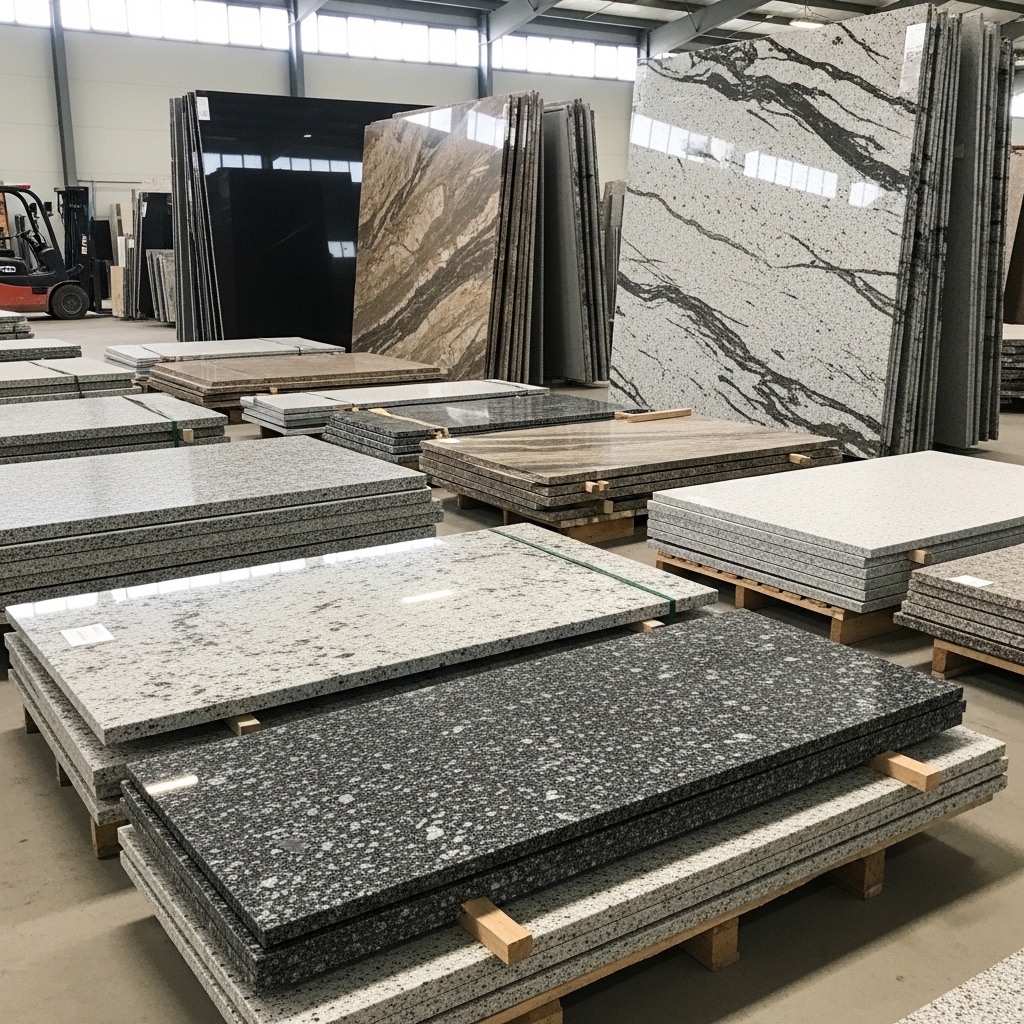
Regular Size
108–120 in × 60–72 in, thickness 0.79 in (2 cm) or 1.18 in (3 cm).
Jumbo Size
126 in × 78 in, thickness 0.79 in (2 cm) or 1.18 in (3 cm).
Super Size
138 in × 78 in, thickness 0.79 in (2 cm) or 1.18 in (3 cm).
Super Jumbo
138 in × 78 in, thickness 0.79 in (2 cm) or 1.18 in (3 cm).
Mini Slab
96 in × 48 in, thickness 0.79 in (2 cm) or 1.18 in (3 cm).
Granite Slab Size Options Guide
Granite slab size options can significantly influence the outcome of your project, and understanding the various factors involved is essential for making informed decisions.
When considering project dimensions, it’s crucial to measure the space accurately; standard granite slabs typically come in sizes of 3 cm thick and can range from 5 to 10 feet in length and 3 to 5 feet in width. Larger slabs can minimize seams, which is particularly beneficial for expansive countertops or large islands.
The desired aesthetic also plays a vital role in selecting slab sizes. For a seamless, modern look, larger slabs are preferable, while smaller slabs may be suitable for intricate designs or patterns.
Budget constraints cannot be overlooked, as larger slabs often come at a premium price. For instance, a standard 3 cm thick slab can cost anywhere from $40 to $100 per square foot, depending on the quality and rarity of the granite.
The fabricator’s expertise is another critical factor; some fabricators may specialize in working with larger slabs, while others may be more adept at handling smaller pieces. It’s advisable to consult with your fabricator to understand their capabilities and recommendations based on your project.
Lastly, specific design requirements, such as cutouts for sinks or appliances, can dictate the size of the slabs you choose. If your design calls for multiple cutouts, smaller slabs may be more practical, whereas a single, large slab can accommodate a more straightforward design with fewer interruptions. By carefully considering these factors, you can select the ideal granite slab size that aligns with your vision and practical needs.
Granite Slab Options: Why Jumbo Matters
Granite slab size options play a crucial role in both aesthetic appeal and functionality in various applications, particularly in kitchen countertops and flooring. One of the primary advantages of opting for larger, jumbo-sized slabs, which can measure up to 126 inches by 76 inches, is the reduction in seams, creating a more seamless and visually appealing surface. This is particularly beneficial in expansive areas where fewer seams can enhance the overall design and minimize the risk of dirt accumulation in joints. Additionally, larger slabs allow for more creative design possibilities, enabling homeowners and designers to utilize a single piece for larger islands or expansive countertops, thus maintaining a consistent pattern and color flow. Furthermore, the thickness of granite slabs, typically ranging from 2 cm to 3 cm, can also influence durability and weight, with thicker slabs providing enhanced strength and resistance to chipping. The variety of finishes available, such as polished, honed, or leathered, further expands the design options, allowing for customization that can suit any style preference. Ultimately, understanding the advantages of granite slab size options, especially the significance of jumbo sizes, empowers consumers to make informed decisions that enhance both the beauty and functionality of their spaces.
Granite Slab Options: Typical Waste Allowance
When selecting granite slab options for a project, it is essential to consider the typical waste allowance, which can significantly impact both cost and material usage. Generally, a waste allowance of 10% to 15% is recommended for granite slabs, accounting for cuts, imperfections, and design adjustments. For instance, if a project requires 100 square feet of granite, ordering between 110 to 115 square feet ensures that there is enough material to accommodate any unforeseen issues.
Additionally, the type of granite chosen can influence the waste factor; more intricate designs or patterns may require additional cuts, thus increasing waste. It is also important to factor in the layout of the slabs, as optimizing the arrangement can minimize waste.
When working with fabricators, discussing the specific needs and potential waste can lead to better planning and cost management. Ultimately, understanding these aspects will help in making informed decisions, ensuring that the project remains within budget while achieving the desired aesthetic.
Granite Slab Options: Largest Format Available
Granite slabs are a popular choice for countertops, flooring, and various architectural applications due to their durability and aesthetic appeal. Among the options available, the largest format granite slabs have gained significant attention for their ability to create seamless and expansive surfaces. These large slabs can measure up to 10 feet by 5 feet, allowing for fewer seams and a more cohesive look in any space. This is particularly advantageous in kitchen designs, where a continuous surface can enhance both functionality and visual appeal.
The thickness of these slabs typically ranges from 2 cm to 3 cm, providing ample strength for heavy usage while maintaining a sleek profile. In addition to their size, large format granite slabs come in a variety of colors and patterns, from classic whites and blacks to vibrant blues and greens, ensuring that homeowners can find the perfect match for their design aesthetic. The natural veining and speckling found in granite add a unique character to each slab, making every installation one-of-a-kind.
Installation of large format granite slabs requires skilled craftsmanship, as the weight and size can pose challenges during handling and fitting. It is essential to ensure that the underlying structure can support the weight of these slabs, which can exceed 1,000 pounds for larger pieces. Proper sealing and maintenance are also crucial to protect the surface from stains and scratches, ensuring that the beauty of the granite lasts for years to come. Regular cleaning with pH-balanced solutions and periodic resealing can help maintain the integrity and appearance of the stone.
Overall, the availability of large format granite slabs offers a modern solution for those looking to make a bold statement in their interiors. With their impressive dimensions, diverse color options, and durability, these slabs are an excellent investment for both residential and commercial spaces, providing a timeless elegance that can elevate any design.
Granite Slab Material: Floor Thickness Recommendations
Granite slabs are a popular choice for flooring due to their durability, aesthetic appeal, and low maintenance requirements. When considering granite for flooring, one of the most critical factors is the thickness of the slabs. Typically, granite slabs come in various thicknesses, with the most common being 2 cm (approximately 0.79 inches) and 3 cm (approximately 1.18 inches).
For residential applications, a 2 cm thickness is often sufficient for areas with moderate foot traffic, such as living rooms and bedrooms. However, for high-traffic areas like kitchens, hallways, or commercial spaces, a 3 cm thickness is recommended. This added thickness provides greater strength and resistance to cracking or chipping, ensuring the longevity of the flooring.
In addition to the thickness, the installation method also plays a crucial role in the performance of granite flooring. Thicker slabs can be installed directly on a concrete subfloor, while thinner slabs may require additional support, such as a plywood underlayment, to prevent flexing and potential damage.
Moreover, the choice of thickness can also influence the overall cost of the project. Thicker slabs generally come at a higher price point, but the investment can be worthwhile for areas that experience heavy use. It is essential to balance aesthetics, functionality, and budget when selecting the appropriate granite slab thickness for your flooring needs.
Ultimately, consulting with a professional installer can provide valuable insights into the best thickness for your specific application, ensuring that your granite flooring not only looks stunning but also stands the test of time.
Granite slab format options for walls & decorative surfaces
Granite slab format options for walls typically include full-slab feature panels, large cut-to-size panels, and modular panel layouts depending on design style and site constraints.
A full-slab look is preferred when the goal is minimal joints and dramatic natural movement, while modular layouts can improve handling and create a consistent joint rhythm across a large elevation.
For example, a luxury residential feature wall may use fewer large panels for a monolithic impression, while a commercial project may choose repeatable modules for faster installation and easier future replacement.
Finish and edge detailing also influence format choice—polished granite reads bold and reflective, while honed or leathered finishes emphasize texture and can suit warm, tactile interiors.
The best format option balances visual impact, access routes, lifting limits, and the desire to keep granite’s most attractive pattern zones uninterrupted in the focal area.
Granite slab format options for stairs
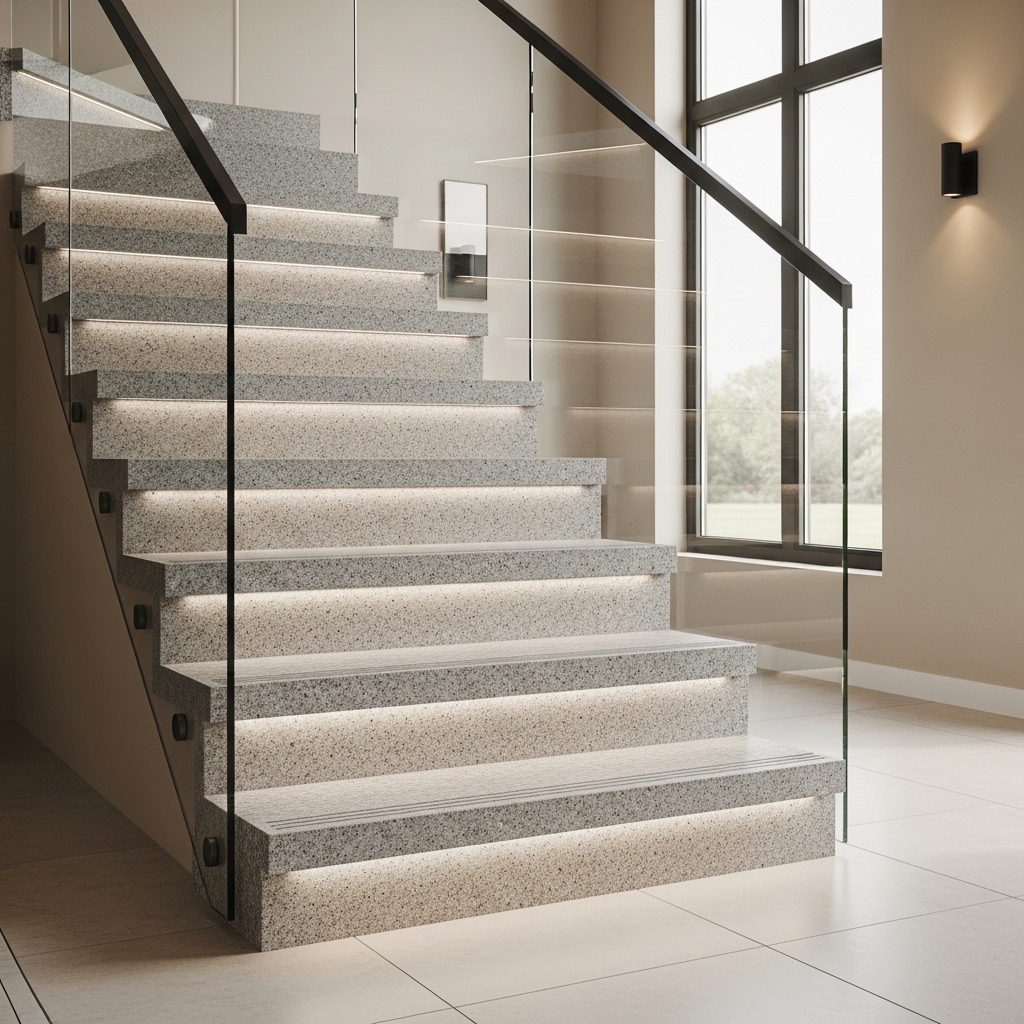
Granite slab format options for stairs include solid tread pieces, tread-and-riser sets, landing panels, and side skirting or stringer cladding that can be fabricated to match the same stone batch.
One approach uses full-depth tread pieces with a consistent orientation for a clean, uniform look, while another approach sequences cuts so grain movement is deliberately balanced across the flight.
For example, a feature stair may reserve dramatic movement for the landing and key steps, while calmer areas are used for risers so the vertical faces do not look visually busy.
Format planning also includes edge style—eased edges for modern minimal stairs, bullnose for traditional softness, or chamfered edges for durability and crisp detailing.
The best option balances the desired visual mass with practical handling limits, especially for large landing panels and long tread runs.
When people ask what size do granite slabs come in in the UAE, suppliers usually explain that most slabs range between 2800–3200 mm in length and about 1500–1800 mm in width, depending on quarry origin and color. Thickness options of 20 mm and 30 mm are standard for kitchens and vanities, offering flexibility for edge profiles. For smaller applications or modular layouts, installers may instead recommend granite tile size options that are easier to handle and install.
What Size Do Granite Slabs Come In for Silver Travertine Marble Projects
When planning what size do granite slabs come in for Silver Travertine marble projects, suppliers generally offer slabs measuring around 2800–3200 mm in length and 1500–1800 mm in width, with common thicknesses of 20 mm and 30 mm. These dimensions are suitable for countertops, wall cladding, and feature applications where proportion and balance matter. Coordinating granite slab sizes with silver travertine marble flooring or wall finishes helps maintain visual harmony and consistent joint alignment across the project.
What Size Do Granite Slabs Come In for Raised Floor Projects
What size do granite slabs come in is an important question when planning finishes for a raised floor project, as slab dimensions must align with access panels and service grids. Granite slabs are commonly supplied in sizes ranging from 2800 to 3200 mm in length and 1500 to 1800 mm in width, with thicknesses between 18 mm and 30 mm. These dimensions allow efficient cutting into panels or countertops while maintaining level accuracy and structural reliability.