
Granite Tile Size Options and Considerations
Granite tile size is commonly supplied in standard modular formats for flooring and wall use, with popular sizes including 12 in × 12 in (30.48 cm × 30.48 cm), 18 in × 18 in (45.72 cm × 45.72 cm), and 24 in × 24 in (60.96 cm × 60.96 cm). Smaller accent and mosaic pieces are also common, such as 6 in × 6 in (15.24 cm × 15.24 cm) or 3 in × 6 in (7.62 cm × 15.24 cm) depending on the design. Typical granite tile thicknesses are often 3/8 in (0.95 cm), 1/2 in (1.27 cm), and 3/4 in (1.905 cm), and in metric terms you’ll frequently see tiles listed around 10 mm (1.0 cm / 0.39 in), 12 mm (1.2 cm / 0.47 in), or 20 mm (2.0 cm / 0.79 in) depending on whether they’re for walls or heavy-duty floors.
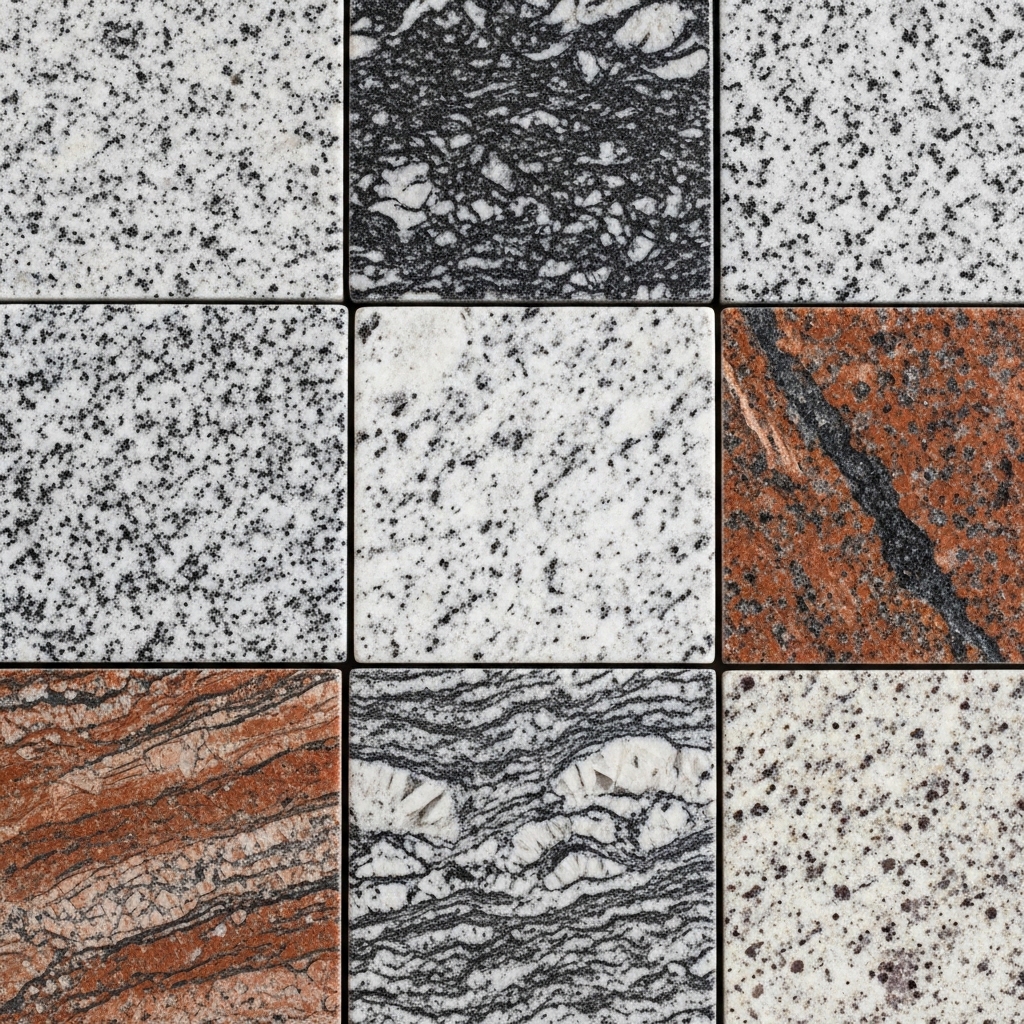
Regular Size
12 in × 12 in, 18 in × 18 in, or 24 in × 24 in, thickness 0.38 in or 0.50 in (common).
Jumbo Size
24 in × 24 in, thickness 0.50–0.75 in (common).
Super Size
24 in × 24 in, thickness 0.50–0.75 in (common).
Super Jumbo
24 in × 24 in, thickness 0.50–0.75 in (common).
Mini Slab
12 in × 12 in (common), thickness 0.38–0.50 in.
Granite Tile Measurements Guide
When selecting granite tiles for a project, it is essential to consider various measurements and factors that will influence the final outcome.
First, assess the project dimensions, as the size of the area to be covered will dictate the quantity and size of tiles needed. For instance, a bathroom floor measuring 100 square feet may require approximately 25 tiles of 24″x24″ size, accounting for cuts and waste.
Next, the desired aesthetic plays a crucial role; whether aiming for a modern look with large format tiles or a classic feel with smaller, intricate designs, the choice of tile size and finish will impact the overall appearance.
Budget constraints are another critical factor; granite tiles can range from $3 to $15 per square foot, so it’s vital to balance quality with affordability.
Additionally, the fabricator’s expertise should not be overlooked, as their skill level can affect the precision of cuts and installation, which is particularly important for complex layouts or custom designs.
Lastly, specific design requirements, such as patterns or textures, may necessitate custom cuts or unique tile sizes, which can further influence measurements and costs. By carefully considering these elements, one can ensure a successful granite tile installation that meets both aesthetic and functional needs.
Granite Tile Measurements: Large-Format Benefits
Granite tile measurements offer numerous advantages, particularly when it comes to large-format tiles, which can significantly enhance the aesthetic appeal and functionality of a space.
One of the primary benefits of using large-format granite tiles is the reduction in grout lines, which not only creates a more seamless and visually appealing surface but also minimizes maintenance, as fewer grout lines mean less dirt and grime accumulation.
For instance, a standard 12×12 inch tile typically has more grout lines compared to a 24×48 inch large-format tile, which can reduce the number of grout lines by up to 75%, depending on the layout.
Additionally, large-format granite tiles can create the illusion of a larger space, making them ideal for smaller rooms or areas where a sense of openness is desired.
The durability of granite also plays a crucial role; it is resistant to scratches, heat, and stains, making it a practical choice for high-traffic areas.
Furthermore, the variety of colors and patterns available in granite allows homeowners to customize their spaces according to personal preferences, ensuring that each installation is unique.
Overall, understanding granite tile measurements and the benefits of large-format options can lead to more informed decisions, resulting in beautiful and long-lasting installations.
Granite Tile Material: Expected Wastage
Granite tile is a popular choice for flooring and countertops due to its durability and aesthetic appeal. When planning a project involving granite tiles, it is essential to account for expected wastage, which typically ranges from 5% to 15% of the total material ordered. This wastage can occur due to various factors, including cutting, fitting, and potential damage during installation. For instance, if you are working with 1,000 square feet of granite tile, you should consider ordering an additional 50 to 150 square feet to cover these losses.
Additionally, the complexity of the layout can influence the amount of waste generated; intricate designs or patterns may require more precise cuts, leading to increased off-cuts. It is also advisable to consult with your installer to determine the specific wastage rate for your project, as they can provide insights based on their experience and the particular characteristics of the granite being used.
Proper planning and ordering of extra material not only ensure that you have enough tiles to complete the project but also help in maintaining a consistent look, as granite can vary in color and pattern from batch to batch.
Granite Tile Material: Largest Format Options
Granite tile is a popular choice for both residential and commercial spaces due to its durability, aesthetic appeal, and versatility. One of the most significant trends in granite tile is the availability of large format options. These larger tiles, often measuring 24×24 inches or even 48×48 inches, can create a seamless look that enhances the overall design of a space. The larger size reduces the number of grout lines, which not only makes for a cleaner appearance but also simplifies maintenance.
When considering large format granite tiles, it’s essential to understand the benefits they offer. For instance, larger tiles can make a room appear more spacious, as they create fewer interruptions in the visual flow of the flooring. This is particularly advantageous in smaller areas where traditional smaller tiles might make the space feel cluttered. Additionally, large format tiles can be used on walls, providing a dramatic backdrop that can elevate the design of kitchens, bathrooms, and living areas.
Installation of large format granite tiles does require careful planning and expertise. Due to their weight and size, these tiles often necessitate a more robust substrate and precise leveling. It is recommended to use a professional installer who is experienced with large format materials to ensure that the tiles are laid correctly and securely. The installation process may also involve specialized tools and techniques, such as the use of a wet saw for cutting and a leveling system to maintain even spacing.
In terms of color and pattern, large format granite tiles come in a wide variety of options, ranging from classic whites and blacks to vibrant blues and greens. Some tiles even feature intricate veining and patterns that can serve as a focal point in a room. For example, a large slab of granite with striking white and gray veining can become a stunning centerpiece in a modern kitchen or bathroom.
Overall, the trend towards larger format granite tiles reflects a growing desire for both functionality and style in interior design. With their ability to create a cohesive look and enhance the perception of space, these tiles are an excellent choice for anyone looking to invest in a durable and visually appealing flooring solution. As the market continues to evolve, we can expect to see even more innovative designs and applications for large format granite tiles in the future.
Granite Tile Material: Thickness for High-Traffic Areas
Granite tile is a popular choice for high-traffic areas due to its durability and aesthetic appeal. When considering granite tile for such spaces, thickness plays a crucial role in ensuring longevity and performance. Typically, granite tiles come in various thicknesses, with the most common being 1 cm (approximately 3/8 inch) and 2 cm (approximately 3/4 inch).
For high-traffic areas, a thickness of 2 cm is often recommended. This increased thickness provides enhanced strength and resistance to cracking, making it suitable for environments that experience heavy foot traffic, such as commercial spaces, entryways, and hallways. The added weight of thicker tiles also contributes to their stability, reducing the likelihood of movement or shifting over time.
Moreover, thicker granite tiles can better withstand the impact of dropped objects and the wear and tear associated with daily use. In contrast, 1 cm tiles, while still durable, may not offer the same level of protection and could be more prone to chipping or cracking under significant stress.
In addition to thickness, the installation method and substrate also play vital roles in the performance of granite tiles in high-traffic areas. Proper installation on a solid, level substrate ensures that the tiles remain securely in place, further enhancing their durability.
Overall, when selecting granite tile for high-traffic areas, opting for a thickness of 2 cm is advisable to ensure that the flooring can withstand the demands of everyday use while maintaining its beauty and integrity over time.
Granite tile measurement guide for walls & decorative surfaces
A granite tile measurement guide for walls and decorative surfaces focuses on selecting tile modules, planning grout lines, and aligning the layout to architectural features like niches and corners.
Granite tiles are often used when a project needs easier handling and a structured grid, with common modules such as 600 × 600 mm or 300 × 600 mm (typical examples) depending on the design style.
For walls, thickness is usually lighter than heavy slabs, and tile-based systems can be practical for areas with limited access where large panels are difficult to transport.
For example, a decorative wall can use larger tiles to reduce grout lines and create a more slab-like feel, while still keeping installation manageable and consistent.
Good measurement planning also includes grout width selection, corner alignment, and trim strategy so the tile layout looks balanced and finishes cleanly at edges.
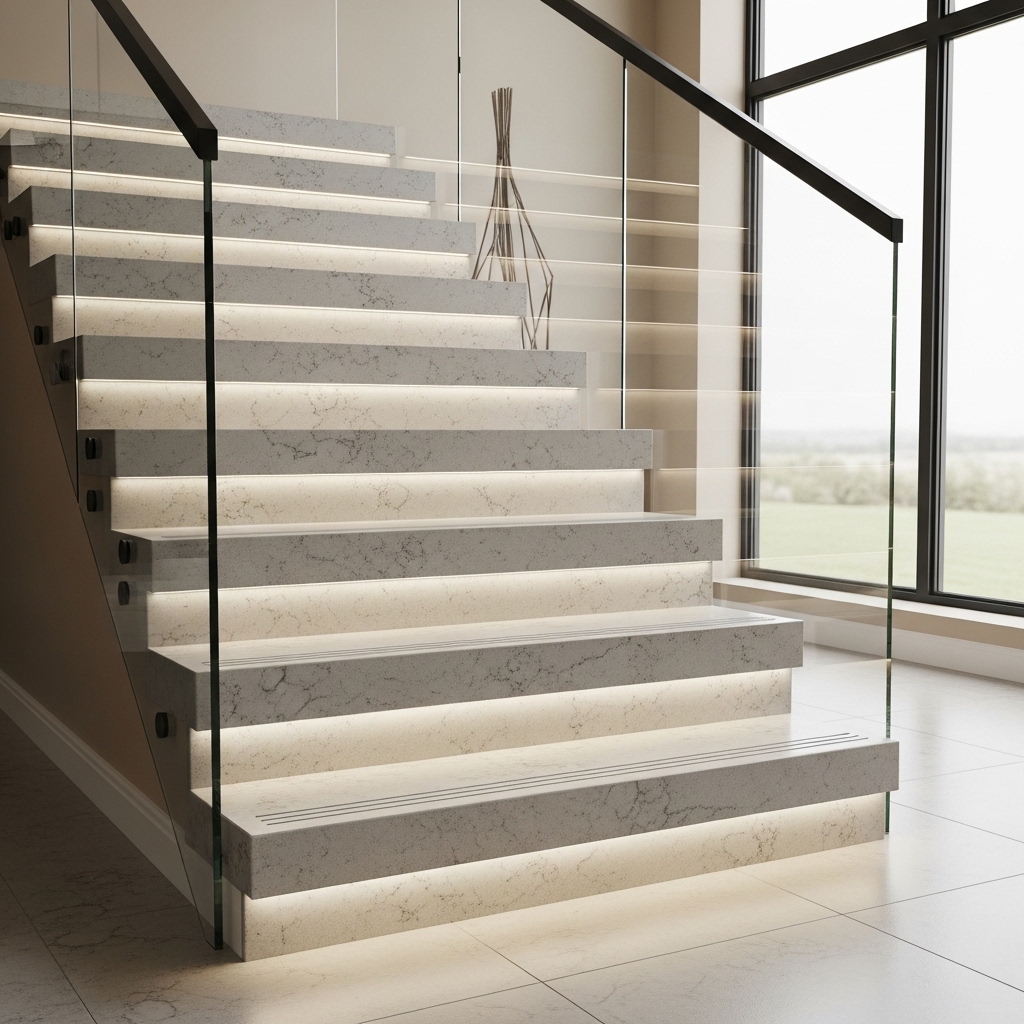
Granite tile measurement guide for stairs
A granite tile measurement guide for stairs focuses on selecting tile modules and laying them out so grout lines remain consistent and safe on repeated treads and risers.
Granite tiles can be practical where slab handling is difficult, and typical modules such as 600 × 600 mm or 300 × 600 mm (examples) can be planned to align joints neatly across the flight.
For example, larger modules reduce grout lines and can make the stair look more “slab-like,” while smaller modules can help accommodate tight turns or complex stair geometry.
On stairs, joint planning is important—grout line placement should avoid landing in awkward positions at the step nose and should stay consistent so the staircase looks straight.
Edge finishing and nosing details are also part of tile planning, ensuring the step front remains durable and visually clean even with repeated foot impact.
Granite tile size in the UAE is commonly supplied in modular formats such as 300 × 300 mm, 600 × 600 mm, or rectangular cuts for floors and walls, making them suitable for both residential and commercial spaces. These tiles provide consistency and reduce material wastage compared to large slabs in certain projects. When comparing formats, designers often relate tile dimensions back to the typical slab size used for countertops and large surfaces.
Granite Tile Size Guide for Residential Staircase Granite Design
A granite tile size guide for residential staircase granite design usually includes modular formats such as 300 × 300 mm, 600 × 300 mm, and custom-cut treads and risers derived from larger slabs. These sizes allow precise fitting on steps, landings, and side cladding while ensuring safety and durability. Using appropriate tile dimensions is especially important for residential staircase granite design, where uniform riser heights and clean edges define the overall finish.
Granite Tile Size Options for Raised Floor Installations
Granite tile size options provide flexibility for installations over a raised floor, especially where modular layouts are required. Standard granite tile sizes such as 600 × 600 mm, 800 × 800 mm, and 600 × 1200 mm are widely used. These formats fit well with raised floor grids, ensuring easy access to underfloor services and clean visual alignment.