
Typical Slab Size
Typical slab size (general countertop slab size across materials) usually falls into a few common bands: engineered quartz and similar man-made slabs are frequently 56 in × 120 in (142.24 cm × 304.80 cm) as a standard format and 63 in × 126 in (160.02 cm × 320.04 cm) as a jumbo format. Natural stones such as granite, marble, and quartzite commonly come in quarry-style ranges around 108–120 in long × 60–72 in wide (274.32–304.80 cm × 152.40–182.88 cm), with some bundles reaching up to about 126 in × 78 in (320.04 cm × 198.12 cm). Typical slab thickness is most often 2 cm (0.79 in / 20 mm) or 3 cm (1.18 in / 30 mm), with 1.5 cm (0.59 in / 15 mm) sometimes used for lighter or vertical applications.
Regular Size
56 in × 120 in (engineered) or about 120 in × 72 in (natural stone), thickness 0.79 in (2 cm) or 1.18 in (3 cm).
Jumbo Size
63 in × 126 in (engineered jumbo) or 126 in × 78 in (natural-stone jumbo), thickness 0.79 in (2 cm) or 1.18 in (3 cm).
Super Size
78 in × 138 in (engineered super) or 138 in × 78 in (natural-stone super), thickness 0.79 in (2 cm) or 1.18 in (3 cm).
Super Jumbo
137.80 in × 78.74 in (engineered super jumbo) or 138 in × 78 in (natural-stone super), thickness 0.79 in (2 cm) or 1.18 in (3 cm).
Mini Slab
48 in × 96 in (engineered mini) or 96 in × 48 in (natural-stone mini), thickness 0.79 in (2 cm) or 1.18 in (3 cm).
Choosing a Typical Slab Format
Choosing a typical slab format involves careful consideration of several factors that can significantly influence the outcome of a project.
First, project dimensions play a crucial role; for instance, larger spaces may benefit from larger slabs, such as 3×6 feet formats, which can minimize joints and create a seamless look, while smaller areas might require more manageable sizes like 2×2 feet.
Desired aesthetic is another important aspect; if a modern, sleek appearance is sought, a polished finish on larger slabs can enhance visual appeal, whereas a rustic look may call for textured or smaller tiles.
Budget constraints must also be taken into account; larger slabs can sometimes be more cost-effective due to reduced installation time and fewer materials needed for grout lines, but they may also come with a higher upfront cost.
The fabricator’s expertise is essential; choosing a format that aligns with the fabricator’s strengths can ensure better quality and craftsmanship; for example, a fabricator experienced in large-format tiles may be better suited for a 3×6 feet slab than one who specializes in smaller formats.
Lastly, specific design requirements, such as patterns or custom cuts, can dictate the slab format; intricate designs may necessitate smaller pieces for precision, while simpler designs can utilize larger slabs effectively. By carefully weighing these factors, one can select a slab format that meets both functional and aesthetic needs while staying within budget.
All-Purpose Slab Formats: Jumbo Pros
Choosing a typical slab format or all-purpose slab formats, such as jumbo slabs, offers several advantages that can significantly enhance both aesthetic appeal and practicality in various applications.
One of the primary benefits of using a typical slab format is its versatility; these slabs can be easily cut and shaped to fit a wide range of designs, making them ideal for countertops, flooring, and wall cladding.
Jumbo slabs, often measuring 126 inches by 63 inches or larger, reduce the number of seams in a project, providing a more seamless and visually appealing finish. This is particularly advantageous in large spaces where continuity is desired, as fewer seams mean less potential for dirt accumulation and easier maintenance.
Additionally, the larger surface area of jumbo slabs can lead to cost savings in both material and labor, as fewer pieces are required to cover the same area. For instance, using a single jumbo slab instead of multiple smaller slabs can reduce installation time by up to 30%, allowing for quicker project completion.
Furthermore, the durability of these slabs, often made from high-quality materials like granite or quartz, ensures longevity and resistance to wear and tear, making them a wise investment for both residential and commercial spaces. Overall, the choice of typical or jumbo slab formats can greatly enhance the functionality and aesthetic of a space while also providing economic benefits.
Common Slab Materials: General Waste Range
Common slab materials used in construction include concrete, steel, and timber, each offering unique benefits and applications.
Concrete slabs are the most prevalent, known for their durability and strength, typically ranging from 4 to 6 inches in thickness for residential applications. They can support heavy loads, making them ideal for foundations and floors.
Steel slabs, often used in commercial buildings, provide excellent tensile strength and can span large distances without the need for intermediate supports. These slabs can be as thin as 3 inches but require careful consideration of fireproofing and insulation.
Timber slabs, while less common, are favored for their aesthetic appeal and sustainability. They are generally used in smaller structures or as part of hybrid systems, with thicknesses varying from 2 to 4 inches.
When considering general waste range, it is essential to account for the disposal and recycling of these materials. Concrete can be crushed and reused as aggregate, while steel can be melted down and repurposed. Timber, if untreated, can be composted or used for biomass energy. Understanding the properties and waste management options of these materials is crucial for sustainable construction practices.
Common Slab Materials: Biggest Format Options
Common slab materials are essential in various construction and design applications, offering both aesthetic appeal and functional durability. Among the most popular options are natural stone, porcelain, and quartz, each presenting unique characteristics and benefits.
Natural stone slabs, such as granite, marble, and limestone, are renowned for their beauty and individuality. Each slab is unique, showcasing distinct patterns and colors that can enhance any space. For instance, granite slabs can be found in sizes up to 126 inches by 76 inches, making them ideal for expansive countertops or large flooring areas. The durability of natural stone is another significant advantage, as it can withstand heavy use and resist scratches and heat, making it a preferred choice for kitchens and high-traffic areas.
Porcelain slabs have gained popularity due to their versatility and range of designs. These slabs can mimic the appearance of natural stone while offering superior durability and lower maintenance. Porcelain slabs can be produced in large formats, often reaching dimensions of 120 inches by 60 inches or more. This size allows for fewer seams in installations, creating a more seamless and visually appealing surface. Additionally, porcelain is non-porous, making it resistant to stains and moisture, which is particularly beneficial in bathrooms and outdoor spaces.
Quartz slabs, engineered from natural quartz crystals and resins, provide a consistent appearance and exceptional durability. They are available in large formats, typically around 120 inches by 55 inches, allowing for expansive applications without the need for frequent seams. Quartz is non-porous, which means it does not require sealing like natural stone, making it a low-maintenance option for homeowners. The wide range of colors and patterns available in quartz slabs enables designers to achieve various aesthetics, from modern to traditional.
In conclusion, the choice of slab material can significantly impact the overall design and functionality of a space. With options like natural stone, porcelain, and quartz available in large formats, homeowners and designers can achieve stunning results while benefiting from the durability and ease of maintenance these materials offer. The right slab material can transform any area, making it both beautiful and practical for years to come.
Common Slab Materials: Thickness for Heavy Footfall
Common slab materials used in construction vary significantly in thickness, especially when designed to withstand heavy footfall. Concrete is one of the most prevalent choices due to its durability and strength. Typically, concrete slabs for heavy foot traffic are poured to a thickness of at least 4 inches, although in commercial settings, this can increase to 6 inches or more. This thickness ensures that the slab can support the weight of people and equipment without cracking or deforming over time.
Another popular material is reinforced concrete, which incorporates steel bars or mesh to enhance tensile strength. For areas subjected to heavy loads, such as warehouses or industrial facilities, reinforced concrete slabs are often designed to be 6 to 12 inches thick. This added thickness, combined with reinforcement, allows the slab to handle significant stress and reduces the risk of structural failure.
Stone slabs are also used in high-traffic areas, particularly in outdoor settings or as flooring in commercial buildings. These slabs can vary in thickness, but for heavy footfall, they are generally at least 2 inches thick. However, thicker options, such as 3 to 4 inches, are recommended for areas where heavy machinery or constant foot traffic is expected.
Lastly, ceramic tiles and porcelain tiles are often used in residential and commercial spaces. While these materials are thinner, typically ranging from 0.25 to 0.5 inches, they are usually installed over a thicker substrate, such as a concrete slab, to provide the necessary support. In high-traffic areas, ensuring that the underlying slab is adequately thick and reinforced is crucial to prevent cracking and ensure longevity.
In summary, the choice of slab material and its thickness is critical in areas with heavy footfall. Concrete and reinforced concrete are preferred for their strength, while stone and tile options require careful consideration of the underlying support to maintain durability and performance over time.
Typical slab measurements for walls & decorative surfaces
Typical slab measurements for walls and decorative surfaces refer to widely available large-format sheets that are cut into panels to suit the wall’s size and the project’s access conditions.
Rather than relying on one fixed size, designers typically choose a slab format that minimizes seams and then “panelize” pieces so they can be safely delivered and installed.
For example, a wall can be designed with fewer large panels for a monolithic look, or split into repeatable modules (such as 800 × 1600 mm as an illustrative panel size) to create a consistent grid.
Thickness selection is part of the measurement process, especially on walls where lighter panels can reduce load and simplify handling without changing the surface design.
A strong plan also includes consistent joint spacing, clean edge finishing, and seam alignment with architectural lines to keep the decorative elevation refined.
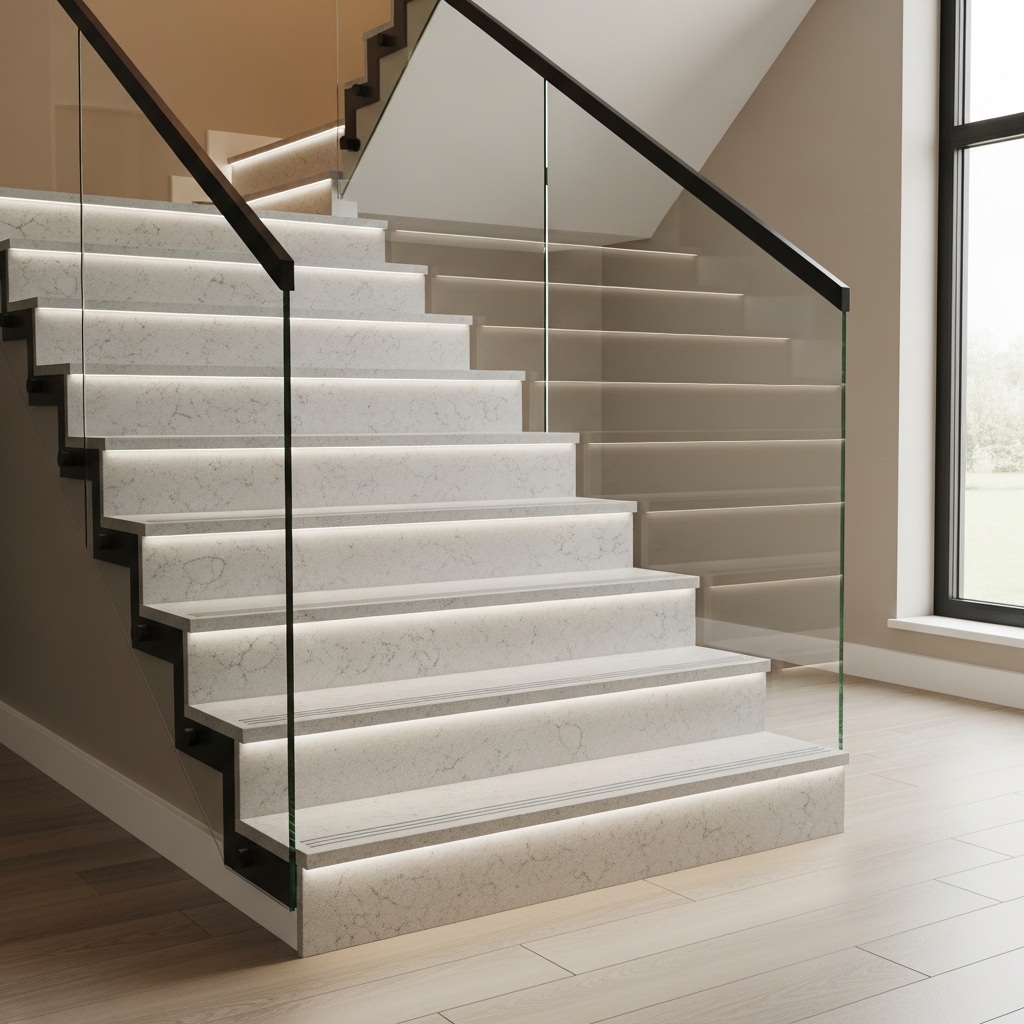
Typical slab measurements for stairs
Typical slab measurements for stairs refer to commonly available large-format slabs used to fabricate repeatable tread and riser components with controlled seams and consistent pattern direction.
Rather than relying on one fixed size, typical planning selects a slab format that can keep landings more continuous and allows treads to be cut as repeated pieces for a uniform appearance.
For example, using larger slabs often makes it easier to avoid placing a seam in the center of a landing, which is one of the most visible points of a staircase.
Tread thickness is selected for durability (often around 20 mm for many materials), while edge profiles like eased or chamfered finishes help protect the step nose from chipping.
A strong typical-slab plan also keeps joint gaps consistent so the flight reads straight and professional when viewed from above and below.
Across UAE stone yards, the typical slab size generally refers to large-format stone pieces around 3000 mm long and 1500 mm wide, offering enough coverage for kitchen counters and islands. This reference helps fabricators estimate seam placement and transportation requirements. For natural materials, these expectations are closely aligned with the typical stone slab size used across granite, marble, and quartzite.
Typical Slab Size Planning for Door Marble Threshold Installations
Typical slab size planning for door marble threshold installations often starts with standard stone slabs measuring approximately 2800–3200 mm in length, which provide enough material to cut multiple threshold pieces from a single slab. Threshold widths commonly range between 80–120 mm with thicknesses of 20–30 mm to match adjacent flooring. Fabricating a matching door marble threshold from the same slab ensures consistent color, polish, and long-term durability.
Typical Slab Size Planning for Raised Floor Systems
Typical slab size planning is a key step when designing finishes around a raised floor system. Most stone slabs are planned within a range of 3000 to 3200 mm in length, which supports modular cutting and minimizes material waste. Proper planning ensures slab joints do not interfere with access panels or service zones.