
Countertop Size: Finding the Perfect Fit for Your Space
Countertop size (finished kitchen counter dimensions) is generally standardized around cabinet modules: the most common finished height is about 36 in (91.44 cm) from floor to top, and the most common finished depth is 25–25.5 in (63.50–64.77 cm) to cover 24 in (60.96 cm) base cabinets with a typical 1–1.5 in (2.54–3.81 cm) front overhang. Straight countertop runs are cut to the room, but single-piece sections are often around 72–120 in long (182.88–304.80 cm) before seams, while islands commonly fall around 36–60 in wide (91.44–152.40 cm) and 72–120 in long (182.88–304.80 cm). Countertop thickness (stone/quartz) is most commonly 2 cm (0.79 in / 20 mm) or 3 cm (1.18 in / 30 mm), and thicker-looking edges are often built up to about 1.5 in (3.81 cm) without using a full 1.5 in slab.
Regular Size
36 in high and 25–25.5 in deep, thickness 0.79 in (2 cm) or 1.18 in (3 cm).
Jumbo Size
36 in high and 25–25.5 in deep, thickness 0.79 in (2 cm) or 1.18 in (3 cm).
Super Size
36 in high and 25–25.5 in deep, thickness 0.79 in (2 cm) or 1.18 in (3 cm).
Super Jumbo
36 in high and 25–25.5 in deep, thickness 0.79 in (2 cm) or 1.18 in (3 cm).
Mini Slab
36 in high and 25–25.5 in deep, thickness 0.79 in (2 cm) or 1.18 in (3 cm).
Choosing the Right Countertop Dimensions
Choosing the right countertop dimensions involves a careful consideration of various factors that align with your project’s specific needs.
First, assess the project dimensions; standard countertop height is typically 36 inches, while depth usually ranges from 24 to 30 inches. Ensure that these dimensions fit comfortably within your kitchen or bathroom layout, allowing for adequate workspace and flow.
Next, consider your desired aesthetic. Whether you prefer a sleek modern look or a rustic charm, the dimensions can significantly impact the overall appearance. For instance, a thicker countertop, around 1.5 to 2 inches, can convey a more substantial feel, while a thinner profile may lend a contemporary vibe.
Budget constraints are also crucial; larger countertops or premium materials can escalate costs quickly. For example, quartz or granite can range from $50 to $200 per square foot, so calculating the total area needed—say, a 10-foot by 2-foot island—will help you stay within budget.
Additionally, the fabricator’s expertise should not be overlooked. Some materials require specialized skills for installation, particularly if you’re considering intricate designs or seams. Ensure that your chosen fabricator has experience with the specific dimensions and materials you desire.
Lastly, specific design requirements, such as integrated sinks or overhangs for seating, will dictate the dimensions you need. For instance, an overhang of 12 inches is common for bar seating, while a seamless sink integration may require precise cuts and measurements. By carefully evaluating these factors, you can select countertop dimensions that not only meet functional needs but also enhance the beauty of your space.
Countertop Dimensions: Jumbo Advantages
Choosing the right countertop dimensions is crucial for both functionality and aesthetics in any kitchen or bathroom.
One of the primary advantages of selecting the appropriate size is enhanced usability; for instance, a standard countertop height of 36 inches is ideal for most users, allowing for comfortable food preparation and cooking.
Additionally, larger countertops, such as those measuring 10 feet by 4 feet, provide ample space for multiple activities, from meal prep to entertaining guests, reducing clutter and improving workflow.
The right dimensions also contribute to the overall design of the space; a well-proportioned countertop can create a balanced look, making a small kitchen feel more spacious or a large kitchen feel more inviting.
Furthermore, choosing the right thickness, typically ranging from 1.5 to 3 inches, can enhance durability and resistance to wear and tear, ensuring that the countertop remains functional and visually appealing for years to come.
Ultimately, investing time in selecting the right countertop dimensions can lead to a more efficient, stylish, and enjoyable space.
Countertop Materials: General Waste Allowance
When selecting countertop materials, it is essential to consider the general waste allowance, which refers to the amount of material that may be wasted during the fabrication and installation process. Typically, a waste allowance of 10% to 15% is recommended for most countertop materials, including granite, quartz, and marble. This percentage accounts for cuts, seams, and any imperfections that may arise during installation. For instance, if you are purchasing 100 square feet of granite, you should plan to buy an additional 10 to 15 square feet to ensure you have enough material to complete the project without compromising quality.
Additionally, different materials have varying waste factors; for example, natural stones like granite may have a higher waste percentage due to their unique patterns and the need for careful selection to match veining. In contrast, engineered stones like quartz often have a more consistent appearance, potentially reducing waste.
It is also crucial to work with a skilled fabricator who can minimize waste through precise cutting and layout planning. By understanding the general waste allowance and planning accordingly, homeowners can ensure a smoother installation process and achieve the desired aesthetic without overspending on materials.
Countertop Materials: Biggest Format Options
When selecting countertop materials, one of the most significant trends is the availability of large format options. These oversized slabs not only enhance the aesthetic appeal of a kitchen or bathroom but also offer practical benefits such as fewer seams and a more cohesive look. Quartz is one of the most popular materials in this category, with manufacturers producing slabs that can measure up to 126 inches by 63 inches. This size allows for expansive surfaces that can cover large islands or expansive countertops without the interruption of seams, creating a sleek and modern appearance.
Another material gaining traction is porcelain, which is known for its durability and resistance to heat and scratches. Large format porcelain slabs can reach dimensions of 126 inches by 63 inches as well, making them ideal for both countertops and wall applications. The versatility of porcelain allows for a variety of finishes, from matte to glossy, and it can mimic the look of natural stone, providing an elegant option for homeowners.
Granite remains a classic choice, and while traditionally available in smaller slabs, many suppliers now offer large format options that can exceed 120 inches in length. This natural stone not only provides a luxurious look but also boasts exceptional durability and resistance to heat and scratches. The large format granite slabs can be particularly striking, showcasing the unique patterns and colors inherent in the stone, making each countertop a one-of-a-kind piece.
Lastly, solid surface materials like Corian have also embraced the trend of large formats. These materials can be fabricated into large sheets, often exceeding 100 inches in length, and are available in a wide range of colors and patterns. Solid surfaces are non-porous, making them easy to clean and maintain, and they can be seamlessly joined, allowing for a continuous look across large areas.
In conclusion, the trend towards larger format countertop materials is reshaping kitchen and bathroom designs. With options like quartz, porcelain, granite, and solid surfaces available in expansive sizes, homeowners can achieve a modern, seamless look that enhances both functionality and style. The ability to create large, uninterrupted surfaces not only elevates the visual appeal but also simplifies maintenance, making these materials a popular choice in contemporary design.
Countertop Materials: Thickness for High-Traffic Areas
When selecting countertop materials for high-traffic areas, thickness plays a crucial role in durability and performance. Typically, countertops range from 1 to 3 centimeters in thickness, with 2 centimeters being the most common choice for residential applications. However, in high-traffic environments such as commercial kitchens or busy family homes, opting for a thicker countertop, around 3 centimeters, can provide enhanced strength and resistance to wear and tear.
Thicker countertops not only offer better structural integrity but also contribute to a more substantial aesthetic appeal. A 3-centimeter thick countertop can withstand the rigors of daily use, including heavy impacts and the placement of hot cookware, without the risk of chipping or cracking. For instance, granite and quartz, popular choices for high-traffic areas, are often available in these thicknesses, providing both beauty and functionality.
Moreover, the thickness of the countertop can influence the overall design and installation process. Thicker materials may require additional support during installation, especially if they are being used in cantilevered applications, such as overhangs for bar seating. It is essential to consider the cabinetry and structural support beneath the countertop to ensure that it can adequately bear the weight of a thicker material, which can be significantly heavier than its thinner counterparts.
In addition to physical durability, the thickness of the countertop can also affect maintenance and repair. Thicker surfaces are generally easier to repair if they do become damaged, as they can often be resurfaced or polished without compromising the overall integrity of the material. For example, a 3-centimeter thick quartz countertop can be refinished to remove scratches and restore its original luster, making it a practical choice for areas that experience high levels of activity.
Ultimately, when choosing countertop materials for high-traffic areas, considering the thickness is vital to ensure longevity and performance. A thicker countertop not only enhances durability but also contributes to the overall aesthetic and functionality of the space, making it a wise investment for both residential and commercial applications.
Countertop measurement guide for walls & decorative surfaces
A countertop measurement guide for walls and decorative surfaces begins by treating the wall area as an extension of the countertop layout, so the surface reads continuous and seams feel intentional.
Start with exact lengths of the counter run, then measure the vertical coverage you need—such as a short splash zone or a full-height panel up to cabinetry or ceiling—and mark all penetrations (sockets, tap lines, cooker hoods).
Many projects aim to keep seams out of high-visibility zones, so joints are planned on corners, at cabinet edges, or inside shadow gaps where they blend into the design.
For example, if a backsplash panel is cut from the same slab batch as the counter, the pattern can be oriented so veining appears to “rise” from the countertop into the wall for a premium continuous look.
Final measurement checks typically include allowing small joint gaps, planning corner sealant lines, and confirming that wall substrates are flat so panels sit flush without lippage or uneven seams.
Countertop measurement guide for stairs
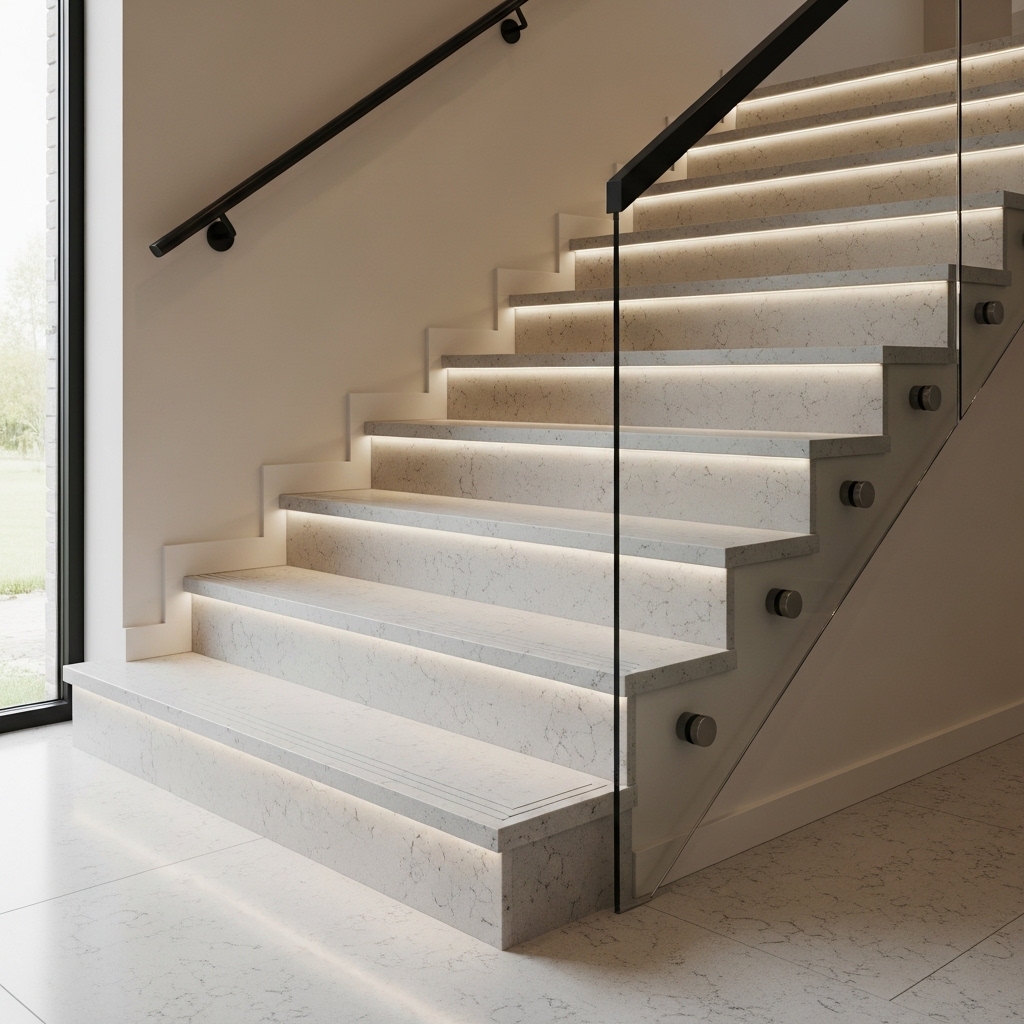
A countertop measurement guide for stairs is most useful when countertop-grade materials (quartz, granite, marble, etc.) are being extended from kitchen or vanity zones into stair treads, risers, and landings for a unified look.
Start by measuring the full stair geometry—flight width, tread depth, riser height, and landing sizes—then align these measurements to any nearby countertop reference lines so seams and pattern direction feel consistent across the space.
For example, if the kitchen island uses a long clean run with minimal joints, the stair landing can be planned as one dominant panel, with seams pushed to perimeter edges or side returns rather than through the center.
Thickness is usually selected for stair performance (often around 20 mm for tread faces), and edge detailing (eased or small chamfer) is specified to protect the step nose from chipping in heavy use.
Finally, the guide includes allowances for joint gaps, silicone at wall returns, and consistent cut orientation so the staircase reads straight, premium, and visually connected to the countertop surfaces nearby.
Countertop size in UAE homes and commercial spaces is usually planned around practical use, with common depths of 600–650 mm, island widths of 900–1200 mm, and finished heights near 900–950 mm. These dimensions allow comfortable working space while keeping seams minimal on longer runs. Outdoor hardscape materials follow very different rules, which is why designers clearly separate countertop planning from elements like cobblestone size used in landscaping and driveways.
Countertop Size Guide for Statuario Marble Kitchen Designs
A countertop size guide for Statuario marble kitchen designs usually follows standard kitchen proportions, with counter depths of 600–650 mm, island widths between 900–1200 mm, and finished heights around 900–950 mm. These dimensions allow the bold grey veining to flow naturally without overcrowding the surface. Designing countertops inspired by statuario marble benefits from generous slab coverage and carefully planned seam placement to achieve a luxurious, seamless appearance.
Countertop Size Planning for Raised Floor Systems
Countertop size planning plays a critical role in projects that integrate a raised floor system, as finished heights must account for both slab thickness and floor build-up. Standard countertop heights typically range from 900 to 950 mm, while depths are usually 600 to 650 mm. When a raised floor of 100 to 150 mm is introduced, accurate planning ensures ergonomic comfort, seamless transitions, and proper alignment with cabinetry and appliances.