
Slab Quartz Size Guide
Slab quartz size (engineered quartz slab formats) is typically offered in a few standard factory sheets: the common standard slab is 56 in × 120 in (142.24 cm × 304.80 cm), and the common jumbo slab is 63 in × 126 in (160.02 cm × 320.04 cm) to reduce seams on large kitchens and islands. Many brands also provide extra-large slabs around 65 in × 130 in (165.10 cm × 330.20 cm), and select premium collections offer super-jumbo sizes like 78 in × 138 in (198.12 cm × 350.52 cm) for very large, seam-minimizing layouts. Quartz slab thickness is most commonly 2 cm (0.79 in / 20 mm) and 3 cm (1.18 in / 30 mm), with some lines also available in thinner 12 mm (0.47 in / 1.2 cm) options for specific applications.
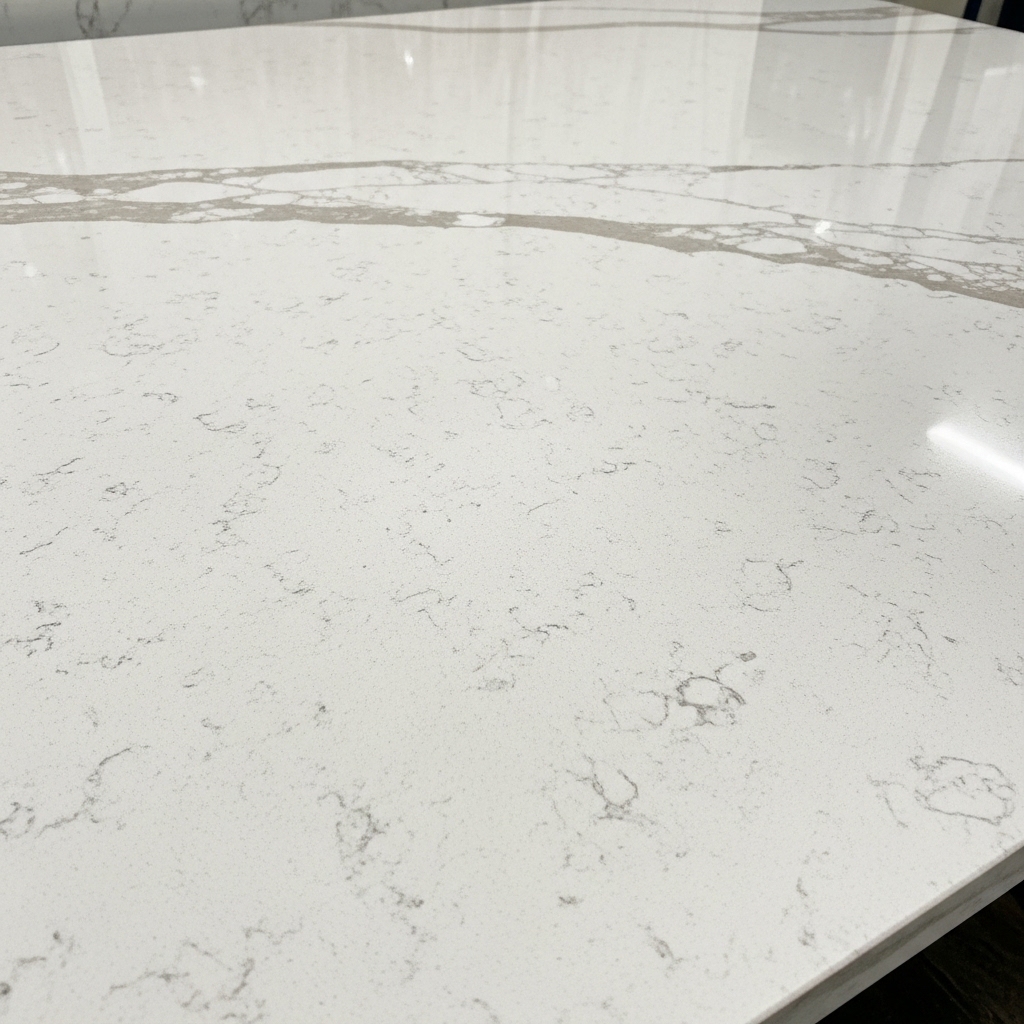
Regular Size
56 in × 120 in (standard) or 63 in × 126 in (jumbo), thickness 0.79 in (2 cm) or 1.18 in (3 cm).
Jumbo Size
63 in × 126 in, thickness 0.79 in (2 cm) or 1.18 in (3 cm).
Super Size
78 in × 138 in, thickness 0.79 in (2 cm) or 1.18 in (3 cm).
Super Jumbo
137.80 in × 78.74 in, thickness 0.79 in (2 cm) or 1.18 in (3 cm).
Mini Slab
48 in × 96 in, thickness 0.79 in (2 cm) or 1.18 in (3 cm).
Picking the Best Quartz Sheet Format
When selecting the best quartz sheet format for your project, it is essential to consider various factors that influence both functionality and aesthetics.
First, assess the project dimensions; larger spaces may benefit from larger sheets, such as 120” x 55”, to minimize seams and create a more cohesive look, while smaller areas might require more manageable sizes like 96” x 30”.
Next, think about your desired aesthetic; if you aim for a sleek, modern appearance, opting for a polished finish in a solid color or subtle pattern can enhance the overall design.
Budget constraints also play a crucial role; quartz sheets can range from $50 to $100 per square foot, so it’s vital to balance quality with affordability.
Additionally, consider the fabricator’s expertise; some may specialize in intricate designs or specific finishes, which can impact the final outcome.
Lastly, specific design requirements, such as cutouts for sinks or unique edge profiles, should be discussed early in the process to ensure the chosen format aligns with your vision and functional needs.
Quartz Sheet Format: Perks of Going Jumbo
Choosing the best quartz sheet format, particularly the jumbo size, offers numerous advantages that can significantly enhance both aesthetic appeal and functionality in various applications.
One of the primary benefits of opting for jumbo quartz sheets, which typically measure around 126 inches by 63 inches, is the reduction in seams. Fewer seams not only create a more seamless and visually appealing surface but also minimize the potential for dirt and bacteria accumulation, making maintenance easier and more hygienic.
Additionally, the larger format allows for more extensive design possibilities, enabling designers and homeowners to achieve a more cohesive look in spaces such as kitchens and bathrooms.
The durability of quartz, combined with the expansive surface area of jumbo sheets, means that they can withstand heavy use while maintaining their beauty over time.
Furthermore, the cost-effectiveness of using larger sheets can be significant; fewer pieces mean reduced labor costs and less waste during installation.
Overall, selecting the best quartz sheet format, especially the jumbo option, not only enhances the visual impact of a space but also provides practical benefits that can lead to long-term satisfaction and value.
Quartz Slab Material: Common Waste Allowance
Quartz slab material is increasingly popular in the construction and design industries due to its durability and aesthetic appeal. When working with quartz slabs, it is essential to consider the common waste allowance, which typically ranges from 5% to 10% of the total material ordered. This allowance accounts for various factors such as cutting, shaping, and potential defects in the slabs. For instance, if a project requires 100 square feet of quartz, a waste allowance of 10% would mean ordering an additional 10 square feet, bringing the total to 110 square feet.
Proper planning and measurement can significantly reduce waste, but it is crucial to factor in the intricacies of the installation process, including the layout and design of the space. Additionally, the complexity of the project can influence the waste percentage; more intricate designs may require a higher allowance.
Ultimately, understanding the common waste allowance for quartz slabs not only helps in budgeting but also ensures that the project runs smoothly without delays due to material shortages.
Quartz Slab Material: Biggest Format Available
Quartz slab material has gained immense popularity in the world of interior design and construction due to its durability, aesthetic appeal, and versatility. One of the most significant advantages of quartz slabs is their availability in large formats, which can dramatically enhance the visual impact of any space.
The biggest formats of quartz slabs can reach dimensions of up to 126 inches by 63 inches, allowing for fewer seams and a more cohesive look when installed. This is particularly beneficial for applications such as kitchen countertops, where a seamless surface not only looks more elegant but also simplifies maintenance. The larger size means that fewer pieces are required to cover a given area, which can lead to reduced installation time and costs.
In addition to their size, quartz slabs are engineered to provide a wide range of colors and patterns, mimicking the appearance of natural stone while offering enhanced durability. The non-porous nature of quartz makes it resistant to stains, scratches, and bacteria, making it an ideal choice for high-traffic areas. For instance, a typical quartz slab can withstand temperatures up to 150 degrees Fahrenheit, making it suitable for kitchen environments where hot pots and pans are frequently placed.
Furthermore, the manufacturing process of quartz slabs allows for customization, enabling designers and homeowners to select specific colors and finishes that align with their vision. This flexibility has made quartz a favored material in both residential and commercial projects. With advancements in technology, some manufacturers are even producing slabs that feature intricate designs and textures, further expanding the creative possibilities for architects and designers.
Overall, the availability of large-format quartz slabs has revolutionized the way surfaces are designed and installed. Their combination of size, durability, and aesthetic versatility makes them an excellent choice for anyone looking to create stunning and functional spaces. As the demand for quartz continues to grow, it is clear that this material will remain a staple in modern design for years to come.
Quartz Surfacing: Thickness for Floors & High Traffic
Quartz surfacing is a popular choice for flooring, particularly in high-traffic areas, due to its durability and aesthetic appeal. Thickness plays a crucial role in determining the performance and longevity of quartz surfaces. Typically, quartz slabs come in various thicknesses, with the most common being 1 cm (approximately 0.39 inches), 2 cm (approximately 0.79 inches), and 3 cm (approximately 1.18 inches). For flooring applications, especially in areas that experience heavy foot traffic, a thickness of 2 cm or more is often recommended. This thickness provides the necessary strength to withstand the wear and tear associated with constant use, reducing the risk of chipping or cracking.
In high-traffic environments such as commercial spaces, retail stores, and busy households, the choice of thickness can significantly impact maintenance and longevity. A thicker quartz surface not only enhances durability but also offers better resistance to impacts and scratches. For instance, a 3 cm thick slab can handle heavier loads and is less likely to flex under pressure compared to a 1 cm slab. Additionally, thicker surfaces can be more forgiving when it comes to installation, as they are less prone to damage during the fitting process.
Moreover, the aesthetic aspect of thickness should not be overlooked. Thicker quartz surfaces can create a more substantial and luxurious appearance, which can be particularly appealing in upscale environments. The visual impact of a thicker slab can enhance the overall design of a space, making it feel more cohesive and well-finished.
When considering quartz surfacing for floors in high-traffic areas, it is essential to balance aesthetics with functionality. While a thicker slab may come at a higher cost, the investment can pay off in terms of durability and reduced maintenance needs over time. Ultimately, selecting the appropriate thickness is vital for ensuring that the quartz surface not only meets the demands of high traffic but also complements the overall design vision of the space.
Quartz slab measurement guide for walls & decorative surfaces
A quartz slab measurement guide for walls starts with measuring the full elevation and then creating a panel map that controls seam placement, pattern direction, and edge returns.
Quartz commonly comes in large formats such as 3000 × 1400 mm or 3200 × 1600 mm, which helps reduce seams and creates a more monolithic decorative look than smaller cladding pieces.
For vertical installations, many projects choose 6–12 mm thickness to reduce weight while keeping the same surface design; thicker 20 mm can be used when edges are exposed or when matching nearby countertop profiles.
For example, a 3200 × 1600 mm slab covers about 5.12 m² (around 55 ft²), which can often span a wide feature zone with fewer panel joints if cuts are planned carefully.
Good measurement practice also includes allowances for joint gaps, clean corner sealant lines, and sequencing panels from the same batch so tone consistency and veining continuity look intentional across the wall.
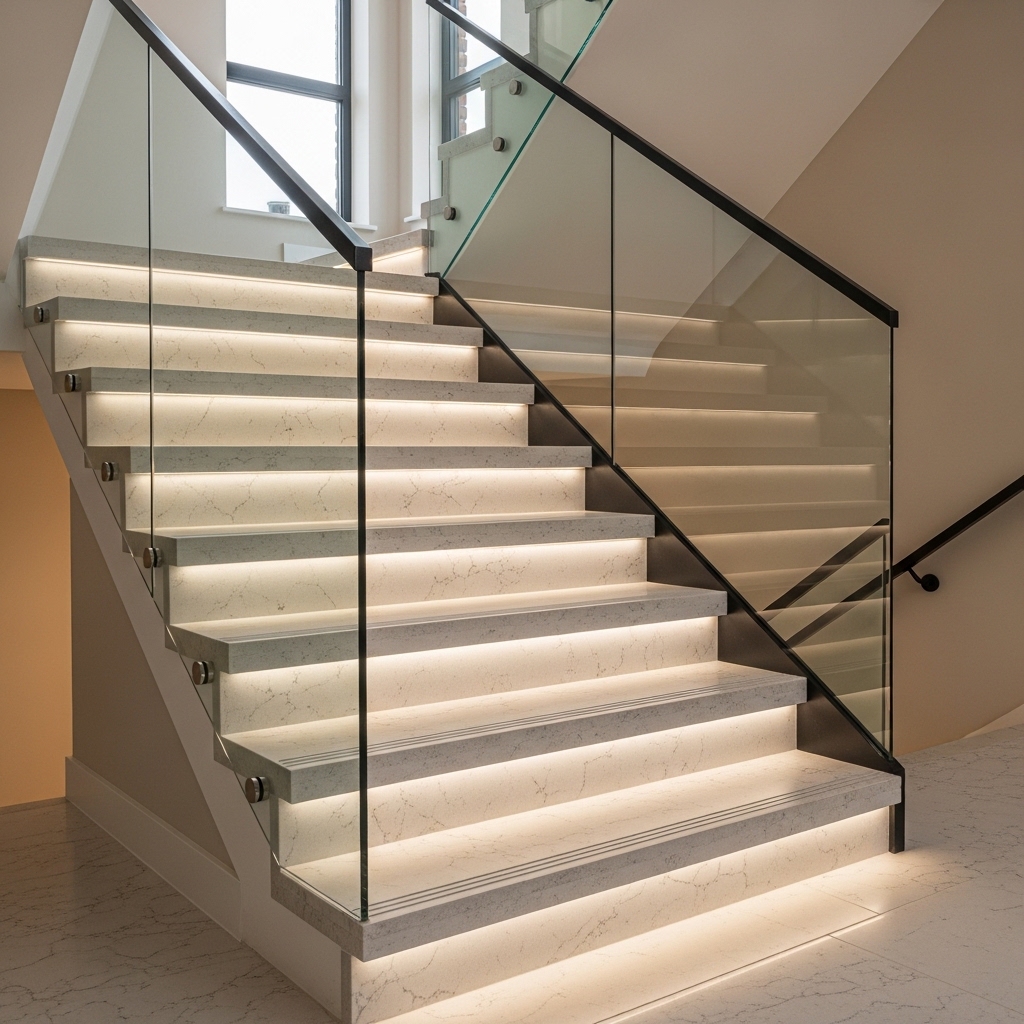
Quartz slab measurement guide for stairs
A quartz slab measurement guide for stairs begins with precise stair geometry and turns it into a cut plan that controls seams, pattern direction, edge detailing, and installation tolerances.
Measure tread depth, riser height, flight width, and landing sizes, then map those components onto slab formats such as 3000 × 1400 mm or 3200 × 1600 mm to maximize yield and keep shading consistent.
For example, a 3200 × 1600 mm slab covers about 5.12 m² (~55 ft²), which can support multiple tread pieces plus a landing section depending on how the cuts are nested.
Stair treads typically use 20 mm thickness for strength, and designers often specify an eased edge or small chamfer at the step nose to reduce chipping and keep the profile crisp.
The guide finishes with seam strategy (avoid center-of-landing seams), uniform joint gaps, and consistent cut orientation so the staircase looks clean, aligned, and premium from every viewpoint.
Slab quartz size in the UAE generally includes standard slabs around 3040 × 1440 mm and jumbo options close to 3200 × 1600 mm, designed to reduce joints in modern kitchens. These consistent dimensions make planning easier for long counters and islands. In contrast, flooring and wall applications may instead use granite tiles size formats for modular installation.
Slab Quartz Size Options for Travertine Marble Look Countertops
Slab quartz size options for travertine marble look countertops usually include standard slabs around 3040 × 1440 mm and jumbo slabs up to 3200 × 1600 mm for larger kitchens. These sizes allow long counter runs and islands to be fabricated with fewer seams. Pairing quartz slabs in these dimensions with travertine marble inspired designs creates a balanced blend of natural texture and modern surface performance.
Slab Quartz Size Options for Raised Floor Installations
Slab quartz size options are an important consideration for installations over a raised floor, where fewer joints improve aesthetics and maintenance. Typical quartz slabs measure about 3040 × 1440 mm, while jumbo slabs can reach up to 3200 × 1600 mm. These sizes support wide-span coverage while maintaining compatibility with raised floor panel layouts.