
Kitchen Platform Size Guide
Kitchen platform size (often meaning the kitchen counter platform/top) follows the same common standards used for countertops: a typical finished depth is 25–25.5 in (63.50–64.77 cm) over 24 in (60.96 cm) base cabinets, usually with a 1–1.5 in (2.54–3.81 cm) overhang, and the standard finished height is about 36 in (91.44 cm). Platform lengths are made to suit the layout, but single continuous pieces commonly range about 72–120 in long (182.88–304.80 cm) before seams, while island platforms often run about 72–120 in long (182.88–304.80 cm) and 36–60 in wide (91.44–152.40 cm). For stone, granite, or quartz platforms, typical thickness is 2 cm (0.79 in / 20 mm) or 3 cm (1.18 in / 30 mm), with thicker-looking front edges often built up to about 1.5 in (3.81 cm) for a heavier visual profile.
Regular Size
25–25.5 in deep and 36 in high, thickness 0.79 in (2 cm) or 1.18 in (3 cm).
Jumbo Size
25–25.5 in deep and 36 in high, thickness 0.79 in (2 cm) or 1.18 in (3 cm).
Super Size
25–25.5 in deep and 36 in high, thickness 0.79 in (2 cm) or 1.18 in (3 cm).
Super Jumbo
25–25.5 in deep and 36 in high, thickness 0.79 in (2 cm) or 1.18 in (3 cm).
Mini Slab
25–25.5 in deep and 36 in high, thickness 0.79 in (2 cm) or 1.18 in (3 cm).
Sizing Your Kitchen Worktop Correctly
When sizing your kitchen worktop correctly, it is essential to consider project dimensions, desired aesthetic, budget constraints, fabricator’s expertise, and specific design requirements.
Start by measuring the available space in your kitchen, ensuring that the worktop fits comfortably without overcrowding the area. A standard kitchen worktop height is typically around 90 cm, while the depth can range from 60 cm to 70 cm, depending on your layout.
Next, think about the aesthetic you wish to achieve; for instance, a minimalist design may require a sleek, thin worktop of around 2 cm, while a more traditional look might benefit from a thicker, more substantial surface of 3 cm or more.
Budget constraints also play a crucial role; high-end materials like granite or quartz can cost between $50 to $200 per square foot, while laminate options may only range from $10 to $40 per square foot.
Additionally, consider the fabricator’s expertise, as some materials may require specialized skills for installation. For example, intricate edge profiles or seamless joins may necessitate a fabricator experienced in stone work.
Finally, specific design requirements, such as integrated sinks or cooktops, will influence the overall dimensions and layout of your worktop. By carefully balancing these factors, you can ensure that your kitchen worktop is not only functional but also enhances the overall design of your space.
Kitchen Worktop Sizing: Why Bigger Wins
Choosing the right size for your kitchen worktop is crucial for both functionality and aesthetics. A larger worktop can significantly enhance your cooking experience, providing ample space for food preparation, plating, and even entertaining guests. For instance, a standard kitchen worktop is typically around 600mm deep, but opting for a depth of 800mm can offer an additional 33% more surface area, allowing for more efficient multitasking.
Moreover, a spacious worktop can accommodate multiple appliances, cutting boards, and ingredients without feeling cramped, which is particularly beneficial during busy meal prep times.
Additionally, a well-sized worktop can improve the overall flow of your kitchen, making it easier to move between cooking zones. It can also serve as a gathering spot for family and friends, transforming your kitchen into a social hub.
Investing in a larger worktop can also increase the value of your home; kitchens with generous workspaces are often more appealing to potential buyers. Ultimately, sizing your kitchen worktop correctly not only enhances your cooking efficiency but also elevates the overall functionality and enjoyment of your kitchen space.
Kitchen Worktops: Typical Fabrication Waste
Kitchen worktops are essential components of any kitchen, providing both functionality and aesthetic appeal. During the fabrication of these surfaces, which can be made from materials such as granite, quartz, or laminate, a significant amount of waste is generated. Typically, the fabrication process can result in waste percentages ranging from 20% to 30%, depending on the material and the complexity of the design.
This waste often includes offcuts, trimmings, and unusable pieces that arise from cutting the worktops to size and shape. For instance, when working with granite, a dense and heavy material, the cutting process can lead to substantial waste due to the need for precise measurements and the inherent limitations of the stone.
To mitigate this waste, fabricators can adopt several strategies, such as optimizing cutting layouts to maximize material usage and reusing offcuts for smaller projects or decorative elements. Additionally, advancements in technology, such as water jet cutting, can reduce waste by providing more accurate cuts with minimal excess material.
Ultimately, being mindful of fabrication waste not only contributes to cost savings but also promotes sustainability within the kitchen design industry, encouraging the responsible use of resources and minimizing environmental impact.
Kitchen Worktops: Largest Format Options
Kitchen worktops are a crucial element in any kitchen design, serving both functional and aesthetic purposes. Among the various options available, the largest format worktops have gained significant popularity due to their seamless appearance and versatility. Large format worktops typically come in sizes that can exceed 3 meters in length and 1.5 meters in width, allowing for expansive surfaces that minimize joints and seams. This not only enhances the visual appeal but also simplifies cleaning and maintenance, as there are fewer crevices for dirt and grime to accumulate.
One of the most sought-after materials for large format worktops is porcelain, known for its durability and resistance to scratches, stains, and heat. Porcelain slabs can be produced in thicknesses ranging from 6mm to 20mm, providing options that cater to both aesthetic preferences and practical needs. For instance, a 12mm thick porcelain worktop can weigh around 30-40 kg per square meter, making it a robust choice for busy kitchens.
Additionally, quartz and granite are also popular choices, with large slabs available that can create a stunning focal point in the kitchen. These natural stones not only offer a luxurious look but also boast impressive durability, with granite being one of the hardest materials available, rated at 6-7 on the Mohs hardness scale.
The installation of large format worktops requires careful planning and skilled craftsmanship, as the weight and size of the slabs necessitate precise handling and support. It is essential to ensure that the underlying cabinetry is adequately reinforced to bear the load of these substantial surfaces. Moreover, the trend towards open-plan living has further fueled the demand for large worktops, as they can effectively define spaces while providing ample room for food preparation, dining, and socializing. A well-designed large format worktop can seamlessly integrate with kitchen islands, creating a cohesive look that enhances the overall functionality of the space.
In terms of cost, large format worktops can vary significantly depending on the material chosen. For example, high-quality porcelain can range from $50 to $150 per square foot, while granite and quartz may fall within a similar price range, depending on the rarity and finish of the stone.
Ultimately, investing in large format worktops not only elevates the aesthetic of a kitchen but also provides a practical solution for modern living, making them a worthwhile consideration for any kitchen renovation or new build.
Kitchen Worktops: Thickness for High-Use Zones
When selecting kitchen worktops, the thickness of the material plays a crucial role, especially in high-use zones where durability and resilience are paramount. Typically, worktops range from 20mm to 40mm in thickness, with thicker options providing enhanced strength and longevity. In areas that experience frequent use, such as around the sink and cooking zones, opting for a thicker worktop can significantly reduce the risk of damage from impacts, heat, and moisture.
For instance, a 30mm thick granite or quartz worktop can withstand heavy pots and pans being placed on it without the fear of chipping or cracking. In contrast, a 20mm worktop may be more susceptible to wear and tear, particularly in busy kitchens where multiple activities occur simultaneously. Moreover, thicker worktops often provide a more substantial visual presence, contributing to the overall aesthetic appeal of the kitchen. A 40mm thick worktop can create a luxurious look, making it a popular choice for homeowners looking to elevate their kitchen design.
In addition to aesthetics and durability, the thickness of the worktop can also influence the installation process. Thicker materials may require additional support during installation, especially if they are being fitted over cabinets without a solid base. It is essential to consider the weight of the material as well; for example, a 30mm thick granite worktop can weigh significantly more than a 20mm laminate option, necessitating careful planning to ensure that the cabinetry can support the load.
Ultimately, when choosing the thickness of kitchen worktops for high-use zones, it is vital to balance functionality, durability, and design preferences. Investing in a thicker worktop can provide peace of mind in a busy kitchen environment, ensuring that the surface remains not only beautiful but also practical for years to come.
Kitchen platform measurement guide for walls & decorative surfaces
A kitchen platform measurement guide for walls and decorative surfaces is about mapping the full cooking zone—platform runs, side returns, backsplash heights, and any feature wall sections—so the slab layout stays cohesive and practical.
In many kitchens, the platform material continues vertically to protect splash areas and create a seamless, modern finish with fewer grout lines and easier maintenance.
A common method is to plan a primary backsplash panel behind the hob and sink, then add smaller returns at side walls, keeping seams aligned to cabinet boundaries for a clean and balanced look.
For example, one large panel can cover the main splash zone while a narrow return finishes the edge, preventing water ingress at corners and making the elevation look complete.
Good measurement planning also accounts for cut-outs for sockets and accessories, and ensures joints are placed away from heavy-use zones so the decorative surface remains easier to maintain over time.
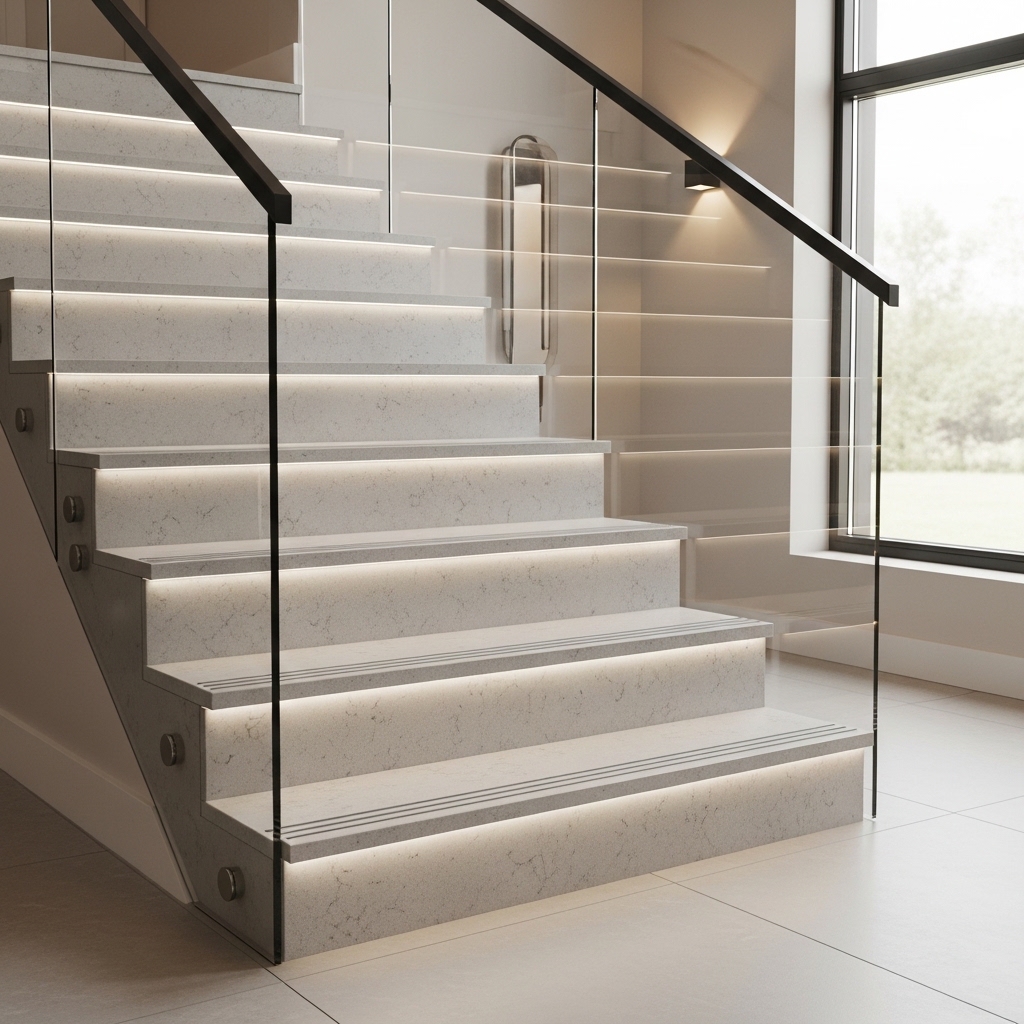
Kitchen platform measurement guide for stairs
A kitchen platform measurement guide for stairs focuses on coordinating the platform slab material with the staircase layout so the two zones feel designed as one connected surface system.
Measure the platform runs and note key alignment lines (cabinet edges, island ends), then translate those reference lines to the stair zone so seams and pattern direction feel consistent across the open-plan view.
For example, if the platform surface is installed with minimal joints, the staircase can mirror that approach by keeping the landing as a single dominant panel and pushing seams to the perimeter edges.
Thickness planning is critical: stair treads often use 20 mm for durability, while vertical cladding or side panels may use lighter builds where suitable to manage load and simplify installation.
A strong guide also considers transitions—where platform meets stair base, skirting edges, and wall returns—so joints remain tidy and the final finish looks intentional and aligned.
From a design standpoint, kitchen platform size in the UAE is calculated to support efficient workflows, often using 600 mm depth for prep areas and wider platforms for islands and breakfast counters. The goal is to maintain comfort while maximizing usable surface area. Material selection is then adjusted to match these dimensions, often referencing quartz countertops size to ensure slabs can cover the platform with minimal seams.
Kitchen Platform Size Ideas with Statuario Marble Finishes
Kitchen platform size ideas with Statuario marble finishes usually emphasize generous surface proportions, such as 600–650 mm counter depths and wide islands up to 1200 mm, to showcase elegant veining. Platforms are typically set at heights of 900–950 mm for comfort and functionality. Using statuario marble within these platform dimensions enhances the luxurious appearance while maintaining practical daily usability.
Kitchen Platform Size Planning for Raised Floor Levels
Kitchen platform size planning becomes more technical when projects include a raised floor. Platforms are typically designed at widths of 600–750 mm with heights carefully calculated to match finished floor levels. Accurate sizing ensures smooth movement between fixed platforms and access flooring while preserving visual continuity.