
Marble Size in Feet
Marble size in feet (full marble slabs) is usually described in quarry-style ranges, commonly about 8–10 ft long by 4–6 ft wide, with exact dimensions varying by the stone’s origin and how it was cut. For example, a frequent “working” slab size is about 8 ft × 5 ft (96 in × 60 in = 243.84 cm × 152.40 cm), while larger slabs may be around 9 ft × 6 ft (108 in × 72 in = 274.32 cm × 182.88 cm) or even 10 ft × 6.5 ft (120 in × 78 in = 304.80 cm × 198.12 cm). Marble thickness is typically 2 cm (0.79 in / 20 mm) or 3 cm (1.18 in / 30 mm), and 1.5 cm (0.59 in / 15 mm) is also common for wall panels, backsplashes, and lighter installations.
Regular Size
8 ft × 5 ft (96 in × 60 in), thickness 0.79 in (2 cm) or 1.18 in (3 cm).
Jumbo Size
10 ft × 6.5 ft (120 in × 78 in), thickness 0.79 in (2 cm) or 1.18 in (3 cm).
Super Size
11.5 ft × 6.5 ft (138 in × 78 in), thickness 0.79 in (2 cm) or 1.18 in (3 cm).
Super Jumbo
12 ft × 6.5 ft (144 in × 78 in), thickness 0.79 in (2 cm) or 1.18 in (3 cm).
Mini Slab
8 ft × 4 ft (96 in × 48 in), thickness 0.79 in (2 cm) or 1.18 in (3 cm).
Marble Measurements in Feet: Size Selection Tips
When selecting marble measurements in feet for your project, it’s essential to consider various factors to ensure the best outcome.
First, assess the project dimensions; for instance, a kitchen countertop typically requires a slab size of at least 10 feet by 4 feet, while a bathroom vanity may only need a smaller piece around 5 feet by 2 feet.
Next, think about the desired aesthetic; larger slabs can create a seamless look, ideal for modern designs, while smaller tiles may suit traditional styles better.
Budget constraints also play a crucial role; high-quality marble can range from $40 to $100 per square foot, so determining your budget upfront will help narrow down your options.
Additionally, consider the fabricator’s expertise; some may specialize in intricate designs that require precise measurements, while others may excel in standard installations.
Lastly, specific design requirements, such as edge profiles or finishes, can influence the size and shape of the marble needed, so be sure to communicate these details clearly to your fabricator to achieve the desired result.
Marble in Feet: Why Large Formats Win
When considering marble measurements in feet, one of the primary advantages is the ability to select the right size for your space, enhancing both aesthetics and functionality. Large format marble tiles, typically measuring 3 feet by 6 feet or even larger, create a seamless look that minimizes grout lines, making spaces appear more expansive and luxurious. This is particularly beneficial in open areas such as living rooms or commercial spaces, where a continuous surface can significantly elevate the overall design. Additionally, larger tiles can reduce installation time and labor costs, as fewer pieces are required to cover the same area. For instance, using a 3×6-foot tile instead of standard 1×2-foot tiles can cut the number of pieces needed by two-thirds, streamlining the installation process. Furthermore, large format marble is often easier to clean and maintain due to its reduced grout lines, which can trap dirt and grime. When selecting marble sizes, it’s essential to consider the scale of the room; larger tiles work best in spacious environments, while smaller formats may be more suitable for compact areas. Ultimately, opting for larger marble formats not only enhances the visual appeal of a space but also offers practical benefits that can lead to long-term satisfaction.
Typical Waste Allowance for Marble Flooring Stone
When installing marble flooring, it is essential to account for a typical waste allowance to ensure a smooth and efficient process. Generally, a waste allowance of about 10% to 15% is recommended, depending on the complexity of the layout and the intricacy of the design. For instance, if you are covering an area of 1,000 square feet, you should plan to purchase between 1,100 to 1,150 square feet of marble to accommodate any cuts, breakages, or miscalculations that may occur during installation.
This allowance becomes particularly crucial when dealing with patterned or custom-cut tiles, where the potential for waste can increase significantly. Additionally, factors such as the skill level of the installer and the type of marble selected can influence the amount of waste generated.
By incorporating a proper waste allowance into your project, you can avoid delays and ensure that you have enough material on hand to complete the installation without compromising on quality or aesthetics.
Marble in Feet: Largest Format Options
Marble is a timeless material that has been cherished for its beauty and durability, making it a popular choice for various applications, including flooring, countertops, and decorative elements. When considering marble in feet, one of the most significant factors is the size of the slabs available. The largest format options can dramatically influence the aesthetic and functional aspects of a space.
Typically, marble slabs can be found in sizes ranging from 2 feet by 4 feet to as large as 5 feet by 10 feet or even larger. The larger the slab, the fewer seams are required, which not only enhances the visual appeal but also simplifies installation. For instance, a 5-foot by 10-foot slab can cover a substantial area, making it ideal for expansive countertops or grand flooring designs.
Moreover, the thickness of the marble slabs can vary, with common options being 1 cm, 2 cm, and 3 cm. Thicker slabs, such as 3 cm, provide added durability and are often preferred for high-traffic areas or heavy-use surfaces. The weight of these larger slabs can be considerable, with a 5-foot by 10-foot slab weighing upwards of 1,000 pounds, necessitating careful handling and installation by professionals.
In addition to size, the variety of colors and patterns available in marble adds to its allure. From classic white Carrara to rich green Alpi, the options are virtually limitless. When selecting large format marble, it is essential to consider how the color and pattern will flow across the space, as larger pieces can create a more cohesive look.
Ultimately, choosing large format marble slabs can elevate the design of any space, providing a luxurious and sophisticated finish. The combination of size, durability, and aesthetic appeal makes marble an excellent choice for those looking to make a statement in their interiors.
Marble (Feet): Thickness for Busy Floor Areas
Marble is a popular choice for flooring due to its elegance and durability, but when it comes to busy floor areas, the thickness of the marble plays a crucial role in its performance. Typically, marble tiles range from 1/2 inch (12 mm) to 3/4 inch (20 mm) in thickness. For high-traffic areas such as commercial spaces, lobbies, and retail stores, opting for thicker tiles, around 3/4 inch, is advisable. This added thickness not only enhances the tile’s strength but also improves its resistance to cracking and chipping, which can occur under heavy foot traffic. Moreover, the installation process for thicker marble tiles often requires a more robust subfloor to support the additional weight. It is essential to ensure that the underlying structure can handle the load, especially in busy environments where the floor may be subjected to constant movement and pressure. A well-prepared subfloor will help maintain the integrity of the marble over time, preventing issues such as uneven surfaces or premature wear. In addition to thickness, the finish of the marble can also impact its performance in busy areas. Polished marble, while visually stunning, can become slippery when wet, making it less suitable for areas prone to spills. In contrast, honed or textured finishes provide better traction, reducing the risk of slips and falls. Therefore, when selecting marble for busy floor areas, it is vital to consider both the thickness and the finish to ensure safety and longevity. Ultimately, investing in thicker marble tiles for high-traffic areas can lead to a more durable and aesthetically pleasing floor. With proper care and maintenance, these floors can withstand the test of time, maintaining their beauty and functionality even in the busiest environments.
Marble measurement guide for walls & decorative surfaces
A marble measurement guide for walls and decorative surfaces considers slab availability, panel sizing strategy, thickness for safe vertical installation, and the finish choice that best suits the space and maintenance expectations.
Marble is often supplied as large slabs with varying ranges depending on the quarry, and those slabs can be used as big feature panels or cut into repeatable cladding modules for a structured, architectural look.
For many wall applications, thickness is commonly selected around 10–20 mm to balance durability and weight, while thinner panel solutions may be used in some systems to reduce load and simplify installation on interior walls.
As an example, a marble feature wall might be planned as two or three large panels so the veining reads as one flowing composition, while seams are placed at corners or aligned with niche borders to maintain a refined appearance.
Because marble can be more sensitive to etching and staining than many other stones, finish selection matters—honed finishes can soften reflections and reduce the visibility of marks, while polished finishes maximize depth and drama on decorative elevations.
Marble measurement guide for stairs
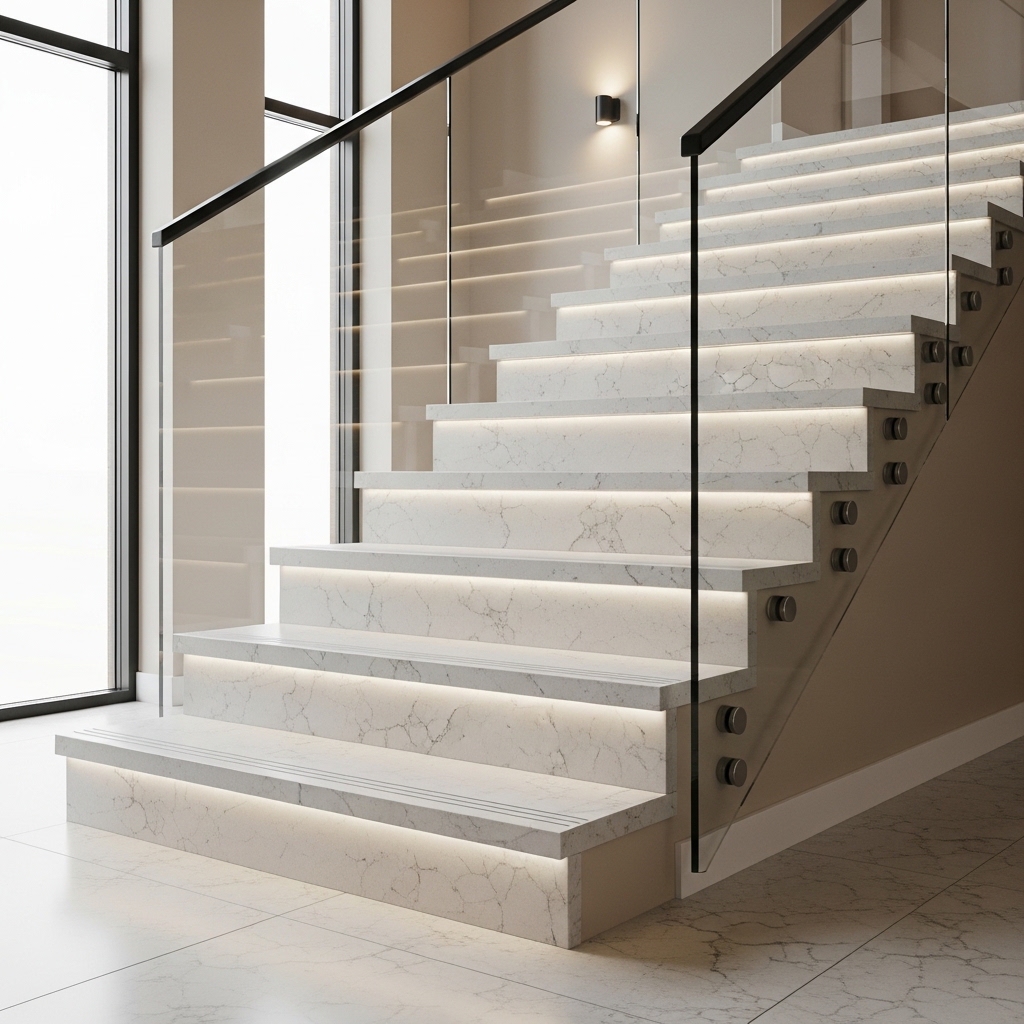
A marble measurement guide for stairs focuses on selecting slab or tile formats that provide a premium look while planning for marble’s maintenance needs and surface sensitivity in high-traffic areas.
Marble is often fabricated into solid treads, risers, and landing panels, with thickness commonly chosen around 20–30 mm depending on design and structural approach.
For example, a staircase can be planned with consistent tread pieces and a calmer pattern on risers to keep the vertical faces tidy, while the most dramatic veining is reserved for landings or feature steps.
Finish selection is important on stairs: honed finishes can reduce visible scuffs and offer a softer feel, while polished finishes deliver maximum visual depth but may show marks more readily in heavy-use zones.
Accurate measurement also includes nose overhang, corner returns, and clean joint alignment so the staircase looks straight and refined from every angle.
In UAE stone markets, marble size in feet is frequently used alongside metric units, with many slabs falling around 8–10 ft in length and 4–6 ft in width, depending on origin and block quality. These ranges influence how marble is selected for floors, staircases, and countertops, where vein continuity is important. During material selection, suppliers may also compare these dimensions with quartzite slab size to determine which material better suits large-format applications.
Marble Size in Feet Reference for Armani Grey Marble Applications
A marble size in feet reference for Armani Grey marble applications is commonly used in the UAE, where slabs often measure approximately 8–10 feet in length and 4–5 feet in width. These dimensions allow wide wall panels, vanity tops, and feature counters to be fabricated with fewer seams. Using armani grey marble in these sizes enhances its linear veining and creates a sleek, contemporary appearance across large interior surfaces.
Marble Size in Feet for Raised Floor Design
Marble size in feet is often referenced during concept design stages for projects incorporating a raised floor. Typical marble slabs measure approximately 9–10 feet in length and 5–6 feet in width, allowing flexibility in cutting while coordinating with raised access flooring. Expressing sizes in feet helps contractors quickly visualize proportions and adjust layouts to match floor panel dimensions.