
Quartz Slabs Size Guide
Quartz slabs size is generally offered in a small set of common manufacturing formats: a standard slab is typically 56 in × 120 in (142.24 cm × 304.80 cm), a jumbo slab is typically 63 in × 126 in (160.02 cm × 320.04 cm), and many brands also list extra-large slabs around 65 in × 130 in (165.10 cm × 330.20 cm) to better suit wide islands and waterfall legs. In premium collections, super-jumbo sizes such as 78 in × 138 in (198.12 cm × 350.52 cm) may be available to minimize seams on very large surfaces. Across these slab sizes, quartz thickness is most commonly 2 cm (0.79 in / 20 mm) or 3 cm (1.18 in / 30 mm), with occasional 12 mm (0.47 in / 1.2 cm) offerings depending on the manufacturer.
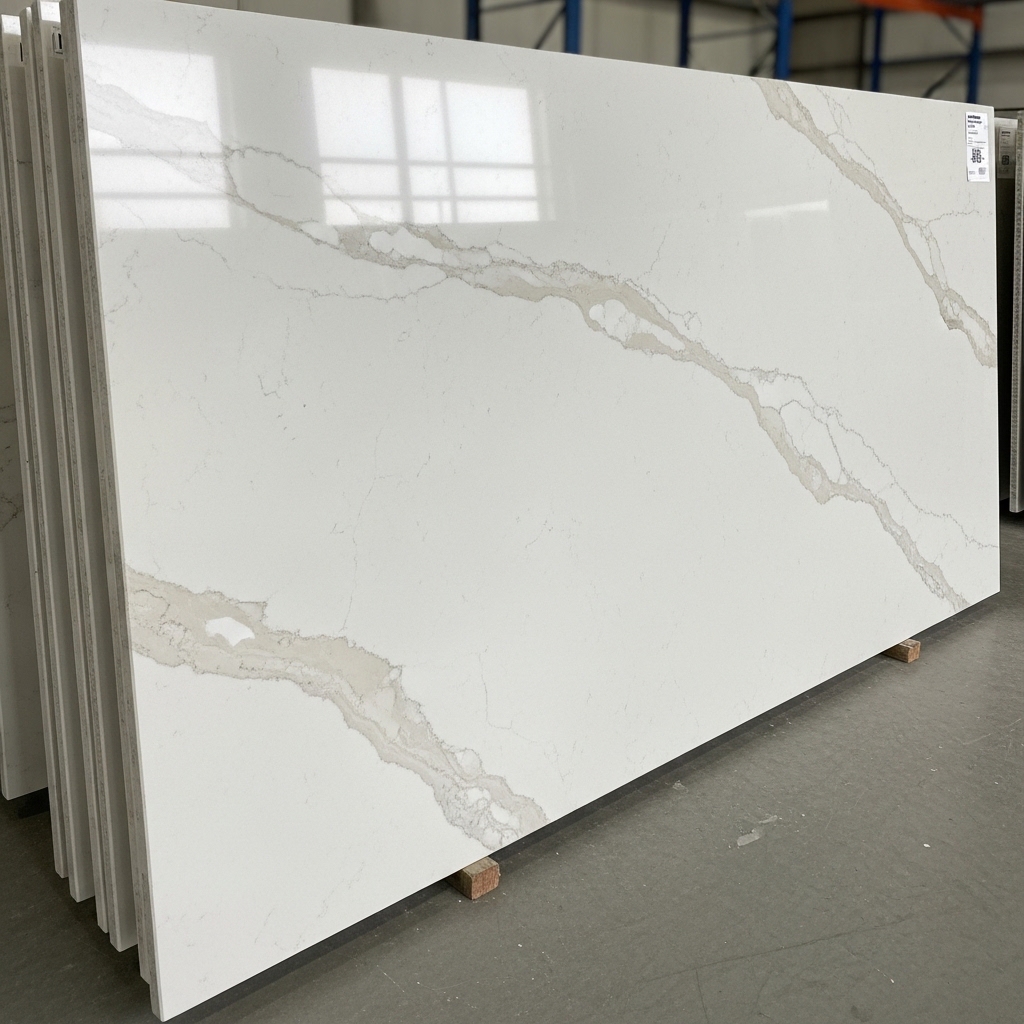
Regular Size
56 in × 120 in (standard) or 63 in × 126 in (jumbo), thickness 0.79 in (2 cm) or 1.18 in (3 cm).
Jumbo Size
63 in × 126 in, thickness 0.79 in (2 cm) or 1.18 in (3 cm).
Super Size
78 in × 138 in, thickness 0.79 in (2 cm) or 1.18 in (3 cm).
Super Jumbo
137.80 in × 78.74 in, thickness 0.79 in (2 cm) or 1.18 in (3 cm).
Mini Slab
48 in × 96 in, thickness 0.79 in (2 cm) or 1.18 in (3 cm).
Quartz Panel Dimensions Guide
When selecting quartz panel dimensions for a project, it is essential to consider various factors that influence both functionality and aesthetics.
First, the project dimensions play a crucial role; for instance, a kitchen countertop typically requires panels that are at least 1.5 to 2 inches thick to ensure durability and support.
Desired aesthetic is another significant factor; larger panels, such as those measuring 120 inches by 55 inches, can create a seamless look, while smaller tiles may be more suitable for intricate designs or backsplashes.
Budget constraints must also be taken into account, as larger panels often come at a premium price, with costs ranging from $50 to $100 per square foot, depending on the quality and brand.
The fabricator’s expertise is vital; some may specialize in large-format installations, while others may excel in detailed, custom cuts, which can affect the choice of dimensions.
Lastly, specific design requirements, such as the need for cutouts for sinks or appliances, can dictate the dimensions of the quartz panels, necessitating precise measurements to ensure a perfect fit. By carefully evaluating these factors, one can select the ideal quartz panel dimensions that align with the overall vision of the project.
Quartz Panel Dimensions: Advantages of Bigger Sheets
Quartz panel dimensions offer several advantages, particularly when opting for larger sheets. One of the primary benefits is the reduction in seams, which not only enhances the aesthetic appeal but also minimizes the potential for dirt and grime accumulation in joints. For instance, a standard quartz panel size of 120 inches by 55 inches can cover a significant area with fewer pieces, making installation quicker and more efficient.
Additionally, larger sheets provide greater design flexibility, allowing for expansive surfaces such as countertops and backsplashes without the interruption of seams. This is particularly advantageous in open-concept spaces where continuity in design is crucial.
Furthermore, larger quartz panels can contribute to improved structural integrity, as they are less likely to warp or crack compared to smaller, multiple pieces. With a thickness typically ranging from 1 to 3 centimeters, these panels maintain durability while offering a sleek, modern look. Overall, the advantages of larger quartz panel dimensions make them an ideal choice for both residential and commercial applications, combining functionality with style.
Quartz Surfaces: Typical Wastage Range
Quartz surfaces are engineered stone products made from a blend of natural quartz crystals, resins, and pigments, offering durability and aesthetic appeal for various applications. When considering the installation of quartz surfaces, it is essential to account for typical wastage, which generally ranges from 5% to 15% of the total material ordered. This wastage can arise from several factors, including cutting, shaping, and fitting the slabs to the desired dimensions. For instance, if a project requires 100 square feet of quartz, one should order between 105 to 115 square feet to accommodate potential losses. Additionally, the complexity of the design, such as intricate cuts or patterns, can further increase wastage percentages. It is advisable to consult with fabricators who can provide insights based on the specific project requirements and help optimize material usage. Proper planning and accurate measurements can significantly reduce wastage, ensuring that the project remains cost-effective while achieving the desired aesthetic results.
Quartz Surfaces: Largest Format Options
Quartz surfaces have gained immense popularity in the realm of interior design and architecture, particularly due to their versatility and durability. One of the most significant advancements in this material is the availability of large format options, which have transformed the way designers and homeowners approach their projects.
Large format quartz slabs can measure up to 126 inches by 63 inches, providing expansive coverage that minimizes seams and enhances the overall aesthetic of a space. This size is particularly advantageous for countertops, wall cladding, and flooring, as it allows for a seamless appearance that is both modern and sophisticated. The reduced number of seams not only contributes to a cleaner look but also makes maintenance easier, as there are fewer grout lines to clean and maintain.
The manufacturing process of large format quartz surfaces involves combining natural quartz crystals with resins and pigments, resulting in a non-porous, highly durable material that is resistant to stains, scratches, and heat. This durability makes large format quartz an ideal choice for high-traffic areas such as kitchens and commercial spaces. Additionally, the variety of colors and patterns available in large format options allows for endless design possibilities, catering to diverse aesthetic preferences.
In terms of installation, large format quartz surfaces require specialized handling and expertise due to their size and weight. Professional installation is recommended to ensure that the slabs are properly supported and secured, preventing any potential damage during the process. Furthermore, the trend towards larger slabs aligns with the growing demand for open-concept living spaces, where expansive surfaces can create a sense of continuity and flow throughout the home.
Overall, the introduction of large format quartz surfaces has revolutionized the way designers and homeowners approach their projects, offering a combination of beauty, functionality, and ease of maintenance that is hard to match. As the industry continues to innovate, we can expect to see even more advancements in quartz surface technology, further expanding the possibilities for modern design.
Quartz Surfaces: High-Traffic Thickness Options
Quartz surfaces have gained immense popularity in both residential and commercial spaces due to their durability and aesthetic appeal. One of the key considerations when selecting quartz surfaces is the thickness, especially in high-traffic areas. Standard thickness options for quartz surfaces typically range from 1 cm to 3 cm, with 2 cm being the most common choice for countertops. However, for high-traffic environments such as restaurants, retail spaces, and busy kitchens, opting for a thicker slab can provide additional strength and resistance to wear and tear.
Thicker quartz surfaces, such as those measuring 3 cm, offer enhanced durability, making them less prone to chipping and cracking under heavy use. This thickness is particularly beneficial in settings where heavy objects may be placed on the surface or where frequent cutting and food preparation occur. Moreover, thicker slabs can also provide a more substantial appearance, contributing to the overall design aesthetic of the space. For instance, a 3 cm thick quartz countertop can create a bold statement in a kitchen, while also ensuring longevity and ease of maintenance.
In addition to durability, the thickness of quartz surfaces can also impact installation and fabrication. Thicker slabs may require specialized equipment and techniques for cutting and installation, which can influence the overall cost. However, the investment in thicker quartz surfaces often pays off in the long run, as they can withstand the rigors of high-traffic environments without compromising on appearance or functionality. Furthermore, many manufacturers offer warranties on their thicker quartz products, providing peace of mind for both homeowners and business owners alike.
Ultimately, when choosing quartz surfaces for high-traffic areas, it is essential to consider not only the thickness but also the specific needs of the space. Whether it’s a bustling café or a family kitchen, selecting the right thickness can significantly enhance the performance and longevity of the surface, ensuring it remains a beautiful and functional element for years to come.
Quartz slab measurements for walls & decorative surfaces
Quartz slab measurements for walls are typically discussed as a combination of overall slab format and thickness, because both influence seam count, handling, and the final visual quality.
Typical large slab examples include 3000 × 1400 mm and 3200 × 1600 mm, with jumbo options available for wider or taller feature zones that need fewer joints.
Wall thickness often targets 6–12 mm for lighter panels, while thicker options like 20 mm may be selected when returns, exposed edges, or strong architectural reveals are part of the design.
For example, using larger slabs can help align seams to corners or cabinetry edges, keeping the main viewing field clean and uninterrupted.
Accurate measurement planning also includes allowances for joint lines, edge finishing, and panel sequencing so the surface reads consistent from one end to the other.
Quartz slab measurements for stairs
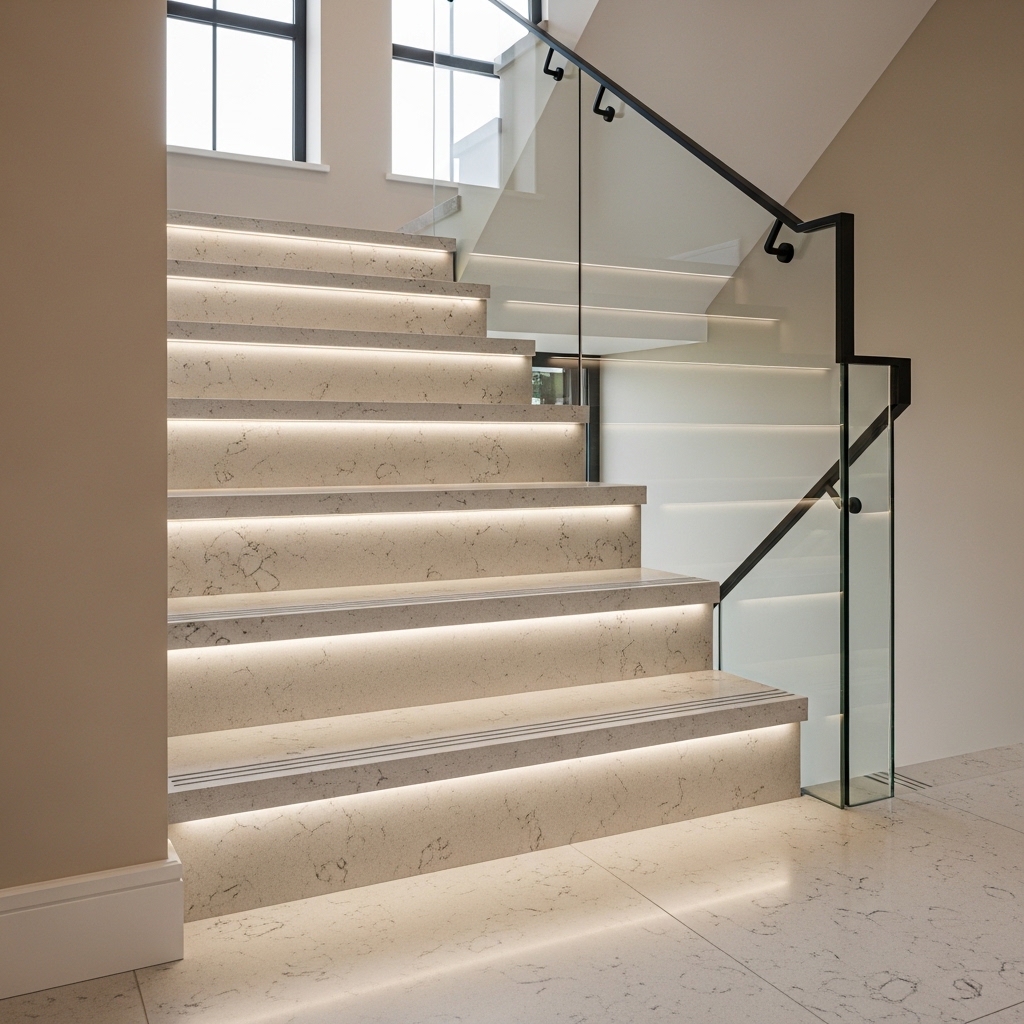
Quartz slab measurements for stairs are planned by matching slab format to stair geometry, then arranging tread and riser cuts to maintain consistent pattern direction and minimize visible joints.
Large slab examples such as 3000 × 1400 mm and 3200 × 1600 mm make it easier to cut repeated tread pieces with consistent tone, especially when all components come from the same batch.
For performance, many stair treads use 20 mm thickness, and edge detailing (small chamfer or eased edge) is chosen to protect the nose and keep the step line crisp.
For example, aligning any unavoidable seams to skirting edges or side returns helps keep the main walking zone visually clean and uninterrupted.
A good plan also considers finish selection—matte or honed treads can feel more practical—while keeping joint spacing uniform so the staircase looks straight and premium.
Quartz slabs size in UAE showrooms usually ranges from standard 3040 × 1440 mm slabs to jumbo formats near 3200 × 1600 mm, giving flexibility for both compact kitchens and expansive island designs. These sizes are selected to minimize joints while maintaining manageable handling during fabrication. For countertop planning, attention is often placed on the quartz countertops slab size that best fits the layout.
Quartz Slabs Size Options for Crema Ivory Marble Style Interiors
Quartz slabs size options for Crema Ivory marble style interiors usually include standard slabs around 3040 × 1440 mm and jumbo slabs near 3200 × 1600 mm for larger spaces. These sizes make it easier to coordinate countertops, islands, and feature surfaces with minimal seams. Matching quartz slab dimensions to crema ivory marble tones creates a soft, cohesive palette suitable for both classic and contemporary interiors.
Quartz Slabs Size Options for Raised Floor Projects
Quartz slabs size options provide flexibility for designers working with a raised floor. Standard slabs around 3040 × 1440 mm suit most applications, while jumbo slabs up to 3200 × 1600 mm are chosen for larger spans. Selecting the right size helps minimize joints and maintain clean alignment with raised floor systems.