
Size of a Slab of Quartz
The size of a slab of quartz (engineered quartz used for countertops) is typically made in a few standard factory formats so fabricators can plan cuts and seams: the common “standard” slab is 56 in × 120 in (142.24 cm × 304.80 cm), and the most common larger option is the jumbo slab at 63 in × 126 in (160.02 cm × 320.04 cm). Depending on the manufacturer, you may also find extra-large slabs around 65 in × 130 in (165.10 cm × 330.20 cm), and select premium lines offer super-jumbo sizes like 78 in × 138 in (198.12 cm × 350.52 cm) for large, seam-minimizing islands. Quartz slab thickness is most commonly 2 cm (0.79 in / 20 mm) and 3 cm (1.18 in / 30 mm, often marketed as “1¼ in” nominal), with some collections also available in thinner 12 mm (0.47 in / 1.2 cm) options for specific applications.
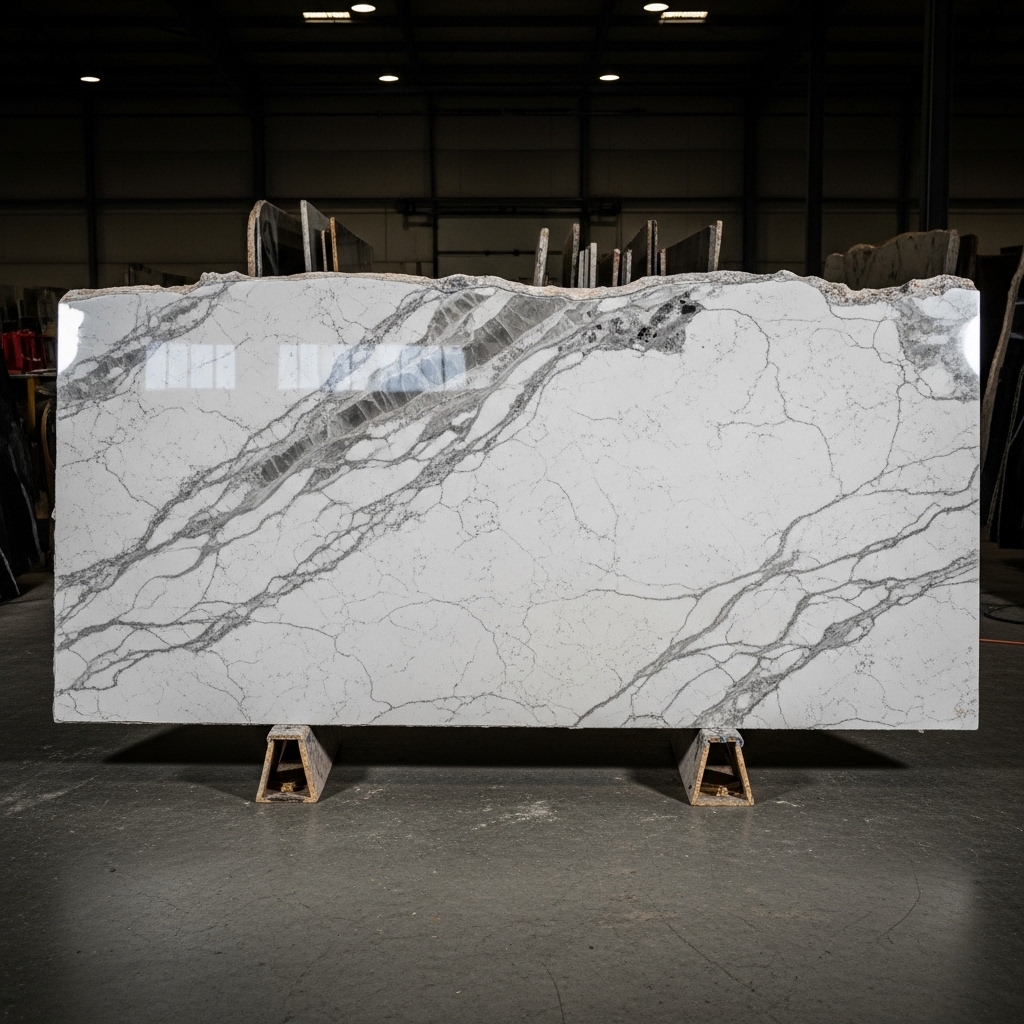
Regular Size
56 in × 120 in, thickness 0.79 in (2 cm) or 1.18 in (3 cm).
Jumbo Size
63 in × 126 in, thickness 0.79 in (2 cm) or 1.18 in (3 cm).
Super Size
78 in × 138 in, thickness 0.79 in (2 cm) or 1.18 in (3 cm).
Super Jumbo
137.80 in × 78.74 in, thickness 0.79 in (2 cm) or 1.18 in (3 cm).
Mini Slab
48 in × 96 in, thickness 0.79 in (2 cm) or 1.18 in (3 cm).
Choosing the Right Quartz Sheet Dimensions
Choosing the right quartz sheet dimensions is crucial for achieving the desired outcome in any project.
First, consider the project dimensions; for instance, if you are working on a large kitchen island, you may need sheets that are at least 120 inches long to minimize seams and create a seamless look.
The desired aesthetic also plays a significant role; if you aim for a modern, sleek appearance, larger sheets can enhance the visual flow, while smaller pieces may suit intricate designs or patterns.
Budget constraints are another factor; larger sheets can be more cost-effective in terms of material waste, but they may also come with a higher upfront cost. For example, a standard 55-inch by 120-inch quartz slab can range from $60 to $100 per square foot, so calculating the total area needed is essential for budgeting.
Additionally, the fabricator’s expertise should not be overlooked; some fabricators may have limitations on the size of sheets they can handle or may charge extra for custom cuts.
Lastly, specific design requirements, such as the need for cutouts for sinks or appliances, can influence the dimensions you choose. Ensuring that the quartz sheets align with both functional and aesthetic goals will lead to a successful project outcome.
Quartz Sheet Dimensions: Why Jumbo Is Better
Choosing the right quartz sheet dimensions is crucial for achieving the desired aesthetic and functional outcomes in any project. One significant advantage of opting for jumbo-sized quartz sheets, typically measuring 126 inches by 63 inches, is the reduction in seams. Fewer seams not only enhance the visual appeal of countertops and surfaces but also minimize the potential for dirt and bacteria accumulation, making maintenance easier. Additionally, larger sheets allow for more extensive applications, such as expansive kitchen islands or large bathroom vanities, without the need for multiple pieces. This can result in a more cohesive look and a seamless installation process. For instance, using a jumbo sheet can cover an area of up to 54 square feet, compared to standard sheets that often cover only about 30 square feet. Furthermore, the increased size can lead to cost savings in labor and material, as fewer sheets mean less time spent on installation and fewer materials needed overall. Ultimately, selecting the right dimensions, particularly jumbo sheets, can significantly enhance both the functionality and aesthetics of a space, making it a wise investment for homeowners and designers alike.
Quartz Material: General Offcut Allowance
Quartz material is increasingly popular in various applications, particularly in countertops and surfaces due to its durability and aesthetic appeal. When working with quartz, it is essential to consider the general offcut allowance, which refers to the extra material needed to account for cuts, defects, and waste during fabrication. Typically, a standard offcut allowance ranges from 10% to 15% of the total material required, depending on the complexity of the design and the cutting techniques used. For instance, if a project requires 100 square feet of quartz, one should plan for an additional 10 to 15 square feet to ensure that there is enough material to accommodate any unforeseen issues.
Additionally, it is crucial to factor in the layout of the slabs, as the orientation and positioning can significantly impact the amount of waste generated. Proper planning and measurement can help minimize offcuts, but it is advisable to consult with fabricators who can provide insights based on their experience and the specific characteristics of the quartz being used. By understanding and applying these guidelines, one can optimize the use of quartz material while maintaining quality and aesthetics in the final product.
Quartz Sheet Material: Biggest Format Available
Quartz sheet material has gained significant popularity in the construction and design industries due to its durability, aesthetic appeal, and versatility. One of the most notable features of quartz sheets is their availability in large formats, which can greatly enhance the visual impact of any space. Typically, these sheets can be found in sizes up to 3.2 meters by 1.6 meters (approximately 10.5 feet by 5.25 feet), allowing for fewer seams and a more cohesive look in applications such as countertops, wall cladding, and flooring. This large format not only minimizes the number of joints but also reduces the potential for dirt accumulation and maintenance issues, making it an ideal choice for both residential and commercial projects.
The manufacturing process of quartz sheets involves combining approximately 90% crushed natural quartz crystals with resins and pigments, resulting in a non-porous surface that is resistant to stains, scratches, and heat. This durability is particularly advantageous in high-traffic areas or environments where hygiene is paramount, such as kitchens and bathrooms. Moreover, quartz sheets are available in a wide range of colors and finishes, from sleek, modern designs to more traditional looks that mimic natural stone. This variety allows designers and homeowners to find the perfect match for their aesthetic preferences while benefiting from the practical advantages of quartz.
In addition to their functional benefits, the large format of quartz sheets also opens up new possibilities for creative design. Architects and interior designers can create expansive surfaces that flow seamlessly, enhancing the overall ambiance of a space. For instance, a single quartz sheet can be used to create a stunning waterfall edge on a kitchen island, providing a striking focal point that draws the eye. Furthermore, the ability to source quartz sheets in larger dimensions can lead to cost savings in terms of both material and labor, as fewer pieces are required to cover a given area. As the demand for innovative and high-quality materials continues to grow, quartz sheet material stands out as a leading choice for those seeking both beauty and functionality in their projects.
Quartz Surfacing: Thickness for Floors & High Footfall
Quartz surfacing is increasingly becoming a popular choice for flooring, particularly in areas with high foot traffic. One of the key considerations when selecting quartz surfacing for floors is its thickness, which plays a crucial role in durability and performance. Typically, quartz slabs come in various thicknesses, with 1 cm (approximately 0.39 inches), 2 cm (approximately 0.79 inches), and 3 cm (approximately 1.18 inches) being the most common options. For high footfall areas such as commercial spaces, retail stores, and busy residential environments, a thickness of 2 cm or 3 cm is often recommended.
Thicker slabs provide enhanced strength and resistance to wear and tear, making them ideal for environments where heavy furniture or constant movement occurs. The 3 cm thickness, in particular, offers superior impact resistance and can withstand the rigors of daily use without showing signs of damage. In contrast, while 1 cm slabs may be suitable for low-traffic areas or as wall cladding, they are generally not recommended for flooring in high-traffic zones due to their increased susceptibility to chipping and cracking.
Moreover, the installation of thicker quartz surfacing can also contribute to a more stable and solid feel underfoot, which is essential in commercial settings where comfort and safety are paramount.
The weight of the thicker slabs may require additional structural support, so it is crucial to consult with professionals during the planning and installation phases to ensure that the subfloor can adequately support the chosen thickness.
Additionally, thicker quartz surfaces can be more challenging to cut and shape, which may affect installation costs and timelines.
In summary, when considering quartz surfacing for floors in high footfall areas, opting for a thickness of 2 cm or 3 cm is advisable to ensure durability, stability, and longevity.
This choice not only enhances the aesthetic appeal of the space but also provides a practical solution to withstand the demands of everyday use.
Quartz slab measurement guide for walls & decorative surfaces
A quartz slab measurement guide for walls starts with the finished elevation: measure total width and height, then mark windows, niches, switches, and edge returns so panel breaks land in clean, logical places.
Most quartz is supplied in large formats such as 3000 × 1400 mm or 3200 × 1600 mm, which helps reduce seam lines compared with smaller cladding pieces and keeps the wall looking more continuous.
For vertical work, many projects choose 6–12 mm thickness to manage load while keeping the same surface design; thicker 20 mm can be useful where edges are exposed or where you want a stronger architectural reveal.
As a simple coverage example, a 3200 × 1600 mm slab covers about 5.12 m² (roughly 55 ft²), so careful cut planning can often keep the main viewing zone nearly seam-free.
To finish cleanly, plan consistent joint gaps, align pattern direction across panels, and place seams along corners, shadow gaps, or cabinetry edges so joints feel intentional rather than disruptive.
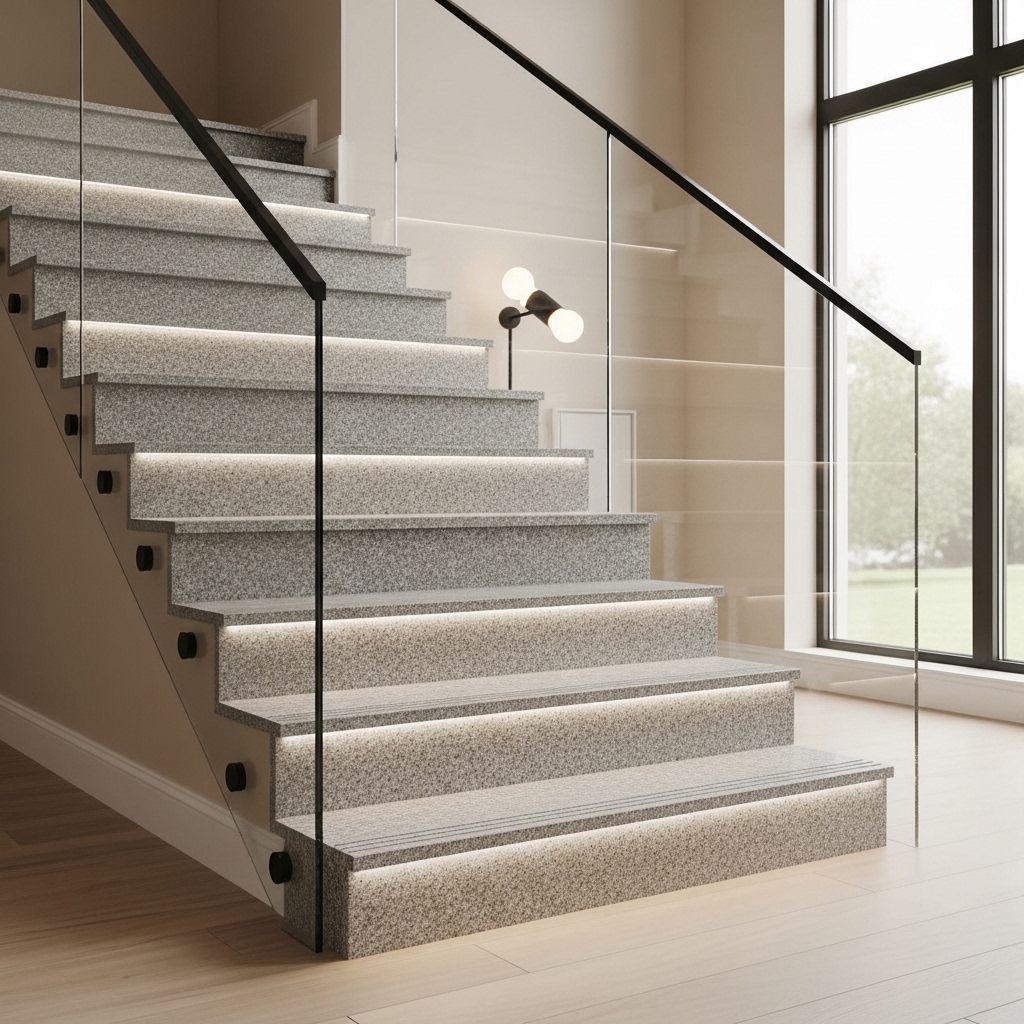
Quartz slab measurement guide for stairs
Start by recording the full stair geometry: flight width, tread depth, riser height, number of risers, and the exact landing sizes, then note any open sides that need skirting or stringer cladding.
Next, create a cut map that keeps all tread faces oriented the same way so the pattern reads consistent from step to step, and place any joints away from the center of landings where they are most noticeable.
Quartz is commonly supplied in large formats such as 3000 × 1400 mm or 3200 × 1600 mm, which makes it easier to cut multiple treads and risers from a single batch for consistent tone.
For example, a 3200 × 1600 mm slab covers about 5.12 m² (~55 ft²), giving useful cutting flexibility for repeated tread pieces plus a landing section depending on your layout.
Finish by specifying tread thickness (often 20 mm), a durable step-nose detail (eased or small chamfer), and uniform joint gaps so the staircase installs straight and looks premium.
Across UAE fabrication workshops, the size of a slab of quartz most commonly available is around 3040 × 1440 mm for standard collections, with jumbo options extending beyond 3200 mm in length for larger designs. Thickness is usually 20 mm, while 30 mm is selected for heavier visual profiles and edge build-ups. During planning, designers align these dimensions carefully with the size of kitchen slab so long runs and islands can be fabricated with minimal seams.
Size of a Slab of Quartz for Volakas Marble Style Countertops
The size of a slab of quartz used for Volakas marble style countertops is typically around 3040 × 1440 mm for standard slabs, with jumbo options extending to about 3200 × 1600 mm for larger kitchens. These dimensions allow elegant grey veining patterns to flow smoothly across long counter runs and islands with minimal seams. Replicating the refined look of volakas marble using quartz slabs of this size delivers visual continuity, durability, and easy maintenance in modern kitchens.
Size of a Slab of Quartz for Raised Floor Installations
The size of a slab of quartz chosen for installations over a raised floor directly impacts joint planning and structural balance. Most quartz slabs used in such applications measure around 3040 × 1440 mm, while jumbo options can extend to 3200 × 1600 mm. With standard thicknesses of 20 mm or 30 mm, these sizes provide sufficient strength while aligning neatly with raised floor panels and underfloor service grids.